
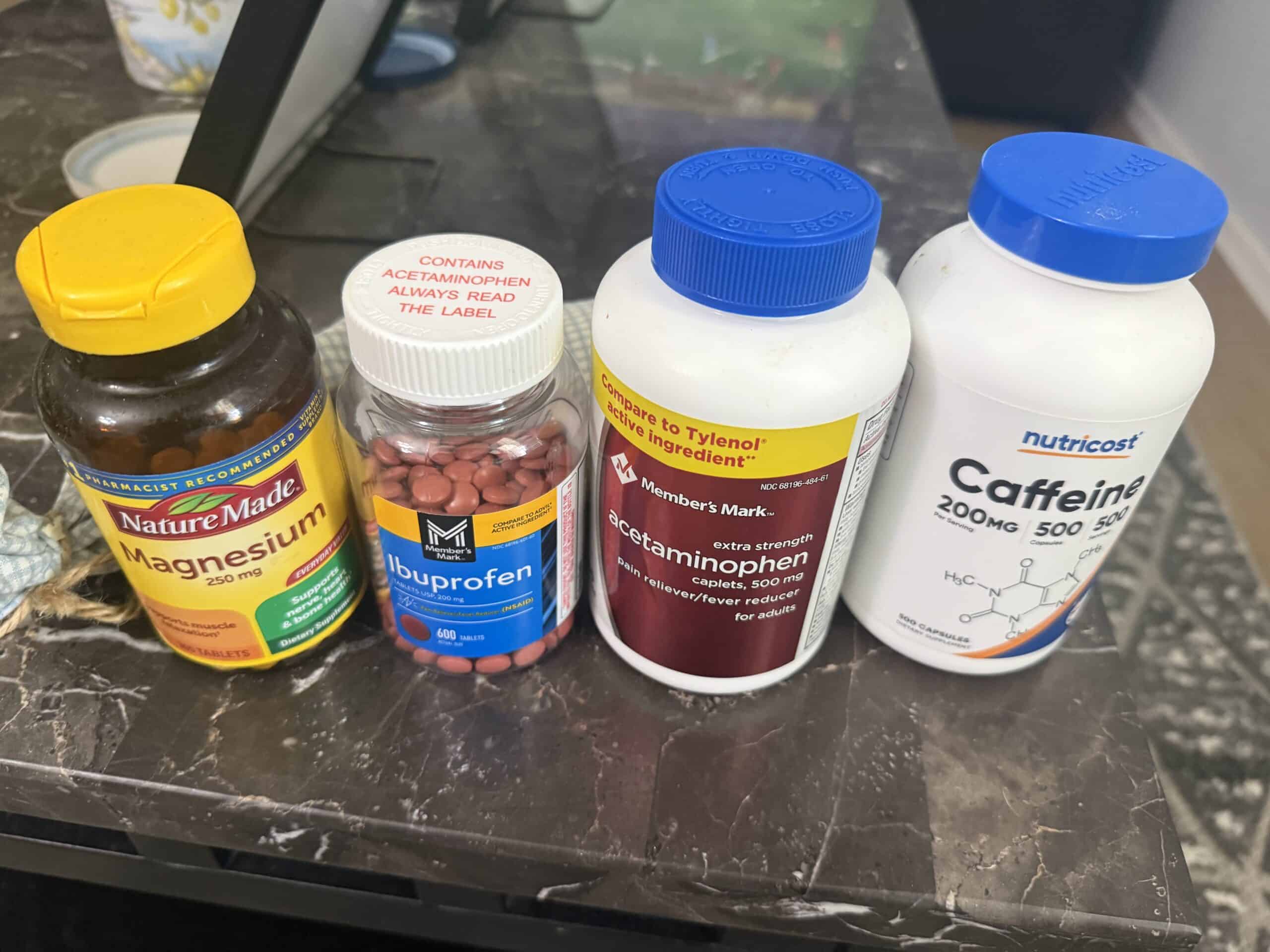
Most people manage migraine with an accumulation rather than a plan. Something bought during a bad week, something a relative suggested, something that seemed worth trying at two in the morning. The result is a drawer of products and no strategy, and the drawer keeps growing because nothing in it was chosen against a clear idea of what it was for.
Important
This is general information, not medical advice. I get migraines, which is why this site exists, and it does not make me qualified to tell you how to treat yours. A toolkit is not a treatment plan, and if migraines are a regular part of your life, a doctor should be involved in the plan rather than a website.
Key Takeaways
- Separate prevention, rescue, and comfort. They are three different jobs.
- Most drawers are heavy on comfort and light on the other two.
- Free changes outperform most purchases and get skipped.
- Buying more is often a way of avoiding a doctor conversation.
- Know your pattern first. It decides everything else.
Three Jobs, Not One
The organizing idea, and the reason most collections are a mess.
Prevention is trying to have fewer attacks. It works over months, it is unglamorous, and you cannot tell it is working without keeping a count. Choosing a supplement covers that side of it, along with prescription options that belong in a doctor’s hands.
Rescue is what you do when one has started. That is a different category with different rules, and stopping a migraine fast covers it. Rescue medications live here, with the caveat below.
Comfort is making an attack more bearable without shortening it. Cooling eye masks, dark rooms, warm compresses. This is where most drawers are overweight, because comfort is the easiest thing to buy at the moment you feel worst.
Sort what you already own into those three. The gaps become obvious fast, and they are usually in prevention.
Know Your Pattern Before You Buy Anything
The step that makes everything else tractable, and it costs nothing.
Attacks that track your cycle, arrive with weather, follow poor sleep, or come after specific foods are all different situations with different levers. Buying generically for migraine when you have a specific pattern is how the drawer fills up.
Migraine triggers is the systematic version. Menstrual migraine and weather-triggered migraine cover two of the most common patterns.
Knowing your prodrome matters too, because it is the window where rescue works best. Prodrome symptoms covers the signs that come before the pain, and recognizing them is worth more than most products.
The Free Things First
Because they outperform a lot of the drawer and nobody sells them.
Sleep, hydration, and regular meals are the boring three, and they do more for attack frequency than most purchases. Dehydration is a more common contributor than people expect and it costs nothing to rule out.
Your environment is next. A migraine-friendly workspace addresses the lighting and screens you sit under for eight hours, which is a bigger input than anything you can wear.
A record is the last free thing and the most useful. Attack days per month, written down. It tells you whether anything is working, and without it you are guessing about a condition that fluctuates on its own.
Where Products Genuinely Help
They do, in specific places, and being clear about which prevents the drawer.
Light, if daily sensitivity is part of your picture. Choosing migraine glasses covers what is worth what, and the environment usually matters more than the eyewear.
Tension, if your neck is involved. Choosing tension relief works through the mechanisms, and the important part is timing rather than product.
Sleep, since the loop between bad sleep and attacks runs in both directions. Sleeping with migraine and choosing a pillow cover it.
Nausea, if that is the part that ruins the day. Anti-nausea products and why migraines cause nausea cover a symptom that gets less attention than the pain.
The Rescue Medication Trap
The one thing on this page that can make you worse, so it gets its own section.
You can know what to reach for when nothing is available before deciding.
Painkillers taken often enough for headache can start causing headaches. That is medication overuse headache, it is well documented, and it is the most important thing to understand before building a toolkit around over-the-counter rescue. Medication overuse headache covers it properly and is worth reading before you need it.
The trap is that the loop is invisible from inside. More headaches means more painkillers means more headaches, and each individual decision feels obviously correct.
Which is the strongest argument for a doctor being involved rather than a drawer. Does ibuprofen help migraines and acetaminophen vs ibuprofen cover the specifics without recommending a habit.
What a Toolkit Is Not
It is not a treatment plan, and the distinction matters.
If migraines are frequent enough to be structuring your life, the thing that changes that is assessment and treatment, which may include preventive medication or newer options. CGRP medications covers one of those, and it is a prescription conversation rather than a purchase.
Buying more is a way of not making the appointment. It feels like progress, it is available at midnight, and it does not require explaining anything to anyone. The appointment is harder and it is the thing that helps. Finding a migraine specialist covers how.
The American Migraine Foundation is a reasonable independent place to understand what treatment can look like, and it has nothing to sell you.
A Minimal Version
If you want a starting point rather than a category.
Know your pattern, written down. Fix the free things: sleep, water, food, and the light you sit under. Have a rescue plan you have discussed with a doctor, and understand the overuse limit before you rely on it. Add comfort items for the attacks you will still have, because you will still have some. Consider prevention with a doctor if frequency justifies it. Exercise sits alongside the rest, and our note on cardio versus strength training covers which suits.
That is five things and only two of them cost money. Most drawers have it backwards, which is the point of writing this down.
Recommended Reading
See migraine triggers, medication overuse headache, and finding a specialist, and biofeedback devices for migraine, and cervical traction devices for migraine relief, and foam rollers migraine tension, and heating pads tension migraine, and ice caps cold therapy migraine relief, and massage guns for migraine tension, and migraine headbands and compression caps, and occipital nerve stimulation for migraine, and tens units for migraine relief, and cefaly review, and using heat for migraine tension, and ice cap vs cooling pad for migraine.
Migraine Toolkit FAQ
What should be in a migraine toolkit?
Three separate things: prevention, rescue, and comfort. Most people’s drawers are heavy on comfort, because comfort is what you buy at the moment you feel worst, and light on prevention, which is the unglamorous part that works over months.
What is the first thing to do?
Write down your pattern. Attacks that follow your cycle, weather, poor sleep, or specific foods are different situations with different levers, and buying generically for migraine when you have a specific pattern is how a drawer fills with things that do not fit.
Do I need to buy anything at all?
Less than you think. Sleep, hydration, regular meals, and the light you sit under for eight hours do more for attack frequency than most purchases, and all of them are free. A written count of attack days is the most useful item and costs nothing.
Can painkillers make migraines worse?
Yes, and this is the most important thing here. Taken often enough for headache, they can start causing headaches. It is called medication overuse headache and the loop is invisible from inside, since each individual decision feels obviously right. It is the strongest reason to have a doctor involved.
How do I know if something is working?
By counting. Migraine frequency fluctuates on its own, so impressions are unreliable about the exact thing you are trying to measure. Attack days per month, before and during, is enough to tell you something honest.
Should I try several things at once?
Not if you want to learn anything. If three things change in a week and something improves, you cannot tell which, so you keep doing all three forever. One at a time is slower and it is the version that produces an answer.
Is a toolkit the same as a treatment plan?
No, and conflating them is the trap. If migraines are structuring your life, what changes that is assessment and treatment, which may include preventive or newer prescription options. A drawer of products is available at midnight and does not require explaining anything to anyone, which is exactly why it is not a substitute.
When should I see a doctor?
If attacks are frequent, worsening, changing in character, or if you are relying on rescue medication often. Anything sudden, severe, or unlike your usual pattern deserves prompt medical attention rather than a purchase. Buying more is often a way of not making the appointment.
Sources
- American Migraine Foundation. Migraine resource library.
- Mayo Clinic. Headache: Symptoms and Causes.
A toolkit that only works at home is half a toolkit. Planning around the triggers a journey stacks covers the travel version.
