
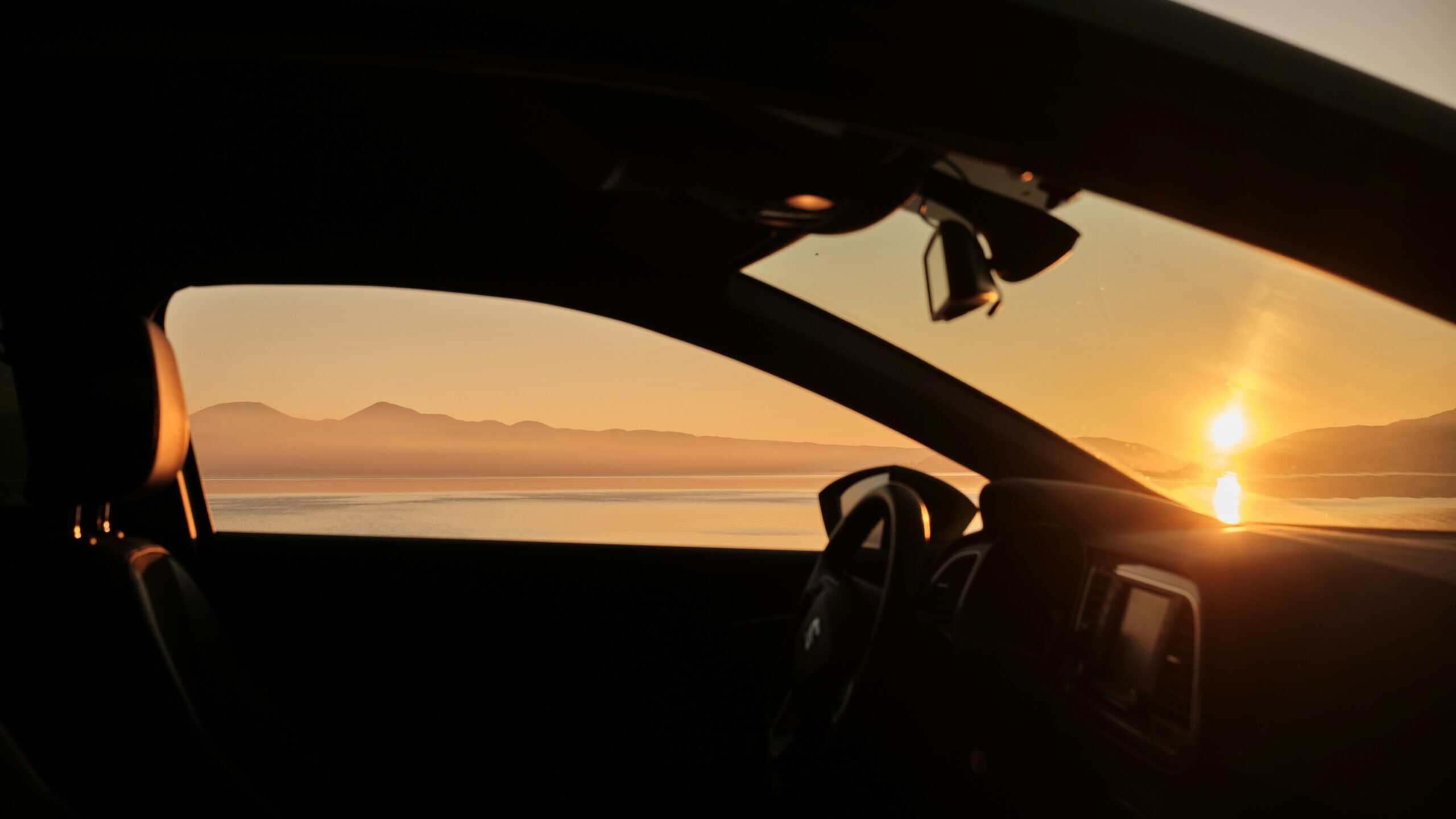
A car is one of the harder light environments to control. Low sun through a windshield, glare bouncing off wet road or another vehicle’s paint, and flicker as you pass through tree shadows all arrive whether you want them or not. Sensitivity to light is one of the most commonly reported features of migraine,1 which makes the car a place worth setting up thoughtfully. The best car sun shades depend on whether you need coverage while parked, while driving, or for a passenger, so the picks below are sorted that way. For eyewear that travels with you, see our guide to choosing migraine glasses.
This article is for general information and is not medical advice. Migraine is a neurological condition that should be diagnosed and managed by a qualified healthcare professional. Never fit anything that obstructs the driver’s view, and follow local laws on window coverings and tinting.
Quick Verdict
For most people, a folding or retractable windshield shade for parking plus a set of static-cling rear side window shades covers the two situations that matter: keeping the cabin from becoming a light and heat trap, and shielding passengers on the road. Drivers dealing with low sun should look at a visor extender rather than anything that covers the windshield, since the windshield must stay clear while driving. Passenger-side and rear coverage is where you have the most freedom.
Key Takeaways
- Windshield shades are for parking only and must be removed before driving.
- Rear and passenger side windows are where you have the most legal freedom.
- Visor extenders help with low sun without blocking the windshield.
- Local laws regulate window tint and coverings; check before fitting anything.
- Shades manage the environment; they do not treat migraine.
How We Picked These Sun Shades
We separated products by where they can legally and safely be used, since windshield coverage is a parking-only solution and driver-side visibility must never be compromised. We then looked at fit, coverage, and ease of fitting and storing.
We favored types that install without adhesive or permanent modification. Every pick is a widely available type so you can match it to your vehicle. Because this involves both driving safety and a medical topic, we note limits clearly.
Folding Windshield Sun Shade
Why It Stands Out
A folding accordion or pop-up windshield shade blocks the largest glass area while parked, keeping the cabin cooler and darker so you are not stepping into a bright, hot car. It folds down for storage between uses. Coverage while parked is its purpose.
Worth Knowing
This is strictly a parking accessory and must be removed before driving. Sizing varies by vehicle, so check the fit. It is the pick for parked coverage.
Best for keeping a parked car cooler and darker. Skip it if you need help with glare while driving.
Retractable Windshield Shade
Why It Stands Out
A retractable windshield shade rolls up into a compact housing, which makes it faster to deploy and store than a large folding panel and avoids the bulk sitting on a seat. Convenience encourages actual use. It suits frequent short stops.
Worth Knowing
Retractable models cost more and the mechanism is another part that can wear. It is still parking-only. It is the pick for quick, frequent use.
Best for people who park often and want fast deployment. Skip it if you want the cheapest option.
Static Cling Rear Side Window Shades
Why It Stands Out
Static cling shades stick to rear side windows without adhesive, reducing glare and direct sun for back seat passengers and children while leaving no residue. They peel off and reposition easily. Rear passenger coverage is their role.
Worth Knowing
They apply to rear windows rather than the driver’s field of view. Cling performance varies with glass cleanliness. It is the pick for rear passengers.
Best for shading rear seat passengers. Skip it if you need driver-area glare control.
Mesh Roller Side Window Shade
Why It Stands Out
A mesh roller shade mounts to the rear side window frame and pulls down like a blind, cutting sun while retaining some outward visibility and airflow when the window is cracked. Adjustability is its advantage. You can set the coverage level.
Worth Knowing
Mounting hardware varies by vehicle, so check compatibility. Mesh reduces rather than eliminates light. It is the pick for adjustable rear coverage.
Best for rear windows where you want adjustable shade. Skip it if you want maximum darkness.
Visor Extender for Low Sun
Why It Stands Out
A visor extender clips to your existing sun visor and drops the shaded area lower or wider, addressing low morning and evening sun without covering the windshield itself. It targets the gap factory visors leave. Driving-legal glare help is its purpose.
Worth Knowing
It must not obstruct your view of the road, so position carefully and check local rules. Tinted panel versions vary in darkness. It is the pick for low sun while driving.
Best for drivers dealing with low morning or evening sun. Skip it if it would sit in your line of sight.
Rear Windshield Shade for Back Glass
Why It Stands Out
A rear windshield shade covers the back glass while parked, cutting the heat and light that builds up in a car left in the sun, and pairs with a front shade for fuller coverage. It addresses the second largest glass area. Parked heat control is its role.
Worth Knowing
Rear glass shades are for parking and must not obstruct the rear view while driving. Fit varies by vehicle shape. It is the pick for complete parked coverage.
Best for pairing with a front shade while parked. Skip it if you only park briefly.
How to Choose Car Sun Shades
Parked or Driving
This is the first and most important distinction. Windshield and rear glass shades are parking accessories that must be removed before driving, while visor extenders and rear side window shades can generally stay in place. Never fit anything that blocks the driver’s view of the road.
Know the Local Rules
Laws on window coverings and tinting vary considerably by state and country, and some restrict what may be applied to front side windows in particular. Check your local regulations before fitting anything semi-permanent. Rear windows usually allow the most latitude.
Fit for Your Vehicle
Windshield shades in particular vary widely in size, and a shade that does not span the glass leaves gaps where light and heat come through. Check the stated dimensions against your vehicle. Our guide to dark sunglasses covers eyewear for driving.
Pair With Eyewear
For glare while actually driving, appropriate sunglasses are usually more useful and more legal than anything fitted to the glass. Our guides to migraine glasses and migraine glasses versus regular sunglasses cover the differences.
Managing Light in the Car
Why the Car Is Difficult
Cars combine large glass areas, changing sun angles, reflective surfaces, and the flicker of passing shadows, which makes the light environment less controllable than a room at home. Sensitivity to light is very commonly reported alongside migraine,1 so the car is a reasonable place to make adjustments. Shades and appropriate eyewear both help.
Safety Comes First
Whatever you fit, clear visibility for the driver is non-negotiable, and nothing should obstruct the windshield, mirrors, or your view of the road while the vehicle is moving. If light or visual symptoms affect your ability to drive safely, that is a matter to discuss with a healthcare professional.2 Do not drive during an attack that affects your vision or concentration. Readers facing long hours behind the wheel can also read our guide to handling an attack on the road.
Common Car Sun Shade Mistakes
Driving With a Windshield Shade Fitted
Windshield shades are parking accessories only. Always remove them before driving.
Ignoring Local Tint Laws
Rules on window coverings vary by location and front side windows are often restricted. Check before fitting anything.
Buying a Shade That Does Not Fit
An undersized windshield shade leaves gaps that let heat and light straight through. Check the dimensions against your vehicle.
Recommended Reading
- How to choose migraine glasses
- Dark sunglasses for bright conditions
- Light filtering window film at home
- Migraine glasses vs regular sunglasses
Frequently Asked Questions
Can you drive with a windshield sun shade on?
No. Windshield sun shades are designed for parked vehicles and completely obstruct the driver’s view, so they must always be removed before driving. For glare while driving, a visor extender or appropriate sunglasses are the correct approach. Never fit anything to the windshield that interferes with your view of the road.
Are car window shades legal?
Rules vary considerably by state and country, and front side windows in particular are often subject to restrictions on tinting and coverings. Rear side windows and the rear windshield generally allow more latitude, especially with removable shades. Check your local regulations before fitting anything, since requirements differ significantly between jurisdictions.
Do sun shades help with light sensitivity while driving?
Shades fitted to rear and passenger windows can reduce glare for passengers, and a visor extender can help with low sun for the driver, but the windshield must remain clear. For the driver, appropriate sunglasses are usually the more practical option. Light sensitivity is commonly reported with migraine,1 though these are comfort measures rather than treatments.
What kind of sunglasses are best for driving?
That depends on conditions and personal comfort, and lenses that are too dark can impair vision in low light or at night, so darkness is not automatically better. Tinted lenses marketed for light sensitivity differ from standard sunglasses in how they filter light. Our migraine glasses guides cover the differences in more detail.
Should I drive if I feel a migraine starting?
If you experience visual disturbance, aura, difficulty concentrating, or any symptom that could impair your ability to drive safely, you should not drive. Discuss driving and your symptoms with a healthcare professional, who can advise based on your particular pattern.2 Safety for you and other road users comes before convenience.
When should I see a doctor about migraine?
Speak to a healthcare professional if you have recurring headaches, if your usual pattern changes, if attacks become more frequent or severe, or if symptoms interfere with daily activities including driving. Sudden, severe, or unusual headaches, or headaches with neurological symptoms such as weakness, confusion, or vision loss, warrant urgent medical attention. Equipment adjustments are no substitute for proper diagnosis and management.
Sources
- >American Migraine Foundation. americanmigrainefoundation.org
- >National Institute of Neurological Disorders and Stroke (NINDS), National Institutes of Health. ninds.nih.gov
