
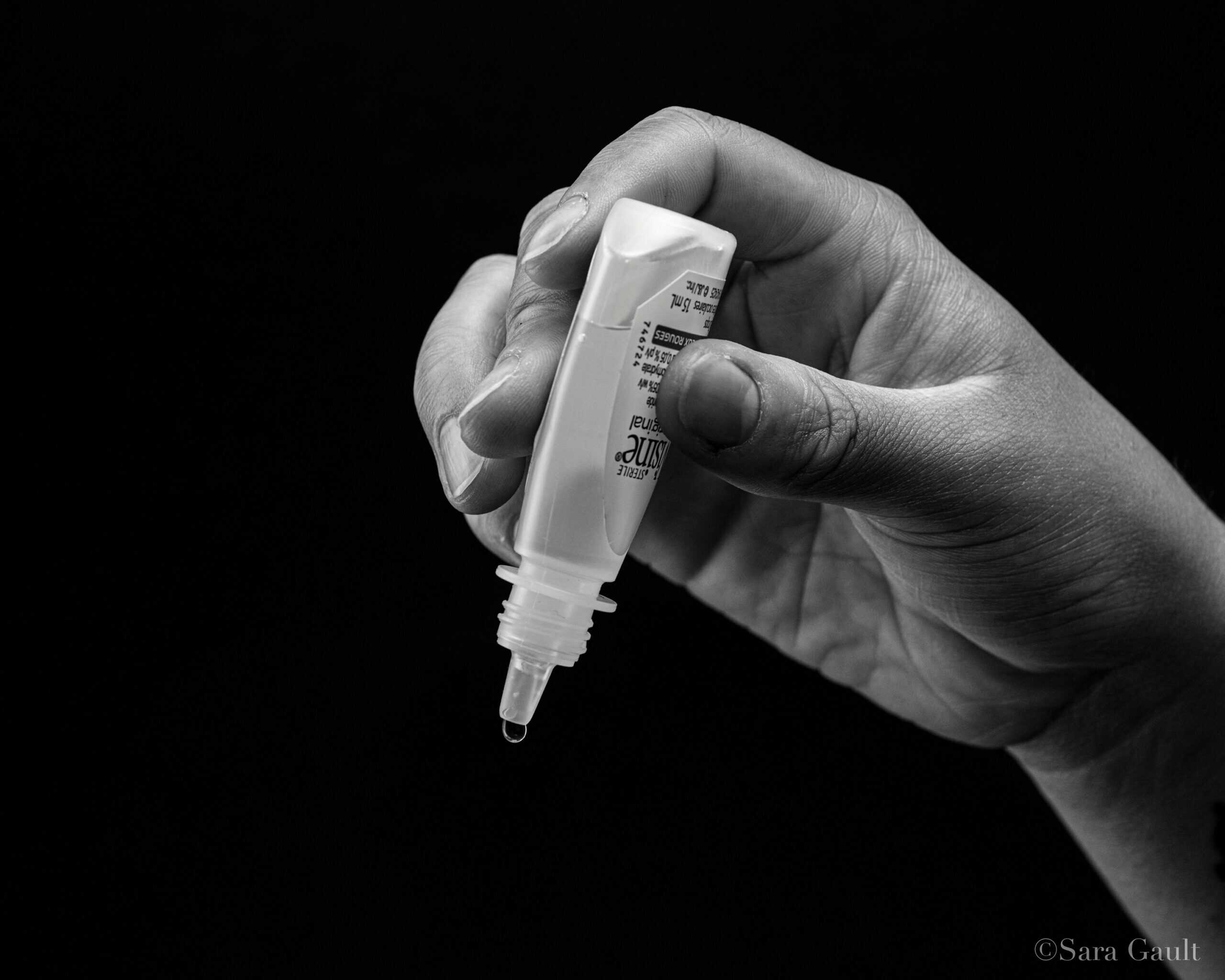
Screen work reduces blink rate, and fewer blinks means the tear film breaks up faster. That is the mechanism behind the gritty, tired, burning feeling after a long day at a monitor, and lubricating drops address it directly by replacing what evaporated.
What drops will not do is treat migraine. Eye strain and migraine frequently arrive together and they are separate things, and drops that fix the dryness while the head pain continues tell you the pain was never coming from your eyes. Trigger identification is unreliable in general, and screen use is one of the harder ones to pin down.
Medical Disclaimer
This article is general information rather than medical advice. Persistent eye pain, vision changes, redness, or discharge need assessment by an optometrist or doctor rather than over-the-counter drops. Sudden visual disturbance, especially with headache, warrants prompt medical attention.
Quick Verdict
Preservative-free lubricating drops in single-use vials suit anyone using drops more than a few times a day, since preservatives irritate with frequent use. Gel drops last longer and blur briefly, which makes them better for evening than mid-task. Avoid redness-reducing drops for routine use.
How We Picked
Preservative content came first, because benzalkonium chloride and similar preservatives cause irritation with repeated daily use. That matters specifically for screen workers, who reach for drops often.
Viscosity ranked next. Thin drops clear instantly and last less time, thicker gels last longer and blur vision briefly, and the right choice depends entirely on when you use them.
We separated lubricating drops from redness relievers deliberately. Vasoconstrictor drops reduce visible redness without addressing dryness, and regular use produces rebound redness.
Packaging mattered more than expected. Single-use vials stay sterile without preservatives, and multi-dose bottles need them, which is the whole trade.
Preservative-Free Single-Use Vials
Why It Stands Out
The right answer for frequent use. Each vial is sealed and sterile until opened, which removes the need for a preservative and the irritation that comes with it.
Anyone using drops four or more times a day should be on these. The irritation from preservatives builds gradually and gets mistaken for worsening dryness, which leads people to use more of the thing causing it.
Worth Knowing
More expensive per dose than a bottle, and the vials generate waste. Each one holds more than a single dose and should be discarded the same day once opened.
They are also fiddly to open with dry hands, which is a small annoyance repeated many times.
Best for daily screen work, frequent use, and anyone whose eyes have become more irritated since starting drops. Skip if you use drops occasionally, where a bottle is cheaper and adequate.
Multi-Dose Lubricating Eye Drops
Why It Stands Out
Cheaper per dose and far more convenient to carry. One bottle lives in a bag for weeks, and there is nothing to unwrap when you need it.
For occasional use, the preservative exposure is low enough not to matter, and the practical advantages are real.
Worth Knowing
Preservatives are the limitation. Frequent daily use causes irritation over time, and this is the most common reason people find drops stop helping.
Bottles also have an open-life after which they should be discarded, usually a few weeks, and most people keep them far longer than that.
Best for occasional dryness, travel, and anyone using drops once or twice a day. Skip if you need drops repeatedly through a working day.
Gel Eye Drops
Why It Stands Out
Thicker formulation stays on the eye surface considerably longer than thin drops, which means fewer applications and better protection through a long stretch of screen work.
The extra dwell time is why gels suit people whose dryness returns within an hour of a standard drop.
Worth Knowing
Vision blurs for a short period after application, which makes gels awkward mid-task. Applying before a break or at the end of the day works better.
Some people find the residue sensation unpleasant, and that is a personal response rather than a product fault.
Best for severe dryness, evenings, and anyone who finds standard drops wear off too quickly. Skip if you need to return to a screen immediately after applying.
Overnight Eye Ointment
Why It Stands Out
Provides protection through the night, which matters for anyone whose eyes feel worst on waking. Incomplete lid closure during sleep is more common than people realize and produces morning dryness that a daytime drop never addresses.
Treating overnight also means starting the day with a stable tear film rather than trying to catch up from mid-morning onward.
Worth Knowing
Ointment blurs vision substantially, so it is a bedtime product only. Applying it and then trying to read is a wasted evening.
It also leaves residue on lashes and pillowcases, which some people find enough of a nuisance to stop.
Best for morning dryness, incomplete lid closure, and severe cases where daytime drops are not enough. Skip if your dryness is purely screen-related and resolves overnight.
Lipid-Based Eye Drops
Why It Stands Out
Targets evaporation rather than volume. The tear film has an oily outer layer that slows evaporation, and lipid-containing drops supplement that layer instead of simply adding water.
For dryness driven by rapid evaporation rather than insufficient tear production, this addresses a different part of the problem than standard lubricants.
Worth Knowing
Whether evaporation is your issue is not something to determine from an article. An optometrist can assess tear film quality, and guessing wrong means paying more for no benefit.
Lipid drops can also cause brief blurring, though generally less than a gel.
Best for anyone whose dryness persists despite regular lubricating drops. Skip as a first purchase, since standard drops are cheaper and adequate for most screen dryness.
Warm Compress Eye Mask
Why It Stands Out
Not a drop, and often more useful than one. Warmth helps the oil glands along the lid margin release their contents, which improves the quality of the tear film rather than just topping up its volume.
For blocked gland dryness, no drop resolves the underlying issue, and regular warm compresses address the cause.
Worth Knowing
This needs consistency over weeks rather than a single use, and most people abandon it before it helps.
Temperature matters and hot is not better. Comfortably warm for a sustained period is the approach, and overheating irritates the skin.
Best for dryness that drops keep treating without resolving, and for anyone told they have gland dysfunction. Skip if you want immediate relief, since this works over weeks. Related comfort products sit in warm compresses for tension.
Eye Drop Types at a Glance
| Type | Duration | Blurring | Best for |
|---|---|---|---|
| Preservative-free vials | Short | None | Frequent daily use |
| Multi-dose bottle | Short | None | Occasional use |
| Gel drops | Longer | Brief | Evenings, persistent dryness |
| Overnight ointment | All night | Substantial | Morning dryness |
| Lipid-based | Longer | Slight | Evaporative dryness |
| Warm compress | Cumulative | None | Gland dysfunction |
Eye Strain Against Migraine
What points toward eye strain
Gritty or burning sensation, tired eyes, symptoms that improve with rest and worsen through a working day. Discomfort is centered on the eyes and responds to lubrication and breaks.
What points toward migraine
Throbbing head pain, light sensitivity, nausea, and pain that worsens with routine activity. ICHD-3 criteria describe migraine without aura as attacks lasting four to seventy-two hours with these features, and light sensitivity around screens is often migraine photophobia rather than eye fatigue. Where screens seem involved, screen time and migraines covers what the relationship actually looks like.
What to Look For
Preservative status
The single most important factor for frequent users. Preservative-free formulations avoid the irritation that builds with repeated daily exposure.
Lubricating rather than redness-reducing
Vasoconstrictor drops reduce visible redness and do not address dryness, and regular use causes rebound redness. Check the active ingredient rather than the marketing.
Viscosity against your schedule
Thin drops for mid-task use, gels and ointments for breaks and bedtime. Matching this to when you need them prevents most disappointment.
Contact lens compatibility
Not all drops can be used with lenses in. Check explicitly if you wear them, since some formulations require removal.
Common Mistakes to Avoid
Using redness relievers daily
These constrict blood vessels rather than lubricating, and stopping after regular use produces rebound redness worse than the original. They suit occasional cosmetic use only.
Treating drops as the whole answer
Blink rate, screen distance, and lighting all contribute, and a workspace setup that causes strain will keep causing it. That ground sits in building a migraine-friendly workspace.
Keeping bottles past their open-life
Multi-dose bottles have a limited period after opening, usually a few weeks. Contamination risk rises after that regardless of how much product remains.
Assuming drops will help the headache
Lubrication addresses dryness. If the head pain continues unchanged while your eyes feel better, that separates the two problems usefully, and whether eye strain causes migraine covers the connection.
Recommended Reading
- the eye strain and migraine link
- what screens actually do
- reducing glare at source
- lighting the workspace properly
- the wider setup
- glasses for light sensitivity
- choosing migraine glasses
Frequently Asked Questions
Do eye drops help migraine?
No. Drops address dryness on the eye surface, and migraine pain has a different mechanism entirely. Drops that relieve grittiness while the head pain continues suggest the two were separate problems.
Why do my eyes feel dry after screen work?
Blink rate drops substantially during focused screen use, so the tear film evaporates without being replenished. That produces the gritty, burning sensation, and deliberate blinking and regular breaks help alongside drops.
Are preservative-free drops worth the extra cost?
For frequent use, yes. Preservatives cause irritation that builds with repeated daily exposure, and that irritation is commonly mistaken for worsening dryness. Occasional users are fine with a bottle.
Can I use redness-relief drops every day?
Not advisable. They constrict blood vessels rather than lubricating, and stopping after regular use causes rebound redness worse than before. Lubricating drops are the appropriate choice for dryness.
Should I use gel drops or regular drops?
Regular drops during work, since gels blur vision briefly. Gels suit evenings and anyone whose dryness returns within an hour of a standard drop.
Can I use drops with contact lenses in?
Some are formulated for lens wear and others require removal. Check the packaging explicitly, since using an incompatible drop can affect the lens as well as your comfort.
When should I see a doctor?
If dryness persists despite regular drops, if you have eye pain, redness, discharge, or vision changes, or if headaches accompany the eye symptoms. Sudden visual disturbance with headache needs prompt assessment rather than over-the-counter treatment.
Sources
- Headache Classification Committee of the International Headache Society (IHS). The International Classification of Headache Disorders, 3rd edition. Cephalalgia. 2018;38(1):1-211. https://ichd-3.org/
- Lipton RB, Munjal S, Buse DC, et al. Predicting Inadequate Response to Acute Migraine Medication: Results From the American Migraine Prevalence and Prevention (AMPP) Study. Headache. 2016;56(10):1635-1648.
