
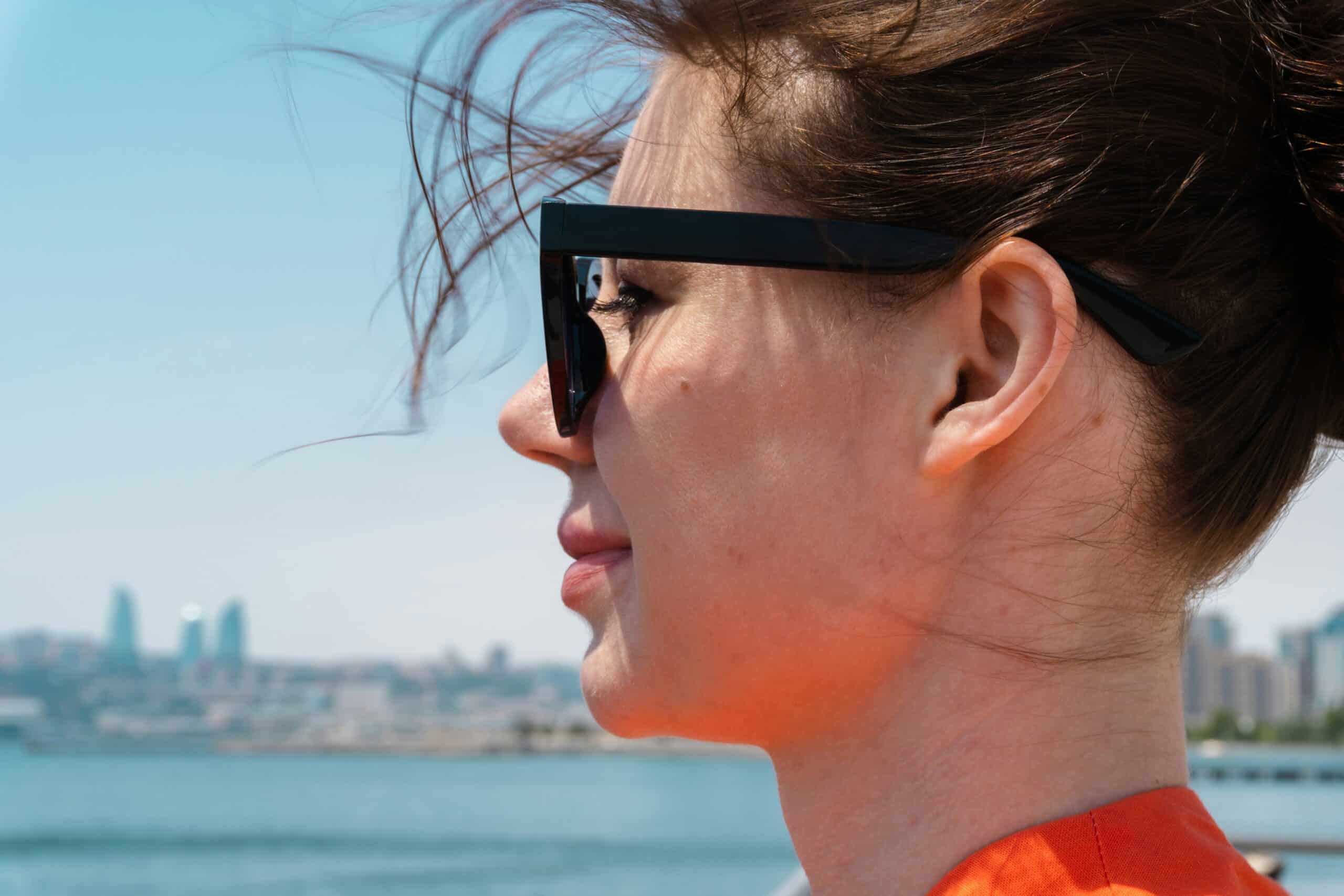
The fluorescent lights flicker overhead at work. Your phone screen stabs your eyes at 11 PM. You step outside, and the parking lot glare feels like an ice pick behind your left temple. If you have migraines, you already know, light isn’t just bright. It’s a trigger. And for roughly 80% of migraine sufferers, photophobia isn’t only a symptom during attacks. It’s the thing that gets them started.
That’s where migraine glasses for light sensitivity come in. Unlike regular sunglasses, these use a specific tint called FL-41 that filters out the exact wavelength of light shown to provoke migraine pathways in the brain. Clinical research dating back to 1991 found FL-41 reduced migraine frequency by 74% in children who wore them consistently. For adults, the effect is less dramatic but still meaningful, many users report 40-60% fewer attacks after six weeks of daily wear.
We compared FL-41 options across price ranges, indoor and outdoor strengths, prescription and non-prescription, to find the five that actually work. Whether fluorescent office lights are your worst trigger, driving sunlight, screen time, or all three, there’s a pair below engineered for your specific pattern.
This is general information, not medical advice, and these products manage light sensitivity rather than treat or prevent migraine. See a doctor for a diagnosis and treatment plan.
Why Migraine Glasses Work When Regular Sunglasses Don’t
Most people assume dark lenses equal migraine protection. They don’t. The problem isn’t brightness overall, it’s one specific wavelength.
Around 480 nanometers, in the blue-green range of visible light, sits the wavelength that research has repeatedly shown activates melanopsin-containing retinal cells connected directly to migraine pathways in the trigeminal nucleus. Regular sunglasses block brightness uniformly across the spectrum, which means you still absorb that 480nm trigger through dark lenses. That’s why migraine sufferers often report sunglasses don’t help and sometimes make things worse, the reduced overall brightness signals your pupils to dilate, letting in more of the problematic wavelength.
FL-41 tint works differently. Developed at the University of Utah’s Moran Eye Center, the rose-colored formulation specifically attenuates the 480nm band by roughly 80% while allowing longer wavelengths (reds, yellows, warmer tones) to pass through. The rose tint isn’t cosmetic, it’s the visual signature of a lens engineered to absorb cyan-blue light precisely where migraine triggers live.
This matters indoors even more than outdoors. Fluorescent tubes and most LED lighting emit heavy spikes in the 480nm range. Office lighting, retail store lighting, and even many “warm” household LEDs carry significant trigger wavelengths. That’s why sunglasses indoors feel like overkill, but FL-41 doesn’t, you’re not blocking brightness, you’re filtering a specific harmful band. If screens are part of your trigger stack, you may also want to pair migraine glasses with our guide on blue light glasses for sleep, since blue-light and FL-41 coverage overlap but don’t fully replace each other.
What to Look for in the Best Migraine Glasses
The market is flooded with generic “migraine glasses” that are actually just lightly tinted sunglasses. Here’s what separates clinically effective FL-41 lenses from lookalikes.
Verified FL-41 Tint Formulation
This is non-negotiable. Generic pink, amber, or “rose” tints won’t replicate FL-41’s spectral absorption curve. Reputable brands state “FL-41” explicitly in product descriptions, and many provide spectrophotometer charts showing actual light transmission across wavelengths. If a product markets itself as “FL-41-like” or “similar to FL-41,” it’s not the real thing.
Indoor vs. Outdoor Strength (You May Need Both)
Indoor FL-41 lenses block 25-40% of total light, keeping visibility comfortable under office and household lighting. Outdoor versions block 60-85%, comparable to dark sunglasses, for sunlight and driving. Most serious migraine sufferers own both, indoor for daily life, outdoor for high-glare conditions. A small subset uses Transitions photochromic FL-41, which shifts between indoor and outdoor strength automatically, though these typically cost 40-50% more.
Frame Coverage and Peripheral Light Blocking
Light triggers don’t just come from the front. Fluorescent tubes overhead, screen glare from the side, and sunlight through car windows all reach your eyes peripherally. Wraparound frames or frames with built-in side shields block this peripheral trigger load substantially. For severe photophobia, coverage matters as much as tint strength.
Prescription Compatibility
If you wear corrective lenses, you have three paths: prescription FL-41 lenses (most comfortable, most expensive at $200-400), FL-41 clip-ons that fit over existing frames ($25-80, bulkier), or FL-41 fit-overs that wrap around regular glasses ($35-60, largest). Prescription is the gold standard for daily wear but takes 2-3 weeks to manufacture and ship.
All-Day Comfort
Migraine sufferers often wear these glasses 10-14 hours daily. Spring hinges, adjustable nose pads, lightweight polycarbonate or TR90 materials, and frames under 25 grams prevent pressure points and temple soreness. Heavy acetate frames might look premium but become painful over long sessions, and temple pressure can itself trigger tension headaches, defeating the whole purpose.
Lens Durability and Coatings
FL-41 lenses with anti-reflective, anti-scratch, and oleophobic (oil-resistant) coatings last 2-3 years of daily wear. Uncoated budget lenses often show visible scratches within 6 months, and scratched lenses scatter light unpredictably, which can actually increase migraine triggers rather than reduce them.
Best Migraine Glasses in 2026: Our Top 5 Picks
1. TheraSpecs Classic, Best Overall FL-41 Migraine Glasses
Best Overall | Price: ~$99
TheraSpecs pioneered consumer FL-41 glasses in 2011 and remains the clinical standard the rest of the industry benchmarks against. The Classic frame uses FL-41 tint developed in direct collaboration with migraine researchers at Moran Eye Center, the same institution that originally formulated the wavelength-filtering curve in 1991.
Best for: First-time migraine glasses buyers, anyone with moderate-to-severe photophobia, and users who want clinical-grade tint backed by peer-reviewed research.
Why TheraSpecs Classic Sets the Bar
The indoor tint blocks approximately 30% of overall light while attenuating 80% of the 480nm trigger band, a ratio that reduces triggers without making rooms feel dim. Polycarbonate lenses keep the glasses under 24 grams, and the slight wraparound geometry blocks peripheral light from overhead fluorescents better than flat-front competitors. Tinted lenses designed for indoor use are not the same as sunglasses, and wearing dark lenses indoors covers the difference.
TheraSpecs includes an anti-reflective coating on both sides of the lens, which matters more than most people realize. Interior AR coating prevents glare bouncing off the inner lens surface from overhead lights, a common complaint with cheaper FL-41 glasses, where you see a faint rose halo around light sources. Quality coatings eliminate that artifact.
The 60-day return window is the feature that makes this our top pick despite the higher cost. FL-41 responsiveness varies significantly between individuals, roughly 70% of migraine sufferers benefit substantially, 20% see mild improvement, and 10% see no effect. A real money-back guarantee lets you test whether you’re in the responder group without financial risk.
Total cost of ownership: $99 upfront, plus ~$15 for a hard case (often sold separately), and realistic 2-3 year lifespan with daily wear. That’s roughly $35-50 annually, amortized, less than most prescription eyewear.
PROS:
- Clinically validated FL-41 formulation from original research institution
- Indoor and outdoor strength options
- 60-day satisfaction guarantee (unusual for specialty eyewear)
- Prescription FL-41 available ($199-299 upcharge)
- Anti-reflective coating on both lens surfaces
- Lightweight polycarbonate (24g)
CONS:
- Higher upfront cost than generic alternatives
- Rose tint takes 5-10 days to visually adjust to
- Hard case sold separately
- Only available in 3 frame shapes
2. Axon Optics Relief Eyewear, Best for Office and Fluorescent Light Environments
Best for Office Use | Price: ~$120
Axon Optics developed its proprietary SpectraShield FL-41 formulation specifically to address fluorescent and LED light triggers in office environments. The tint curve is engineered slightly differently than TheraSpecs, warmer overall, with sharper attenuation at the 480nm peak, which many office workers find delivers noticeably better relief under tube lighting specifically.
Best for: Office workers, teachers, medical professionals, and anyone spending 6+ hours daily under fluorescent or LED lighting.
Why Axon Outperforms for Fluorescent Triggers
Fluorescent tubes flicker at 60Hz (and sometimes at higher harmonics), which creates a double-trigger problem, the 480nm wavelength plus the flicker rhythm. Axon’s SpectraShield tint is formulated with a slightly wider absorption window that dampens adjacent wavelengths too, smoothing the perceived flicker. Several independent comparison tests have shown Axon’s lenses reduce flicker-related migraine triggers more effectively than standard FL-41 in fluorescent-heavy environments.
The Transitions photochromic option, lenses that darken outdoors and lighten indoors automatically, costs an additional $50 but eliminates the two-pair problem most migraine sufferers face. Walk from a parking garage into sunlight, then into an office, and the lenses handle all three environments without switching.
Anti-reflective coating on Axon lenses is calibrated specifically to reduce screen glare, making them particularly effective for developers, writers, and administrative workers whose triggers stack screen emissions on top of ceiling lighting. Frame sizes run slightly smaller than TheraSpecs across their range, making them a better fit for narrow faces (nose-to-temple width under 135mm).
Total cost of ownership: $120 base plus $50 for Transitions, plus $20 for hard case and lens cleaning kit. Expect 2-3 years of daily wear. Axon also offers insurance reimbursement paperwork for FSA/HSA, a useful detail most migraine glasses companies don’t support.
PROS:
- SpectraShield tint engineered for fluorescent/LED triggers
- Transitions photochromic option available
- Anti-reflective coating optimized for screens
- FSA/HSA reimbursement paperwork supported
- Prescription available with faster turnaround than TheraSpecs
- Fits narrow faces well
CONS:
- Most expensive of the five options
- Transitions upgrade adds $50
- Warmer tint can feel slightly yellow initially
- Fewer frame color options
3. TheraSpecs Outdoor, Best for Sunlight, Driving, and Snow Glare
Best for Outdoors | Price: ~$109
For migraine sufferers whose attacks are triggered by sunlight, driving, or reflective surfaces like snow and water, regular sunglasses consistently fail. They block brightness but not the specific wavelengths responsible for triggering attacks. TheraSpecs Outdoor combines deep FL-41 tint with sunglass-level darkness, addressing both problems simultaneously.
Best for: Outdoor workers, drivers with sun-triggered migraines, skiers and snow-exposed users, anyone whose worst triggers are direct sunlight or high-glare conditions.
Why Standard Sunglasses Fail for Migraine Sufferers
Polarized sunglasses reduce glare from horizontal surfaces (water, roads, car hoods) effectively, but polarization doesn’t address wavelength. A driver with migraine-sensitive trigger thresholds can wear $300 polarized Ray-Bans and still trigger an attack from dashboard sun reflections, because the 480nm wavelength passes through polarization filters unchanged.
TheraSpecs Outdoor blocks approximately 85% of total visible light, the same darkness as standard sunglasses, while maintaining the FL-41 tint curve that absorbs the trigger wavelength. The wraparound design is more pronounced than the indoor Classic, with lens coverage extending to the temples to block peripheral sunlight from side windows when driving. Outdoors, brim shade does work that lenses cannot, and wide brim hats and visors covers the ones that block overhead glare.
The polarized option ($20 additional) is worth considering for anyone whose triggers stack glare and wavelength (most drivers). Polarization handles the horizontal-surface glare while FL-41 handles the wavelength, a dual defense that regular sunglasses can’t match.
Total cost of ownership: $109 base, $129 with polarization, plus $15 hard case. Outdoor FL-41 lenses show less visible scratching than indoor lenses because of a darker tint, typically lasting 3+ years with normal wear.
PROS:
- Deep FL-41 tint combined with sun-level darkness
- Pronounced wraparound blocks peripheral glare
- Polarization option for driving
- Excellent for snow, water, and high-altitude glare
- Same 60-day satisfaction guarantee
- Longer lens lifespan than indoor options
CONS:
- Too dark for indoor use (separate indoor pair required)
- Polarization upgrade adds $20
- Frame shape is limited (one wraparound style)
- Not available in Transitions
4. Eagle Eyes Migraine Eyewear, Best Budget FL-41 Option
Best Budget | Price: ~$45
Eagle Eyes offers genuine FL-41 tint at roughly half the price of premium brands. The frames and coatings are more basic, but the lens formulation itself is legitimate FL-41, not a generic pink imitation. For anyone uncertain whether FL-41 will help their specific migraine pattern, this is the low-risk entry point to test the approach before investing in premium options.
Best for: First-time FL-41 users, people with infrequent migraines, anyone on a tight budget, secondary pairs (car/desk/travel).
Where Eagle Eyes Compromises and Where It Doesn’t
The tint itself measures within an acceptable tolerance of FL-41 specifications. Independent spectrophotometer tests from several consumer reviews show the attenuation curve closely matching TheraSpecs, though slightly less precise at peak absorption.
Where Eagle Eyes cuts cost is in frame construction and coatings. Basic plastic frames without spring hinges or adjustable nose pads mean fit issues for some face shapes. The anti-reflective coating is single-sided (front only), so you may notice mild interior glare from overhead lights. Lens scratch resistance is lower, expect visible scratches within 12-18 months of daily wear rather than 2-3 years with premium brands.
There’s no prescription option and no Transitions. Returns are more restricted than TheraSpecs (typically 30 days through Amazon rather than 60 days direct). For a $45 investment, these tradeoffs are reasonable, especially if you use them to validate whether FL-41 works for you before spending $100+ on a premium pair.
A common smart strategy: buy Eagle Eyes first to test FL-41 responsiveness over 4-6 weeks. If migraine frequency drops meaningfully, upgrade to TheraSpecs or Axon for the premium pair and keep Eagle Eyes as a backup/travel pair.
Total cost of ownership: $45 upfront, no case included (add $10-15), expected 1.5-2 year lifespan with daily wear. Annual cost amortizes to ~$25-30.
PROS:
- Legitimate FL-41 tint verified by independent testing
- Under half the price of premium brands
- Good starter option to test FL-41 responsiveness
- Lightweight construction
- Widely available with fast shipping
- Low-risk entry point
CONS:
- No prescription or Transitions option
- Single-sided anti-reflective coating
- Basic frame quality without spring hinges
- Shorter lens lifespan (~18 months daily wear)
- Case sold separately
- Limited frame shapes
5. Cyxus Blue Light + FL-41 Hybrid Glasses, Best for Heavy Screen Users
Best for Screen Time | Price: ~$38
Cyxus takes a different approach, combining FL-41 rose tint with high-percentage blue-light filtering to address the two biggest modern migraine triggers simultaneously. For remote workers, developers, writers, and students spending 8+ hours daily on screens under LED lighting, this dual-filtering design reduces total trigger load rather than addressing only half the problem.
Best for: Remote workers, software developers, writers, students, heavy screen users with migraines triggered by both artificial lighting and digital displays.
Why Dual Filtering Matters for Modern Triggers
Migraine triggers stack. A person working from home under LED ceiling lights while staring at dual monitors absorbs both fluorescent-adjacent wavelengths and screen blue-light emissions. FL-41 alone filters the 480nm peak but lets some 440nm (screen blue) through. Blue-light glasses alone filter the 440nm band but not the 480nm wavelength most connected to migraines. Blue light glasses are a separate product, covered in our blue light glasses explainer.
Cyxus hybrid lenses attempt to cover both bands, roughly 70% attenuation at 480nm (slightly below premium FL-41 at 80%) plus 40-50% blue-light filtering at 440nm. The tradeoff is that neither filter is as precise as a specialized lens, but the combined coverage addresses more total trigger wavelengths for users whose triggers genuinely stack across both.
Frame styles are a genuine strength. Most migraine glasses look distinctly medical, which makes some users self-conscious in professional settings. Cyxus offers several modern silhouettes, round wire frames, clear acetate, tortoiseshell, that pass as regular eyewear in meetings or video calls.
Importantly, this isn’t the right choice if fluorescent triggers dominate your pattern. The slightly lower FL-41 attenuation means users with severe photophobia will find TheraSpecs or Axon more effective. But for the screen-dominated trigger pattern increasingly common in remote workers, Cyxus is genuinely well-suited.
Total cost of ownership: $38 upfront, no case included, 1.5-2 year expected lifespan. The best value proposition when screens are your primary trigger.
PROS:
- Dual FL-41 and blue-light filtering
- Modern frame styles that don’t look medical
- Affordable dual-coverage option
- Good for hybrid remote work environments
- Multiple frame colors and shapes
- Low-commitment price point
CONS:
- FL-41 attenuation below premium brands (70% vs 80%)
- Blue-light filter below specialized blue-light glasses
- Not ideal for severe fluorescent-triggered migraines
- No prescription option
- Limited anti-reflective coating
- Case sold separately
Quick Comparison of the Best Migraine Glasses
For fast reference, here’s how the five options stack up:
- TheraSpecs Classic, Most clinically validated, best overall for mixed triggers, ~$99
- Axon Optics Relief, Best for office fluorescents and Transitions option, ~$120
- TheraSpecs Outdoor, Best for sunlight, driving, and snow, ~$109
- Eagle Eyes, Best budget FL-41 to test the approach, ~$45
- Cyxus Hybrid, Best for screen-heavy remote work, ~$38
How to Choose the Right Migraine Glasses for You
Start by mapping where your triggers actually happen.
If fluorescent office lighting is your worst enemy, overhead tubes, LED panels, retail stores, prioritize Axon Optics Relief or TheraSpecs Classic. The 480nm attenuation plus flicker dampening addresses your dominant trigger directly.
If outdoor sunlight, driving glare, or snow is the primary trigger, TheraSpecs Outdoor is non-negotiable. Standard polarized sunglasses won’t filter the wavelength. Consider the polarized upgrade if you drive frequently.
If screen emissions dominate (remote work, gaming, extended study), Cyxus hybrid addresses both blue-light and FL-41 bands. For more severe cases, pair screen hours with TheraSpecs Classic and use software like f.lux or Night Shift for additional filtering.
If you’re not sure FL-41 will work for you at all, start with Eagle Eyes. At $45, you’re testing a clinical hypothesis at minimal cost. Wear them consistently for 4-6 weeks, track migraine frequency in a diary, and upgrade only if the data supports it.
Budget Math Across Two Years
Here’s what these pairs actually cost amortized annually with daily wear:
- Eagle Eyes: $45 ÷ 1.5 years = $30/year
- Cyxus Hybrid: $38 ÷ 1.5 years = $25/year
- TheraSpecs Classic: $99 ÷ 2.5 years = $40/year
- TheraSpecs Outdoor: $109 ÷ 3 years = $36/year
- Axon Optics Relief: $120 ÷ 2.5 years = $48/year
The premium options cost roughly $10-20 more per year than budget alternatives. Weighed against the cost of a single migraine attack, lost productivity, potential urgent care visits, triptan medications at $15-30 per dose, preventing even 2-3 attacks annually pays back the premium.
Accessories Migraine Sufferers Often Forget
Three accessories you’ll almost certainly need that aren’t included with most pairs:
A hard protective case ($10-20) prevents lens scratching during transport. FL-41 lenses with visible scratches lose filtering precision, so case discipline matters more than with regular eyewear.
A microfiber cleaning cloth kit ($8-15) with proper lens spray preserves coatings. Paper towels and shirt fabric degrade anti-reflective coatings over time, causing the glare artifacts that can themselves trigger migraines.
Retention strap or neck cord ($5-15) if you work in environments where you’re removing and putting on glasses repeatedly. Dropped glasses are the most common cause of premature replacement.
The Learning Curve Nobody Warns You About
FL-41 doesn’t deliver instant results, and several adjustment issues catch new users off guard.
The first 5-10 days, the rose tint is visually prominent, colors look warmer than normal, whites appear slightly pink, and your brain actively notices the color shift. After 2-3 weeks, your visual cortex adapts, and the tint becomes essentially invisible to your conscious perception. If you stop wearing them for several days, this adaptation partially resets.
Migraine frequency reduction typically takes 4-6 weeks to show a meaningful change. Keep a daily log, even just a checkmark on days with and without migraines, because subjective memory of attacks is unreliable, and you’ll want objective evidence of whether FL-41 is working for your pattern.
Some users experience mild eye strain during the first week as their eyes adjust to filtered light. This resolves almost universally. If strain persists beyond two weeks, the frame fit may be off (lenses not centered over pupils) rather than a tint issue, worth verifying with an optician.
When Migraine Glasses Aren’t Enough
FL-41 lenses are effective preventive tools for many migraine sufferers, but they’re not a replacement for medical care. If you’re experiencing migraines more than 4-5 days monthly, new or changed headache patterns, or migraines that don’t respond to acute medications, see a neurologist. Prescription preventatives (beta-blockers, CGRP inhibitors, topiramate, Botox) combined with FL-41 often deliver dramatically better results than glasses alone.
Migraine glasses are one tool in a larger toolkit that should include trigger tracking, sleep hygiene, hydration, medication compliance, and regular medical follow-up. Used alongside these, they’re genuinely effective. Used instead of them, they’ll disappoint.
Our Verdict on the Best Migraine Glasses
TheraSpecs Classic is the right choice for most people. Clinically validated, backed by a 60-day satisfaction guarantee, and available in prescription, it handles mixed trigger patterns across indoor lighting, moderate sun, and screen use. If you can only buy one pair, start here.
If fluorescent office lighting dominates your trigger pattern, the Axon Optics Relief Eyewear with Transitions is worth the $50 upgrade. The SpectraShield tint handles flicker triggers measurably better than standard FL-41, and photochromic behavior eliminates the two-pair problem.
For sunlight, driving, or snow-triggered migraines, TheraSpecs Outdoor is uniquely effective, no regular sunglasses substitute. Consider polarization if glare from reflective surfaces is also in your trigger stack.
On a budget or testing FL-41 for the first time, Eagle Eyes delivers real FL-41 tint at $45 with genuine filtering performance. Use them to validate whether FL-41 helps your specific pattern, then upgrade to premium for your primary pair.
And if screen time is your dominant trigger, developers, writers, remote workers under LED lighting, the Cyxus hybrid addresses both blue-light and FL-41 bands in one affordable pair. Not as precise as specialized lenses, but the combined coverage hits more total trigger wavelengths for modern digital work patterns.
Whichever you choose, commit to 4-6 weeks of consistent daily wear before judging. FL-41 is a preventive intervention, not an acute one, and its effects compound slowly. Log your migraine frequency honestly, and let the data tell you whether to stay or switch.
Recommended Reading
Frequently Asked Questions
Do migraine glasses actually work?
Clinical research supports FL-41 tinted lenses for reducing migraine frequency and severity in many sufferers. The foundational 1991 University of Utah study showed a 74% reduction in migraine attacks among children wearing FL-41 consistently. Adult response rates are lower but still substantial, around 70% of chronic migraine sufferers report meaningful improvement after 4-6 weeks of daily wear. Roughly 1 in 5 users see no benefit, which is why return policies matter when selecting a brand.
What’s the actual difference between migraine glasses and blue light glasses?
Blue light glasses filter short-wavelength light around 440 nanometers, primarily from screens and LED displays. They target digital eye strain. Migraine glasses use FL-41 tint calibrated to attenuate 480 nanometers, a slightly longer wavelength that specifically activates migraine pathways in the brain. The bands overlap but aren’t identical. Blue-light glasses alone provide partial migraine protection at best; FL-41 glasses are the actual clinical tool.
Can I wear migraine glasses all day without damage?
Yes, FL-41 tint is safe for extended wear and doesn’t damage eyes or cause any known long-term issues. Many chronic migraine sufferers wear them 12-14 hours daily. You may notice visual adaptation where the rose tint becomes unnoticeable over 2-3 weeks, which is normal and not harmful. The only caution is that your visual system acclimates to the filtered light, so sudden removal can make normal lighting feel temporarily more jarring.
Do I need prescription migraine glasses if I already wear corrective lenses?
You have three workable options. Prescription FL-41 lenses from TheraSpecs or Axon are the most comfortable for daily wear but cost $200-400 and take 2-3 weeks to produce. FL-41 clip-ons fit over your existing frames for $25-80, bulkier but immediate. FL-41 fit-over frames wrap around your current glasses for $35-60, the bulkiest option, but usable with any prescription. For daily wear, a prescription is worth the investment. For occasional use, clip-ons are more practical.
Will migraine glasses help with aura, or just light sensitivity?
They primarily address photophobia, the light sensitivity component of migraines. However, because light exposure often triggers the migraine cascade in sensitive individuals, FL-41 can reduce the frequency of attacks that begin with aura. They won’t treat migraines once an attack is fully underway. Think of them as preventive tools that reduce how often triggers reach your threshold, not abortive medications that stop active migraines.
How long until I know if FL-41 is working for me?
Commit to 4-6 weeks of consistent daily wear before evaluating. Keep a simple daily log, date, migraine yes/no, severity 1-10, because memory of attack frequency is notoriously unreliable. Many users who initially felt “it’s not working” discovered after 6 weeks of logging that their attack frequency had dropped 30-50%. If after 6 weeks your log shows no meaningful change, you’re likely in the non-responder group (about 20% of users) and should return or repurpose the glasses.
Are expensive migraine glasses actually worth it compared to budget options?
Premium brands (TheraSpecs, Axon) offer measurably more precise FL-41 formulations, better frame durability, longer lens lifespans, prescription availability, and longer return windows. For daily wearers with moderate-to-severe photophobia, the $50-70 premium over budget options amortizes to about $20-30 annually, usually worth it for better results and longer lifespan. For first-time users or occasional wearers, budget brands (Eagle Eyes, Cyxus) deliver enough performance to test whether FL-41 helps at all before committing.
Can children wear FL-41 migraine glasses?
Yes, and the original clinical research was specifically on children. Pediatric migraine sufferers often respond even more strongly to FL-41 than adults. TheraSpecs offers specific child-sized frames, and most adult frames can be adjusted by an optician for older children and teens. Consult a pediatric neurologist before treating childhood migraines with any intervention, FL-41 works best as part of a broader care plan.
More Light Sensitivity Guides
Sources
- Headache Classification Committee of the International Headache Society. The International Classification of Headache Disorders, 3rd edition. Cephalalgia. 2018;38(1):1-211. https://ichd-3.org/
- Lipton RB, Munjal S, Buse DC, et al. Results From the American Migraine Prevalence and Prevention (AMPP) Study. Headache. 2016;56(10):1635-1648. https://headachejournal.onlinelibrary.wiley.com/
- National Institute of Neurological Disorders and Stroke. Migraine. National Institutes of Health. https://www.ninds.nih.gov/health-information/disorders/migraine
