
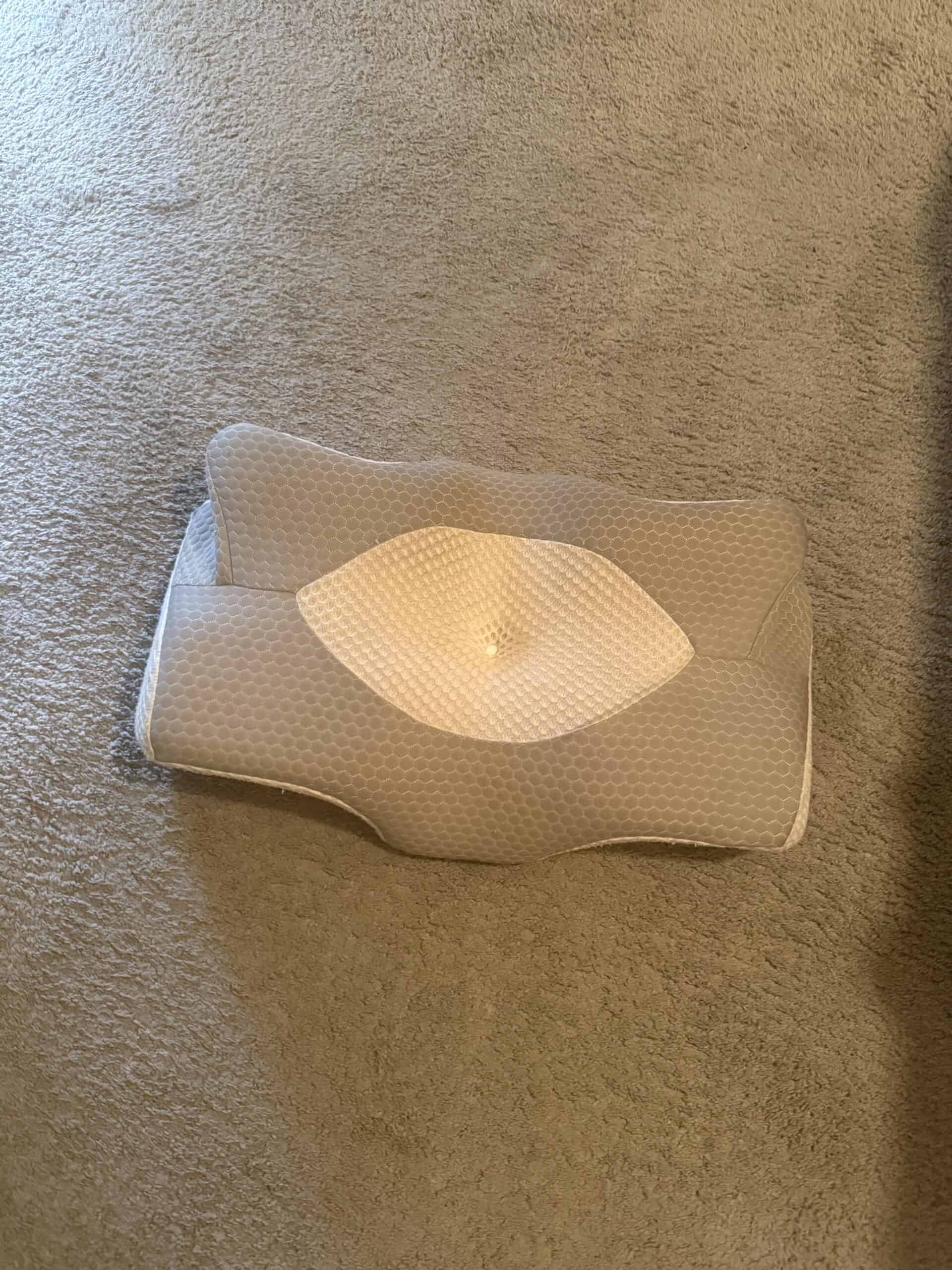
A pillow is not migraine treatment and no pillow prevents migraine. What a pillow does is set the position of your neck for seven or eight hours, and if neck tension is tangled up in your attacks, that is a lot of hours to get wrong. That is the honest case for caring about it, and it is narrower and more useful than the way these are usually sold.
Important
This is general information, not medical advice. I get migraines, which is why this site exists, and that does not make me able to tell you what is driving yours. If you are waking with headaches regularly, that is worth investigating with a doctor rather than solving with bedding.
Key Takeaways
- No pillow prevents migraine. It manages neck position, which may matter.
- Your sleeping position decides loft more than any migraine feature does.
- Side sleepers need height. Getting that wrong creates neck tension.
- Cervical shapes suit some people and are not automatically better.
- Waking with headache has several possible causes worth separating.
Start With How You Sleep
Before anything migraine-specific, because this decides most of it.
Side sleepers need loft to fill the gap between shoulder and head. Too flat and the neck bends sideways all night, which is a reliable way to build tension. Back sleepers need less, enough to support the natural curve without pushing the head forward. Stomach sleepers need almost nothing and are in an awkward position regardless.
Most people are on a pillow chosen for unrelated reasons years ago, which has since compressed. That is the first thing to check and it costs nothing to notice. Pillows for migraine sufferers covers the range and sleeping with migraine the wider situation.
The migraine-specific features people shop for matter less than getting this right, and a well-chosen ordinary pillow beats a poorly chosen specialist one.
What a Pillow Can and Cannot Do
Worth being direct, because this category oversells.
A pillow cannot prevent migraine. It has no mechanism for that. What it can do is avoid contributing to neck tension, and for people whose attacks are entangled with neck tension, not adding to the problem overnight is worth something.
That is a modest claim. It is also the true one, and expecting more is how people end up disappointed by an object that was doing its job.
If neck tension is genuinely part of your pattern, choosing tension relief covers the daytime side, which is where more of the tension is accumulated than overnight.
Cervical Shapes Are a Preference, Not an Upgrade
The main decision within the category.
A cervical or contoured pillow is shaped to hold your neck in a particular position rather than letting you settle into your own. When your neck wants that support, it can be genuinely effective. When it does not, it is a pillow insisting on something all night, which some people find intolerable.
Neither reaction is wrong and neither is predictable in advance. Neck pillows for migraine covers the shapes on offer.
The related device worth not confusing with a pillow: cervical traction is something you use for a period rather than sleep on, and it is a different proposition with different considerations.
Waking With Headache Has Several Explanations
Important, because a pillow is a satisfying thing to blame and often not the cause.
Morning headaches can come from neck position, and they can also come from teeth grinding, from sleep apnoea, from dehydration, from medication timing, or from the ordinary fact that migraine has its own rhythm and often arrives early.
Buying a pillow for a problem that is actually apnoea means months lost on the wrong thing, and that is a condition worth ruling out properly rather than working around. Dehydration is a cheaper and more common explanation than people expect.
If you wake with headaches regularly, a doctor conversation should come before a bedding purchase. Mayo Clinic’s material on headache covers the range of causes, and it is a better first stop than a product page.
The Rest of the Bedroom Matters More
Honestly, and this is the part a pillow guide should say.
Light and sleep quality are more connected to migraine than pillow shape is. Blackout curtains address morning light. Cooling eye masks and sleep masks address the same problem differently.
Sleep itself is a well-documented factor in migraine, in both directions: poor sleep contributes to attacks, and attacks wreck sleep. That loop does more damage than any pillow fixes, and addressing the loop is a bigger lever than optimising what your head rests on.
Our sister site covers the general sleep question in more depth if that is where your problem actually is.
Temperature is worth a mention too, since a room that is too warm fragments sleep and fragmented sleep is one of the more consistently reported contributors to attacks. That is a thermostat and a fan rather than a pillow, and it is cheaper than most of what gets sold for this.
A Sensible Approach
Work out your sleeping position and whether your current pillow matches it. That is free and it resolves more of this than shopping does.
If you are a side sleeper on something flat, that is the fix and it does not need to be migraine-branded. If neck tension is a documented part of your pattern, a contoured shape is worth trying with the expectation that you may not like it.
Give any change a few weeks before judging it. A new pillow feels wrong for the first several nights almost regardless of whether it is right, because you are adapting to a different position. That is not a verdict, it is adjustment, and people return good pillows on night two constantly.
And keep the frame honest. You are not buying a treatment. You are removing one possible contributor from a problem with many, which is worth doing and is not the same as solving it.
And if you are waking with headaches regularly, treat that as a question rather than a purchase. The American Migraine Foundation covers what is worth investigating, and a pillow is not the first line of enquiry.
Recommended Reading
See sleeping with migraine, choosing tension relief, and pillows for migraine sufferers, and bedroom setups for waking with migraine, and blackout sleep tents and canopies, and sleep trackers for migraine patterns, and lack of sleep cause migraines, and oversleeping trigger a migraine, and naping with a migraine.
Migraine Pillow FAQ
Can a pillow prevent migraines?
No. A pillow has no mechanism for that. What it does is set your neck position for seven or eight hours, so it can avoid contributing to neck tension. For people whose attacks involve neck tension, not making it worse overnight is worth something, and that is the honest extent of it.
What pillow height do I need?
It depends on your sleeping position, which matters more than any migraine feature. Side sleepers need enough loft to fill the shoulder gap, or the neck bends sideways all night. Back sleepers need less. Most people are on a compressed pillow chosen years ago for other reasons.
Are cervical pillows better?
They are different, not better. A contoured pillow holds your neck in one position instead of letting you settle. When your neck wants that, it helps. When it does not, it is a pillow insisting on something for eight hours. Neither reaction is predictable in advance.
Why do I wake up with a headache?
Several possibilities, and the pillow is only one. Teeth grinding, sleep apnoea, dehydration, medication timing, and migraine’s own rhythm all produce morning headaches. Apnoea in particular is worth ruling out properly rather than working around with bedding.
Is a traction device the same as a pillow?
No. Traction is something you use for a period rather than sleep on, and it is a different proposition with its own considerations. Confusing the two leads to buying the wrong thing.
What matters more than the pillow?
Light and sleep quality. Poor sleep contributes to attacks and attacks wreck sleep, and that loop does more damage than pillow shape. Blackout curtains and addressing the loop are bigger levers than optimising what your head rests on.
Do I need a migraine-specific pillow?
Usually not. A well-chosen ordinary pillow that matches how you sleep beats a poorly chosen specialist one. The branding is doing less work than the loft.
When should I see a doctor instead?
If you are waking with headaches regularly, that is a question rather than a shopping decision. It is worth investigating properly, since several of the possible causes are conditions rather than comfort problems, and none of them are fixed by bedding.
Sources
- Mayo Clinic. Headache: Symptoms and Causes.
- American Migraine Foundation. Migraine resource library.
