
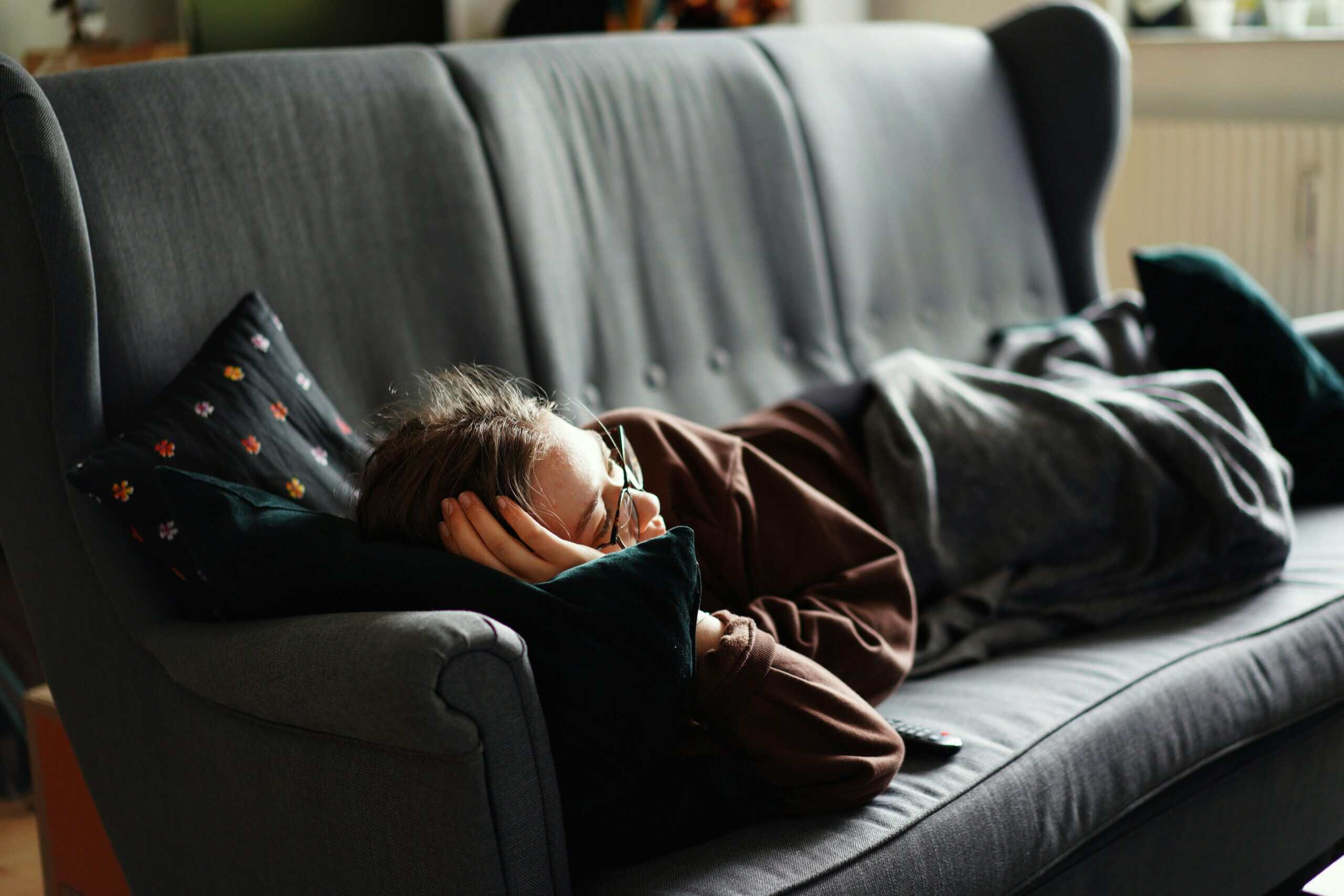
Sleep genuinely aborts migraine attacks for a lot of people, and it is one of the few interventions that costs nothing. The problem is that a long afternoon sleep disrupts that night’s sleep, and disrupted sleep is one of the better-supported migraine triggers there is.
So the useful version is a nap short enough to help without displacing tonight, which for most people means keeping it brief and early rather than sleeping until the pain goes. Our note on sleeping with a migraine covers overnight.
Medical Disclaimer
This is general information, not medical advice. Migraine requires diagnosis and management from a doctor, and sleep is a supportive measure rather than a treatment. Sudden severe headache, headache with fever, confusion, weakness, or vision changes need immediate medical attention.
Quick Answer
Keep naps short and earlier in the day, prepare a dark quiet space, and set an alarm. Waking after a long deep nap frequently leaves you feeling worse rather than better.
Why Sleep Helps
Many people with migraine find that sleep ends an attack, and it is one of the most commonly reported effective responses.
The relationship between sleep and migraine runs both directions. Sleep disruption is associated with attacks, and attacks disrupt sleep, which is part of why the connection is so tangled.
Sleep also removes you from sensory input altogether, which is genuinely meaningful when light and sound are both actively painful.
What it does not do is substitute for treatment. Where a doctor has prescribed acute medication, taking it early is generally more effective than waiting to see whether sleep resolves things. Our note on whether lack of sleep causes migraines covers the other direction.
Length Is the Whole Question
Short naps avoid deep sleep, which is why waking from one feels clear rather than groggy.
Longer naps enter deep sleep, and waking from that produces sleep inertia: the heavy disoriented feeling that can last a while and, for some people, comes with head pain of its own.
A long nap also reduces sleep pressure for the evening, which pushes bedtime later and shortens that night’s sleep. That is exactly the disruption associated with further attacks.
Set an alarm even when you feel certain you will wake up. Sleeping through an intended short nap is the common failure, and mid-attack judgment about time is unreliable.
Timing Within the Day
Earlier is better
A nap in the early afternoon interferes with night sleep far less than one in the early evening.
The evening nap trap
Falling asleep on the sofa at seven because the pain is bad is the version that most reliably wrecks the night.
Consistency helps
A regular sleep schedule is associated with fewer attacks, and erratic napping works against that even when individual naps help.
Weekends count
Lying in on days off is a recognized pattern associated with attacks, which is the same disruption in a different form. Our note on noise cancelling headphones for migraines covers that.
Napping at Work
Most attacks happen during the day, and most people are not at home when one starts.
A parked car is what a lot of people end up using, and it works reasonably: reclined seat, sunshade, engine off. Never with the engine running, for carbon monoxide reasons.
Some workplaces have a quiet room, first aid room, or unused meeting room, and asking in advance rather than during an attack makes it far easier to access one.
A sleep mask and earplugs kept in a desk drawer turn any dim corner into a workable space, and they take up almost no room.
Where accommodations are relevant, migraine is a recognized condition and discussing arrangements with an employer or occupational health service before you need them is more effective than improvising. Our note on creating a migraine-friendly workspace covers the wider setup.
Setting Up the Space
Dark matters most, since light sensitivity is usually the dominant symptom. Blackout curtains or a sleep mask both work, and a mask is faster when an attack arrives unexpectedly.
Quiet comes second, using earplugs or a closed door. Deciding this in advance means not having to solve it mid-attack.
Cool is easier to sleep in than warm, and many people find a cold compress helpful alongside.
Neck support matters more than it seems, since neck pain accompanies many attacks and a poorly supported neck makes both worse. Our roundup of neck pillows covers that. For the neck itself, cervical traction is one of the options worth understanding.
Waking Up Worse
Waking from a nap with a worse migraine than you started with is common enough to be worth planning around.
Sleep inertia is one explanation, since waking from deep sleep produces grogginess and disorientation that can feel like worsened pain even when the migraine itself is unchanged.
Dehydration is another and it is easy to fix. Several hours asleep without fluids, particularly after vomiting, leaves you worse on waking.
Medication timing matters too. If acute medication was taken before sleeping and its effect ends while you are still asleep, waking coincides with pain returning, which reads as the nap causing it.
Position contributes as well, since sleeping awkwardly on a sofa or in a chair adds neck tension to an attack that may already involve it. Our roundup of how to choose a migraine pillow covers support.
When Napping Does Not Work
Pain frequently prevents sleep, which is the central frustration. Lying quietly in the dark still reduces sensory input and is worth doing even without sleeping.
Nausea makes lying flat difficult for some people, and slightly propped is more tolerable than flat.
Anxiety about the attack keeps people awake too, particularly when there is something they are due to be doing.
Lying in a dark quiet room for thirty minutes has value whether or not sleep happens, and treating it as rest rather than a failed nap is more useful. Our roundup of sleep masks covers the light side.
Each of those has a straightforward fix, and knowing which one applies to you turns an unpredictable outcome into a manageable one.
Naps as a Warning Sign
Sudden overwhelming tiredness is a recognized premonitory symptom, appearing hours before pain along with yawning, mood change, and neck stiffness.
Someone who naps because they feel exhausted and wakes with a migraine may have been in the premonitory phase already rather than triggered by the nap.
That distinction is worth tracking, because sudden fatigue as an early warning is useful information and early treatment is a recognized approach.
Recording naps and their timing relative to attacks separates the two over enough weeks. Our note on what to record in a diary covers tracking.
Napping With Migraine FAQ
Does sleeping help a migraine?
For many people it ends an attack, and it is one of the most commonly reported effective responses. It supports treatment rather than replacing prescribed medication.
How long should a nap be?
Short enough to avoid deep sleep, since waking from deep sleep produces grogginess and sometimes head pain. Longer naps also displace that night’s sleep.
Should I set an alarm?
Yes, even if you feel certain you will wake. Sleeping through an intended short nap is the common failure, and judgment about time is unreliable mid-attack.
When is the worst time to nap?
Early evening. Falling asleep on the sofa when the pain is bad most reliably disrupts night sleep, and that disruption is associated with further attacks.
I cannot sleep because of the pain. What now?
Lying quietly in a dark room still reduces sensory input and has value. Treat it as rest rather than a failed nap, and slightly propped helps if nausea makes flat difficult.
Can napping trigger a migraine?
Sudden tiredness is a recognized premonitory symptom, so a nap followed by an attack may mean the attack was already underway. Tracking separates the two over time.
What should the room be like?
Dark first, since light sensitivity usually dominates, then quiet and cool. Set it up while you are well rather than trying to arrange it during an attack.
When should I see a doctor?
For diagnosis of recurring headaches, if attacks change in frequency or severity, or if sleep problems persist. Sudden severe headache with fever, confusion, or weakness requires emergency care.
Sources
- American Migraine Foundation. Sleep and migraine. https://americanmigrainefoundation.org/resource-library/
- American Academy of Sleep Medicine. Healthy sleep habits. https://sleepeducation.org/healthy-sleep/healthy-sleep-habits/
- National Institute of Neurological Disorders and Stroke. Migraine information. https://www.ninds.nih.gov/health-information/disorders/migraine
For the wider picture, see our guide to how to choose migraine glasses.
