
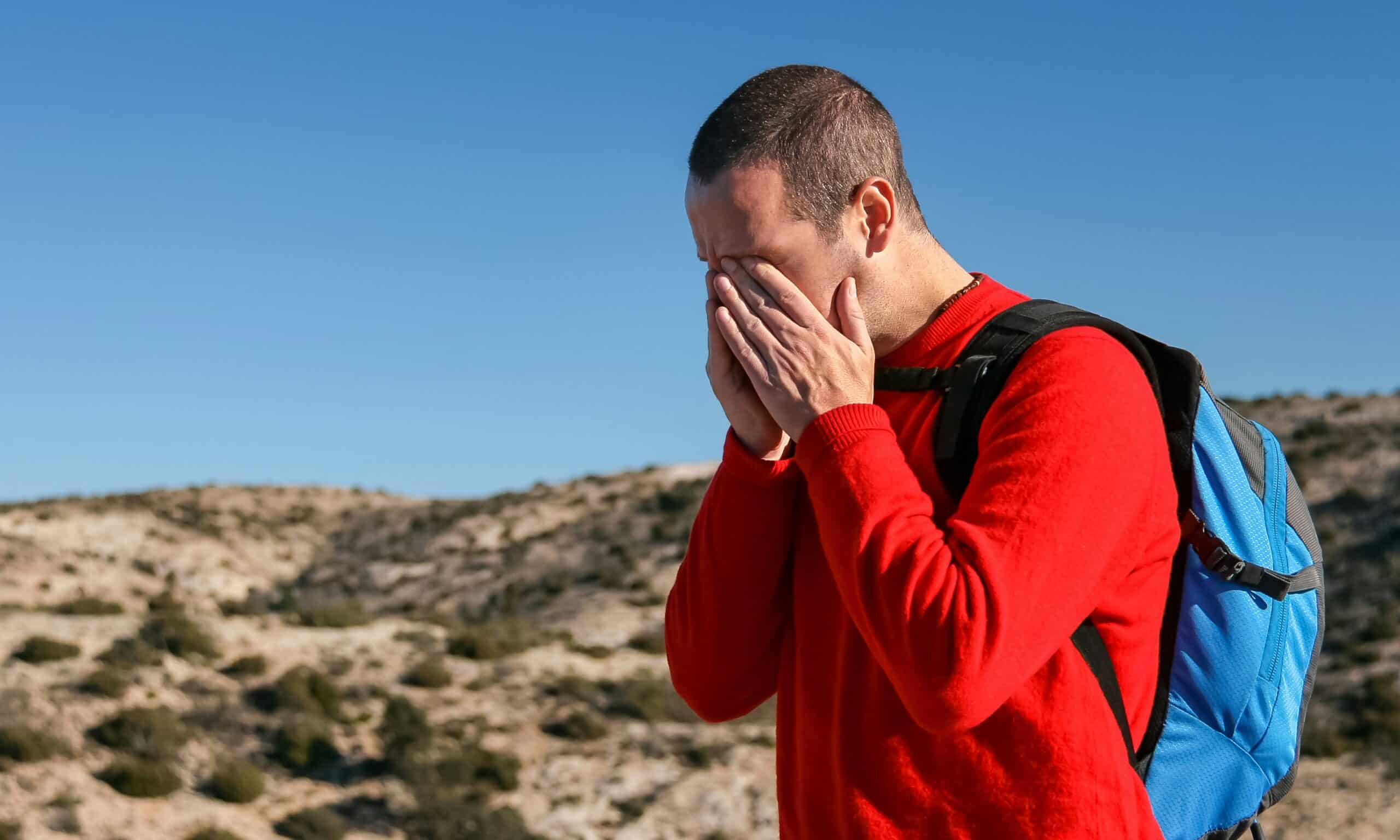
Traveling with chronic migraine works best when you protect sleep and meal timing, carry your acute medication in your hand luggage, and build the trip around the assumption that an attack will happen rather than hoping it will not. Travel stacks several known triggers at once: disrupted routine, dehydration, unfamiliar food timing, heat, and altitude or cabin pressure changes.
That stacking is the whole problem. The American Migraine Foundation lists stress, irregular sleep, dehydration, weather changes, and skipped meals among the most commonly reported triggers,1 and a travel day frequently delivers all five before lunch. Planning cannot remove them, but it can stop them arriving together unmanaged.
Medical Disclaimer
This article is general information and not medical advice. Talk to your doctor before traveling, particularly about medication supply, timing across time zones, and what to do if an attack does not respond to your usual treatment. Carry a copy of your prescriptions and check destination rules on any medication you take.
Quick Answer
Keep your sleep and meal schedule as close to normal as the trip allows, carry all acute medication in your hand luggage with a copy of the prescription, and plan a genuine rest window on arrival day. Build the itinerary with slack in it, so an attack costs you one activity rather than the whole trip. Air travel adds cabin pressure and dry air to the usual problems, and flying specifically covers that leg of a trip.
Travel Triggers and What Actually Helps
| Travel factor | Why it matters | Practical step |
|---|---|---|
| Disrupted sleep | Irregular sleep is a commonly reported trigger | Hold your usual sleep window where possible |
| Skipped or late meals | Missed meals are a frequent trigger | Carry food; eat on your normal schedule |
| Dehydration | Cabin air and heat both increase fluid loss | Refill a bottle after security, drink on a schedule |
| Heat and weather change | Heat and pressure shifts are reported triggers | Plan indoor time in the hottest hours |
| Bright and flickering light | Light sensitivity is common between and during attacks | Sunglasses, window seat control, tinted lenses |
| Stress and rushing | Stress is among the most reported triggers | Build slack into connections and schedules |
Key Points
- Acute medication belongs in hand luggage, never in checked bags
- Carry more doses than the trip length in case of delays
- Keeping meal and sleep timing steady matters more than any product
- Arrival day should include a rest window, not an activity
- Travel insurance and a plan for care abroad are worth arranging in advance
- Telling one travel companion what an attack looks like makes it easier to handle
Sort Medication Before Anything Else
This is the part that turns a difficult trip into an unmanageable one if it goes wrong. Acute medication goes in your hand luggage, always, because checked bags get delayed and an attack does not wait for a suitcase.
Carry more than you expect to need. Delays, extended trips, and attacks that need a second dose all happen, and running out abroad is considerably harder to solve than at home. Keep medication in original labelled packaging where possible, and carry a copy of the prescription or a letter from your doctor.
Check destination rules. Some medications that are routine in one country are restricted in another, and this is worth confirming well before departure rather than at a border. Your prescribing doctor or pharmacist can usually advise, and embassy websites list controlled substances.
If you take preventive medication on a schedule, work out in advance how time zones affect the timing. That is a question for your doctor rather than something to improvise on arrival, particularly across large shifts.
Protect Sleep and Meal Timing
Routine disruption is the most consistent thing travel does to you, and sleep and food are the two pieces most within your control.
Where the time difference is small, simply keep your usual schedule. Where it is large, shifting gradually in the days before departure reduces the size of the jump. Either way, decide in advance rather than letting the itinerary decide for you.
Meals matter as much as sleep and get less attention. Airports, long drives, and unfamiliar cities all make eating on schedule harder, and a skipped meal is a trigger for many people. Carrying food you know you tolerate removes the dependence on finding something suitable at the right time.
Caffeine deserves specific thought. Whatever your usual intake, keeping it consistent matters more than the amount, since both an unusual extra cup and a missed one can contribute. The wider picture is covered in how caffeine interacts with migraine.
Manage Light, Sound, and Air on the Journey
The journey itself is often the hardest part, because you have least control during it.
Light is the most reported sensitivity and the easiest to plan for. Sunglasses for terminals and vehicles, control over a window shade where you can choose your seat, and an eye mask for resting all help. Options are compared in eye masks for light blocking and tinted lenses.
Sound is harder to escape in transit. Earplugs or noise-reducing headphones make a long flight or a crowded station considerably more tolerable, and reducing overall sensory load leaves you with more capacity for the rest of the day. Whether the electronics earn their place is covered in this guide.
Cabin air is dry, which increases fluid loss over a long flight. Refilling a bottle after security and drinking on a schedule rather than by thirst is a small habit that removes one stacked trigger. Practical detail on that sits in preventing dehydration-related attacks.
Build an Itinerary With Slack In It
The most useful planning change is structural rather than anything you pack. An itinerary with no gaps means any attack costs you something you had committed to, which adds stress to an attack that stress may have contributed to. Trips into higher country raise their own questions, which our article on migraine and altitude covers.
Leave the arrival day light. Travel days stack triggers, and treating the first evening as recovery rather than as the start of the holiday absorbs the worst of it.
Book flexible where the price difference is reasonable, and prefer longer connections. A tight connection missed is stressful for anyone and considerably worse when rushing is itself a trigger.
Tell at least one person you are traveling with what an attack looks like for you and what helps. Not having to explain while symptomatic is worth a short conversation in advance.
Pack a Travel Version of Your Toolkit
Whatever you use at home, a reduced version travels. That usually means acute medication, an eye mask, earplugs, a water bottle, food you tolerate, and any device or cold therapy you rely on.
Keep it in one bag that stays with you rather than distributed across luggage. During an attack, searching for things is exactly what you cannot do, and a single kit you can hand to someone else solves that.
Think about where you will use it. A hotel room with blackout curtains is a resource worth checking for when booking, and knowing whether your accommodation is quiet is often more valuable than its other features. Building the home version first makes the travel version obvious, and that sits in assembling a migraine toolkit.
What Trips People Up
Putting medication in checked luggage
The most consequential and most common mistake. Bags are delayed and lost, and an attack in a foreign city without treatment is a genuinely bad situation.
Packing exactly enough doses
Delays extend trips, and attacks sometimes need more than expected. Extra doses weigh nothing and remove a real risk.
Scheduling the arrival day
The day you travel is the day your triggers stack. Planning an activity for that evening is how people spend day two recovering instead of exploring.
Assuming you will find what you need there
Familiar brands, formulations, and even food you tolerate may not be available at your destination. Carrying what you rely on avoids finding out during an attack.
Related Reading
- the full trigger picture
- protecting sleep quality
- neck support for long journeys
- what belongs in a kit you carry
Related: plan a vacation around migraines.
Related: handle a migraine at a restaurant.
Frequently Asked Questions
Can flying trigger a migraine?
Many people report attacks around air travel, and the likely contributors are the ones that stack on a travel day: disrupted sleep, dehydration in dry cabin air, skipped meals, stress, and pressure changes. Managing those individually is more practical than treating flying as a single trigger.
Should I take medication before traveling?
That depends entirely on your treatment plan and is a question for your doctor. Some people are advised on timing around travel; others are not. Do not start taking acute medication preventively on your own, since frequent use carries its own risks.
How much medication should I bring?
More than the trip length suggests, allowing for delays and for attacks needing a second dose. Keep it in hand luggage in labelled packaging, with a copy of the prescription in case anyone asks.
Does altitude affect migraine?
Pressure changes are among the commonly reported weather-related triggers,1 and altitude changes pressure considerably more than weather does. If you know you are sensitive, gradual ascent and extra hydration are the usual precautions, and your doctor can advise for significant elevation.
What should I do if an attack starts while traveling?
Follow the plan you and your doctor already agreed, treat as early as your plan allows, and find somewhere dark and quiet if you can. Having told a travel companion in advance means you do not have to explain while symptomatic.
Is travel insurance worth it with chronic migraine?
Worth arranging, and worth checking that pre-existing conditions are declared and covered. Policies vary considerably on chronic conditions, and a declined claim after the fact is an expensive way to find out.
When should I see a doctor before a trip?
Well before departure if you need extra medication, advice on timing across time zones, documentation for customs, or if your attacks have recently become more frequent or severe. Sudden changes in pattern should be assessed before traveling rather than after.
Sources
- American Migraine Foundation, “Top 10 Migraine Triggers and How to Deal with Them.” https://americanmigrainefoundation.org/resource-library/top-10-migraine-triggers/
- American Migraine Foundation, “Seasonal Migraine.” https://americanmigrainefoundation.org/resource-library/seasonal-migraine/
A packed kit removes a planning step. travel kits for migraine covers what to include.
Recommended Reading
See our note on creating a migraine friendly workspace.
