
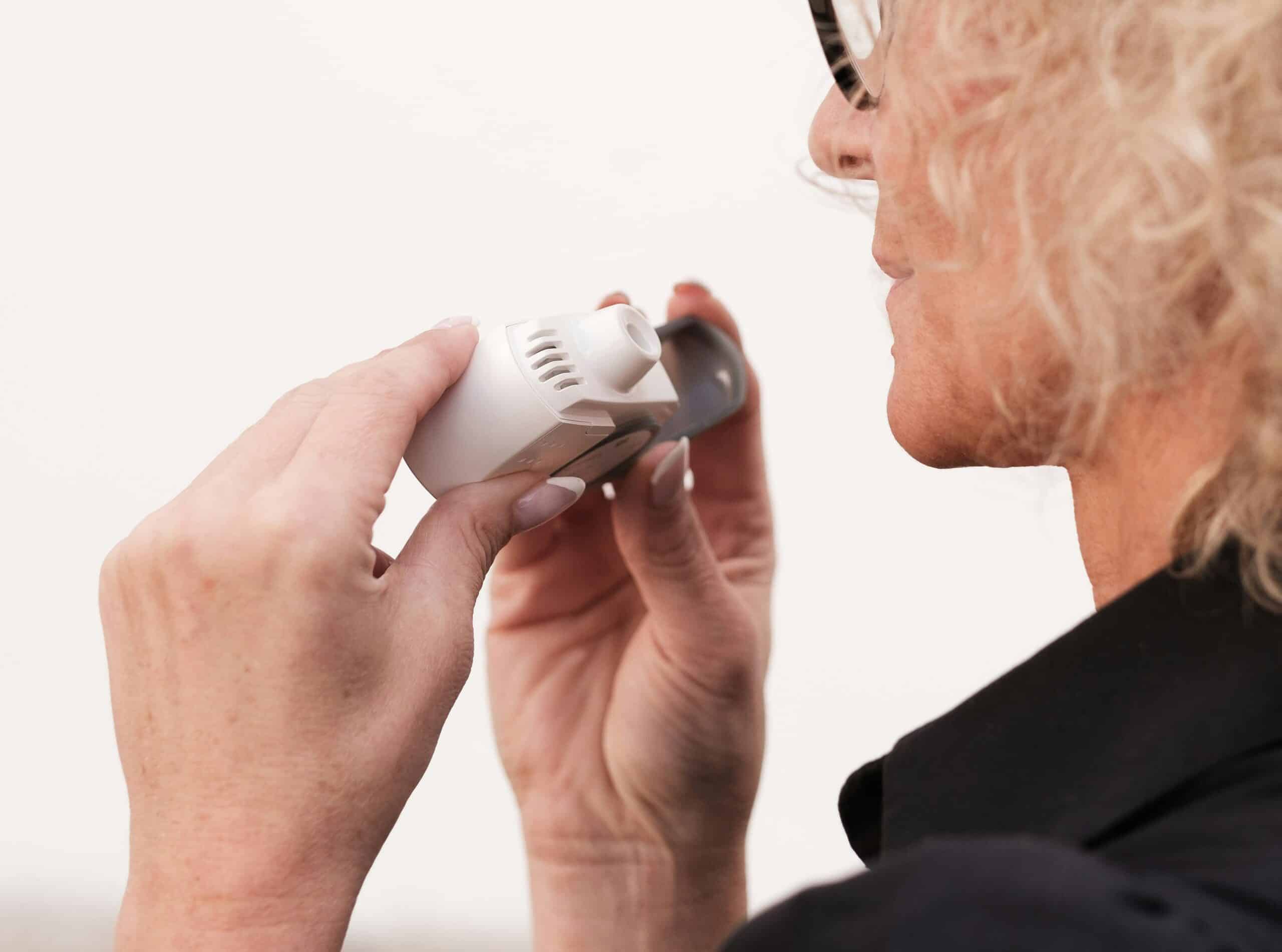
Slow paced breathing has real support as part of migraine management. The devices sold to help you do it mostly do not, and separating those two things is the most useful thing this page can do. Relaxation training is well established in headache care, and the American Migraine Foundation describes it as a systematic set of procedures for slowing the sympathetic nervous system, typically taught alongside biofeedback.1 Research cited by AMF indicates behavioral therapies can reduce migraine by 35 to 50 percent, comparable to preventive medications.2
None of that evidence is about a specific gadget. It concerns a practice you can begin tonight with no equipment. What the devices in this guide do is make the practice easier to sustain, which for some people is the difference between a technique they know about and one they actually use.
Medical Disclaimer
This article is general information and not medical advice. Breathing practice is not a treatment for migraine and does not replace medical care. Anyone with a respiratory or cardiac condition should speak to a doctor before using a resistance-based breathing trainer, and anyone with migraine should discuss adding behavioral approaches with their doctor or a headache specialist.
Quick Verdict
Start with no device at all, since paced breathing costs nothing and is the part with evidence behind it. If you need help staying consistent, a simple pacing device or an HRV sensor supports the habit. Respiratory muscle trainers are strength equipment for the lungs and are not what the migraine research is about.
Key Points
- The supported intervention is the breathing practice, not any particular device
- Paced breathing at a slow rate is the common element across approaches
- HRV sensors show whether your physiology is responding; pacers do not
- Respiratory muscle trainers build inspiratory strength, a different purpose entirely
- Consistency over weeks matters more than any feature you can buy
- Behavioral approaches work best when taught by a trained clinician
How We Picked
The first filter was whether a product supports slow paced breathing at all, since that is the mechanism the evidence concerns. Devices designed for athletic lung conditioning were included only with a clear explanation of what they are, because they appear constantly in searches for this topic and buyers deserve to know they are a different category.
Sustainability was second. The barrier to relaxation practice is almost never understanding it; it is doing it on the two hundredth day. Devices reducing friction, through a rhythm you follow passively or a session that starts in one tap, were favored over feature-rich ones.
Claim honesty was the third filter, and it removed several products. Anything marketed as treating or preventing migraine was set aside regardless of build quality, since that claim is not supported for this hardware.
1. The Simple Pacing Device
Why It Stands Out
A small device that expands and contracts, glows, or vibrates in a slow rhythm gives you something to follow without counting. Counting occupies exactly the attention you are trying to settle, so removing it makes sessions easier and more consistent.
Worth Knowing
There is no measurement, so you cannot tell whether your body is responding. Some people find that freeing and others find it unsatisfying. A phone app does the same job for nothing, and the argument for hardware is that it is not a phone.
Right for daily practice with minimal friction. Skip it if you want evidence the practice is working.
2. The HRV Biofeedback Sensor
Why It Stands Out
Pairing paced breathing with a heart rate variability sensor closes the loop. You see the physiological response to the breathing in real time, which is the definition of biofeedback and the version of this that has the research behind it. AMF describes biofeedback as using sensors to monitor functions including breathing and heart rate, with cues that let you modify your body’s reactions.3
Worth Knowing
More setup, more cost, and more to interpret. HRV moves with sleep, caffeine, and illness, so single sessions mean little and chasing the number can become its own stressor.
Right for people who need measurable feedback to stay engaged. Skip it if data would become something else to worry about.
3. The Wearable With Haptic Breathing Cues
Why It Stands Out
A watch or band that taps a rhythm on your wrist lets you practice anywhere without looking at anything. That matters for using the technique when it is most useful, which is often at a desk or in a waiting room rather than during a scheduled session at home.
Worth Knowing
Cues are usually short guided sessions rather than a full programme, and the breathing rate may not be adjustable to what suits you. It is a convenience layer on a device bought for other reasons rather than a dedicated tool.
Right for practice away from home. Skip it as your only approach if you want a structured programme.
4. The Resistance Breathing Trainer
Why It Stands Out
These build inspiratory muscle strength by making you breathe against resistance, and they are used in respiratory conditioning and some clinical settings. They appear in searches for breathing devices constantly, so they are here to be identified clearly rather than recommended for this purpose.
Worth Knowing
Strength training is not relaxation training. Breathing hard against resistance activates rather than settles the nervous system, which is close to the opposite of what paced breathing is doing. The migraine-relevant evidence concerns slow relaxed breathing, not resistance work.
Right for respiratory conditioning goals discussed with a doctor. Skip it if you are here for migraine, since it is not the same intervention.
5. The Guided Audio Programme
Why It Stands Out
A structured audio course walks you through progressive relaxation and paced breathing in sequence, which is closer to how these techniques are taught clinically than a bare rhythm is. For learning the method properly rather than just following a pace, this is the most faithful consumer version. Readers interested in the wider subject can read our overview of anxiety and migraine.
Worth Knowing
Quality varies enormously and most programmes are not developed with clinical input. Programmes making treatment claims for migraine are overstating what relaxation training does, however well produced they are.
Right for learning the technique rather than only pacing it. Skip anything promising migraine treatment.
6. The Visual Desktop Pacer
Why It Stands Out
A light that slowly brightens and dims on a desk provides an ambient cue you can follow while working. Practice attached to an existing routine survives better than practice requiring you to stop and set aside time, and this suits people whose triggers cluster around work stress.
Worth Knowing
An ambient cue is easy to ignore, and following it half-attentively while working is not the same as a session. For light-sensitive people a pulsing light source may also be unwelcome, which is worth considering before putting one at eye level.
Right for building practice into a working day. Skip it if flickering or pulsing light bothers you.
Breathing Devices at a Glance
| Type | Measures response | Supports slow breathing | Relevant to migraine research |
|---|---|---|---|
| Simple pacer | No | Yes | Supports the practice |
| HRV sensor | Yes | Yes | Closest to studied biofeedback |
| Haptic wearable | Sometimes | Yes | Supports the practice |
| Resistance trainer | No | No | Different intervention |
| Guided audio | No | Yes | Closest to taught method |
| Visual pacer | No | Yes | Supports the practice |
What the Practice Actually Involves
Slow the rate
Paced breathing generally means slowing well below a resting rate, with the exhale longer than the inhale. The specific count matters less than the slowing and the consistency, and a rate you can hold comfortably beats an ambitious one you cannot.
Breathe with the diaphragm
Movement should come from the belly rather than the upper chest. A hand on the abdomen is enough to check, and this is the element people most often get wrong when self-teaching.
Practice on good days
The skill is built when nothing hurts and applied when something does. Practicing only during stress means practicing badly, at the moment you have least capacity to learn.
Keep sessions short and regular
Ten to fifteen minutes most days does more than an occasional long session. This is the same pattern as any skill, and it is where consumer devices genuinely help by removing friction.
Relaxation Training vs Biofeedback
What separates them
Relaxation training teaches procedures without measuring anything. Biofeedback adds a sensor showing a physiological signal in real time. AMF describes the two as typically used together rather than as competing options.1
Which to start with
Relaxation training, because it needs nothing and can start immediately. Adding a sensor later answers the question of whether your practice is producing a measurable change.
Building It Into a Week
Attach it to something you already do
Practice that depends on remembering rarely survives a busy month. Tying a session to an existing fixed point, such as before bed or after lunch, removes the decision and is the single strongest predictor of whether the habit lasts.
Start shorter than feels useful
Five minutes done daily beats twenty minutes attempted twice. The aim in the first fortnight is establishing the pattern rather than reaching any particular duration, and length can grow once the habit holds.
Expect uneven progress
Some sessions settle quickly and others do not, and that varies with sleep, stress, and how the day went. Judging the practice by individual sessions produces frustration; judging it by whether you kept it up over a month is the useful measure.
Track frequency, not sessions
The outcome that matters is attack frequency over months, not how many sessions you logged. Keeping that record alongside is the only way to tell whether the time is earning anything, and it is what a clinician will ask about.
Common Misconceptions
That the device does the work
Every piece of evidence here concerns a practice, not hardware. A device that helps you practice consistently is useful; one bought instead of practicing is not.
That breathing trainers and breathing pacers are the same
Resistance trainers build muscle strength. Pacers guide slow relaxed breathing. They are sold side by side and they do opposite things to your nervous system.
That it works during an attack
These are preventive skills. Some people find relaxation helps them cope through an attack, which is different from stopping one. Acute treatment is a separate conversation with your doctor.
That more sessions are always better
Straining to perform relaxation activates the stress response you are trying to settle. Short comfortable sessions outperform long effortful ones, and stopping early on a difficult day is legitimate practice.
Recommended Reading
- how stress contributes to attacks
- assembling a practical toolkit
- finding a clinician for behavioral approaches
- other approaches to tension
- tracking whether practice changes frequency
- the trigger picture behind prevention
- sleep habits that support prevention
- keeping a record of what changes
Frequently Asked Questions
Do breathing exercises help migraine?
Relaxation training, which includes paced breathing, is an established part of behavioral headache care, and AMF reports behavioral therapies reducing migraine by 35 to 50 percent in cited research.2 That evidence concerns the practice rather than any device, and results depend on consistency.
Do I need a device at all?
No. Paced breathing requires nothing and can start today. Devices reduce the friction of practicing regularly, which matters for some people and not for others, but nothing is gated behind a purchase.
What is the difference between a breathing trainer and a breathing pacer?
A resistance trainer strengthens the muscles you breathe with, used for respiratory conditioning. A pacer guides the timing of slow relaxed breathing. Only the second relates to the relaxation training studied in headache care.
How long until breathing practice makes a difference?
Weeks of consistent practice rather than days, since it is a learned skill. Structured programmes generally run over several weeks, and tracking attack frequency across months is the honest way to judge whether it is helping you.
Can breathing exercises stop an attack?
They are preventive rather than acute. Some people find them useful for coping during an attack, but that is not the same as aborting one, and acute treatment should follow the plan agreed with your doctor.
Is a resistance breathing trainer safe?
They are used clinically, but breathing against resistance is exertion, and anyone with a respiratory or cardiac condition should ask a doctor before using one. For migraine specifically, they are not the relevant tool.
What breathing rate should I aim for?
Slow paced breathing generally means well below a normal resting rate, with a longer exhale than inhale. The exact count matters less than slowing consistently and staying comfortable, since straining to hit a target defeats the purpose. A clinician teaching the technique will usually help you find a rate that suits you.
Can I practice this during a migraine attack?
Some people find slow breathing helps them cope while symptomatic, and there is no harm in trying if it does not increase discomfort. It is not an acute treatment, and it should not replace whatever your doctor has advised for treating an attack.
When should I see a doctor?
Before adding behavioral approaches if you want them integrated properly, and sooner if attacks are becoming more frequent or severe, if your usual treatment is losing effect, if you are using acute medication frequently, or if you notice new symptoms. A headache specialist can advise whether behavioral therapy suits your pattern.
Sources
- American Migraine Foundation, “5 Common Alternative Treatments for Migraine.” https://americanmigrainefoundation.org/resource-library/common-alternative-treatments-migraine/
- American Migraine Foundation, “Alternative Migraine Treatments.” https://americanmigrainefoundation.org/resource-library/alternative-treatments-migraine/
- American Migraine Foundation, “Biofeedback and Relaxation Training for Headache.” https://americanmigrainefoundation.org/resource-library/biofeedback-and-relaxation-training/
- American Headache Society, “Behavioral Treatment for Migraine.” https://americanheadachesociety.org/resources/primary-care/behavioral-treatment-for-migraine
