
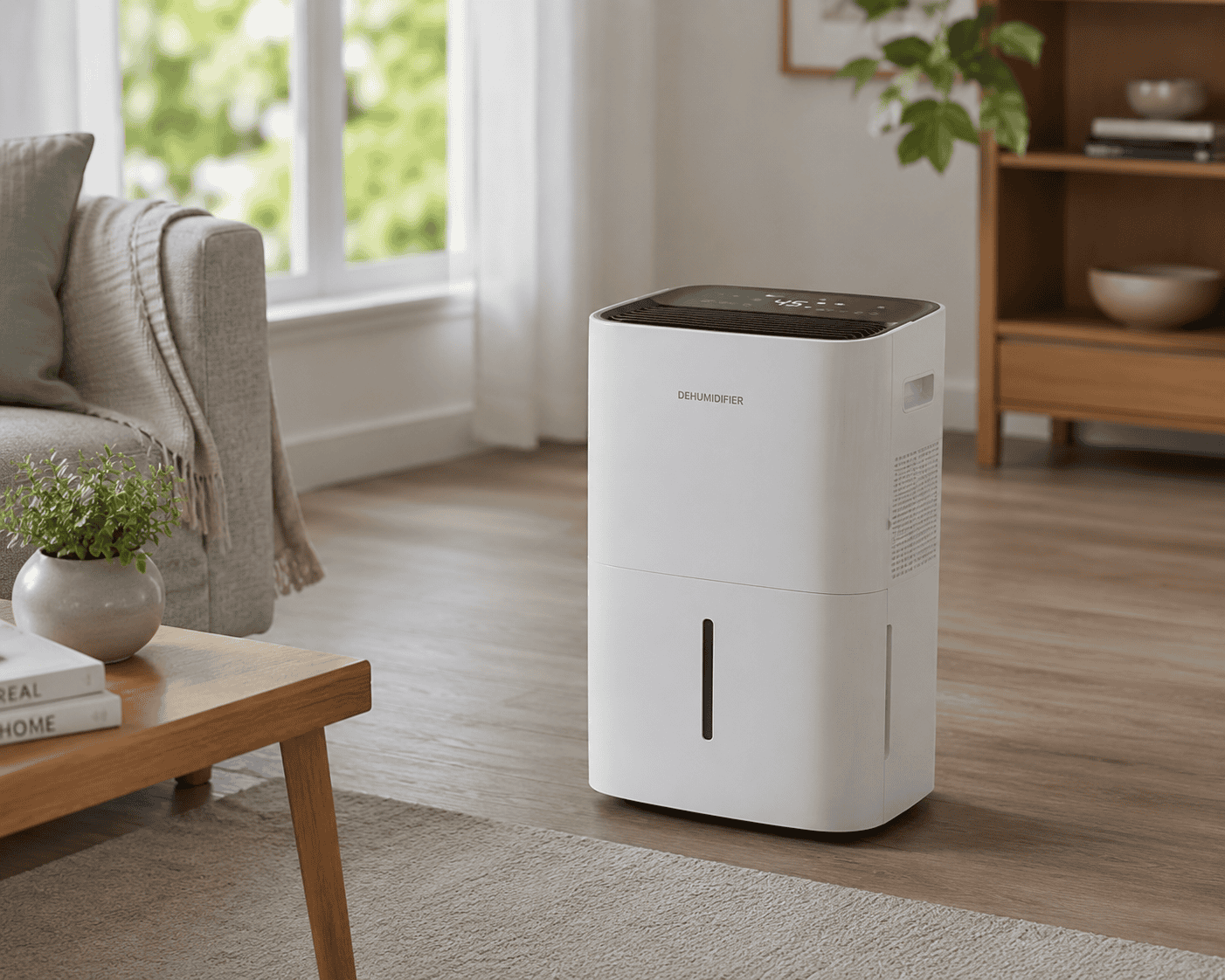
The best dehumidifiers for migraine relief pull excess moisture out of muggy, damp rooms, cutting down the mold and dust mites that act as triggers for many people and easing that heavy, clammy feeling that can make a head feel worse. Damp basements, humid summers, and poorly ventilated rooms all let moisture build, and that moisture feeds mold growth. The right dehumidifier holds your indoor humidity in a healthy range, drains conveniently, and runs quietly enough to live with.
This article is for general information only and is not medical advice. Migraine is a medical condition, and a dehumidifier is a comfort and environmental tool, not a treatment or cure. Always consult a qualified healthcare provider about migraine diagnosis, prevention, and treatment.
Quick verdict:
- Best overall: Frigidaire FFAD5033W1 50-Pint, a reliable workhorse with continuous drain.
- Best for damp basements: hOmeLabs 50-Pint, with a built-in pump that drains upward.
- Best for bedrooms: Midea 20-Pint, quiet and correctly sized for smaller rooms.
- Best small and quiet: Eva-Dry EDV-1100, near-silent for closets and bathrooms.
How We Picked the Best Dehumidifiers for Migraine Relief
We focused on what matters for comfort and trigger control: moisture removal capacity, accurate humidity control, drainage options, noise for sleep, and features like auto-defrost and auto-restart. We kept in mind that mold and damp conditions are reported environmental migraine factors, which is part of why muggy rooms can feel rough.1 The notes below come from published specifications and consistent owner reports, not from hands-on testing or medical testing of migraine outcomes.
| Your situation | Frigidaire 50 | hOmeLabs 50 | Midea 20 | Eva-Dry | Waykar 80 |
|---|---|---|---|---|---|
| Damp basement or crawl space | Best fit | Best fit | Skip | Skip | Best fit |
| Bedroom, quiet for sleep | Workable | Workable | Best fit | Best fit | Skip |
| Small closet or bathroom | Skip | Skip | Workable | Best fit | Skip |
| Large whole-home coverage | Workable | Best fit | Skip | Skip | Best fit |
| Set-and-forget drainage | Best fit | Best fit | Workable | Skip | Workable |
Dehumidifier prices change often, so confirm the current cost before you buy.
1. Frigidaire FFAD5033W1 50-Pint: Best Overall
Why It Stands Out
The Frigidaire FFAD5033W1 is a dependable 50-pint unit that suits most homes. It covers large basements and living areas, with a continuous-drain option so you rarely empty a bucket. Energy Star certification keeps running costs reasonable for a unit this size.
Worth Knowing
Set the target humidity, attach a drain hose to a nearby sink, and it largely runs itself. It is on the louder side, so a finished bedroom may prefer a quieter model. The build has a solid track record for reliability over time.
It suits the person who wants a no-fuss workhorse for a basement or large room. Skip it if you need near-silent bedroom operation. For most homes, it is the easiest dehumidifier here to recommend. Its long reliability record is a big part of the appeal.
Plumb the drain hose once and you can essentially forget it is there.
2. hOmeLabs 50-Pint: Best for Damp Basements
Why It Stands Out
The hOmeLabs 50-Pint with a built-in pump solves the most annoying basement problem: draining water upward. The pump can push condensate up to a laundry tub or out a window without a floor drain. It removes moisture efficiently across large, damp spaces.
Worth Knowing
Auto-restart resumes your settings after a power outage, useful in storm-prone basements. Auto-defrost lets it keep working in cooler basement temperatures without icing up. It has a reliable app and a strong long-term track record.
It suits the person fighting persistent dampness in a basement or crawl space. Skip it if you only need to treat a small bedroom. For damp, mold-prone spaces, the upward-draining pump is the standout feature. It removes the single biggest hassle of basement dehumidifying.
The pump is what makes truly set-and-forget basement drainage possible.
3. Midea 20-Pint: Best for Bedrooms
Why It Stands Out
The Midea 20-Pint is compact, quiet, and correctly sized for a bedroom or small apartment. It avoids the wasted energy of running a large unit in a small space. The intuitive controls make it simple to set a target humidity and walk away.
Worth Knowing
Its smaller capacity suits single rooms rather than large basements. It is cheaper to buy and run than a 50-pint unit. Quiet operation makes it suitable for the room where you sleep.
It suits the person who wants right-sized, quiet moisture control in a bedroom. Skip it if you need to dry a large or very damp space. For bedrooms and small rooms, it is the sensible, efficient pick. Right-sizing the unit is the smartest way to keep energy bills down.
Sizing the unit to the room keeps both noise and energy use down.
4. Honeywell TP50: Best Smart Mid-Size
Why It Stands Out
The Honeywell TP50 pairs solid moisture removal with smart, app-based control. You can monitor humidity and adjust settings from your phone, handy for a basement you rarely visit. Energy Star efficiency keeps it economical to run.
Worth Knowing
It offers a continuous-drain option alongside its bucket for hands-off operation. The humidistat cycles it on and off to hold your target level. Coverage suits medium to larger rooms.
It suits the person who wants remote monitoring and a trusted brand. Skip it if you want the absolute lowest price or near-silent operation. For smart, mid-size moisture control, it is a strong option. Remote monitoring is genuinely useful for a space you rarely walk into.
Phone alerts mean you catch a full bucket before it shuts off.
5. Eva-Dry EDV-1100: Best Small and Quiet
Why It Stands Out
The Eva-Dry EDV-1100 is a tiny, near-silent unit perfect for closets, bathrooms, and other small spaces. It runs quietly enough to ignore, which suits moisture-prone spots near a bedroom. Its small footprint fits almost anywhere.
Worth Knowing
It removes far less moisture than a compressor unit, so it is for small areas only. The collection capacity is modest, requiring more frequent emptying in damp conditions. It is best as a spot solution rather than a whole-room dehumidifier.
It suits the person targeting a small, damp closet or bathroom quietly. Skip it if you need to dry a basement or large room. For small-space, quiet moisture control, it does the job. Some versions use a renewable desiccant you simply recharge by plugging in.
Its near-silent run makes it easy to place right outside a bedroom.
6. Waykar 80-Pint: Best Large-Capacity
Why It Stands Out
The Waykar 80-Pint is built for large, very damp spaces that smaller units cannot keep up with. Its high capacity covers big basements and whole floors. A continuous-drain option keeps it running without constant bucket emptying.
Worth Knowing
It is larger and heavier, though caster wheels help you move it. The high capacity uses more energy, fitting genuinely damp spaces rather than mild ones. It includes the auto-defrost and auto-restart features expected at this size.
It suits the person with a large, persistently humid space to dry out. Skip it if your room is small or only mildly damp. For maximum moisture removal, it is the heavy hitter here. It is the unit to reach for when smaller dehumidifiers keep losing the battle.
Match this much capacity to a genuinely damp space to justify the energy use.
How to Choose a Dehumidifier for Migraine Comfort
A few decisions shape whether a dehumidifier fits your space and helps. Weigh these before buying.
Capacity and Room Size
Pint rating reflects how much moisture a unit removes per day, so match it to your space and dampness. An undersized unit cannot keep humidity down in a wet basement. Sizing up a little gives margin in very damp conditions. A unit that constantly runs flat out will wear faster and never catch up.
Drainage Options
A bucket works for light use, but a continuous-drain hose or built-in pump means hands-off operation. Pumps drain upward where no floor drain exists, which suits basements. Continuous drainage is the key to set-and-forget use.
Noise for Bedrooms
Compressor dehumidifiers vary widely in noise, which matters in a finished room or bedroom. Quieter, right-sized units suit living spaces, while louder ones are fine in storage areas. Check the decibel rating if sleep is a concern.
Auto-Defrost and Auto-Restart
Auto-defrost prevents coils from icing up in cool basements so the unit keeps collecting water. Auto-restart resumes your settings after a power outage. Both features matter for basements and storm-prone areas.
How Damp Air Connects to Headaches
Understanding why moisture matters helps you target the real problem. Damp conditions affect comfort in a few distinct ways, and a headache diary is the best way to spot your own pattern. Damp rooms raise further questions, and our article on mold and migraine covers them in detail.
Mold and Dust Mites
Humid air feeds mold growth and dust mites, both of which can drive allergy and sinus symptoms. For people whose headaches tie to those triggers, drier air can mean less exposure. Keeping humidity controlled is the prevention lever.
That Heavy, Muggy Feeling
Beyond allergens, muggy air simply feels oppressive and stuffy to many people. A drier, better-regulated room often feels more comfortable during an attack. Comfort itself is a reasonable goal when you are sensitive to your surroundings.
Musty Odors
Damp spaces develop musty smells from mold and mildew, and strong odors are a reported trigger for some. Removing the moisture removes the source of the smell. A dehumidifier and good ventilation work together here.
Dehumidifier vs Humidifier for Headaches
These tools do opposite jobs, so the right one depends on your climate. Here is the distinction.
When You Need a Dehumidifier
Damp, humid air encourages mold and dust mites and can feel heavy and oppressive. A dehumidifier removes that excess moisture in humid climates or damp rooms. If your space feels muggy or smells musty, this is the tool.
When You Need a Humidifier
Dry air from winter heating can cause sinus dryness and congestion instead. A humidifier adds moisture in those conditions. Our guide to the best humidifiers covers that opposite case.
Common Dehumidifier Mistakes to Avoid
A few mistakes leave a dehumidifier underperforming or creating new issues. Each is easy to avoid.
Buying the Wrong Capacity
An undersized unit runs constantly and never gets ahead of the moisture. Match the pint rating to your space and how damp it is. Size up slightly for very wet basements.
Over-Drying the Air
Pulling humidity too low creates dry air that can cause its own sinus discomfort. Aim for a balanced indoor humidity rather than the lowest possible. The EPA recommends keeping indoor humidity in a controlled range to limit mold.2
Neglecting the Filter and Tank
A dirty filter and standing water can spread mold, the very thing you are trying to reduce. Clean the washable filter and empty the tank regularly. Continuous drainage avoids standing water entirely.
Expecting It to Replace Medical Care
A dehumidifier addresses one environmental factor, not the underlying condition. It is a comfort tool, not a treatment. Work with a healthcare provider on diagnosis, prevention, and treatment.
Frequently Asked Questions
What is the best dehumidifier for migraine relief in 2026?
The Frigidaire FFAD5033W1 50-Pint is the best overall pick for most homes, with reliable moisture removal and a continuous-drain option. For damp basements, the hOmeLabs 50-Pint with a built-in pump leads. For bedrooms, the quieter Midea 20-Pint is correctly sized.
Can humidity trigger migraines?
Damp, humid air can encourage mold and dust mites and feel heavy and oppressive, which some people connect to their headaches. Removing excess moisture may reduce those triggers. Triggers vary by person, so track your own patterns to see if humidity affects you.
What humidity level should I aim for?
A controlled mid range, roughly 30 to 50 percent, limits mold and dust mites without over-drying the air. Most dehumidifiers have a humidistat to hold a target level. A separate hygrometer helps you confirm the reading.
Will a dehumidifier help with mold?
By keeping humidity in a controlled range, a dehumidifier discourages the damp conditions mold needs to grow. It does not remove existing mold, which needs proper cleaning or remediation. Controlling moisture is the prevention step.
How big a dehumidifier do I need?
Match the pint rating to your space and how damp it is, sizing up a little for very wet basements. A 20-pint unit suits a bedroom, while a 50-pint or larger fits basements and big rooms. An undersized unit will struggle to keep up.
Are dehumidifiers loud enough to disturb sleep?
Compressor units vary, with some quiet enough for bedrooms and others better suited to basements. Check the decibel rating and choose a right-sized, quieter model for sleeping areas. Small desiccant units like the Eva-Dry are near-silent.
Do I need a built-in pump?
A pump is valuable in a basement where water must drain upward to a sink or window with no floor drain. Without that need, a gravity drain hose or bucket is enough. The pump is the feature that makes basement drainage truly hands-off.
When should I see a doctor about my migraines?
See a healthcare provider if your migraines are frequent, severe, changing in pattern, or interfering with daily life, and seek urgent care for a sudden, severe headache. A professional can diagnose your condition and recommend prevention and treatment. A dehumidifier is a comfort complement, not a substitute for medical care.
Recommended read: Pair this with our guides to the best air purifiers for migraine relief and best humidifiers for migraine relief. For a darker, calmer room, see the best blackout curtains, and learn how stress triggers migraines.
More Migraine Guides
Sources
- American Migraine Foundation, environmental migraine triggers. americanmigrainefoundation.org
- U.S. Environmental Protection Agency, indoor humidity and mold control. epa.gov
For the wider picture, see our guide to how to choose migraine tension relief.
