
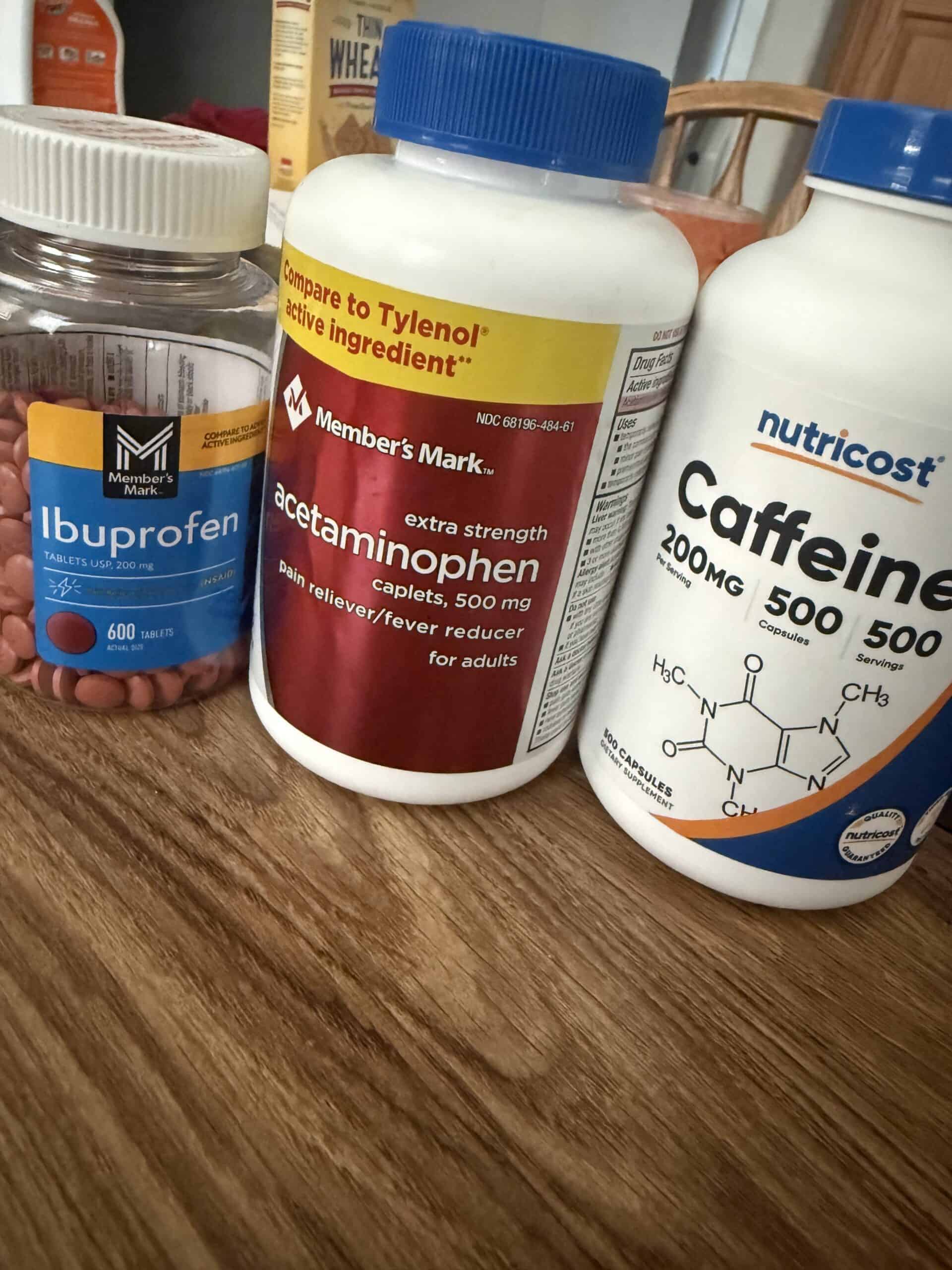
There are at least ten supplements marketed for migraine and they are not interchangeable. Some have decent evidence behind them, some have thin evidence, and some are sold on the strength of the word natural. Choosing between them is not really a shopping problem. It is a question of what you are trying to do, how long you are willing to wait, and whether you have talked to a doctor about it.
Important
This is general information, not medical advice. I get migraines, which is why this site exists, and it does not make me qualified to tell you what to take. Supplements interact with medications and some are not safe in pregnancy or with certain conditions. Talk to a doctor before starting anything here, particularly if you are already on migraine medication.
Key Takeaways
- Supplements are preventive, not rescue. None of them stop an attack in progress.
- Expect to wait two to three months before judging anything.
- Change one thing at a time or you will learn nothing.
- Evidence quality varies enormously across this category.
- A doctor conversation comes first, especially alongside prescription treatment.
Start With What You Are Trying to Do
The first fork in the road, and getting it wrong wastes months.
Supplements in this category are almost entirely preventive. The idea is that taking something daily reduces how often attacks happen or how bad they are. That is a different job from stopping an attack that has already started, which is what rescue treatment does.
If you are looking for something to take when a migraine begins, this is the wrong category and stopping a migraine fast is the relevant read. If you are looking to have fewer of them over time, then prevention is the right frame and patience is the price.
The exception people point to is caffeine, which behaves differently and is genuinely complicated, since it can help acutely and contribute to the problem when overused. That complexity is why it sits awkwardly in this category rather than fitting neatly.
Understand That the Evidence Is Uneven
This is the part supplement marketing works hardest to blur.
Some of these have been studied reasonably well and have found their way into clinical guidance. Others have a few small studies and a lot of enthusiasm. Others again are essentially traditional use plus a manufacturer’s confidence. All of them are sold in similar bottles with similar language, and the packaging tells you nothing about which group yours is in.
Magnesium and riboflavin are the two most commonly discussed in a preventive context, and the comparison between them is worth reading if you are choosing a first thing to try.
CoQ10 and feverfew come up regularly with more modest support. Butterbur has a genuine safety consideration around liver toxicity depending on preparation, which is a good example of why natural does not mean harmless.
The American Migraine Foundation is a reasonable independent starting point for what the evidence actually says, and it is a better guide than any product page including this one.
Match It to Your Pattern
Some of these are aimed at situations rather than at migraine in general, and that narrows the choice usefully.
If nausea is the part that ruins your day, ginger is aimed at that specifically rather than at attack frequency. That is a different goal and worth being clear about, because it will not reduce how often you get them.
If your attacks track your cycle, that is a distinct pattern with its own considerations, and menstrual migraine covers it properly.
If sleep is tangled up in it, melatonin sits at that intersection, and sleeping with migraine is the wider picture. Vitamin D and omega-3 are general health supplements with migraine-adjacent interest rather than migraine treatments as such.
Knowing your own pattern is what makes this tractable. Migraine triggers is worth working through first, because a supplement aimed at the wrong pattern is months you do not get back.
Give It Two to Three Months
The single most important practical point on this page.
Preventive supplements do not work quickly. The usual guidance is that you need two to three months at a consistent dose before you can say anything about whether it helped. That is a long time to take something on faith, and it is also the reality of the category.
What that means in practice is that patience is the actual cost, not money. People try something for three weeks, conclude it does nothing, and move on, which is not enough time to have learned anything either way.
It also means you should decide in advance how long you are giving it and what would count as an improvement. Migraine frequency is variable enough that “I think it is a bit better” is not a reliable read, which brings us to the next thing.
Change One Thing at a Time
Obvious in principle and almost nobody does it.
If you start magnesium, riboflavin, and CoQ10 in the same week, and things improve, you have learned that something helped and you will be taking three things forever because you cannot tell which. If things get worse, you cannot tell which either.
One at a time, for two to three months each, is slow. It is also the only version of this that produces information. Given the category requires months of patience anyway, you may as well get an answer out of it.
Keeping a record helps more than memory does, because migraine frequency fluctuates on its own and recall is unreliable about exactly the thing you are trying to measure. A simple count of attack days per month is enough.
Talk to a Doctor First, Genuinely
Not a formality, and this is where a page like this should be most careful.
Supplements interact with medications. Some are not appropriate in pregnancy. Some are not appropriate with particular health conditions. Butterbur’s liver considerations are a real example rather than a theoretical one. If you are on prescription migraine treatment, adding things to it is a conversation to have with the person who prescribed it.
There is also a diagnostic question underneath. Supplements are for managing migraine you have already had confirmed as migraine, and severe headaches are worth having properly assessed rather than self-treating around. Finding a migraine specialist covers that route.
Mayo Clinic’s material on headache is a reasonable independent starting point for understanding what you may be dealing with, and the American Migraine Foundation covers the range of treatments without selling you anything.
Where Supplements Sit in the Bigger Picture
Worth situating honestly.
Supplements are one part of managing migraine and not the main part for most people. Trigger management, sleep, hydration, and prescription treatment where appropriate all do more heavy lifting, and a supplement is a marginal adjustment on top of those rather than a replacement.
That is not an argument against them. It is an argument for expectations. Something that reduces attack frequency modestly, over months, is a genuinely worthwhile outcome and it is also not the outcome the marketing implies.
Dehydration and weather triggers cost nothing to address and are worth ruling out before spending. Rescue options are a separate conversation for when one has already started.
A Reasonable Order to Try Things
Not a recommendation of what to take, which is not mine to give. A framework for sequencing.
Start by knowing your pattern, because it narrows the field. Rule out the free things: sleep, hydration, and identifiable triggers. Then talk to a doctor about whether a preventive supplement fits alongside whatever else you are doing.
If you get to the point of trying one, the two most commonly discussed for prevention are the sensible place to begin, and the comparison between them is the first decision. Then one thing, two to three months, keep a count, and decide honestly at the end.
That is slower than the internet suggests and it is the version that tells you something true.
Recommended Reading
See magnesium vs riboflavin, migraine triggers, and finding a specialist, and alcohol and migraines, and air quality monitors for migraine triggers, and hair accessories that dont trigger headaches, and water bottles for migraine hydration, and caffeine and migraine, and caffeine help a migraine, and exercise trigger migraines, and skipping meals trigger a migraine, and how stress triggers migraines, and migraine food triggers list.
Migraine Supplement FAQ
Which migraine supplement should I start with?
That is a question for a doctor rather than a website, and the honest framework is: know your pattern first, rule out sleep and hydration and triggers, then discuss it. Magnesium and riboflavin are the two most commonly discussed for prevention, and comparing them is a reasonable first decision.
How long before a migraine supplement works?
Two to three months at a consistent dose before you can judge it. That is the real cost of this category, and it is why people who try something for three weeks and stop have not learned anything. Decide in advance how long you are giving it.
Can supplements stop a migraine that has already started?
No. These are preventive, aimed at reducing how often attacks happen over time. Stopping an attack in progress is rescue treatment, which is a different category entirely and worth reading about separately.
Can I take several supplements at once?
You can and you will learn nothing. If three things start in the same week and something changes, you cannot tell which did it, so you end up taking all three indefinitely. One at a time, two to three months each, with a simple count of attack days.
Are natural supplements safe?
Not automatically, and butterbur is the clearest example, where liver toxicity is a genuine consideration depending on the preparation. Supplements also interact with medications and some are not appropriate in pregnancy. Natural is a marketing word rather than a safety claim.
Do I need to tell my doctor?
Yes, particularly if you are on prescription migraine treatment. Interactions are real, and the person who prescribed your treatment needs to know what else is going in. This is not a formality.
How do I know if it is working?
By counting, not by feeling. Migraine frequency fluctuates on its own and recall is unreliable about exactly the thing you are measuring. A simple count of attack days per month, kept before and during, is enough to tell you something honest.
When should I see a doctor instead of trying supplements?
If your headaches have not been properly assessed, if they are changing in pattern or severity, if they are new, or if they come with symptoms beyond your usual. Supplements are for managing something already identified as migraine. Anything sudden, severe, or different deserves medical attention rather than a shopping decision.
Sources
- American Migraine Foundation. Migraine resource library.
- Mayo Clinic. Headache: Symptoms and Causes.
