
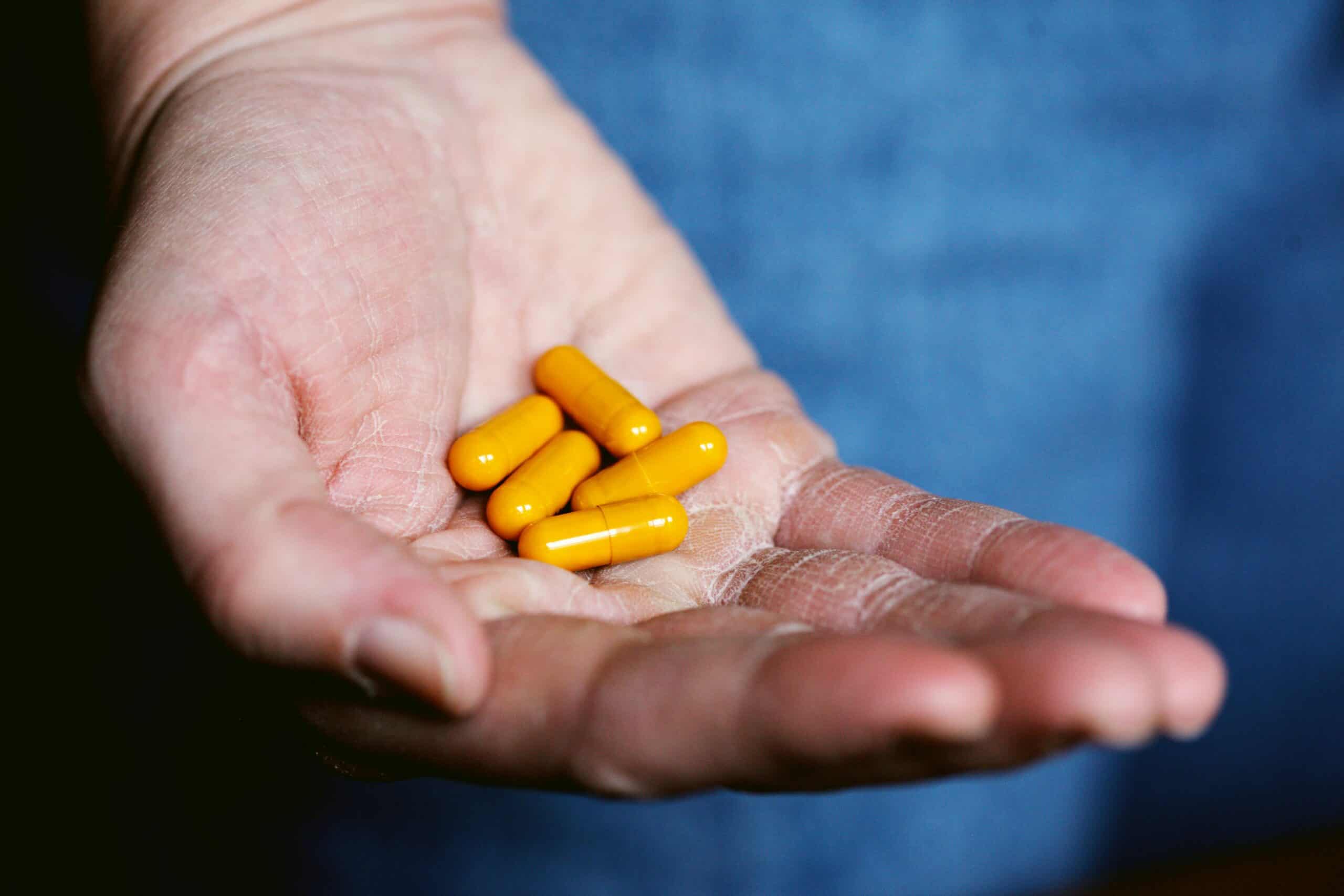
Turmeric root contains only a small fraction of curcumin by weight, which is why almost every supplement on the shelf is an extract rather than the spice. Choosing between the best turmeric and curcumin supplements for inflammation comes down to standardization and absorption, because curcumin on its own is poorly absorbed and the formulation is what addresses that. The evidence base is thinner than the marketing suggests, and that is worth knowing before you spend anything.
The National Center for Complementary and Integrative Health describes research on turmeric for health conditions as limited, with results that have not clearly established benefit for most uses. For migraine specifically the evidence is thinner still.
Supplement selection has general rules worth reading first. Our guide to how to choose a migraine supplement covers those.
Medical Disclaimer
This article is general information about supplement categories and is not medical advice, and nothing here claims that turmeric or curcumin treats or prevents migraine. Curcumin can interact with blood thinners and other medications, and high-dose supplements have been associated with liver injury in published case reports. Talk to a doctor or pharmacist before starting any supplement, particularly alongside prescription medication, during pregnancy, or with gallbladder or liver conditions.
Key Takeaways
- Turmeric root is mostly not curcumin, so extracts and root powders are different products.
- Curcumin is poorly absorbed on its own, which is what formulations address.
- Piperine, phytosome, and liposomal approaches all target absorption differently.
- Standardized to 95% curcuminoids is the common extract benchmark on labels.
- Third-party testing matters more here than in most supplement categories.
- NCCIH describes the research as limited rather than settled.
How We Picked
We compared formulation categories rather than individual brands, because products turn over constantly while the delivery approaches stay the same. Each section covers one approach and who it suits.
We ranked categories on four things: whether the curcuminoid content is stated and standardized, how the formulation addresses absorption, whether third-party verification is typical for that format, and how the daily dose is actually taken.
We excluded anything sold on anti-inflammatory claims alone, and we have not stated dosages, because appropriate amounts depend on the individual and belong with a clinician rather than an article.
On the evidence we follow the National Center for Complementary and Integrative Health, which notes turmeric has been studied for a range of conditions without research clearly showing it helps most of them, and the National Institutes of Health Office of Dietary Supplements on the general point that supplements are not reviewed for effectiveness before sale. Neither supports a claim about migraine.
1. Standardized Curcumin Extracts
Why It Stands Out
An extract standardized to a stated curcuminoid percentage tells you what is actually in the capsule, which the raw spice cannot. The common benchmark on labels is 95% curcuminoids.
That consistency is the point of the category. Two bottles of the same standardization contain comparable active content.
Worth Knowing
A high curcuminoid percentage says nothing about how much you absorb, and plain curcumin is absorbed poorly. Standardization and bioavailability are separate questions that labels often blur.
Capsule size tends to be large, and some people find them difficult. Pill organizers help with daily routines, which our guide to pill organizers covers.
Look for third-party verification marks rather than the brand’s own claims. Supplements are not assessed for effectiveness before sale.
Best for: Knowing exactly what the capsule contains. Skip it alone if absorption is your concern.
Check Price on Amazon2. Curcumin with Piperine
Why It Stands Out
Piperine, the active compound in black pepper, is the longest-established and cheapest approach to improving curcumin absorption. Most budget formulations use it for that reason.
It adds very little to the price and appears in a large share of products. The pairing is well known enough that many labels state the piperine amount.
Worth Knowing
Piperine also affects how the body processes various medications, which is the part people miss. That makes a pharmacist conversation more important with this formulation rather than less.
Some people find piperine causes stomach upset. Taking it with food reduces that for many.
This interaction question is the reason the disclaimer above matters. Anyone on prescription medication should raise it specifically.
Best for: Improving absorption at the lowest cost. Skip it without checking interactions if you take prescription medication.
Check Price on Amazon3. Phytosome and Liposomal Formulations
Why It Stands Out
These bind curcumin to phospholipids or encase it in lipid carriers to improve how much reaches the bloodstream, without relying on piperine. For anyone avoiding piperine because of medication interactions, that is the practical alternative.
Manufacturers of these formats typically publish their own absorption data. Branded ingredient names on the label indicate which system is in use.
Worth Knowing
These cost considerably more per day than a plain extract with pepper. Better absorption also means a given label amount is not comparable to a plain extract’s.
Absorption data usually comes from the ingredient manufacturer rather than independent work. Treat it as a claim about the delivery system rather than about health outcomes.
Liposomal liquids need refrigeration in some cases and have short shelf lives. Check storage before buying a large bottle.
Best for: Avoiding piperine and prioritizing absorption. Skip it if cost per day is the deciding factor.
Check Price on Amazon4. Whole-Root Turmeric Powders and Capsules
Why It Stands Out
Whole-root turmeric contains the full range of compounds in the root rather than isolated curcuminoids, and it costs far less per serving. For anyone who wants the food rather than the extract, this is that product.
Powder also goes into cooking and drinks, which suits people who would rather not take capsules. Culinary amounts have a long history of ordinary food use.
Worth Knowing
Curcuminoid content is a small fraction of the root, so the active amount per serving is far lower than an extract. These are not interchangeable with standardized products.
Powdered spices also vary in quality and have had heavy-metal contamination reported in some supply chains. Third-party verified sources matter here specifically.
It stains everything it touches, including teeth and worktops. That is a practical rather than a health point.
Best for: Culinary use and a food-first approach. Skip it if you want a known curcuminoid dose.
Check Price on Amazon5. Turmeric and Ginger Blends
Why It Stands Out
Blends pair turmeric with ginger, which is the one adjacent ingredient with a clearer role in the migraine context because ginger is commonly used for nausea. Two ingredients in one capsule simplifies a routine.
Cost per day is usually lower than buying both separately. Many blends add black pepper as well.
Worth Knowing
Blends obscure how much of each ingredient you are taking, and the ratio is set by the manufacturer rather than by you. Separate products let you adjust one without the other.
If nausea is the actual target, a ginger product is the more direct choice. Our guide to ginger supplements for migraine nausea covers that.
Both ingredients can affect bleeding risk, so the combination raises the same interaction question twice. Worth naming to a pharmacist.
Best for: Simplifying a routine when you want both ingredients. Skip it if you need to control each dose separately.
Check Price on Amazon6. Golden Milk and Drink Mixes
Why It Stands Out
Drink mixes turn turmeric into something you consume as part of a routine rather than as a pill, which suits anyone who dislikes capsules or already has an evening ritual. Most include black pepper and a fat source, both of which suit absorption.
Warm drinks also fit alongside other evening habits. Our guide to teas for migraine relief covers that category.
Worth Knowing
Curcuminoid content per serving is usually low and often unstated. Many mixes also carry added sugar, which matters if blood sugar stability is part of your pattern.
Treat these as a pleasant way to consume turmeric rather than as a dose. The label rarely supports comparison with an extract.
Sweetened mixes are food products first. Checking the sugar content is the practical step.
Best for: Routine and enjoyment over measured dosing. Skip it if you want a stated curcuminoid amount.
Check Price on AmazonTurmeric and Curcumin Supplements at a Glance
| Format | Curcuminoid content | Absorption approach | Relative cost | Best situation |
|---|---|---|---|---|
| Standardized extract | Stated, high | None built in | Low to moderate | Knowing the content |
| Curcumin with piperine | Stated, high | Piperine | Lowest | Budget absorption |
| Phytosome or liposomal | Stated, varies | Lipid carrier | Highest | Avoiding piperine |
| Whole-root powder | Low, often unstated | Food fats and pepper | Lowest per gram | Culinary use |
| Turmeric and ginger blend | Stated, shared | Often piperine | Low | One capsule, two ingredients |
| Drink mix | Usually unstated | Fat and pepper | Moderate | Routine over dosing |
How to Choose Turmeric and Curcumin Supplements for Inflammation
Have you cleared it with a clinician?
This is genuinely the first step rather than a formality. Curcumin affects bleeding risk, interacts with several drug classes, and is not appropriate with some gallbladder and liver conditions.
Bring the specific product to the conversation. A pharmacist can check it against your current medication list in a few minutes.
Do you want the extract or the food?
Standardized extracts give a known curcuminoid amount. Whole root gives the spice at culinary levels with a much lower active content.
These are different products serving different intentions. Neither is a substitute for the other.
How does the formulation handle absorption?
Plain curcumin is poorly absorbed, so the delivery system is doing real work. Piperine is cheapest, lipid-based systems cost most and avoid the piperine interaction question.
Label amounts are not comparable across these systems. A smaller number in a lipid formulation is not automatically less.
Is it third-party verified?
Supplements are not evaluated for effectiveness before sale, and turmeric supply chains have had contamination reports. An independent verification mark is worth more here than a marketing claim.
Look for the testing body’s mark on the bottle. Batch certificates are better still.
What does the evidence actually support?
NCCIH describes the research as limited and inconclusive across most studied conditions. There is no basis in that body of work for expecting it to prevent or treat migraine.
Going in with accurate expectations is the useful part. Our guides to magnesium and riboflavin cover the supplements with more substantial migraine-specific literature behind them.
How will you fit it into a routine?
Large capsules, twice-daily schedules, and refrigerated liquids all fail on adherence rather than on content. The format you will actually take daily beats the one with the best label.
Pairing it with an existing habit helps. Our comparison of magnesium versus riboflavin covers how people usually sequence supplement trials.
Extract with Piperine vs Lipid Formulation
Where piperine wins
Cost, availability, and a long track record as the standard approach. It is the cheapest way to address the absorption problem.
Most products on the shelf use it, so comparison shopping is easy. Label amounts are broadly comparable between them.
For anyone not taking prescription medication, this is usually the sensible starting point. It does the job for very little money.
Where the lipid formulation wins
It sidesteps the piperine interaction question entirely, which matters if you take anything regularly. That alone decides it for a lot of people.
Absorption is the design goal rather than an add-on, and dosing per capsule is usually lower as a result. Fewer and smaller capsules follow.
The trade is cost per day, several times a plain extract. Whether that is worth it depends on the interaction question more than on the absorption numbers.
Common Turmeric Supplement Mistakes to Avoid
Treating spice and extract as the same thing
Curcuminoids are a small fraction of turmeric root. A teaspoon of the spice and a standardized capsule are not comparable products.
Comparing label amounts across formulations
A lipid-based product with a smaller stated amount may deliver more than a larger plain extract. The delivery system changes what the number means.
Skipping the interaction conversation
Curcumin affects bleeding risk and piperine affects drug metabolism. Both are reasons to check rather than assume, particularly alongside anticoagulants.
Buying on anti-inflammatory marketing
The research NCCIH summarizes has not clearly established benefit for most conditions studied. Marketing language runs well ahead of that.
Adding it to an already crowded stack
Several supplements started at once make it impossible to attribute any change. Adding one at a time is what makes a trial readable, and tracking helps, which migraine journals cover.
Recommended Reading
- CoQ10 supplements and feverfew cover two more commonly tried options.
- Omega-3 supplements cover the other ingredient usually discussed around inflammation.
Frequently Asked Questions
What are the best turmeric and curcumin supplements for inflammation?
A standardized extract tells you the curcuminoid content, and a formulation that addresses absorption makes that content usable. Piperine is the cheapest approach and lipid-based systems avoid its interaction questions at higher cost.
Does turmeric help with migraine?
There is no good evidence that it does. NCCIH describes turmeric research as limited and inconclusive across most conditions studied, and the migraine-specific literature is thinner than for magnesium or riboflavin.
Why do turmeric supplements contain black pepper?
Curcumin is absorbed poorly on its own, and piperine from black pepper improves how much reaches the bloodstream. It is the oldest and cheapest solution to that problem.
What does 95% curcuminoids mean?
It describes the standardization of the extract, meaning curcuminoids make up that share of the extract by weight. It says nothing about how much you absorb.
Is turmeric safe to take every day?
Culinary amounts have a long history of ordinary food use. Supplement doses are a different matter, with reported liver injury cases and interactions with blood thinners, which is why a clinician conversation comes first.
Can you just cook with turmeric instead?
You can, and the active content will be far lower than a standardized extract. Cooking with it alongside fat and black pepper is the traditional approach and a reasonable one if food is what you want.
Are turmeric supplements checked for quality?
Not before sale. Supplements are not reviewed for effectiveness or verified for content by regulators in advance, and turmeric supply chains have had contamination reports, so third-party testing marks matter.
When should I see a doctor before taking turmeric?
Before starting, if you take any prescription medication, particularly blood thinners, or if you have gallbladder or liver conditions, are pregnant, or are breastfeeding. See a doctor promptly for new, worsening, or more frequent headaches regardless of what supplements you are considering.
Sources
- National Center for Complementary and Integrative Health. Turmeric. National Institutes of Health. https://www.nccih.nih.gov/health/turmeric
- National Institutes of Health Office of Dietary Supplements. Dietary Supplements: What You Need to Know. https://ods.od.nih.gov/
- National Institute of Neurological Disorders and Stroke. Migraine. National Institutes of Health. https://www.ninds.nih.gov/health-information/disorders/migraine
- American Migraine Foundation. Supplements and Migraine. https://americanmigrainefoundation.org/
