
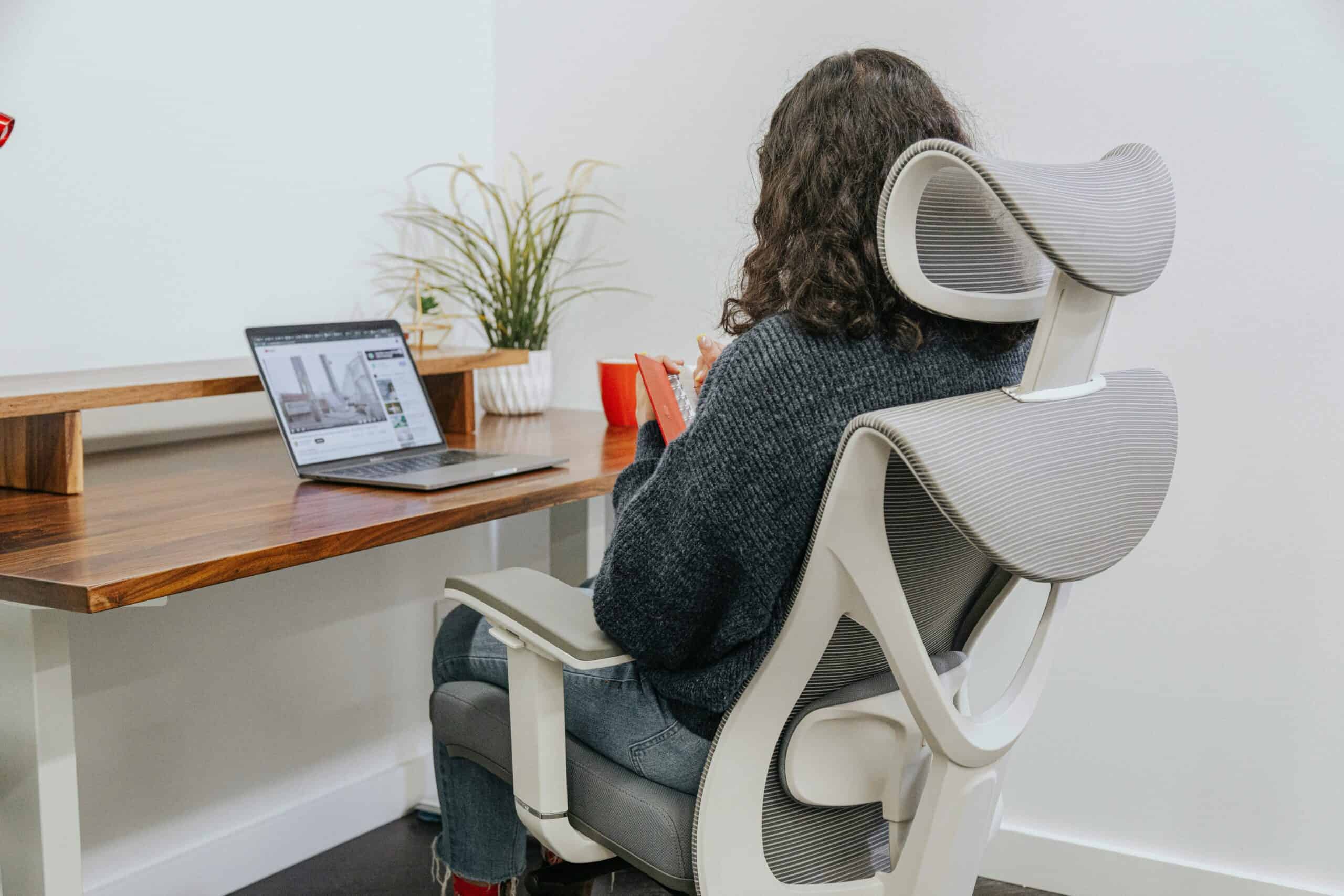
Most office chairs fail in two specific places, and both have a cushion that costs a fraction of replacing the chair. The best lumbar supports and seat cushions for office chairs work by restoring the lower back curve and levelling the pelvis, which is what sets the position of everything above them including the neck. A chair that reclines correctly and a seat that tips you backward produce very different spines, and the cushion is what changes the second one.
The honest framing is that these are corrections rather than upgrades. A good chair set up properly needs neither.
The chair itself comes first. Our guide to ergonomic chairs covers what to look for if you are replacing rather than patching.
Medical Disclaimer
This article is general information about seating accessories and is not medical advice. Back and neck pain have many possible causes, some of which need assessment. Anyone with new, worsening, or severe symptoms, or with numbness, tingling, or weakness, should be seen by a doctor or physical therapist rather than buying a cushion.
| Type | What it corrects | Keeps position | Relative cost | Best situation |
|---|---|---|---|---|
| Strapped lumbar pillow | Missing lower back curve | Yes, strapped | Low | Chairs with flat backs |
| Memory foam seat cushion | Hard or worn seat pan | Mostly | Low | Long seated hours |
| Wedge cushion | Seat that tips backward | Yes | Low | Pelvis rolling back |
| Coccyx cutout cushion | Tailbone pressure | Yes | Low to moderate | Tailbone discomfort |
| Gel and hybrid cushion | Heat and pressure together | Mostly | Moderate | Warm rooms, long sits |
| Full-back support cover | Whole backrest shape | Yes, fitted | Moderate | Old or unsupportive chairs |
Key Points
- A cushion that slides is a cushion you stop using, so straps matter.
- A seat cushion raises you, which changes your correct desk and screen height.
- Wedges tilt the pelvis forward and restore the lower back curve indirectly.
- Memory foam softens in warm rooms and firms up in cold ones.
- Lumbar height is adjustable on some supports and fixed on most.
- Published guidance puts the lower back supported with feet flat and arms near the body.
How We Picked
We compared cushion categories rather than individual products, because lines turn over constantly while the shapes do not. Each section covers one correction and the chair problem it addresses.
We ranked categories on four things: whether they stay where you put them, what they change about seat height, how they behave over a full day rather than the first ten minutes, and whether they wash.
We excluded anything sold on posture-correction claims, since a cushion supports a position rather than teaching one. We have also not stated firmness ratings, because body weight changes how any foam behaves.
The target position comes from published workstation guidance. NIOSH and OSHA both describe a seated computer posture with the lower back supported, feet flat or on a rest, and arms close to the body, and Mayo Clinic’s back pain guidance treats prolonged static sitting as something to break up rather than to perfect.
1. Strapped Lumbar Support Pillows
Why It Stands Out
A contoured pillow strapped across the backrest fills the gap behind the lower back that most chairs leave empty. It is the cheapest fix for the single most common chair failure.
Straps are what separate this from a cushion that ends up on the floor by lunchtime. Two-strap designs hold height as well as position.
Worth Knowing
Height placement matters more than firmness, and most supports are fixed at a single height on the strap. Adjustable-strap versions let you tune where the curve lands.
Too much depth pushes you forward off the backrest, which creates a new problem. Starting with a thinner support and building up beats the reverse.
Mesh-backed chairs sometimes reject straps entirely because there is nothing solid to anchor against. Checking the backrest construction first saves a return.
Best for: Flat or under-supported backrests on chairs you intend to keep. Skip it if your chair already has adjustable built-in lumbar support.
Check Price on Amazon2. Memory Foam Seat Cushions
Why It Stands Out
A dense foam cushion redistributes pressure across the seat and restores a worn or over-firm seat pan. For long seated hours, that spread is what stops one area taking all the load.
These cost little and need no fitting. Most come with a washable cover.
Worth Knowing
Any seat cushion raises you, which means your desk is now relatively lower and your screen relatively lower too. Both need re-checking after adding one.
Memory foam softens in warm rooms and stiffens in cold ones, so the same cushion feels different across seasons. Cheap foam also bottoms out within months.
Raising the seat usually means your feet need help. Our guide to desk footrests covers the other end of that change.
Best for: Hard, worn, or flat seat pans and long sitting stretches. Skip it if your chair height is already at its maximum useful setting.
Check Price on Amazon3. Wedge and Tilt Cushions
Why It Stands Out
A wedge raises the back of the seat relative to the front, which tips the pelvis forward and lets the lower back find its natural curve without a lumbar pillow doing the work. It addresses the cause rather than propping up the consequence.
Many chairs have seat pans that slope backward, which rolls the pelvis under and flattens the spine. A wedge cancels that slope directly.
Worth Knowing
The adjustment period is real, because the pelvis is being held somewhere it is not used to. Starting with short sessions works better than a full day.
Wedges also raise seat height more than a flat cushion does, so the desk and footrest question is sharper. Inflatable versions allow a smaller angle to begin with.
Anyone with existing back problems should get this checked before using one. A wedge changes spinal position deliberately, which is not appropriate for everyone.
Best for: Chairs whose seat tips you backward and pelvises that roll under. Skip it without advice if you have a diagnosed back condition.
Check Price on Amazon4. Coccyx Cutout Cushions
Why It Stands Out
A U-shaped cutout at the back removes contact under the tailbone while keeping support under the sit bones. For tailbone discomfort specifically, nothing else in this category does the same job.
The shape also naturally encourages sitting back in the chair rather than perching forward. Most include a non-slip base.
Worth Knowing
If tailbone pressure is not your problem, the cutout adds nothing and slightly reduces total support area. Buy it for the symptom rather than as a general upgrade.
The cutout also has to line up with your anatomy, which depends on cushion size relative to your hips. A cushion that is too narrow puts the edges where you do not want them.
Persistent tailbone pain deserves assessment rather than accommodation. A cushion makes sitting tolerable and does not address why it hurts.
Best for: Tailbone discomfort while seated. Skip it as a general-purpose seat cushion.
Check Price on Amazon5. Gel and Hybrid Cushions
Why It Stands Out
Gel layers move heat away from the contact surface, which matters in a warm room or on a long afternoon. Hybrid gel-over-foam designs pair that with the pressure spread of foam.
Gel also resists the gradual bottoming out that cheap foam suffers. Firmness stays more consistent across seasons.
Worth Knowing
These weigh noticeably more and cost more than plain foam. Pure gel grids can feel firm to anyone expecting a soft cushion.
Heat management is a comfort feature rather than a postural one. It does nothing about the curve of your back.
If heat is the main problem, the room may be the better target. Our guide to portable air conditioners covers that.
Best for: Warm rooms, long sits, and anyone whose foam cushion has gone flat. Skip it if you want the cheapest workable fix.
Check Price on Amazon6. Full-Back Support Covers
Why It Stands Out
A fitted cover reshapes the entire backrest rather than adding support at one height, which suits an old chair whose padding has collapsed everywhere. Shoulder and mid-back support come along with the lumbar curve.
Because it fits over the whole backrest, nothing slides down during the day. Many include a matching seat section.
Worth Knowing
Fit is chair-specific and a cover sized for a different backrest sits badly. Measuring the backrest before ordering is not optional.
These also add bulk, which can push you forward relative to your desk and armrests. Re-checking armrest height afterward matters.
Reshaping the whole back is a bigger change than a single pillow, so give it time before judging. Our guide to posture correctors covers what wearable alternatives do and do not do.
Best for: Older chairs with collapsed padding throughout. Skip it if only the lower back needs help.
Check Price on AmazonHow to Choose Lumbar Supports and Seat Cushions for Office Chairs
Which part of the chair is actually failing?
Lower back ache with a flat backrest points at a lumbar support. Numb or sore sitting bones point at a seat cushion. A pelvis that rolls under points at a wedge.
Buying for the symptom beats buying a set. Most people need one of these, not four.
Will it stay where you put it?
An unstrapped lumbar pillow migrates within an hour and ends up behind your shoulders or on the floor. Straps and non-slip bases are the difference between a fix and a purchase.
Check the strap design against your backrest. Mesh backs and very thin frames defeat some of them.
What does it do to your seat height?
Every seat cushion raises you, and a wedge raises you more. Your desk and screen are now relatively lower and your feet may not reach.
Re-measure the station after adding one. Our guide to creating a migraine-friendly workspace walks through the order to check things in.
How long do you sit at a stretch?
Anything feels fine for ten minutes. Density and heat behavior are what separate cushions over a four-hour block.
Denser foam and gel hybrids hold up better across a full day. Cheap foam is a few months of comfort.
Can you break up the sitting instead?
Mayo Clinic’s back guidance treats prolonged static sitting as the thing to interrupt rather than to optimize. A cushion makes a position tolerable and changing position beats holding a better one.
Alternating is the stronger intervention. Our guide to standing desks and to anti-fatigue mats cover the standing half.
Does it wash?
A cushion you sit on daily gets dirty, and a non-removable cover means replacing the whole thing. Removable machine-washable covers are worth the small premium.
Check whether the foam itself can be aired. Some sealed designs hold moisture.
Lumbar Support vs Wedge Cushion
Where the lumbar support wins
It is direct, cheap, and requires no adjustment period. The gap behind your lower back gets filled and the change is immediate.
It also does not alter your seat height, so nothing else about the station needs rechecking. That makes it the lowest-friction thing to try first.
For a chair with a genuinely flat backrest this is the right answer. The backrest is the thing that is wrong.
Where the wedge wins
It addresses why the lower back flattened rather than propping it back up. A seat pan sloping backward rolls the pelvis under, and no lumbar pillow fully cancels that.
People who have tried several lumbar supports without success often find the seat was the problem. The back was compensating.
The cost is an adjustment period and a raised seat. Tension elsewhere may still need attention, which choosing migraine tension relief covers.
Common Misconceptions
That a cushion corrects posture
It supports a position rather than teaching one. Remove it and nothing has changed about how you sit.
That softer is better
Soft foam bottoms out and stops supporting within an hour. Density is what holds up over a working day.
That adding a seat cushion is free
It raises you, so the desk, the armrests, and the screen are all now relatively lower. One change creates three checks.
That more support is better
An over-deep lumbar pillow pushes you off the backrest and into a forward lean. Thinner and correctly placed beats thicker.
That a cushion replaces movement
Static sitting is the load, and the published guidance is to interrupt it. Pressure tools help the muscles afterward, which foam rollers and massage guns both cover.
Worth reading next: whether posture causes migraines covers how much of this chain is established and how much is assumed, and neck stretchers and stretching straps cover the muscles that a poorly supported chair loads by the end of an afternoon.
Frequently Asked Questions
What are the best lumbar supports and seat cushions for office chairs?
A strapped contoured lumbar pillow for a flat backrest, a dense memory foam or gel seat cushion for a hard seat pan, and a wedge if your chair tips you backward. Buy for the specific failure rather than buying a matched set.
Do lumbar support pillows actually work?
They fill the gap most chairs leave behind the lower back, which supports the natural curve rather than creating it. Whether that reduces pain varies between people, and placement height matters more than firmness.
Will a seat cushion make my chair too high?
It can. Every cushion raises you, so check that your feet still rest flat and that your forearms still sit near desk height, and add a footrest if not.
What is a wedge cushion for?
It raises the back of the seat so the pelvis tips forward instead of rolling under, which lets the lower back curve naturally. It suits chairs whose seat pan slopes backward.
Is memory foam or gel better for a seat cushion?
Memory foam spreads pressure well and softens in warm rooms. Gel manages heat better and holds firmness more consistently, at more weight and cost.
Can a cushion fix a bad chair?
It can correct a specific failure like a flat back or a hard seat. It cannot add adjustability, and a chair that will not set to your height is still the wrong chair.
Do these help with neck pain and headaches?
Seat and lower back position influence how the spine above them sits, so there is a plausible chain. Treat it as one contributor rather than a direct fix, since neck pain and headache have many causes.
When should I see a doctor about back or neck pain?
See a doctor or physical therapist if pain is new, worsening, or persistent, and get seen promptly for numbness, tingling, weakness, or pain running down a limb. Those are reasons for assessment rather than a cushion purchase.
Sources
- National Institute for Occupational Safety and Health. Computer Workstations and Ergonomics. Centers for Disease Control and Prevention. https://www.cdc.gov/niosh/
- Occupational Safety and Health Administration. Computer Workstations eTool. United States Department of Labor. https://www.osha.gov/etools/computer-workstations
- Mayo Clinic. Back Pain: Symptoms and Causes. https://www.mayoclinic.org/diseases-conditions/back-pain/
- American Migraine Foundation. Migraine Triggers. https://americanmigrainefoundation.org/
