
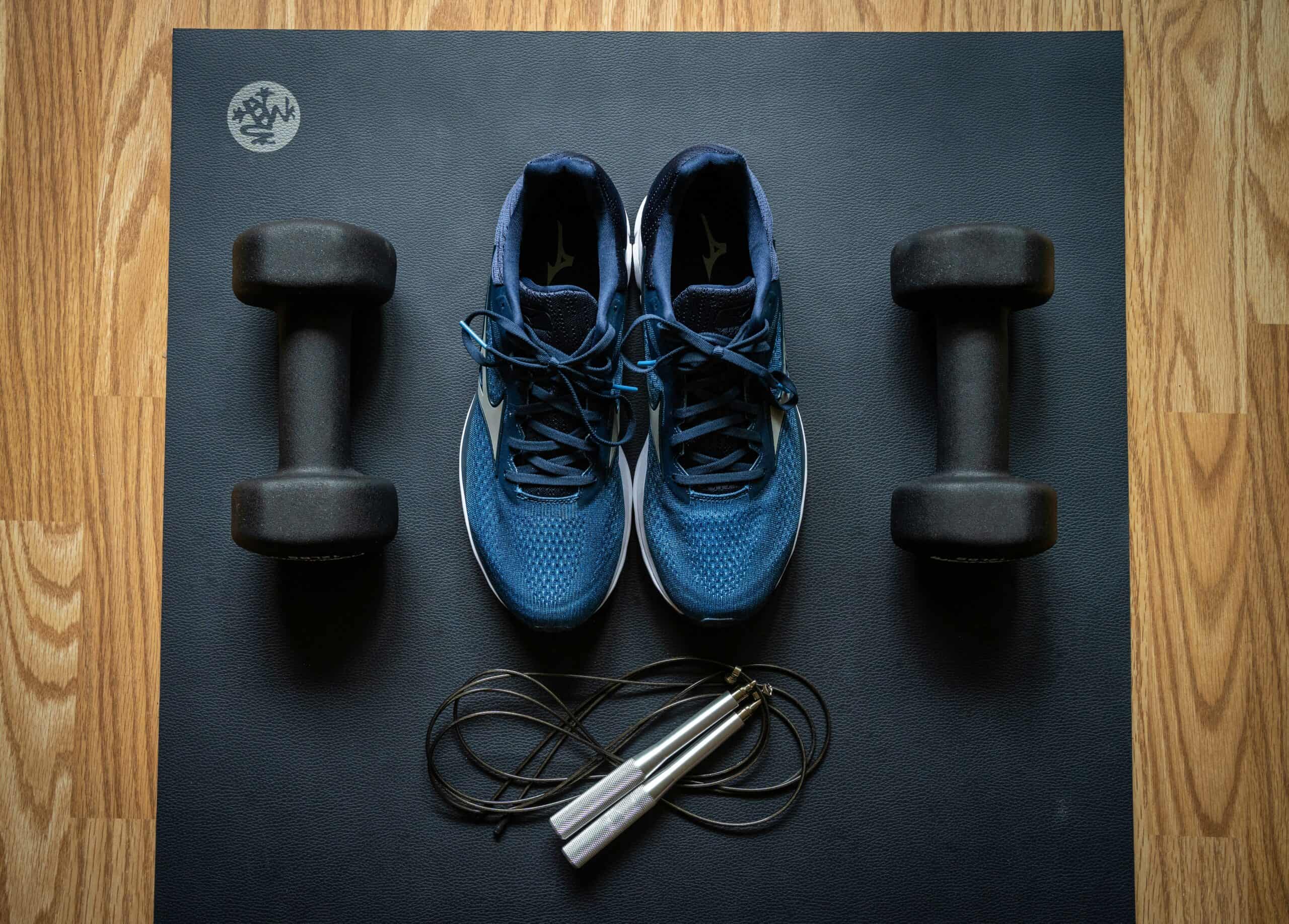
An anti-fatigue mat works by encouraging small constant shifts in posture, which keeps blood moving and stops the muscle tension that builds when you stand still on a hard floor. NIOSH reviewed the literature on prolonged standing at work and reported consistent findings of increased low back pain, physical fatigue, muscle pain, and leg swelling, listing floor mats among the interventions studied1. That tension often settles in the neck and shoulders, which is where it becomes relevant to anyone managing head pain alongside a standing desk. Buying the desk and standing on bare tile undoes part of what the desk was for. Our roundup of standing desks covers the surface above.
Medical Disclaimer
This covers comfort equipment rather than treatment. Nothing here diagnoses or treats migraine, and persistent neck or shoulder pain is worth discussing with a doctor rather than managing with equipment alone.
Quick Verdict
A polyurethane mat around three quarters of an inch thick suits most desk setups. Choose a contoured or terrain mat if you want more movement, a beveled edge if the mat sits in a walkway, and check the size against how far you actually move while working.
Key Takeaways
- Movement matters more than cushioning depth.
- Too soft is a real problem, since unstable footing creates its own fatigue.
- Beveled edges stop the mat becoming a trip hazard.
- Polyurethane outlasts foam by a wide margin.
- A mat helps posture; it does not replace sitting breaks.
How We Picked
Mats are grouped by material and surface design, since those decide both how much movement the mat encourages and how long it lasts before flattening. Edge treatment is weighted throughout, because a mat that curls at the corners becomes something to trip over.
Selection criteria reflect construction and surface behavior. Descriptions come from product research rather than from time spent standing on a particular mat.
1. A Polyurethane Standing Mat, Best Overall
Why It Stands Out
Polyurethane gives firm support with enough give to encourage micro-movement, and it recovers its shape rather than compressing permanently. That recovery is what separates a mat that works for years from one that flattens in months.
Around three quarters of an inch is the common thickness, which supports without making footing feel unstable.
Worth Knowing
These cost considerably more than foam, and the difference is durability rather than immediate comfort. A cheap foam mat feels similar on day one and noticeably worse after six months.
Check the surface texture, since a smooth polyurethane mat can be slippery in socks. Our note on setting up a workspace covers the rest of the arrangement.
This suits daily standing desk use. Skip it if you stand occasionally and want the cheapest option.
Check Price on Amazon2. A Contoured Terrain Mat, Best for Movement
Why It Stands Out
Mats with raised mounds, edges, and a calf rest give your feet somewhere to go, which prompts more position changes than a flat surface does. Since movement is the mechanism, this design does more of what the mat is for.
The varied surface also gives the arches something to work against, which some people find eases foot fatigue specifically.
Worth Knowing
The raised features are not comfortable for everyone, and anyone with existing foot problems may find them irritating rather than helpful. This is a preference rather than an upgrade.
Contoured mats also work poorly if you move around much, since the features are positioned for one standing spot.
This suits people who stay in one position. Skip it if you shift around or have sensitive feet.
Check Price on Amazon3. A Large Flat Mat, Best for Moving Around
Why It Stands Out
A wide flat mat covers the whole area you actually occupy, so stepping sideways to reach something does not put a foot on cold tile. For anyone who shifts position frequently, coverage matters more than surface features.
Flat surfaces also suit a chair being rolled partly onto them at a sit-stand desk.
Worth Knowing
Larger mats are heavier to move for cleaning and more visually dominant in a room. They also cost more for the same material.
Check whether the mat is rated for chair castors if you use one, since rolling a chair across an unrated mat damages the surface. Our roundup of ergonomic chairs covers the seated half of a sit-stand setup.
This suits active standing and larger desks. Skip it in a small space.
Check Price on Amazon4. A Gel-Core Mat, Best for Hard Floors
Why It Stands Out
Gel cores distribute pressure differently from foam, which some people find easier on the heels and lower back over long periods on concrete or tile.
They also tend to be thinner for the same support, which keeps the standing height closer to floor level.
Worth Knowing
Gel can feel cold underfoot, particularly in a room that runs cool, and it does not insulate from a cold floor the way a thicker foam mat does.
Quality varies enormously in this category, and a poorly made gel mat develops permanent depressions where you stand most. Our note on home office lighting covers another environmental factor in the same room.
This suits concrete and tile floors. Skip it in a cold room.
Check Price on Amazon5. A Beveled-Edge Safety Mat, Best for Walkways
Why It Stands Out
Tapered edges let you walk on and off without catching a foot, which matters if the mat sits anywhere you pass through rather than only stand.
Beveled edges also resist curling, which is how most mats eventually become a hazard regardless of where they started.
Worth Knowing
The taper reduces the usable cushioned area, so a beveled mat gives less support for its footprint than a square-edged one.
Check that the underside grips, since a mat that slides on a hard floor is a worse hazard than one with a slight edge.
This suits shared spaces and walkways. Skip it if the mat sits under a desk and nowhere near a path.
Check Price on Amazon6. A Foam Mat, Best Budget Option
Why It Stands Out
Foam mats cost a fraction of polyurethane and feel comfortable immediately, which makes them a reasonable way to find out whether a mat helps you before spending more.
They are also light, easy to move, and simple to clean.
Worth Knowing
Compression set is the problem. Foam develops permanent dents where you stand and stops recovering, usually within months of daily use rather than years.
Softer is also not better here. A mat that lets your feet sink makes footing unstable, which creates its own fatigue in the ankles and calves.
This suits trying the idea out. Skip it for long-term daily standing.
Check Price on AmazonAnti-Fatigue Mats at a Glance
| Type | Durability | Encourages movement | Best for |
|---|---|---|---|
| Polyurethane | Highest | Moderate | Daily standing desk use |
| Contoured terrain | High | Most | Staying in one spot |
| Large flat | Varies | Moderate | Moving around |
| Gel core | Varies widely | Moderate | Concrete and tile |
| Beveled edge | High | Moderate | Walkways |
| Foam | Lowest | Moderate | Trying it out |
What to Look For in an Anti-Fatigue Mat
How firm is it?
Firm enough to stand on steadily, soft enough to give slightly. Too soft is the common mistake, since unstable footing tires the ankles and calves rather than resting them.
How much do you move?
If you stay put, a contoured mat gives your feet somewhere to go. If you shift and step sideways, a larger flat mat matters more than surface features.
Where does it sit?
Anything near a walkway needs beveled edges. A mat entirely under a desk can have square edges and more usable cushioned area.
What is the floor?
Concrete and tile are the hardest surfaces and the strongest case for a good mat. On carpet the benefit is smaller, and a thin mat may add little.
Contoured or Flat?
The case for contoured
Movement is the mechanism, and raised features prompt more of it. For someone standing in one position for long stretches, that is doing the thing the mat exists to do.
The case for flat
Coverage and versatility. A flat mat works wherever you put your feet, suits people who move around, and does not irritate sensitive feet. Our guide to posture support covers the wider question of standing well.
Common Standing Desk Mistakes to Avoid
Standing all day
A mat makes standing more comfortable and does not make prolonged standing a good idea. The underlying research treats mats as one intervention among several, alongside changing position, footwear, and the option to sit2. Alternating between sitting and standing is the point of a sit-stand desk.
Buying the softest mat available
Excess softness makes footing unstable, which tires the lower legs. Firm with slight give is what you want.
Ignoring footwear
A mat cannot compensate for unsupportive shoes or standing barefoot on a hard floor all day. Both matter alongside it.
Letting a mat curl
Curled corners are a trip hazard, and once foam has taken a set it does not flatten again. Store it flat rather than rolled. Our note on getting through a workday covers pacing on difficult days.
Recommended Reading
See our roundup of monitor light bars, notes on anti-glare screen filters, our foam roller picks, and a guide to neck massagers.
Anti-Fatigue Mat FAQ
Do anti-fatigue mats actually help?
They encourage small constant shifts in posture, which keeps blood moving and reduces the muscle tension that builds from standing still on a hard surface. The effect is on comfort and fatigue rather than on any medical condition, and a mat is not a treatment for anything.
How thick should an anti-fatigue mat be?
Around three quarters of an inch suits most people. Thicker is not automatically better, since a mat that lets your feet sink makes footing unstable and tires the ankles and calves rather than resting them.
Is a contoured mat better than a flat one?
It depends on how you work. Raised features prompt more movement, which is what the mat is for, and they suit someone who stays in one spot. If you shift position and step sideways, a larger flat mat gives better coverage.
Do I need one on carpet?
The benefit is smaller than on concrete or tile, since carpet already provides some give. A mat still adds firmness and a defined standing area, but the case is considerably weaker than on a hard floor.
How long do anti-fatigue mats last?
Polyurethane mats recover their shape and last for years of daily use. Foam mats develop permanent depressions where you stand, often within months. That durability difference is what the price gap buys.
Can I use a kitchen mat at a standing desk?
Yes, and the main differences are size and edge treatment. Kitchen mats are often narrower and designed for a spot in front of a sink. Check the dimensions against how much you move at your desk.
Will a mat stop my neck and shoulder pain?
It addresses fatigue from standing rather than pain from posture or screen position, which are separate problems. Monitor height, chair setup, and taking breaks matter at least as much. Persistent neck pain is worth raising with a doctor rather than managing with equipment.
Should I stand barefoot on the mat?
Some people prefer it and some mats are slippery in socks or bare feet. Supportive footwear generally helps more than the mat surface does, particularly for anyone standing for long stretches.
When should I see a doctor about this?
If neck, shoulder, or back pain persists despite changes to your setup, or if head pain is becoming more frequent or more severe, that is worth raising with a doctor rather than working around with equipment. A physical therapist can assess posture and standing tolerance directly, and a change in headache pattern is a reason to speak to your own physician or a neurologist.
Sources
- National Institute for Occupational Safety and Health, “Prolonged Standing at Work,” NIOSH Science Blog, Centers for Disease Control and Prevention. https://www.cdc.gov/niosh/bulletin/2014/standing.html
- Waters TR, Dick RB, “Evidence of Health Risks Associated with Prolonged Standing at Work and Intervention Effectiveness,” Rehabilitation Nursing, PubMed. https://pubmed.ncbi.nlm.nih.gov/25041875/
