
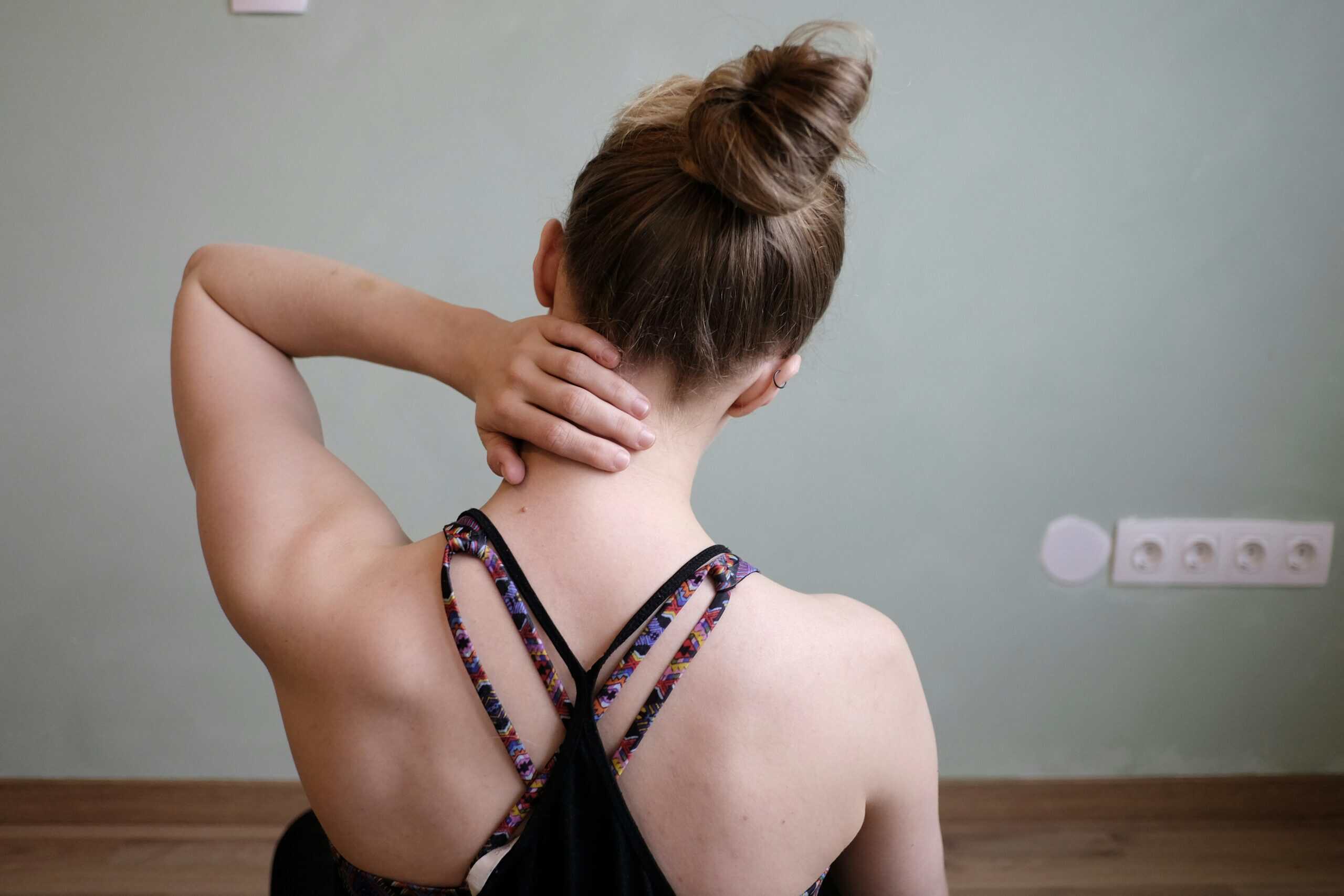
Pressure tools work on a muscle from the outside, and stretching changes its resting length instead. The best neck stretchers and stretching straps for tension cover six formats that do that in different ways, from a doorway unit that supports your head to a simple strap that guides a movement you could almost do unaided. Most cost a fraction of a massage gun, which makes this the cheap end of a cluster people usually enter at the expensive end.
Neck and shoulder tension sits alongside headache for a lot of people. Which causes which is not always clear.
Pressure tools remain useful. Our guide to foam rollers for migraine tension covers that approach.
Medical Disclaimer
This article is general information about stretching equipment and is not medical advice. Neck stretching is not appropriate for everyone, and it can be harmful with some conditions, including certain spinal problems, recent injury, or vascular concerns. Anyone with neck pain, numbness, tingling, dizziness, weakness, or new or worsening headaches should be assessed by a doctor or a physical therapist before using any of these tools.
A Quick Note
Stop immediately and seek advice if any tool produces dizziness, visual changes, numbness in the arms or hands, or pain that increases rather than eases. Those are reasons to get assessed, not reasons to push through.
Key Points
- Stretching changes muscle length; pressure tools work on muscle tissue directly.
- Straps guide a movement rather than applying force to the spine.
- Traction devices pull, and pulling needs professional guidance first.
- Posture stretchers open the chest, which changes head position indirectly.
- Gentle and frequent beats hard and occasional for most people.
- Any tool that causes dizziness or numbness should be stopped.
How We Picked
We compared tool categories rather than individual models, because product lines change while the movements do not. Each section covers one format and the muscles it addresses.
We ranked formats on four things: how much control the user keeps over the force applied, how easily the movement can be done wrong, portability, and cost relative to the pressure tools people usually buy first.
We excluded anything sold on inch-gain or realignment claims, since those are not outcomes a home tool can deliver. We have also not stated hold times or session frequencies, because those are exactly what a professional should set for an individual.
On safety our framing follows the general position of the National Institute of Neurological Disorders and Stroke and Mayo Clinic that neck pain with neurological symptoms warrants assessment, and the American Migraine Foundation’s description of neck pain as a frequent companion to migraine attacks rather than an established cause.
1. Stretching Straps with Loops
Why It Stands Out
A looped strap guides a stretch with your own hands providing the force, which means you feel exactly what you are doing and can stop instantly. For neck and shoulder work that user control is the safest arrangement available.
Straps cost very little, pack flat, and cover shoulders, chest, and upper back as well. Nothing pulls on your spine mechanically.
Worth Knowing
Technique matters, and a strap will happily let you do a movement badly. Learning the positions from a professional first is worth the visit.
The loops are also mostly designed for legs, so neck and shoulder use takes some adapting. Look for a strap with many closely spaced loops.
There is no support for the head, so you hold your own position throughout. Anyone who wants the head supported should look further down this list.
Best for: Everyone starting out, because you keep full control of the force. Skip it if you want a tool that does the work for you.
Check Price on Amazon2. Posture Stretchers and Thoracic Arches
Why It Stands Out
A curved foam or plastic arch opens the chest and upper back while you lie over it, which lets the head sit back rather than forward. That change affects the neck without touching it.
Because you lie on it, your own body weight sets the intensity. Rolling off ends the stretch immediately.
Worth Knowing
The first sessions can feel intense across the chest and ribs. Starting with a towel over the arch reduces it.
These target the thoracic spine rather than the cervical spine, which is a feature rather than a limitation. Expect indirect benefit at the neck.
Desk posture is the thing this addresses. Our guides to posture correctors and whether posture causes migraines cover the wider question.
Best for: Desk workers with rounded shoulders and a forward head position. Skip it if lying on a firm curve is uncomfortable for your back.
Check Price on Amazon3. Doorway and Frame Neck Stretchers
Why It Stands Out
A frame unit supports the back of the head and neck so the muscles can release without you holding the position. For people who cannot relax into a stretch, that support is the point.
Most allow small height adjustments to change the angle. Setup is quick once the position is found.
Worth Knowing
These apply more force than a strap, and the line between a stretch and traction gets blurry. That makes professional guidance more important, not less.
Fit is also less adjustable than it looks, and a unit that suits one neck length may not suit another. Returns policies are worth checking.
Anyone considering real traction should read our guide to cervical traction devices and whether cervical traction helps migraines first.
Best for: People who want the head supported during a stretch. Skip it without professional guidance if you have any neurological symptoms.
Check Price on Amazon4. Resistance Bands for Neck and Shoulder Work
Why It Stands Out
Light bands let you strengthen the muscles that hold your head up, which is the other half of the problem. Tension often follows weakness in the deep neck flexors and mid-back.
Bands cost almost nothing and scale by choosing a lighter or heavier one. They cover rows, pull-aparts, and external rotation.
Worth Knowing
This is strengthening rather than stretching, so the effect builds over weeks rather than minutes. People looking for immediate relief will be disappointed.
Direct resistance against the head should only be done on professional instruction. Band work here means shoulders and upper back.
Bands perish and snap eventually, so check them before use. Building the habit matters more than the specific band you buy.
Best for: Addressing the weakness behind recurring tension. Skip it if you want relief in the next ten minutes.
Check Price on Amazon5. Chin Tuck and Neck Retraction Aids
Why It Stands Out
Small aids that cue a chin tuck target the deep neck flexors, which is one of the most commonly prescribed movements for a forward head position. The cue is the useful part, because the movement is easy to do wrong.
These are inexpensive, portable, and usable at a desk. No lying down required.
Worth Knowing
The movement is subtle, and most people jut the chin or tilt the head instead. Getting it checked once by a professional makes the difference.
Benefit comes from doing it often rather than doing it hard. A few short sets through the day beats one long session.
Pair it with the desk itself. Our guide to creating a migraine-friendly workspace covers what causes the forward head position in the first place.
Best for: Desk workers wanting a frequent, low-effort movement. Skip it if you have not had the movement checked for form.
Check Price on Amazon6. Massage Balls and Trigger Point Tools
Why It Stands Out
A ball against a wall reaches the upper back and shoulder muscles precisely, and you control the pressure with how hard you lean. It complements stretching rather than competing with it.
Peanut-shaped versions straddle the spine rather than pressing on it. Cost is minimal and portability is excellent.
Worth Knowing
This is pressure rather than stretching, so it sits alongside the rest of this list. Neither replaces the other.
Pressure directly on the spine or on the front or sides of the neck should be avoided. Muscle, not bone and not blood vessels.
Heat before pressure suits some people. Our guides to heating pads and scalp massagers cover adjacent options.
Best for: Targeted upper back and shoulder work at low cost. Skip direct use on the neck itself.
Check Price on AmazonNeck Stretchers and Stretching Straps at a Glance
| Tool | What it does | User controls force | Relative cost | Best situation |
|---|---|---|---|---|
| Stretching strap | Guides a stretch | Fully | Lowest | Safest starting point |
| Thoracic arch | Opens chest and upper back | By body weight | Low | Rounded desk posture |
| Frame neck stretcher | Supports head during stretch | Partly | Moderate | Cannot relax unaided |
| Resistance bands | Strengthens support muscles | Fully | Lowest | Recurring tension |
| Chin tuck aid | Cues retraction movement | Fully | Low | Frequent desk breaks |
| Massage ball | Applies local pressure | Fully | Lowest | Upper back knots |
What to Look For in Neck Stretchers and Stretching Straps
Have you been assessed?
This is genuinely the first question, not a formality. Neck symptoms with numbness, tingling, dizziness, or weakness need assessment before any tool goes near them.
A single physical therapy visit also gives you correct technique. That makes every cheap tool on this list more useful.
Do you control the force?
Straps, bands, and balls let you stop the instant something feels wrong. Frame stretchers and traction devices apply force more independently of you.
More user control means more margin for error. Start at that end.
Is the problem tightness or weakness?
Tightness responds to stretching, and weakness responds to strengthening. Tension that keeps returning after stretching often points to the second.
Many people need both. Bands and straps together cost very little.
Can you use it often?
Frequency matters more than intensity for most neck work. A tool at your desk gets used, and one in a cupboard does not.
Portability is therefore a real criterion. Straps and balls win on this easily.
Does it press anywhere it should not?
Nothing should apply pressure to the front or sides of the neck, or directly on the spine. Muscle on the back and sides of the shoulders is the target.
Peanut-shaped balls and shaped arches are designed around that. Check the shape before the price.
What does it replace?
If you already own a massage gun, a strap adds stretching rather than duplicating pressure. Our guides to massage guns and choosing migraine tension relief cover how the categories fit together.
Buying the cheap complement usually beats a second expensive tool. That is the argument for this whole category.
Stretching vs Pressure Tools
Where stretching wins
It changes the resting length of a muscle rather than working on the tissue in place. For a chronically shortened position, that is the more direct answer.
Straps and arches also cost a fraction of a massage gun or a powered massager. Nothing needs charging.
User control is the other advantage. You feel the force because you are producing it.
Where pressure tools win
Localized tight spots respond to pressure in a way a general stretch does not. A specific knot under the shoulder blade is a good example.
Powered tools also need less technique, which matters if form is hard to learn. Our guide to neck massagers covers that end.
Most people benefit from having both available. They address different things.
Common Mistakes to Avoid
Stretching hard into pain
Increasing pain is a signal to stop, not a sign of progress. Gentle and frequent works better than forceful and occasional for most people.
Confusing stretching with traction
Traction pulls the cervical spine and belongs under professional guidance. A strap guiding your own movement is a different thing.
Pressing on the front of the neck
Important structures sit there, and no home tool should apply pressure to them. Keep tools to muscle on the back and sides.
Ignoring neurological symptoms
Numbness, tingling, weakness, dizziness, or visual changes mean stop and get assessed. Those are not stretching problems.
Skipping the cause
Tension that returns every afternoon is usually about the station and the workload. Our guide to neck wraps covers symptom relief while the cause gets addressed.
Recommended Reading
- Heating pads for tension cover warming muscles before stretching.
- Scalp massagers cover the area above the neck.
Frequently Asked Questions
What are the best neck stretchers and stretching straps for tension?
A looped stretching strap is the best starting point because you control the force completely, and a thoracic arch addresses the rounded posture behind a forward head position. Light resistance bands cover the strengthening side that stretching alone leaves out.
Are neck stretchers safe?
It depends on the tool and the person. Straps that guide your own movement give you full control, while frame stretchers and traction devices apply force more independently and should be used with professional guidance, especially with any neurological symptoms.
What is the difference between a neck stretcher and cervical traction?
Stretching lengthens muscle through a movement you control, and traction applies a pulling force to the cervical spine itself. Traction is a clinical intervention that belongs under guidance rather than something to try unsupervised.
Will stretching my neck stop my headaches?
It may ease muscle tension that accompanies attacks, and neck tension and headache frequently occur together without one clearly causing the other. Treat it as one possible contributor rather than a cure.
How often should I stretch my neck?
Frequency generally beats intensity, and the specific amount is something a physical therapist should set for you. Short and gentle through the day suits most people better than one hard session.
Should I stretch or strengthen?
Often both. Tension that keeps returning after stretching frequently points to weakness in the deep neck flexors and mid-back, which bands address.
Can stretching make neck pain worse?
Yes, if the technique is wrong, the force is too high, or the underlying problem is not muscular. Pain that increases during or after a stretch is a reason to stop and get assessed.
When should I see a doctor about neck tension and headaches?
See a doctor before starting any neck tool if you have numbness, tingling, weakness, dizziness, or visual changes, and see one promptly if headaches are new, worsening, or becoming more frequent. Sudden severe headache or a headache after injury needs urgent assessment.
Sources
- National Institute of Neurological Disorders and Stroke. Migraine. National Institutes of Health. https://www.ninds.nih.gov/health-information/disorders/migraine
- Mayo Clinic. Neck Pain: Symptoms and Causes. https://www.mayoclinic.org/diseases-conditions/neck-pain/
- American Migraine Foundation. Neck Pain and Migraine. https://americanmigrainefoundation.org/
