
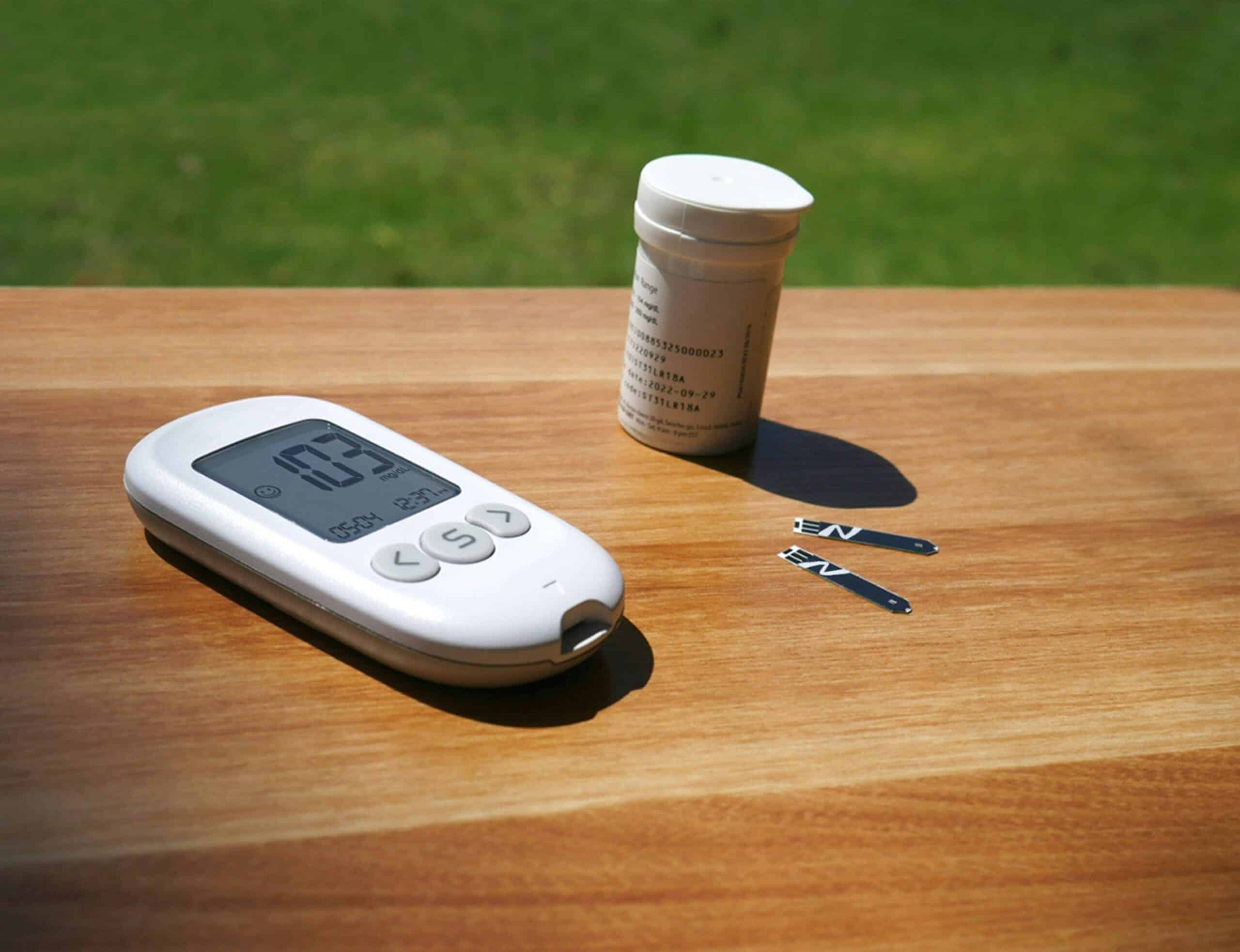
A barometric pressure monitor tells you when atmospheric pressure is falling, which for some people with migraine correlates with attacks. It cannot prevent anything. What it can do is turn a vague sense that weather affects you into a record you can check against your attack history, and give you enough warning to treat early rather than late.
Weather is one of the most commonly reported migraine triggers and one of the least actionable. The American Migraine Foundation lists storms, excessive heat, and changes in barometric pressure among common weather-related triggers.1 AMF also notes that seasonal shifts between sun and showers change barometric pressure, which can act as a trigger.2 A monitor is how you find out whether that pattern is yours.
Medical Disclaimer
This article is general information and not medical advice. A pressure monitor is a measuring instrument, not a medical device, and nothing here predicts or prevents migraine attacks. Discuss any changes to how you treat or prevent attacks with your doctor, particularly acute medication timing.
Quick Verdict
A phone app reading local station data is enough for most people to establish whether pressure and attacks line up, and it costs nothing. Buy a dedicated home weather station only once you have found a correlation worth tracking precisely, since local readings differ meaningfully from airport data several miles away. Readers who travel to higher elevations may also want our article on migraine at high elevation.
Key Takeaways
- Rate of change matters more than the absolute pressure reading
- Free phone apps are enough to test whether a correlation exists for you
- Home stations give local readings that regional forecasts miss
- Pressure data is only useful alongside a consistent attack record
- Monitoring can increase anxiety in some people, which is itself a trigger
- No monitor prevents anything; it buys awareness and time
How We Picked
Trend display came first. A single pressure number is close to meaningless for this purpose. What matters is whether pressure is rising or falling and how fast, so devices showing a trend over hours ranked far ahead of those showing only a current reading.
Data logging was second. Correlating weather with attacks requires history, not a snapshot. Devices that store readings, or push them to an app that does, are the only ones that support the actual job.
Honest positioning was the third filter. Nothing in this category predicts migraine, and products implying otherwise were set aside. A barometer measures air pressure; the interpretation is yours and your doctor’s.
1. The Smartphone Barometer App
Why It Stands Out
Most modern phones contain a barometric sensor, and free apps read it alongside regional station data. For establishing whether you have a weather pattern at all, this costs nothing and requires no new hardware, which makes it the sensible first step for everyone.
Worth Knowing
Phone sensors are calibrated for altitude and step counting rather than precision meteorology, and readings drift. The app also cannot log while your phone is off. As a screening tool it is fine; as a precise record it is not.
Right for finding out whether pressure and your attacks correlate. Skip it if you already know they do and want accurate local data.
2. The Digital Home Weather Station
Why It Stands Out
A station with an indoor display and an outdoor sensor gives readings from where you actually live rather than from an airport miles away. Better units show a pressure trend arrow and a graph of the last day or two, which is exactly the information that matters.
Worth Knowing
Placement affects accuracy. Outdoor sensors need shade and airflow, and a unit baking in afternoon sun reports nonsense for temperature and can affect the housing over time. Battery-powered sensors also need replacing on a schedule you will forget.
Right for anyone who has confirmed a weather pattern and wants local data. Skip it before you have confirmed the correlation.
3. The Wi-Fi Connected Station
Why It Stands Out
Connected stations log to an app automatically, which removes the manual step that kills most tracking efforts. Months of pressure history sitting alongside your attack record is what makes a correlation visible rather than suspected.
Worth Knowing
Some manufacturers gate history beyond a short window behind a subscription, so check how far back free data goes before buying. Cloud dependence also means a service change can strand your history.
Right for long-term tracking with minimal effort. Skip it if you would rather not put weather data through a third-party account.
4. The Analog Aneroid Barometer
Why It Stands Out
A traditional wall barometer needs no power, no app, and no account. It has a second hand you set manually, so the gap between the two needles shows at a glance how much pressure has moved since you last checked. Simple, durable, and not a screen.
Worth Knowing
No logging at all, so it cannot build history. Analog units also need calibrating to your elevation and drift over time. For anyone who dislikes another app and only wants a general sense of direction, that may be an acceptable trade.
Right for a low-tech at-a-glance reading. Skip it if you intend to correlate data properly.
5. The Portable Travel Barometer
Why It Stands Out
A pocket or keychain unit travels, which matters because pressure changes with altitude as well as weather. Flying, driving over a mountain pass, or moving between regions all change what your body experiences, and a portable reading captures that.
Worth Knowing
Small sensors are less accurate, and altitude changes swamp weather changes in the data. A reading taken at 8,000 feet is not comparable to one from home, which makes travel data harder to interpret rather than easier.
Right for people who travel often and suspect altitude plays a part. Skip it for home tracking.
6. The Multi-Sensor Indoor Air Monitor
Why It Stands Out
Units combining pressure with humidity, temperature, and air quality cover several environmental factors at once. Since weather triggers rarely arrive alone, and humidity and heat are frequently reported alongside pressure changes, a combined record can be more informative than pressure by itself.
Worth Knowing
More variables make correlation harder, not easier. With enough metrics, something will always appear to line up with an attack. This suits people already comfortable reading data carefully, and it can mislead everyone else.
You can see why the change matters more than the reading before deciding.
Right for tracking several environmental factors together. Skip it if pressure alone is what you are testing.
Setting Up a Fair Comparison
Start both records on the same day
Weather data and attack data only become comparable when they cover the same window. Beginning the journal a month before the monitor arrives leaves you comparing a full weather record against a partial attack record, which biases everything that follows.
Record attacks blind where you can
Logging the attack first, without checking the barometer, keeps the two records independent. Looking at pressure and then deciding whether today counts as an attack day is how people find patterns that are not there.
Note the season
Pressure swings are larger in some seasons than others, and AMF describes spring shifts between sun and showers as a period when barometric changes act as a trigger.2 A correlation found across one season is worth confirming across another.
Watch for the other variables that move with weather
Storms bring pressure drops, but also humidity changes, temperature swings, light changes, and sometimes disrupted sleep or plans. Attributing an attack to pressure alone when four things changed together is the most common error in this kind of self-tracking.
Barometric Monitors at a Glance
| Type | Logs history | Local reading | Best for |
|---|---|---|---|
| Phone app | Partial | Regional | Testing the correlation |
| Digital station | Short term | Yes | Local accuracy |
| Wi-Fi station | Yes | Yes | Long-term tracking |
| Analog barometer | No | Yes | At-a-glance trend |
| Portable unit | Usually not | Wherever you are | Travel and altitude |
| Multi-sensor monitor | Yes | Indoor | Several factors at once |
How to Actually Use the Data
Record attacks before you look at weather
Log attacks first, independently, then compare against pressure afterwards. Checking the barometer and then deciding whether you feel an attack coming produces a correlation that is about expectation rather than weather.
Watch the rate of change
Reported weather sensitivity generally concerns pressure dropping quickly ahead of a storm rather than any particular absolute value. A trend arrow or a graph over six to twelve hours tells you more than the current number.
Give it several months
Migraine frequency varies for many reasons, and a handful of coincidences prove nothing either way. A few months of parallel records is the minimum before drawing a conclusion, and it is worth pairing with a diary kept consistently.
Take it to your doctor
If a pattern holds, that is genuinely useful clinical information. It may affect how and when you use acute treatment, which is a conversation for your doctor rather than a decision to make from a graph.
What the Numbers Mean in Practice
Units and what you will see
Pressure is reported in inches of mercury, millibars, or hectopascals depending on the device and region. Millibars and hectopascals are numerically identical, which causes needless confusion. Pick one unit and stay with it, since switching mid-record makes your own history harder to read.
Typical ranges
Sea-level pressure usually sits within a fairly narrow band, and the movements people associate with symptoms are small in absolute terms. That is part of why the rate of change matters more than the value, and why a device showing only a current number is close to useless for this purpose.
Storms and fronts
A falling barometer generally indicates an approaching low-pressure system, which is the pattern most weather-sensitive people describe. The drop typically precedes the weather itself, which is where any warning value comes from.
Altitude versus weather
Driving over a pass changes pressure far more than most weather systems do. If your device is not altitude-corrected, travel days will dominate your record and obscure the weather signal entirely.
Weather Tracking vs Trigger Journaling
What each one gives you
A monitor supplies objective environmental data you cannot misremember. A journal captures everything else: sleep, food, stress, hormones, screen time. Weather is one line in a much longer list, and AMF’s trigger material treats it as one among many.3
Why the journal comes first
Without an attack record, pressure data has nothing to correlate against. Start with tracking attacks and their circumstances, add weather data second, and you will get an answer far faster than by buying hardware first.
Common Misconceptions
That a monitor predicts attacks
It reports air pressure. Any predictive value comes from a personal pattern you have established over months, and it will be probabilistic at best rather than reliable.
That weather affects everyone with migraine
Weather sensitivity is commonly reported but not universal. Buying equipment before establishing that you personally have the pattern is a common way to spend money on nothing.
That the absolute number matters
People who track this generally find the movement matters rather than the level. A stable low reading and a rapidly falling one are very different situations.
That more monitoring is always better
Constant checking can raise anxiety about attacks that have not happened, and stress is itself a well-documented trigger.3 If tracking is making you more watchful rather than more informed, that is a reason to scale it back.
Related Reading
- practical steps for weather-sensitive patterns
- the full trigger picture
- apps for recording attacks
- humidity control indoors
- adding moisture in dry conditions
- building a toolkit around your own pattern
- indoor air quality alongside weather factors
- how stress interacts with other triggers
Frequently Asked Questions
Can barometric pressure really trigger migraine?
Weather changes including barometric pressure shifts are among the commonly reported migraine triggers, and the American Migraine Foundation lists storms, heat, and pressure changes together.1 Sensitivity varies considerably between individuals, and not everyone with migraine is affected.
What pressure change is enough to matter?
There is no established threshold that applies to everyone, which is why personal tracking is the only way to find yours. Most people who report a pattern describe rapid drops ahead of storms rather than any specific figure.
Do I need a monitor if weather apps show pressure?
Not initially. A free app is the right way to test whether a correlation exists. A dedicated monitor becomes worthwhile once you have a pattern and want readings from your actual location rather than a regional station.
Can I do anything about a pressure drop?
You cannot change the weather, but knowing a drop is coming may let you keep to routines that help, stay hydrated, protect sleep, and have your acute treatment accessible. How and when to use that treatment is a question for your doctor.
Where should I place a weather station sensor?
Outdoor sensors belong in shade with free airflow, away from walls that radiate heat and away from vents. Pressure readings are less placement-sensitive than temperature, but a poorly placed sensor undermines everything else the unit reports.
Does altitude affect the readings?
Considerably. Pressure falls with elevation, so units are calibrated to sea level or to your local altitude. Readings taken while traveling are not comparable to home readings unless the device is recalibrated.
Do smart watches measure barometric pressure?
Many do, since the sensor is used for altitude and stair counting. Whether the watch exposes a readable pressure history varies by model and app, and the sensor is calibrated for activity tracking rather than meteorology, so treat it as a screening tool rather than a record.
How is this different from a weather forecast?
A forecast predicts conditions across a wide area. A monitor reports what is happening where you are, which can differ meaningfully from an airport station miles away. For correlating against your own attacks, local and current beats regional and predicted.
When should I talk to a doctor?
See a doctor if attacks are becoming more frequent or severe, if your usual treatment is losing effect, if you are using acute medication often, or if you notice new or unusual symptoms. Bring your tracking records, since a documented pattern is useful clinical information.
Sources
- American Migraine Foundation, “Top 10 Migraine Triggers and How to Deal with Them.” https://americanmigrainefoundation.org/resource-library/top-10-migraine-triggers/
- American Migraine Foundation, “Seasonal Migraine.” https://americanmigrainefoundation.org/resource-library/seasonal-migraine/
- American Migraine Foundation, “Weather and Migraine.” https://americanmigrainefoundation.org/resource-library/weather-and-migraine/
Recommended Reading
See our note on air quality monitors, and creating a migraine friendly workspace.
