
Medical Disclaimer
This is general information about consumer products, not medical advice. No product here diagnoses or treats any condition, and persistent or worsening symptoms should be assessed by a doctor rather than managed with a purchase.
The Difference Between Aromatherapy and Evidence
Essential oils occupy a complicated position in migraine management, surrounded by extravagant claims on one side and wholesale dismissal on the other. The honest reality sits between these extremes. Several essential oils have published clinical research supporting their use for migraine, not the anecdotal reports that most wellness marketing relies on, but randomized controlled trials with placebo comparisons that meet the methodological standard that separates meaningful evidence from marketing copy. For a related option, see our guide to pre-blended migraine relief roll-ons.
Peppermint oil applied topically to the forehead has a published randomized trial showing pain reduction comparable to 1,000mg of acetaminophen at 15 minutes post-application. Lavender oil inhaled during acute migraine attacks has a published trial showing statistically significant pain reduction and associated symptom improvement versus placebo inhalation. These are specific, documented findings, not category-level claims about aromatherapy generally.
The mechanism matters for understanding both why these specific oils work and why most others do not. Peppermint’s active compound menthol produces vasodilation through TRPM8 receptor activation and creates a cooling sensation that competes with pain signal transmission through counter-irritation, the same mechanism as cold therapy, applied topically. Lavender’s linalool and linalyl acetate cross the blood-brain barrier and modulate GABA and glutamate activity at a neurological level that standard aromatherapy claims do not support, but that published pharmacological research documents specifically for these compounds.
For migraine sufferers building a complete natural management approach, our guide to best migraine relief products covers the full product ecosystem, including the non-aromatherapy interventions that combine with essential oils for comprehensive management. The sleep disruption that both triggers and accompanies migraine is addressed in our guide to how to sleep with a migraine.
The Evidence Hierarchy for Essential Oils in Migraine
Before the specific oil recommendations, understanding what the evidence actually shows prevents both over-reliance on oils that are overhyped and dismissal of oils that genuinely help.
Strong clinical evidence (published RCTs):
- Peppermint oil, topical application for acute pain reduction
- Lavender oil, inhalation for acute attack severity reduction
Mechanistic evidence with limited clinical trials:
- Eucalyptus oil, anti-inflammatory and analgesic properties documented in laboratory and animal studies, with limited human migraine-specific trials
- Rosemary oil, contains rosmarinic acid with documented neuroprotective and anti-inflammatory activity
Traditional use without clinical trial support:
- Frankincense, chamomile, basil, extensive traditional use with plausible mechanisms but no migraine-specific published trials
This hierarchy matters because it determines where you direct money and where you set expectations. Peppermint and lavender are the starting points. Everything else fills in based on personal response after establishing the evidence-based foundation.
How to Use Essential Oils for Migraines, The Methods That Work
The application method determines whether the active compounds reach the target receptor site at sufficient concentration to produce the documented effects. This is where most essential oil use fails, the right oil applied incorrectly produces no meaningful benefit.
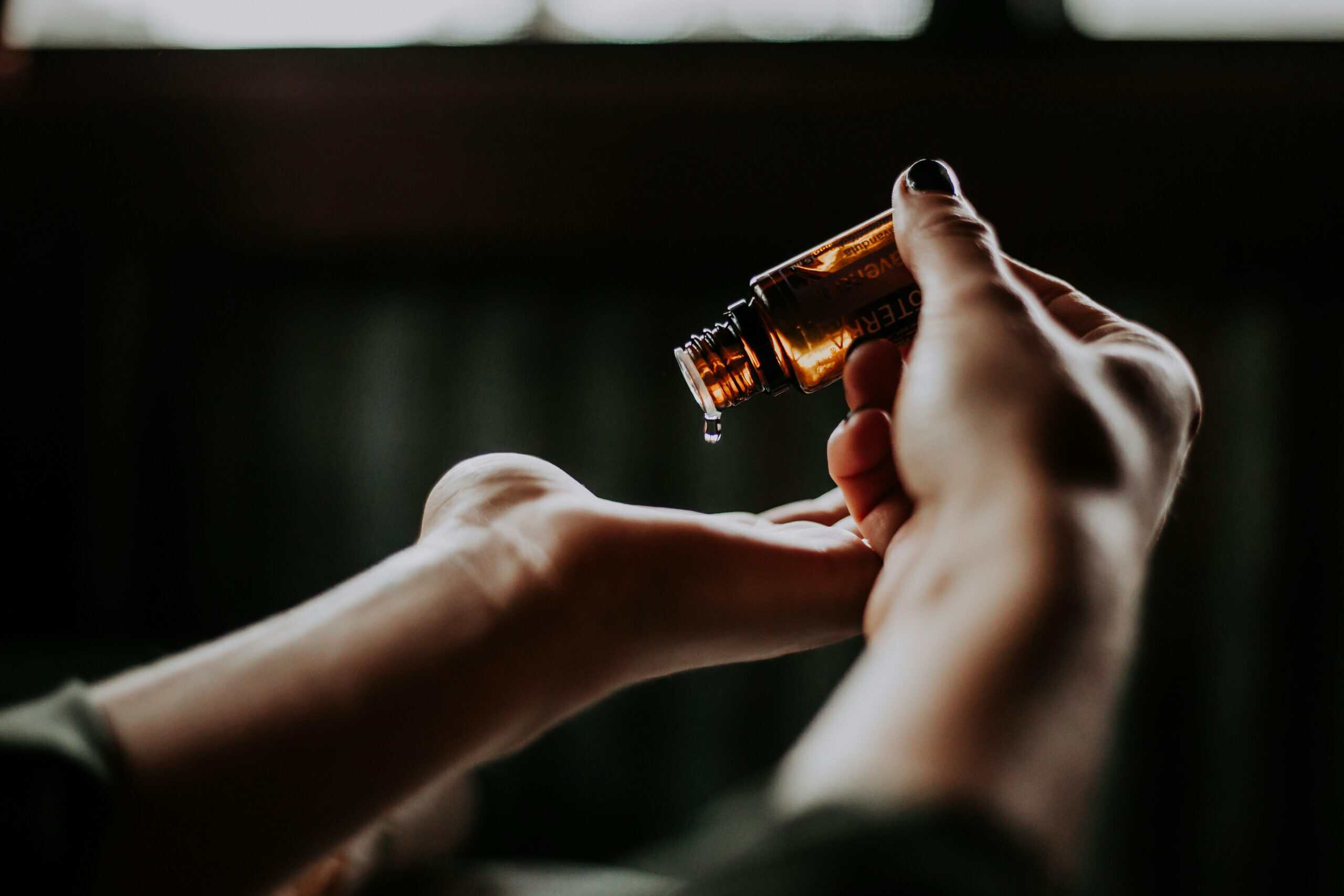
Topical application (peppermint specifically): Dilute 2 to 3 drops of peppermint oil in 1 teaspoon of carrier oil, fractionated coconut, jojoba, or sweet almond oil. Apply to the temples, forehead, and the back of the neck at the occipital ridge. Massage gently and allow to absorb. Never apply undiluted essential oil to skin, the undiluted menthol concentration produces skin irritation that worsens rather than relieves migraine symptoms. The clinical trial showing acetaminophen-comparable pain reduction used a 10% peppermint oil in ethanol solution applied with a roll-on applicator, the concentration and delivery method that produced the result.
Inhalation (lavender specifically): Inhale directly from the bottle for two to three breath cycles, or add 2 to 3 drops to a tissue held near the nose, or use a personal inhaler device. The clinical trial showing lavender’s efficacy used 15 minutes of inhalation at the onset of a migraine attack. Diffusing into a room produces lower concentration exposure than direct inhalation, adequate for ambient relaxation but below the concentration that produced the clinical trial results. For the acute attack protocol, direct inhalation at onset is the method that matches the evidence.
Cold diffusion (for sustained ambient effect): A cold-air diffuser, ultrasonic rather than heat-based, disperses essential oil molecules without altering their chemical composition through heat. Heat-based diffusers degrade some of the active compounds in both peppermint and lavender, reducing their effectiveness. For sustained ambient diffusion during rest between migraine attacks, a quality ultrasonic diffuser provides consistent low-concentration exposure. Our guide to the best aromatherapy diffusers for sleep covers the specific diffuser models that maintain oil integrity, cross-referencing with the RestRight site for the sleep context where diffuser use is most beneficial for migraine sufferers whose attacks are sleep-related.
Best Essential Oils for Migraines in 2026: The Evidence-Based Picks
1. Peppermint Oil, Best for Acute Topical Relief
Best Overall | Price: ~$10-15
Peppermint oil is the only essential oil with published randomized controlled trial evidence showing comparable acute migraine pain reduction to oral analgesics. The 2010 published trial by Göbel et al. found that 10% peppermint oil applied to the forehead and temples produced pain reduction equivalent to 1,000mg acetaminophen at 15 and 30 minutes post-application, with the significant advantage of onset within minutes rather than the 30 to 60 minutes required for oral medication absorption.
Peppermint Oil, The Menthol Mechanism That Clinical Trials Confirm
The cooling sensation from menthol is not merely pleasant, it produces measurable vasodilation and activates cold thermoreceptors (TRPM8) that compete with pain signal transmission through counter-irritation at the peripheral nerve level. For migraine sufferers who experience significant scalp sensitivity (allodynia) during attacks, where even touching the scalp is painful, peppermint’s counter-irritation mechanism addresses allodynia more directly than any oral medication at the peripheral level.
Quality matters significantly for peppermint oil efficacy. Look for 100% pure peppermint oil (Mentha piperita) with a menthol content listed at 40% or above, lower menthol content indicates either adulteration or use of less potent peppermint species. Third-party GC/MS testing documentation from the manufacturer provides the quality verification that migraine-specific topical use requires.
Best for: Migraine sufferers who want an evidence-based non-medication acute intervention for topical application at attack onset, anyone whose attacks include significant scalp and temple pain that responds to a cooling sensation.
PROS:
- Only essential oil with published RCT evidence showing analgesic-comparable acute pain reduction
- Rapid onset within minutes of application
- Inexpensive, approximately $10 to $15 for a quality 1oz bottle
- Can be used during pregnancy when many medications are avoided
- Combines naturally with cold therapy for compound benefit
CONS:
- Must be properly diluted, undiluted application causes skin irritation
- Keep away from the eyes and mucous membranes
- Menthol may trigger a headache in a minority of sensitive individuals
2. Lavender Oil, Best for Inhalation Acute Relief
Best Inhalation | Price: ~$10-15
The 2012 published clinical trial by Sasannejad et al. found that inhaling lavender essential oil for 15 minutes at migraine onset produced statistically significant pain reduction compared to placebo inhalation, with 71% of lavender-treated attacks showing full or partial response versus 47% of placebo-treated attacks. This is the specific evidence that distinguishes lavender from the broader aromatherapy claims that lack clinical substantiation.
Lavender Oil, The Published Trial That Separates It From General Aromatherapy Claims
Lavender’s linalool and linalyl acetate compounds produce anxiolytic, analgesic, and sedative effects through multiple pathways, including serotonin receptor modulation, the same neurotransmitter system that prescription triptans target for migraine relief. The mechanisms are different and the potency is not comparable to prescription treatment, but the neurochemical basis for lavender’s effect on migraine is documented at the pharmacological level rather than relying on placebo or experiential reporting alone.
For migraine sufferers who experience significant anxiety and tension as prodrome symptoms, the anxiety that precedes attacks and can itself lower the threshold for full attack development, lavender’s anxiolytic component addresses both the psychological trigger and the pain component of the attack.
Best for: Migraine sufferers who experience significant anxiety, tension, and stress as attack triggers or prodrome symptoms, anyone for whom relaxation-promoting interventions consistently improve migraine outcomes.
PROS:
- Published RCT evidence for acute migraine attack reduction
- Dual mechanism, anxiolytic and analgesic properties
- Safe for diffusion in shared spaces without the cooling intensity of peppermint
- Combines with improved sleep quality for the preventive benefit between attacks
- Inexpensive at approximately $10 to $15
CONS:
- Inhalation method, less practical mid-attack for some migraine sufferers
- The effect size is smaller than that of prescription medications
- Quality varies significantly between brands, third-party testing essential
3. Eucalyptus Oil, Best for Sinus-Associated Migraine
Best for Sinus Symptoms | Price: ~$8-12
Eucalyptus oil’s active compound 1,8-cineole has documented anti-inflammatory, analgesic, and mucolytic properties that address the sinus pressure and inflammation component that co-occurs with some migraine presentations, particularly those misdiagnosed as “sinus headaches” that are actually migraine with sinus congestion as a symptom. For migraine sufferers whose attacks consistently include significant sinus pressure, facial pain, and nasal congestion alongside head pain, eucalyptus addresses the sinus component that peppermint and lavender do not specifically target.
A 2014 published study found that eucalyptus oil inhalation reduced pain, blood pressure, and mental stress significantly compared to almond oil control, supporting the anecdotal reports of migraine sufferers who find eucalyptus inhalation provides meaningful relief specifically for the facial pressure and sinus component of their attacks.
Best for: Migraine sufferers whose attacks include significant sinus pressure and facial pain, anyone who finds that decongestants or sinus medications provide partial relief for their “migraine” (which may include sinus inflammation as a triggering or concurrent factor).
PROS:
- Anti-inflammatory and analgesic properties documented in published research
- Addresses the sinus component that other migraine oils do not target
- Effective for steam inhalation, adds a clearing benefit for nasal congestion
- Inexpensive at approximately $8 to $12
- Combines well with peppermint for a combined cooling and decongestant effect
CONS:
- Avoid use with children under 10, 1,8-cineole can cause respiratory issues in young children
- Limited migraine-specific clinical trials
- Strong scent, may be intolerable for some migraine sufferers during attacks
4. Rosemary Oil, Best for Tension-Migraine Overlap
Best for Muscle Tension | Price: ~$8-12
Rosemary oil contains rosmarinic acid and 1,8-cineole, compounds with documented neuroprotective and anti-inflammatory properties. For migraine sufferers whose attacks are consistently preceded or accompanied by significant neck and shoulder muscle tension, the cervicogenic component that co-occurs with many migraine presentations, rosemary’s combination of circulation-improving and muscle-relaxing properties addresses the peripheral trigger that pure neurological interventions do not.
Applied topically (diluted) to the neck, shoulders, and occipital ridge during the prodrome or at attack onset, rosemary provides counter-irritant stimulation alongside the circulation-promoting effect that reduces the muscle tension component of cervicogenic migraine. It is not a substitute for the neurological interventions that peppermint and lavender provide, it is the complement that addresses the musculoskeletal component specifically.
Best for: Migraine sufferers with significant neck and shoulder tension as a consistent prodrome or accompanying symptom, anyone whose attacks are consistently preceded by cervical muscle tightness that responds to heat, massage, or muscle relaxant interventions.
PROS:
- Rosmarinic acid has documented anti-inflammatory and neuroprotective properties
- Addresses the cervicogenic muscle tension component of migraine
- Combines well with peppermint for topical application to the neck and shoulders
- Inexpensive at approximately $8 to $12
- Also beneficial for cognitive clarity in the postdrome phase
CONS:
- Not recommended during pregnancy
- Limited migraine-specific clinical trials
- Effect is complementary rather than primary, not a standalone acute intervention
5. Frankincense Oil, Best for Stress-Triggered Migraine Prevention
Best for Stress Prevention | Price: ~$15-25
Frankincense (Boswellia serrata) contains boswellic acids with documented anti-inflammatory properties that inhibit 5-lipoxygenase, an inflammatory enzyme involved in leukotriene production that contributes to neuroinflammation. While migraine-specific clinical trials for frankincense are limited, the anti-inflammatory mechanism is relevant for migraine sufferers whose attacks are consistently triggered by stress and the inflammatory cascade that chronic stress activates.
Frankincense diffused during stress-management practices, meditation, breathing exercises, or rest, provides both the aromatherapeutic relaxation effect and the low-level anti-inflammatory exposure that may reduce the neuroinflammatory state that stress-triggered migraine exploits. Its use is most appropriate in the preventive context rather than acute relief, diffused daily during stress management rather than inhaled during an active attack.
Best for: Migraine sufferers with consistent stress as a primary trigger, anyone whose attack calendar shows clear correlation with high-stress periods and whose management approach includes active stress reduction practices.
PROS:
- Boswellic acid’s anti-inflammatory mechanism has been documented in published research
- Effective for daily stress management diffusion in the preventive context
- Pleasant resinous scent well-tolerated by most migraine sufferers
- Combines with meditation and breathwork for stress-reduction protocols
- Mid-range price at approximately $15 to $25
CONS:
- Limited migraine-specific clinical trials
- Primarily preventive rather than acute, not an intervention for active attack management
- Higher price than peppermint and lavender for less specific evidence base
Quick Comparison: Best Essential Oils for Migraines 2026
| Oil | Evidence Level | Best Use | Method | Price |
|---|---|---|---|---|
| Peppermint | Published RCT | Acute relief | Topical | ~$10-15 |
| Lavender | Published RCT | Acute relief | Inhalation | ~$10-15 |
| Eucalyptus | Mechanistic + limited trials | Sinus component | Steam/inhalation | ~$8-12 |
| Rosemary | Mechanistic | Tension component | Topical to neck | ~$8-12 |
| Frankincense | Mechanistic | Stress prevention | Diffusion | ~$15-25 |
The Essential Oil Migraine Protocol, Start Here
Rather than experimenting with individual oils without structure, the protocol that uses the evidence most efficiently is straightforward:
Acute attack onset: Apply diluted peppermint oil (10% in carrier oil) to the forehead, temples, and occiput immediately. Simultaneously, inhale lavender directly from the bottle for 15 minutes while resting in a dark room. If sinus pressure is present, add eucalyptus steam inhalation.
Daily prevention: Diffuse lavender in the bedroom during sleep for the combined sleep quality and neurological modulation benefit. Add frankincense diffusion during daily stress-management practice if stress is a consistent trigger. Apply diluted rosemary to the neck and shoulders if cervical tension is a consistent prodrome symptom.
Quality purchase criteria for all oils: Look for 100% pure essential oil with the botanical name specified (Mentha piperita for peppermint, Lavandula angustifolia for lavender). GC/MS third-party testing documentation verifies the active compound profile. Avoid fragrance oils or “aromatherapy oils” that are not 100% pure essential oils, these do not contain the active compounds at concentrations that produce the documented effects.
Frequently Asked Questions: Best Essential Oils for Migraines
Do essential oils actually help migraines?
Two specific oils, peppermint and lavender, have published randomized controlled trial evidence supporting their use for acute migraine relief. Peppermint applied topically showed pain reduction comparable to 1,000mg of acetaminophen in a published trial. Lavender inhaled during attacks showed statistically significant pain reduction versus placebo in a published trial. Other oils have mechanistic evidence without migraine-specific clinical trials. Essential oils are not a substitute for prescription migraine medication in moderate to severe cases, they are a complementary non-pharmacological intervention with specific evidence for specific oils used correctly.
How do I use peppermint oil for migraines?
Dilute 2 to 3 drops of 100% pure peppermint oil in 1 teaspoon of carrier oil. Apply to the forehead, temples, and the back of the neck at the first sign of head pain, not after the attack has reached full intensity. Reapply every 15 to 30 minutes as needed. Never apply undiluted peppermint oil directly to skin, the undiluted menthol concentration causes skin irritation. Keep away from eyes and mucous membranes. The clinical trial that demonstrated analgesic-comparable effects used a 10% peppermint oil concentration in ethanol with a roll-on applicator.
Can I use essential oils if I take migraine medication?
Yes, essential oils used topically and by inhalation do not interact with standard migraine medications, including triptans, NSAIDs, or ergotamines, at typical aromatherapy application amounts. The exception is internal consumption of essential oils, which is not recommended for migraine use and may interact with medications. If you take prescription preventive medications, discuss any supplement additions with your neurologist. Essential oils are generally complementary to medication rather than replacements for it in established migraine management.
Which essential oil diffuser is best for migraines?
An ultrasonic cold-air diffuser preserves the active compounds in essential oils by dispersing them without heat degradation. Heat-based diffusers and candle diffusers alter the chemical composition of both peppermint and lavender through thermal degradation, reducing the concentration of active compounds that produce documented effects. Our guide to the best aromatherapy diffusers for sleep covers the specific ultrasonic diffuser models that maintain oil integrity for medically-minded use.
Are essential oils safe to use during pregnancy for migraines?
Peppermint oil has a generally favorable safety profile during pregnancy when used topically in appropriate dilution, it is among the more commonly recommended oils for pregnancy-related nausea and headache when medication options are limited. Lavender topical and inhalation use is generally considered safe during pregnancy. Avoid rosemary during pregnancy, it has documented uterotonic properties. Eucalyptus should be used with caution. Always discuss with your obstetrician before using any essential oils during pregnancy, particularly during the first trimester.
More Migraine Relief Guides
Frequently Asked Questions
When should I see a doctor about my migraines?
See a doctor if your migraines are frequent, severe, or changing in pattern, if over-the-counter options are not helping, or if you have new or unusual symptoms such as weakness, vision loss, confusion, or the worst headache of your life. A doctor can confirm the diagnosis, rule out other causes, and discuss prescription options.
For the wider picture, see our guide to best noise cancelling headphones for migraines.
Sources
- National Institutes of Health. MedlinePlus health topics. https://medlineplus.gov/
- American Academy of Sleep Medicine. Clinical resources and practice guidelines. https://aasm.org/clinical-resources/practice-standards/practice-guidelines/
Our guide to whether essential oils help migraines covers the scent sensitivity question to settle before buying one.
