
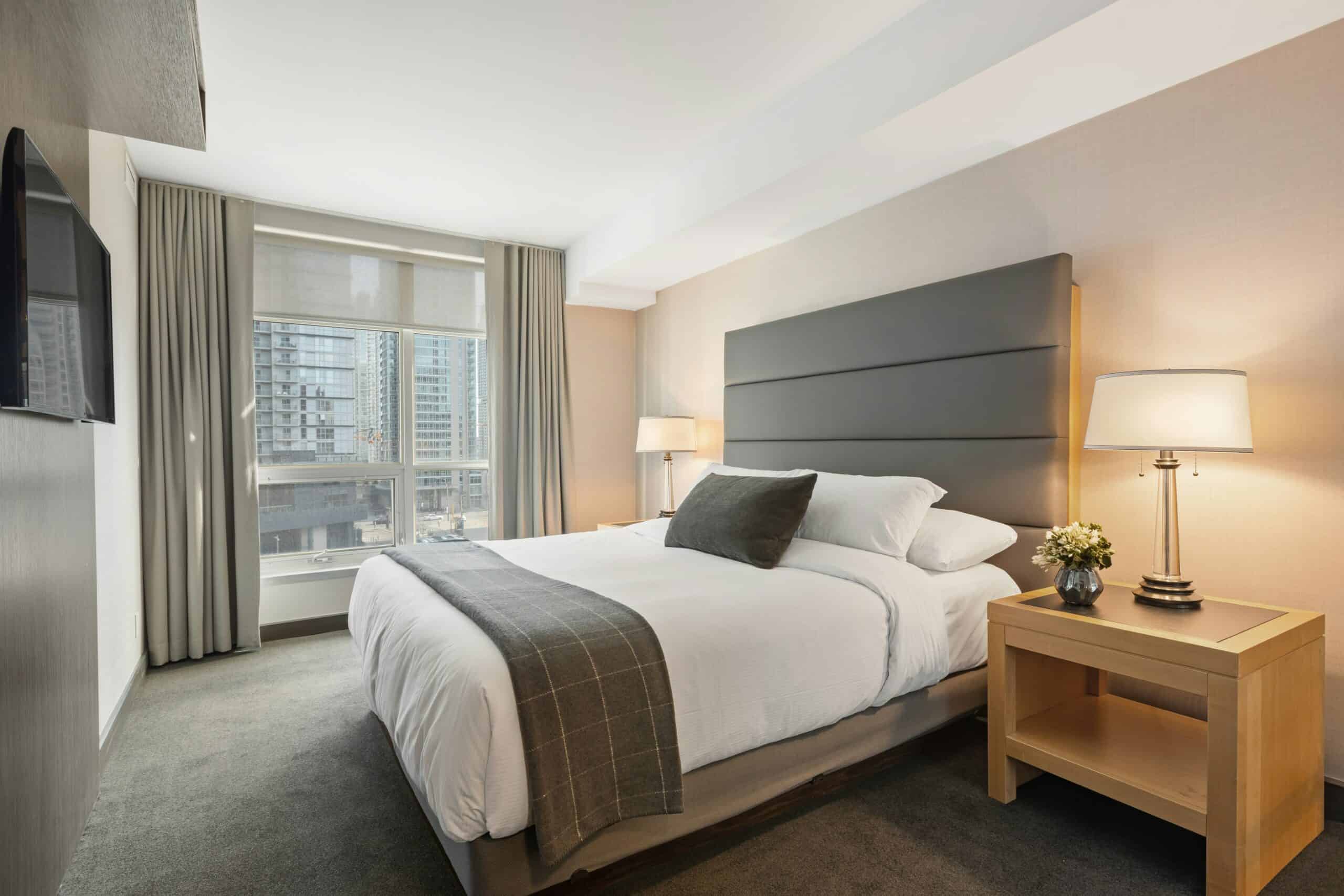
A hotel room removes the environmental controls people build at home. The curtains leak, the pillows are wrong, the air conditioning cycles all night, and none of it can be changed permanently.
What can be changed is what you bring. A small kit addresses the same problems in any room without depending on what the hotel provides. Our note on traveling with chronic migraine covers the wider trip.
Medical Disclaimer
This is general information rather than medical advice. Environmental adjustments are self-care measures rather than treatment, and anything involving medication belongs with a doctor who knows your history. Sudden severe headache unlike any you have had before, or headache with fever, confusion, weakness, or vision loss, needs emergency care.
What Goes Wrong in Hotel Rooms
| Problem | Why it happens | What helps |
|---|---|---|
| Light around curtains | Curtains never meet properly | Clips, sleep mask |
| Standby lights | TVs, alarm clocks, smoke alarms | Tape, cloth, unplugging |
| Corridor light under the door | Gap under every hotel door | Towel along the base |
| Air conditioning noise | Cycles on and off all night | Earplugs, steady sound |
| Unfamiliar pillows | Wrong loft for your neck | Ask for alternatives, travel pillow |
| Scented cleaning products | Standard in hospitality | Ventilate on arrival |
How We Picked
Selections are grouped by the specific problem each solves, since a hotel kit is about coverage rather than any single item being excellent.
Descriptions come from documented product features rather than hands-on testing of every option.
1. A Contoured Sleep Mask, Best Overall
Why It Stands Out
Solves the light problem regardless of what the curtains do, which is the single most common hotel complaint for anyone sensitive to light.
Contoured designs leave space over the eyes rather than pressing on them, which matters if you are lying down during an attack rather than only sleeping.
Worth Knowing
Fit varies considerably and a mask that leaks at the nose defeats the purpose.
Some people find any pressure on the head unwelcome during an attack. Our roundup of sleep masks for migraine covers the category.
This suits nearly everyone. Skip it if head pressure bothers you.
Check Price on Amazon2. Blackout Curtain Clips, Best for Light Leaks
Why It Stands Out
Hotel curtains almost never close fully, and the vertical strip of light down the middle is the part people notice at five in the morning.
Clips weigh almost nothing and solve it in seconds without any negotiation with the hotel.
Worth Knowing
Heavy curtains need a stronger clip than a stationery clamp provides.
They do nothing about light around the edges or under the door. Our note on choose migraine glasses covers the full approach.
This suits any hotel stay. Skip it only if you already use a mask and sleep fine.
Check Price on Amazon3. Reusable Earplugs, Best for Sound
Why It Stands Out
Hotel noise is unpredictable rather than constant, and earplugs address corridor conversations, doors, and cycling air conditioning at once.
Reusable designs with different tip sizes fit better than disposable foam for most people over a full night.
Worth Knowing
They reduce rather than eliminate sound, and low-frequency noise passes through most of them.
Anyone needing to hear an alarm should test that first. Our note on whether earplugs help covers use during an attack.
This suits noisy locations. Skip it if you need to stay alert to sound.
Check Price on Amazon4. A Reusable Cold Pack, Best for Attacks
Why It Stands Out
Cold applied to the forehead or neck is a long-standing self-care measure, and hotel ice is available at any hour.
A gel pack that can be chilled in the room fridge or filled from the ice machine travels flat and weighs little.
Worth Knowing
Room fridges are frequently minibars that do not get cold enough.
Never apply anything frozen directly to skin. Our roundup of cold packs covers the options.
This suits anyone who uses cold at home. Skip it if heat works better for you.
Check Price on Amazon5. A Travel Pillow for Sleeping, Best for Neck Support
Why It Stands Out
Hotel pillows are chosen for durability and laundering rather than for neck alignment, and waking with neck pain is a recognized problem for many people with migraine.
A packable pillow gives you a known quantity in an unknown room.
Worth Knowing
Full-size travel pillows take real luggage space rather than fitting in a bag pocket.
Most hotels will supply alternative pillows on request, which costs nothing. Our note on migraine glasses vs regular sunglasses covers the connection.
This suits frequent travelers. Skip it for a single night.
Check Price on Amazon6. A Compact Travel Kit, Best for Organization
Why It Stands Out
Keeping everything in one pouch that lives in your luggage means it travels without being packed each time, which is how these kits actually get used.
Finding what you need in the dark during an attack is considerably easier from one known place.
Worth Knowing
Prepacked kits rarely match what any individual needs, so assembling your own works better.
Medication storage has its own temperature considerations. Our roundup of travel kits covers assembling one.
This suits anyone traveling regularly. Skip it if you travel rarely.
Check Price on AmazonSetting the Room Up on Arrival
Doing this when you arrive, rather than when you need it, is the difference between a five-minute job and a difficult one.
Deal with light sources first. Standby lights on televisions, alarm clocks, and smoke detectors are small and surprisingly bright in a dark room, and tape or a cloth over them takes seconds.
A towel along the base of the door blocks corridor light, which is the source people forget because it is below eye level.
Locate the thermostat and work out whether the air conditioning can be set to run continuously rather than cycling, since the sound of it switching on and off is more disruptive than steady operation.
Ventilating the room on arrival clears the scented cleaning products used as standard in hospitality, which are a recognized trigger for some people. Our note on dark sunglasses for migraine sufferers covers that.
The Room Itself Matters Less Than You Think
People focus on the room because it is visible, and the larger factors during travel are usually elsewhere.
Schedule disruption does more than any curtain gap. Late arrivals, early departures, and meals at unfamiliar times all shift the routine at once.
Dehydration is common while traveling, since water is less available than at home and people drink less without noticing.
Skipped or delayed meals are a commonly reported trigger, and travel days produce them reliably.
Setting the room up is worth doing and it is the smaller half of the problem. The larger half is keeping sleep, food, and fluid closer to normal than the trip naturally allows. Our note on napping with a migraine covers rest on the road.
What to Ask For at Check-In
A quiet room
Away from elevators, ice machines, and the pool. Most hotels accommodate this if asked at booking rather than on arrival.
A high floor away from the street
Traffic and loading noise carry further at night than during the day.
Extra or alternative pillows
Free, usually available, and it solves the pillow problem without carrying one.
A room away from recent renovation
Fresh paint and adhesives are strong smells that persist for weeks. Our note on does cold help neck tension migraine covers planning.
Sleep Timing Matters More Than the Room
Irregular sleep is one of the more consistently reported migraine triggers, and travel disrupts it in several ways at once.
Both too little and too much sleep are recognized as problematic for many people, which makes catching up at the weekend a mixed strategy.
Time zone changes shift the whole schedule, and the adjustment period is where attacks cluster for many travelers.
Keeping wake time as consistent as the trip allows does more than any room adjustment. Our note on whether oversleeping triggers migraines covers the pattern.
What to Look For
Things that pack flat
A kit only travels if it fits without a decision each trip.
Items that work in any room
A mask works everywhere; a device needing a specific outlet does not.
Nothing that needs the hotel to cooperate
The point of bringing your own is not depending on what is provided.
Familiar rather than new
A trip is the wrong time to discover something does not suit you.
Common Mistakes to Avoid
Setting up only when symptoms start
Taping over standby lights is far harder during an attack than on arrival.
Relying on hotel blackout curtains
They almost never close fully, and the gap is at eye level when lying down.
Packing medication in checked luggage
Bags get delayed, and that is a straightforward thing to avoid.
Trying new products on a trip
Test anything at home first, where a poor result costs nothing. Our roundup of migraine glasses covers another item worth testing first.
Sources
American Migraine Foundation, on travel and migraine management and on common triggers. Mayo Clinic, on migraine triggers including sleep disruption and strong smells. American Academy of Sleep Medicine, on sleep regularity.
Recommended Reading
See our note on car sun shades for migraine, our roundup of car accessories, our note on quieting a room, and a note on noise as a trigger or symptom.
Hotel Room Migraine FAQ
What matters most in a hotel room?
Light control, since hotel curtains rarely close fully and standby lights are surprisingly bright. A sleep mask handles it regardless of the room.
Should I set the room up before I need it?
Yes. Taping over standby lights and putting a towel under the door takes minutes on arrival and is genuinely difficult mid-attack.
What can I ask the hotel for?
A quiet room away from elevators and ice machines, a higher floor away from the street, and alternative pillows. All are usually free.
Do hotel blackout curtains work?
Rarely completely. The vertical gap where they meet sits at eye level when you are lying down, which is why clips are worth carrying.
What about the air conditioning?
Cycling on and off is more disruptive than steady running. Check whether the thermostat allows continuous fan operation.
Should I bring my own pillow?
For frequent travel, possibly. For a single night, asking for alternative pillows costs nothing and takes no luggage space.
Does travel itself trigger attacks?
Sleep disruption is a commonly reported trigger, and travel disrupts it in several ways at once. Keeping wake time consistent helps more than room adjustments.
When should I see a doctor?
If attacks are frequent, worsening, or not responding to what you use. Sudden severe headache unlike any before, or headache with fever, confusion, weakness, or vision loss, needs emergency care.
