
Most advice about cold and migraine assumes you put something cold on your forehead. That works for some people, and it is not where I put mine.
I use a gel pack on the top back of my neck, and I use it when the problem is tension in my head and upper neck rather than for every attack. That distinction turned out to matter more than anything about the pack itself. Our note on migraine cooling pads covers why.
Medical Disclaimer
This is general information, not medical advice. Migraine is a neurological condition needing diagnosis and management from a doctor, and cold therapy is a comfort measure rather than treatment. Anyone with circulatory conditions, nerve damage, or reduced skin sensation should ask a doctor before using cold therapy. Sudden severe headache, fever, confusion, weakness, or vision changes require immediate medical attention.
Quick Answer
Apply cold to wherever the tension actually is, commonly the back of the neck or the temples, for roughly fifteen to twenty minutes. Use a barrier between the pack and your skin, and stop if the area becomes numb or painful.
What I Use
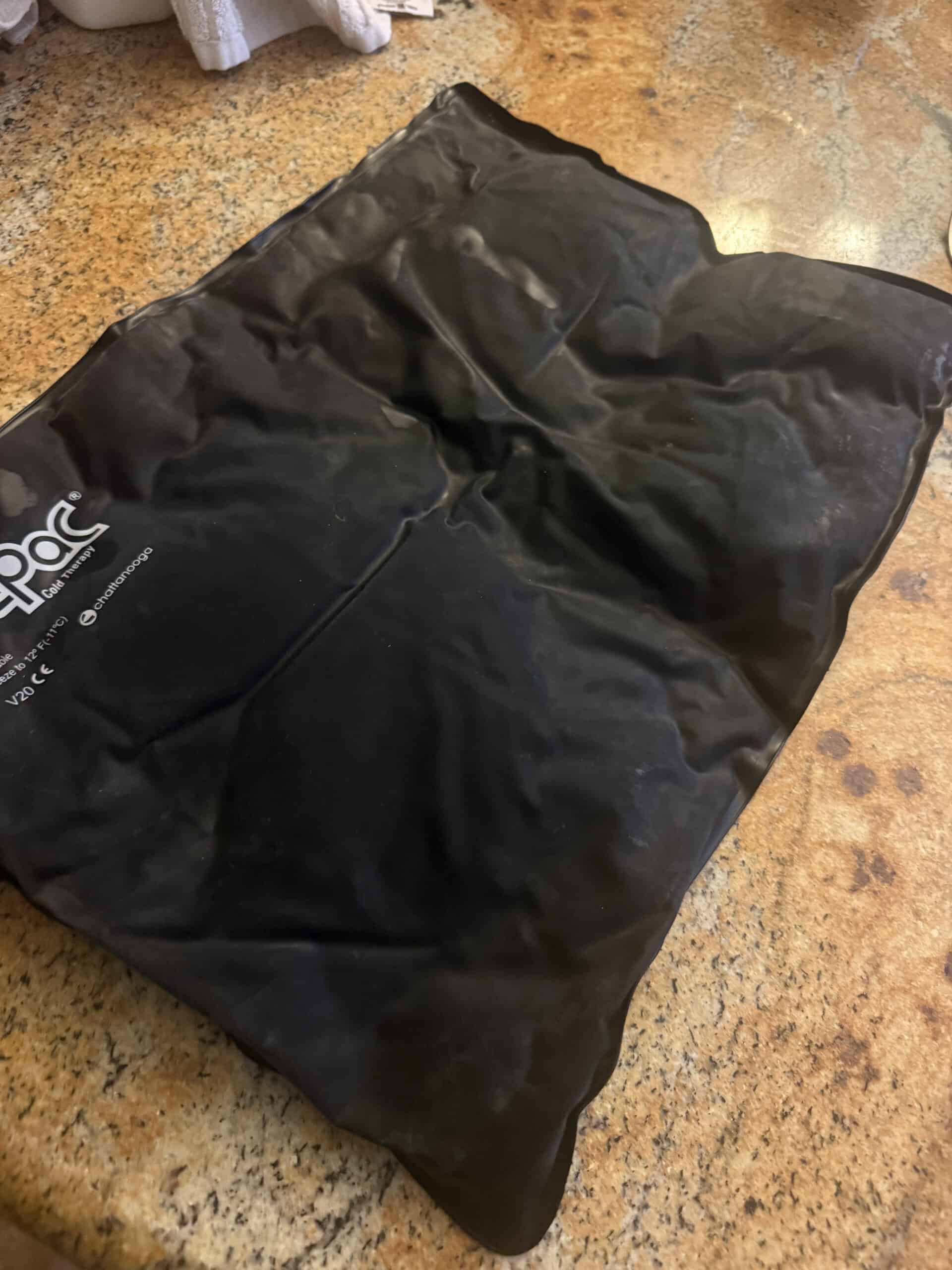
A plain gel pack kept in the freezer. Nothing specialized, nothing designed for migraine, no strap or cap or wearable design.
I take it out and put it directly on the top back of my neck, which is where the tension sits when I get it. Fifteen to twenty minutes is what I do, and then it goes back in the freezer.
One honest note: I use it without wrapping it in anything, and standard guidance says to use a cloth barrier between a frozen pack and skin. That guidance exists because direct contact with something at freezer temperature can damage skin, and it is the safer practice. I am describing what I do rather than recommending it.
I do not use it alongside the red light mask. Those are separate things I reach for at different times rather than a routine I combine.
Where to Put It
The back of the neck
Where I use mine. It suits attacks that come with neck and upper head tension, and it is the placement least covered in most migraine advice.
The forehead and temples
The standard recommendation, and it works for people whose pain concentrates there.
Over the eyes
Cooling eye masks are made for this and combine cold with blocking light, which addresses two symptoms at once.
Wherever the pain actually is
The useful principle. Following generic placement advice when your pain is somewhere else wastes the intervention. Our roundup of cooling eye masks covers the eye option.
How Long
Fifteen to twenty minutes is the range I use and is broadly consistent with general cold therapy guidance.
Longer is not better. Extended cold application risks skin and tissue damage, and the benefit does not continue increasing with time.
If you want to repeat it, leaving a gap between applications lets the skin return to normal temperature first.
Set a timer rather than estimating, because judgment about elapsed time during an attack is unreliable. I use my phone.
Why Cold Might Help
The mechanism is not fully settled. Cold applied to the neck may affect blood flow in vessels close to the surface, and cold is also understood to affect how pain signals are processed.
There is some research on cold applied to the carotid area at the front of the neck specifically, though findings vary and this is not a settled area.
What is clearer is that cold provides a competing sensation, which is a recognized way of reducing perceived pain regardless of the underlying condition.
The honest position is that plenty of people find it helps, the evidence base is thinner than the popularity suggests, and it is cheap and low-risk enough to try. Our note on building a migraine toolkit covers where it fits.
Cold or Heat
These are not interchangeable and I use them for different things.
Cold goes on when the problem is head and upper neck tension during an attack. Heat is what I use for muscle tension more generally, and I keep them separate rather than alternating.
General guidance tends to associate cold with acute pain and heat with muscle tightness and stiffness, which roughly matches how I use each.
Some people alternate or use both in the same session. I do not, and I have no view on whether that works better. Our roundup of warm compresses covers the heat side.
Practical Things That Matter
Keep it in the freezer permanently so it is ready. An attack is not the moment to discover the pack is at room temperature.
Have more than one if you use it often, since a pack that has warmed up takes hours to refreeze and attacks do not wait.
Gel packs stay flexible when frozen, which is why they conform to the neck where a rigid block would not. That flexibility is most of the reason to use gel rather than anything else.
Check the skin afterward. Redness that fades is normal; numbness, white patches, or pain mean you left it on too long or too directly.
What Kind of Pack
The choice matters less than people expect, and a few differences are worth knowing.
Gel packs stay flexible at freezer temperature, which is why mine conforms to the back of my neck instead of sitting on it like a brick. That flexibility is the whole reason to prefer gel over a rigid pack or a bag of ice.
Purpose-made migraine caps and wraps hold the cold in place without you having to, which matters if you want your hands free or if holding a pack in position is itself uncomfortable. Mine is a plain pack and I hold it or lie against it.
Frozen vegetables work in an emergency and conform reasonably well, and they warm up considerably faster than gel does.
Whatever you use, having two means one is always frozen. A pack that has warmed through takes hours to refreeze, and attacks do not schedule themselves around that. Our roundup of headbands and compression caps covers the wearable versions.
When Cold Is Not the Answer
It does nothing for the underlying condition. This is symptom management, and where a doctor has prescribed acute medication, taking it early generally matters more than any comfort measure.
Some people find cold makes things worse, and that is a real response rather than doing it wrong. If it does, stop.
Anyone with reduced sensation in the area cannot reliably tell when cold is causing damage, which is why circulatory conditions and nerve damage warrant a doctor’s input first.
And if you are reaching for it constantly, that frequency is itself information worth bringing to an appointment. Our note on what to record in a diary covers tracking it.
Ice Pack FAQ
Where should I put an ice pack?
Wherever the pain or tension actually is. I use the top back of my neck because that is where mine sits. Forehead and temples are the standard recommendation and suit people whose pain concentrates there.
How long should I leave it on?
Around fifteen to twenty minutes. Longer risks skin and tissue damage without adding benefit, and a timer is more reliable than judging it during an attack.
Should I wrap the pack in a cloth?
Standard guidance says yes, because direct contact with something at freezer temperature can damage skin. I use mine unwrapped, which is what I do rather than what I would tell you to do.
Does cold actually work for migraine?
Many people find it helps and the evidence base is thinner than its popularity suggests. It is cheap and low-risk, which makes it reasonable to try even without strong research behind it.
Cold or heat?
Cold is generally associated with acute pain and heat with muscle tightness. I use cold during attacks with neck tension and heat separately for muscle tension, and I keep them apart.
What kind of pack is best?
A gel pack stays flexible when frozen and conforms to the neck, which is most of the argument. Mine is a plain one with no migraine-specific design at all.
Can I use it too often?
Frequency is limited by skin safety rather than by any daily cap, so leave gaps between applications. Reaching for it constantly is worth mentioning to your doctor as information about attack frequency.
When should I see a doctor?
For diagnosis of recurring headaches, if attacks change in pattern, or before using cold therapy if you have circulatory conditions or reduced skin sensation. Sudden severe headache with fever, confusion, or weakness is an emergency.
Sources
- American Migraine Foundation. Managing migraine symptoms. https://americanmigrainefoundation.org/resource-library/
- National Institute of Neurological Disorders and Stroke. Migraine information. https://www.ninds.nih.gov/health-information/disorders/migraine
- American Academy of Family Physicians. Cold and heat therapy guidance. https://familydoctor.org/
