
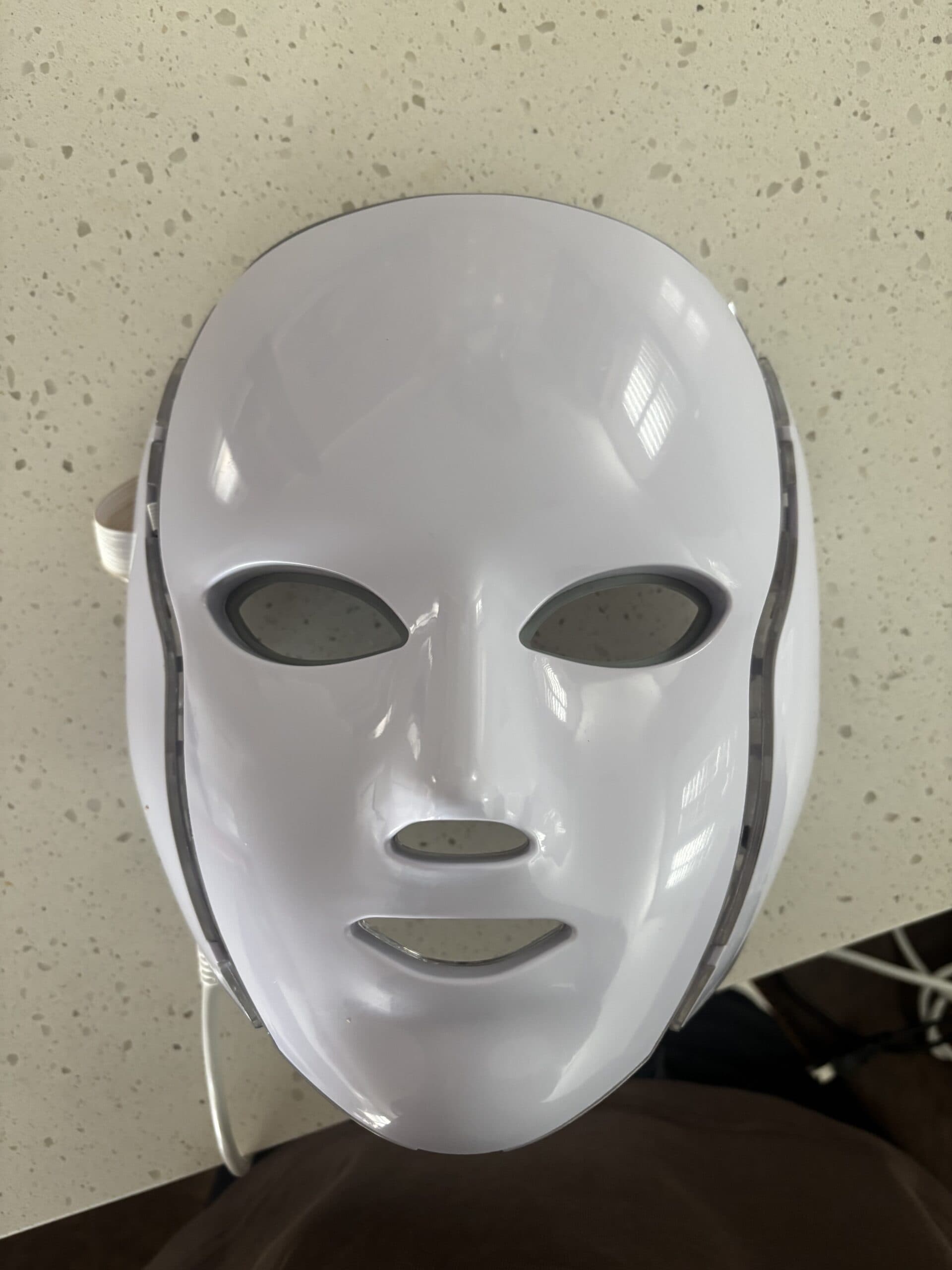
The honest answer is that the evidence is limited and emerging: red light therapy is not an established or standalone treatment for migraine, though some people use a red light mask as a low-risk complementary tool alongside their regular care. Whether red light therapy masks help migraines is a fair question given how many struggle to find relief, so here is what the research actually shows, what it does not, and how I personally use one, with picks in our guide to red light therapy devices for migraine.
Medical Disclaimer
This article is for general information and is not medical advice. Red light therapy is not an established treatment for migraine, and individual experiences vary. Always talk with a qualified healthcare provider before starting any new therapy for migraine, especially if you have frequent attacks or other health conditions.
Quick Answer
Red light therapy for migraine is an emerging, low-risk idea with limited clinical evidence. It is not an established treatment and should not replace medical care. The proposed mechanism, photobiomodulation, is plausible but under-studied for migraine specifically. Some people, myself included, find a red light mask a pleasant complementary tool, but that is individual experience, not proof it works. Green light actually has stronger migraine research.
Key Takeaways
- Clinical evidence for red light therapy and migraine is limited and emerging.
- It is not an established or standalone migraine treatment.
- The proposed mechanism is photobiomodulation, still under study.
- Green light has stronger migraine-specific research than red.
- Treat it as a possible complement to medical care, not a replacement.
What Red Light Therapy Is
Red light therapy, also called photobiomodulation, uses low levels of red or near-infrared light to stimulate activity in cells. The proposed idea is that these wavelengths are absorbed by the mitochondria, the energy-producing part of cells, potentially supporting cellular energy and influencing inflammation. Most home red light devices, including face masks, were originally designed for skin and are widely marketed for complexion and anti-aging. The application to migraine is newer and more theoretical, resting on the idea that supporting cellular energy and reducing inflammation could, in principle, be relevant to a condition involving the brain and nervous system. That idea is plausible, but plausibility is not the same as proof.
What the Research Actually Shows
Here is where honesty matters. For migraine specifically, the clinical evidence on red and near-infrared light therapy is limited and early, drawn largely from small studies, and it does not support red light therapy as a standalone migraine treatment. Some research on transcranial photobiomodulation for headache is encouraging but preliminary, and it is generally described by researchers as experimental. Notably, the stronger body of light-therapy research for migraine involves green light, not red: a University of Arizona Health Sciences clinical trial found that daily green light exposure reduced headache days for many participants, and studies in the journal Brain showed green light aggravates migraine far less than other colors. We compare the two in our guide on red light versus green light therapy for migraines. For red light, treat the current evidence as promising but unproven.
My Experience Using a Red Light Mask
For transparency, here is my own use, which is personal experience and not evidence that it works. I have a wearable red light mask that covers the full face, which I have had for roughly eight months to a year. I use it only occasionally, maybe once every couple of weeks including times I use it recreationally, and for migraine I reach for it mid-attack, usually when I have not managed to get relief from other things I try first. I genuinely like using it and find it a pleasant, low-effort thing to do. That is the honest extent of it: an occasional, secondary tool I enjoy, not something I rely on as a primary treatment or would claim cured a migraine.
How It Might Fit Into Migraine Care
If you are curious about red light therapy, the reasonable way to frame it is as a possible low-risk complement to an established migraine plan, never a replacement for one. Effective, evidence-based migraine care includes medical treatments, identifying and managing triggers, and lifestyle factors like consistent sleep, hydration, and stress management. A red light device, if you enjoy it, sits alongside those as an optional extra, much like some people use cooling masks or relaxation routines. It should not delay or displace seeing a doctor, especially if your migraines are frequent, severe, or changing, since those warrant proper medical evaluation and treatment.
What to Know Before Trying One
A few practical points matter. Red light masks are generally considered low-risk, but eye comfort and safety deserve attention since the device sits over the face, which we cover in our guide on whether red light therapy is safe for migraines. Manage expectations: the evidence does not promise relief, so approach it as an experiment rather than a solution. And crucially, talk with your healthcare provider first, particularly if you have eye conditions, take photosensitizing medications, or have frequent attacks. Going in with realistic expectations and medical guidance is the sensible way to try any emerging, unproven approach.
Recommended Reading
- red light versus green light therapy, since green has stronger evidence.
- how to use red light therapy for migraines, if you try it.
- is red light therapy safe for migraines, on eye safety.
- red light therapy devices for migraine, for options.
- whether earplugs help
- choosing migraine glasses
How It Fits With Established Migraine Tools
It helps to place red light therapy next to the tools that actually have evidence behind them. Established migraine care includes medical treatments, trigger management, and light-related aids like migraine glasses for light sensitivity and, where light sensitivity is a factor, softer lighting such as migraine-friendly night lights. Green light, covered in our comparison, has the strongest light-therapy research for migraine. A red light mask sits below all of these on the evidence ladder, as a pleasant, low-risk extra rather than a core tool. Seeing it in that context keeps it in proportion: enjoyable if you like it, but not a substitute for the things that genuinely help.
Do Red Light Therapy Masks Help Migraines FAQ
Is red light therapy established to help migraines?
No. The clinical evidence for red light therapy and migraine is limited and emerging, and it is not an established or standalone treatment. Some early research is encouraging, but it does not prove red light masks relieve or prevent migraines. Treat it as unproven and complementary.
How strong is the evidence that red light masks help migraines?
Weak so far. The clinical evidence for red light therapy and migraine is limited and early, drawn from small studies, and it does not establish red light masks as effective for migraine. Some research is encouraging but preliminary. Treat any migraine benefit as unestablished, and see our comparison for how green light differs.
Can a red light mask replace my migraine medication?
No. Red light therapy is not a replacement for medical treatment and should never be used to delay or replace care from your doctor. If you have frequent or severe migraines, evidence-based medical treatment matters. A red light device, at most, is an optional low-risk complement.
Does red light therapy have side effects for migraine?
Red light therapy is generally considered low-risk, but because a mask sits over the face, eye comfort and safety matter, and bright light can be a concern for some migraine sufferers. Talk to your doctor first, especially with eye conditions or photosensitizing medications. See our safety guide for details.
Should I see a doctor about my migraines?
Yes, especially if your migraines are frequent, severe, changing, or not well controlled. A healthcare provider can offer evidence-based treatments and rule out other causes. Emerging tools like red light therapy should complement, never replace, proper medical evaluation and a personalized migraine management plan.
How often do people use red light masks for migraine?
It varies widely, and there is no established migraine protocol. Personally I use mine only occasionally, roughly every couple of weeks including recreational use. Since the evidence is limited, there is no established frequency for migraine relief. Follow the device instructions and your doctor’s guidance rather than any fixed rule.
Are red light therapy masks a waste of money for migraine?
Not necessarily, if you enjoy them and keep expectations realistic. They are low-risk and pleasant for many people, and often double for skin. But since migraine evidence is limited, do not buy one expecting reliable migraine relief. Value it as an optional extra, not a treatment.
What migraine tools have better evidence than red light?
Established medical treatments, trigger and lifestyle management, and, among light tools, green light therapy and migraine glasses for light sensitivity have stronger support. Red light is more of an emerging, general-wellness option. Prioritize evidence-based care and discuss options with your doctor.
Sources
- University of Arizona Health Sciences, clinical research on green light therapy for migraine.
- American Migraine Foundation, evidence-based migraine treatment guidance.
