
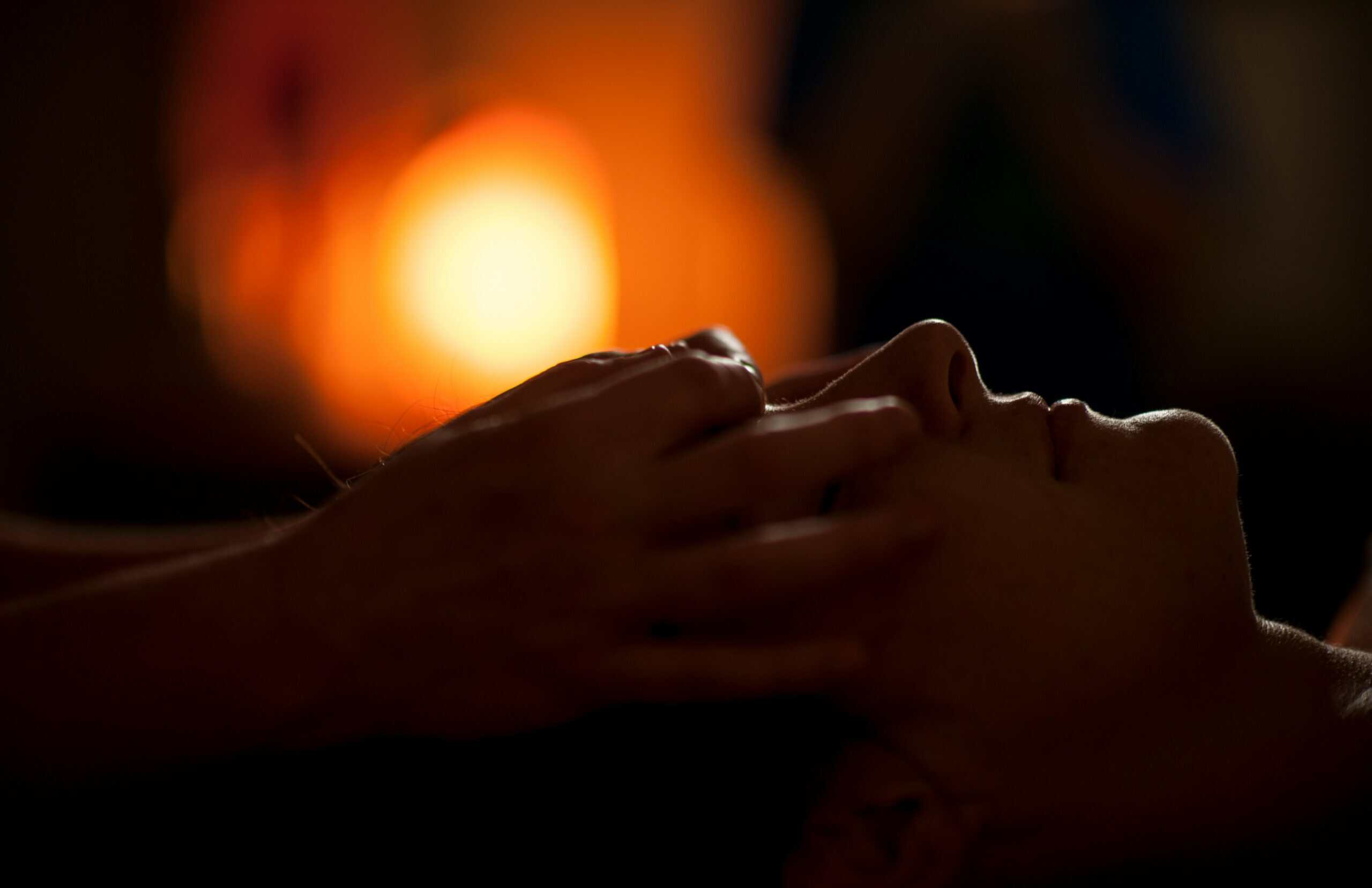
The evidence is inconsistent and the number of trials is small, so massage is best treated as comfort and tension management rather than as migraine prevention. Whether massage helps migraines has a less satisfying answer than most articles give it, because the research base is genuinely thin.
Neck and shoulder tension is the part with better support. Our guide to whether posture causes migraines covers the mechanical side this overlaps with.
A Quick Note
This is general information, not medical advice. Massage is not a treatment for migraine and is not a substitute for diagnosis. A new, sudden, severe or changing headache needs medical evaluation. Anyone with a clotting disorder, on anticoagulants, pregnant, or with osteoporosis or a recent injury should speak to a clinician before booking.
Quick Answer
NCCIH describes the research on massage for headache as inconsistent, with only a small number of trials completed. Some reduced migraine frequency against a waiting list and others found no advantage over inactive treatment. The evidence for short-term neck and shoulder pain relief is better, which is where the realistic benefit sits.
Key Takeaways
- Few trials exist, and their results do not agree.
- Comparisons against waiting lists look better than against sham.
- Neck and shoulder pain relief has stronger support.
- Relief from neck work tends to be short lived.
- Most states license or certify massage therapists.
- Rare serious harms exist, mostly with vigorous technique.
- Pressure on the head during an attack is often intolerable.
| What you want | How the evidence looks | Practical read |
|---|---|---|
| Fewer migraine days | Inconsistent, few trials | Do not count on it |
| Neck and shoulder relief | Better supported, short term | The realistic benefit |
| Relief during an attack | Not what the research covers | Depends entirely on the person |
| Tension-type headache | Manual therapy looks more useful | A different condition |
| Stress reduction | Plausible and not migraine-specific | Worth counting anyway |
| Replacing preventive care | No support at all | Not a substitute |
What the Research Actually Says
NCCIH is direct about the state of this literature, noting that only a small number of trials of massage for headache have been completed and that results are inconsistent.
The pattern within those trials is informative. Some found decreased migraine frequency compared with a waiting list, while others found no difference between massage and inactive treatment.
A waiting list is a weak comparator, because it controls for time passing and nothing else. An inactive treatment controls for attention and expectation too.
When a therapy beats a waiting list and not an inactive comparison, the honest conclusion is uncertainty. Our guide to whether cervical traction helps migraines covers a neighboring intervention with a similar problem.
Neck Pain Is the Better Claim
What the reviews support
NCCIH reports a review finding massage more helpful than inactive therapies for neck and shoulder pain, without being more effective than other active therapies.
Dose appears to matter
NCCIH also cites work indicating short-term neck pain relief when sessions were long enough and frequent enough. A single short appointment is not the thing that was examined.
Why that is relevant to migraine
Neck and shoulder tension travels with migraine for many people, whether as trigger, symptom or consequence of guarding through an attack.
Where it stops
Relieving neck pain is not the same as preventing migraine. Our guide to whether cold helps neck tension migraine covers a cheaper approach to the same target.
Tension-Type Headache Is a Different Question
NCCIH points to a review concluding that manual therapy can be a valuable nonpharmacologic option for tension-type headache. That is a genuinely different diagnosis.
Mixing the two is the most common error in writing about this. Migraine and tension-type headache differ in mechanism, in symptoms and in what helps.
Anyone whose head pain is bilateral, pressing, and without nausea or light sensitivity may be dealing with the condition where manual therapy looks more useful.
Getting the diagnosis right comes first. Our comparison of migraine against headache covers the distinction, and our guide to how migraines are diagnosed covers who makes that call.
During an Attack Is Individual
Some people want firm pressure at the base of the skull during an attack. Others cannot tolerate being touched at all.
Cutaneous allodynia is the reason for that split. When the skin and scalp become painful to light touch, massage stops being an option.
Scalp tenderness follows the same pattern and is common enough to expect. Our guide to why your scalp hurts during a migraine covers it.
The practical answer is to find out between attacks rather than during one. Our roundup of scalp massagers covers the gentlest end of the category.
Professional, Device or Self
- A licensed therapist. NCCIH notes that forty-five states and the District of Columbia require licensure or certification before practice.
- A percussive device. Useful on shoulders and upper back, and not for use on the neck or skull.
- A handheld neck massager. Convenient, adjustable, and easy to overuse.
- A foam roller. Good for the thoracic spine and shoulders that drive forward head posture.
- Your own hands. Free, available during an attack, and the only option that costs nothing to abandon.
- Heat first. Warming tissue before working on it makes the work more tolerable.
Our roundup of neck massagers covers the handheld category, our roundup of massage guns covers the percussive option, and our roundup of foam rollers covers the upper back.
Safety Is Not Nothing
NCCIH describes the risks as low overall while listing rare serious harms including blood clots, nerve injuries and bone fractures. Those cluster around vigorous technique and around older people.
Deep tissue work on the neck deserves particular caution. The structures there are close to the surface and not all of them tolerate pressure.
Anticoagulants, clotting disorders, osteoporosis, recent injury and pregnancy all warrant a conversation with a clinician first.
NCCIH also cautions against using massage to delay medical evaluation, which is the most relevant warning for headache. Our guide to finding a migraine specialist covers the step massage should not replace.
What to Expect If You Try It
Set the goal as tension and comfort rather than fewer attacks. That framing avoids disappointment and still leaves something worth having.
Keep a headache diary across whatever course you book, because group averages say nothing about you. Frequency is the number to watch.
Change one thing at a time. Starting massage and a new preventive together makes the result unreadable.
Watch for medication overuse in the background, which is easy to miss while trying something new. Our guide to choosing migraine tension relief covers matching the tool to the target, and our guide to using heat for migraine tension covers the pairing that costs almost nothing.
Related Reading
Frequently Asked Questions
Does massage help migraines?
The evidence is inconsistent and the number of trials is small. NCCIH notes that some reduced migraine frequency against a waiting list while others found no difference from inactive treatment. Treat massage as tension and comfort management rather than migraine prevention.
Is massage better for tension headaches than migraines?
The evidence points that way. NCCIH cites a review concluding manual therapy can be a valuable nonpharmacologic option for tension-type headache, which is a different diagnosis from migraine with different mechanisms and different treatments.
Does massage help the neck pain that comes with migraine?
This is the better-supported claim. NCCIH reports massage being more helpful than inactive therapies for neck and shoulder pain, though not more effective than other active therapies, and the relief tends to be short lived.
Can you massage during a migraine attack?
It depends entirely on the person. Some find firm pressure at the base of the skull helpful, while others cannot tolerate touch at all because of cutaneous allodynia, where light contact becomes painful. Work out which you are between attacks.
Are massage guns safe to use for migraine tension?
On the shoulders and upper back, generally yes with moderate pressure. Not on the neck or skull, where structures sit close to the surface. NCCIH links rare serious harms including nerve injury to vigorous technique, so restraint matters more than intensity.
How often would you need to go?
The neck pain research NCCIH describes suggests sessions need to be long enough and frequent enough to help, so a single short appointment is not what was examined. Agree a course with the therapist and keep a diary across it.
Who should avoid massage?
Anyone on anticoagulants or with a clotting disorder, osteoporosis, a recent injury, or during pregnancy should speak to a clinician first. NCCIH also cautions against using massage to delay medical evaluation, which matters most with an undiagnosed headache.
When should you see a doctor instead?
Before starting any therapy for an undiagnosed headache, and promptly for a headache that is new, sudden, severe, changing in pattern, or accompanied by fever, weakness, confusion, vision changes or neck stiffness. Neck pain with neurological symptoms needs urgent assessment.
Sources
- National Center for Complementary and Integrative Health, massage therapy: what you need to know
- National Center for Complementary and Integrative Health, headaches and complementary health approaches
- National Certification Board for Therapeutic Massage and Bodywork, practitioner certification
