
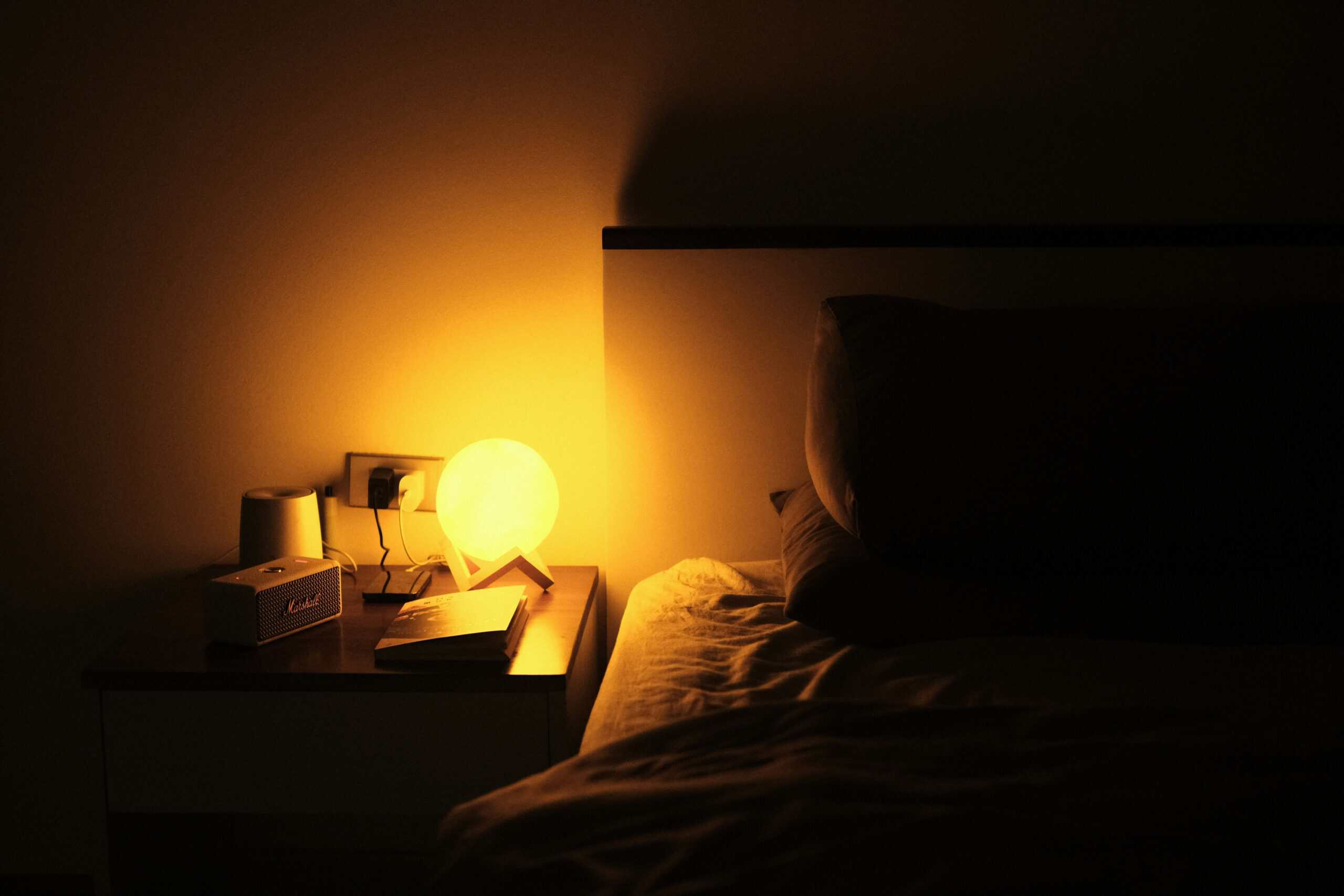
When light feels harsh during or after an attack, even a normal night light can be too much. The best night lights for migraine give just enough warm, dim glow to move safely at night without the jarring brightness of overhead light, complementing tools like our blackout curtains for migraine relief. These are comfort and environment choices, not treatments, so use them to make a dark space gentler while following a plan set with your doctor.
Quick Verdict
For most people, a dimmable amber or red-toned night light gives soft, low-glare light that is easy on sensitive eyes. If you want hands-free light only when you get up, a motion-sensor amber night light keeps the room dark until you need it.
Key Takeaways
- Migraine-friendly night lights are comfort and environment choices, not treatments.
- Warm amber and red tones are gentler on sensitive eyes than bright white light.
- Dimmable and motion-sensor options keep light minimal and only when needed.
- A low night light helps you move safely without turning on harsh overheads.
- Talk to your doctor about migraine; lighting is a supportive change, not a cure.
How We Picked the Best Night Lights for Migraine
We focused on warm, low-glare light, dimmability, motion options, and gentle placement for a bedroom or bathroom. We framed night lights as an environmental comfort choice rather than a treatment, in line with individualized, physician-guided migraine care1.
We included amber, red-toned, dimmable, and motion-sensor styles so different needs are covered. Because light sensitivity varies, we avoided efficacy claims and focused on comfort features2.
Dimmable Amber Night Light
Why It Stands Out
A dimmable amber night light gives a soft, warm glow you can turn down to the gentlest setting, ideal for sensitive eyes at night. The warm tone avoids the harshness of cool white light.
Worth Knowing
Amber light is dim by design, so it is for orientation rather than tasks. Place it low and away from direct line of sight.
It suits most people wanting gentle bedroom light. Skip it if you need brighter light for a task.
Red-Toned LED Night Light
Why It Stands Out
A red-toned night light offers very low-glare illumination that many people find the least jarring in the dark. The red hue is gentle and minimally stimulating before sleep.
Worth Knowing
Red light is dim and tinted, so the room takes on a warm cast. It is for soft orientation, not reading or detailed tasks.
It fits people who want the gentlest possible glow. Pass if you dislike a colored cast in the room.
Motion-Sensor Amber Night Light
Why It Stands Out
A motion-sensor amber light stays off until you move, then casts a soft glow for nighttime trips to the bathroom. It keeps the room fully dark when you are resting.
Worth Knowing
You need to move within the sensor’s range for it to light, so place it along your path. Battery models need occasional recharging or new batteries.
It suits people who want darkness while resting and light only when up. Skip it if you prefer a steady, always-on glow.
Plug-In Adjustable Warm Night Light
Why It Stands Out
A plug-in warm night light with adjustable brightness lets you set a consistent, gentle level in a hallway or bedroom outlet. The adjustability helps you find the lowest comfortable setting.
Worth Knowing
It needs an outlet in the right spot, and warm is better than cool white for sensitivity. Some include a dusk-to-dawn sensor for automatic operation.
It fits outlets near your nighttime path. Pass if there is no outlet where you need light.
Rechargeable Portable Night Light
Why It Stands Out
A rechargeable portable night light can be placed anywhere without an outlet and moved between rooms as needed. Many offer warm tones and adjustable brightness for flexible, gentle light.
Worth Knowing
It needs periodic recharging, and output is modest by design. The portability is the main advantage for outlet-free spots.
It suits people who want flexible placement. Skip it if you prefer a permanent plug-in light.
Smart Dimmable Night Light
Why It Stands Out
A smart night light lets you set warm color and very low brightness from an app or schedule, so it dims automatically at bedtime. The control suits people who want to fine-tune the glow.
Worth Knowing
Smart lights cost more and need an app or hub. Confirm it offers warm tones and a genuinely low minimum brightness.
It fits tech-friendly users wanting scheduled, adjustable light. Pass if you prefer a simple plug-in.
Migraine Night Light Comparison at a Glance
| Pick | Type | Best for | Trade-off |
|---|---|---|---|
| Dimmable amber | Warm, adjustable | Gentle bedroom glow | Dim by design |
| Red-toned LED | Low-glare | Least jarring light | Colored cast |
| Motion-sensor amber | Automatic | Dark until you move | Needs movement |
| Plug-in warm | Adjustable | Consistent hallway light | Needs an outlet |
| Rechargeable portable | Cordless | Flexible placement | Recharging needed |
| Smart dimmable | App-controlled | Scheduled dimming | Costs more, needs app |
How to Choose a Migraine-Friendly Night Light
Choose Warm Amber or Red Tones
Warm amber and red light are gentler on sensitive eyes than bright white. The warmer and dimmer the light, the less jarring it tends to feel at night.
Prioritize Dimmability
A light you can turn down lets you find the lowest comfortable setting, which matters most when you are sensitive. Adjustable or smart lights give the finest control.
Consider Motion Activation
Motion-sensor lights keep the room fully dark while you rest and only glow when you get up. This suits people who want darkness for sleep but light for safe nighttime trips.
Place It Gently and Low
Keep the light low and out of direct line of sight so it lights the path without glaring at you. Combine it with other calm-space steps, and see our overview of how stress triggers migraines for another common factor.
Amber vs White Night Lights
Amber: Gentle and Low-Stimulation
Warm amber and red light are widely preferred by people sensitive to light because they are soft and minimally stimulating at night. The trade is that they are dim and give the room a warm cast.
White: Brighter but Harsher
Cool white night lights are brighter and better for seeing detail, but that brightness can feel harsh to sensitive eyes and may disturb sleep. For a migraine-friendly bedroom, most people lean toward warm over white.
Recommended Reading
- Best flicker-free bulbs for migraine
- Best light-filtering window film for migraine
- Best migraine eye masks for light blocking
- dimming household lighting
- choosing migraine glasses
Common Migraine Night Light Mistakes to Avoid
A few choices keep the light gentle and useful.
Choosing Bright White Light
Cool white night lights can be harsh on sensitive eyes and disturb sleep. Pick warm amber or red and keep brightness as low as is practical.
Placing It in Direct View
A light aimed at eye level glares and defeats the purpose. Position it low and out of direct sight so it lights the path, not your eyes.
Skipping Dimmability
A fixed-brightness light may still be too bright for a sensitive night. Choose a dimmable or adjustable option so you can find a comfortable level.
Expecting It to Treat Migraine
Gentle lighting can make a dark space easier to navigate, but it is not a treatment. Keep your medical plan central and treat the night light as a supportive comfort choice.
Frequently Asked Questions
What is the best night light for migraine?
For most people, a dimmable amber or red-toned night light gives soft, low-glare light that is easy on sensitive eyes. For darkness while resting and light only when you get up, a motion-sensor amber night light is a good choice. Neither treats migraine.
What color night light is best for migraines?
Warm amber and red tones are generally gentler on sensitive eyes and less stimulating at night than bright white. A dim, warm light placed low and out of direct view tends to feel the most comfortable.
Can a night light help during a migraine attack?
During an attack many people become very sensitive to light, so any light should be minimal and warm. A dim amber or red light can help you move safely without turning on harsh overheads, but use only as much as feels comfortable and rest in darkness if you prefer.
Are motion-sensor night lights good for migraine sufferers?
They can be, because they keep the room fully dark while you rest and only glow when you move. That suits people who want darkness for sleep but a little safe light for nighttime trips, as long as the light is warm and dim.
Will a night light reduce my migraines?
No, it is a comfort and environment choice, not a treatment. A gentle night light may make a dark space easier and less jarring to navigate, but migraine management should come from your doctor, with lighting as one supportive piece.
How bright should a migraine night light be?
As dim as is practical while still letting you move safely, which is why dimmable options are ideal. Keep it low, warm, and out of direct sight so it lights your path without glaring at your eyes.
When should I see a doctor about my migraines?
See a doctor if your headaches are new, severe, frequent, or changing, or come with symptoms like vision changes, weakness, or confusion. A clinician can diagnose the cause and build a plan, which lighting changes cannot.
This article is for general information only and is not medical advice. It does not diagnose, treat, or replace care from a qualified healthcare professional. Talk to your doctor about diagnosis and management of migraine or any persistent or severe headache.
More Light Sensitivity Guides
Sources
- American Headache Society. https://americanheadachesociety.org/ (Patient and professional resources on migraine and headache.)
- International Classification of Headache Disorders (ICHD-3). https://ichd-3.org/ (Reference classification for migraine and headache disorders.)
