
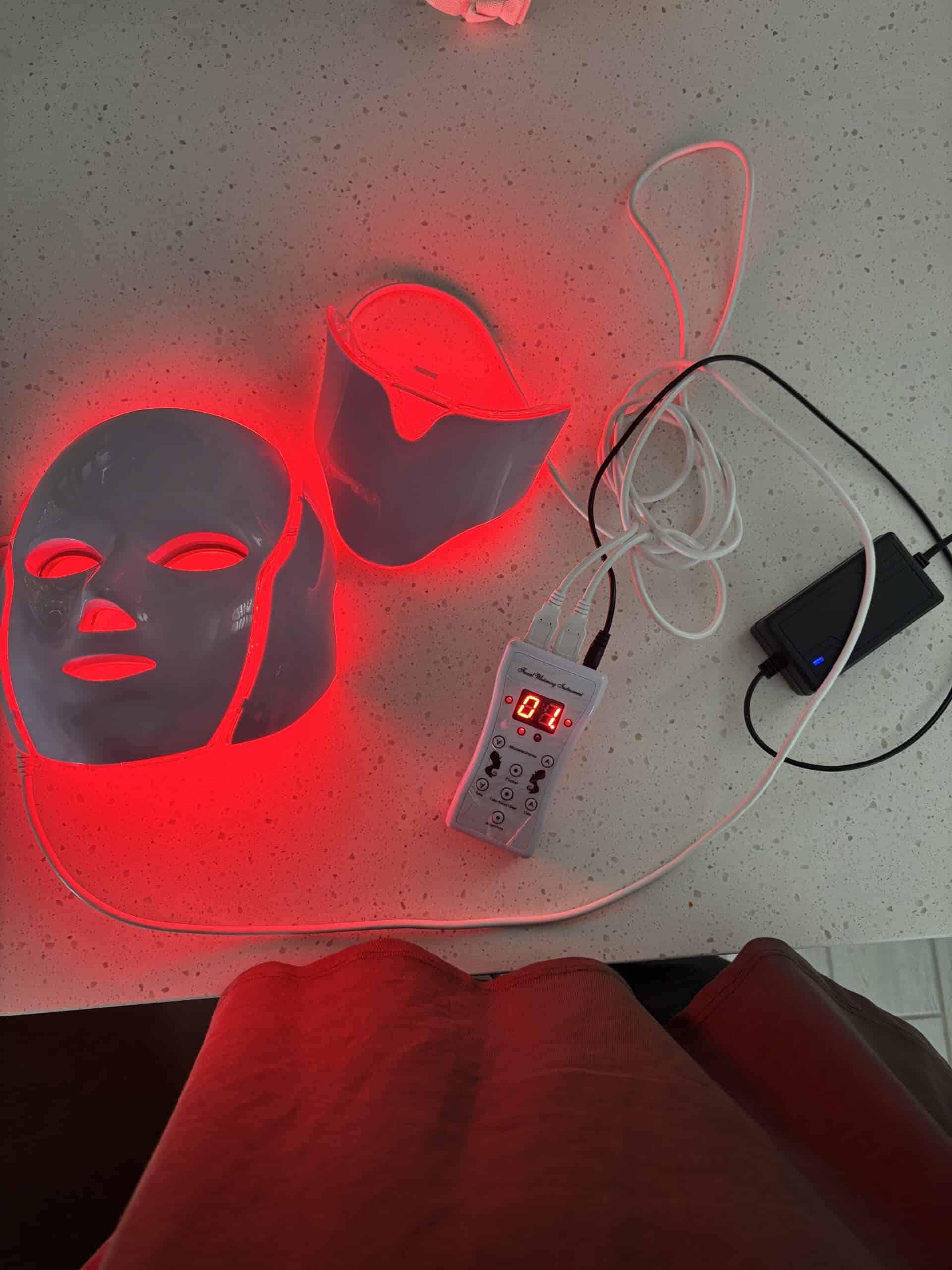
To use red light therapy for migraines, follow your device’s instructions for session length and distance, start with short sessions, protect your eyes as directed, and treat it as an occasional complement to your regular migraine care rather than a replacement. Since research on how to use red light therapy for migraines is limited, there is no established protocol, so this guide covers sensible general practice and how I personally use mine, with device options in our guide to red light therapy devices for migraine.
Medical Disclaimer
This article is for general information and is not medical advice. Red light therapy is not an established treatment for migraine, and individual experiences vary. Talk with a qualified healthcare provider before starting any new therapy, especially if you have frequent or severe attacks.
Quick Answer
Follow the manufacturer’s instructions for time and distance, since devices differ. Start with short sessions, keep your eyes closed or protected if the light is near your face, and use it in a calm, comfortable setting. There is no evidence-based migraine protocol, so treat it as an optional, occasional tool alongside your medical care, and stop if it bothers you.
Key Takeaways
- There is no established migraine protocol; follow device instructions.
- Start with short sessions and protect your eyes as directed.
- Use it in a calm, comfortable setting.
- Treat it as an occasional complement, not a primary treatment.
- Stop and consult your doctor if it worsens symptoms.
Follow Your Device’s Instructions
Because red light devices vary widely in wavelength, intensity, and design, the manufacturer’s instructions are your first and most important guide. A full-face mask, a panel, and a handheld wand all have different recommended distances and session lengths, and following those matters more than any generic rule you might read online. Since there is no established migraine-specific protocol from research, the device instructions are the sensible baseline. Read them before your first use, note the recommended session length and any cool-down between sessions, and do not assume more or longer is better, since that is not supported and can cause discomfort.
Start Short and Comfortable
A sensible approach is to start with shorter sessions and see how you feel. This lets you gauge your comfort and tolerance before doing more, which is especially wise for migraine sufferers who can be sensitive to light and stimulation. Use the device in a calm, quiet, comfortable environment rather than a busy or bright one. If a session feels unpleasant or seems to worsen symptoms, stop. Beginning gently and paying attention to your own response is the reasonable way to try any new tool, and it matches how cautiously migraine sufferers generally need to approach light-related things.
Protect Your Eyes
Eye safety deserves real attention with any light device used near the face, and it is the main practical caution with a red light mask. Follow the manufacturer’s eye-safety guidance closely, which often means keeping your eyes closed during use or using provided eye protection. Never stare directly into bright light sources. Because migraine and light sensitivity are closely linked, being careful here is doubly important. We cover this fully in our guide on whether red light therapy is safe for migraines. When in doubt, keep your eyes closed and shielded, and prioritize comfort over any assumed benefit from keeping them open.
When to Use It
There is no evidence-based answer to timing for migraine, so this comes down to personal preference and how you tolerate it. Some people try red light as a calming routine between attacks; others use it during an attack as a comfort measure. Personally, I reach for my mask mid-attack, and only occasionally, usually when other things I try first have not brought relief. I use it maybe once every couple of weeks, including times I use it recreationally for skin. That is simply how it fits my life, not a recommended schedule, since no established frequency or timing exists for migraine relief.
How I Use My Red Light Mask
To make this concrete, here is my actual routine, offered as personal experience rather than instruction. My device is a wearable mask that covers the full face, which I have used for around eight months to a year. When I use it for migraine, I put it on mid-attack in a comfortable, low-stimulation setting, keep my eyes closed, and follow the built-in session timing. I do not use it daily or as a first response; it is an occasional, secondary comfort tool that I happen to enjoy. I like the calm few minutes it provides, but I hold no expectation that it will end an attack, and I still rely on my established migraine care.
Treat It as a Complement
The most important usage principle is context: red light therapy should complement, never replace, your migraine management. Keep up your evidence-based treatments, trigger management, and healthy sleep and hydration habits, and slot red light in as an optional extra if you enjoy it. Because the evidence is limited, do not let it delay seeing a doctor or adjusting a treatment plan that needs attention. Used this way, as a low-risk, occasional complement with realistic expectations and eye safety in mind, red light therapy can be a pleasant addition for those who like it, without overstating what it can do.
Recommended Reading
- do red light therapy masks help migraines, for the evidence.
- how often to use red light therapy, on frequency.
- is red light therapy safe for migraines, on eye safety.
- red light therapy devices for migraine, for options.
- choosing migraine glasses
Pairing It With Other Comfort Tools
Red light is easy to combine with other gentle, low-risk comfort measures during a migraine. Many people layer it with rest in a dark, quiet room, cold therapy such as cooling eye masks, or light-blocking aids like a migraine eye mask between sessions. None of these are treatments, but together they form a soothing routine some find helpful for coping during an attack. If you use a red light mask, fit it into that kind of calm setup rather than treating it as a standalone fix, and always keep your eyes protected. The comfort of the overall routine may matter as much as any single tool within it.
How to Use Red Light Therapy for Migraines FAQ
How long should a red light therapy session be for migraine?
Follow your device’s instructions, since there is no established migraine protocol. Sessions commonly range from several minutes as directed by the manufacturer. Start shorter to gauge tolerance. Longer is not necessarily better and is not evidence-based, so the device guidance is your best reference.
Should I keep my eyes closed during red light therapy?
Follow the manufacturer’s eye-safety guidance, which for face masks often means keeping eyes closed or using provided protection. Never stare into bright light. Given the link between migraine and light sensitivity, erring toward keeping eyes closed and shielded is the cautious, sensible choice.
When is the best time to use red light therapy for migraine?
There is no evidence-based best time for migraine. People use it between attacks as a routine or during an attack as comfort. Personally I use mine mid-attack and only occasionally. Choose what feels comfortable for you, since no established timing exists, and prioritize your established care.
Can I use a red light mask every day?
Follow your device’s recommended frequency. Since there is no established migraine protocol, daily use is neither required nor shown to help migraine specifically. Many people, including me, use it only occasionally. Avoid overusing it on the assumption that more helps, since that is not supported.
What should I do if red light therapy makes my migraine worse?
Stop using it. Because migraine involves light sensitivity, some people may find light devices uncomfortable. If a session worsens your symptoms, discontinue and mention it to your doctor. Red light therapy is optional, so there is no reason to continue something that aggravates your migraines.
Does red light therapy replace migraine medication?
No. It is not a replacement for medical treatment and should complement, never delay, proper care. Keep up your evidence-based migraine plan and use red light therapy only as an optional extra. Consult your doctor about your treatment, especially with frequent or severe attacks.
Can I combine red light therapy with other migraine remedies?
Yes, it combines easily with low-risk comfort measures like resting in a dark room, cold therapy, and eye masks. It should complement, not replace, your medical treatment. Combining gentle comfort tools into a calm routine is reasonable, as long as none delay proper care.
Do I need special training to use a red light mask?
No, home devices are designed for simple self-use following the included instructions. The main things are protecting your eyes, starting with short sessions, and not overusing it. No special training is needed, but reading your device guidance and consulting your doctor first are both sensible.
When should I see a doctor before trying red light therapy?
Check with a clinician first if you have an eye condition, take medication that increases light sensitivity, or are being treated for another neurological condition. See a doctor if your headaches change in pattern, worsen, or come with new symptoms. Red light therapy is worth discussing as an addition to care rather than a replacement for it.
Sources
- American Migraine Foundation, evidence-based migraine management guidance.
- University of Arizona Health Sciences, research on light therapy for migraine.
