
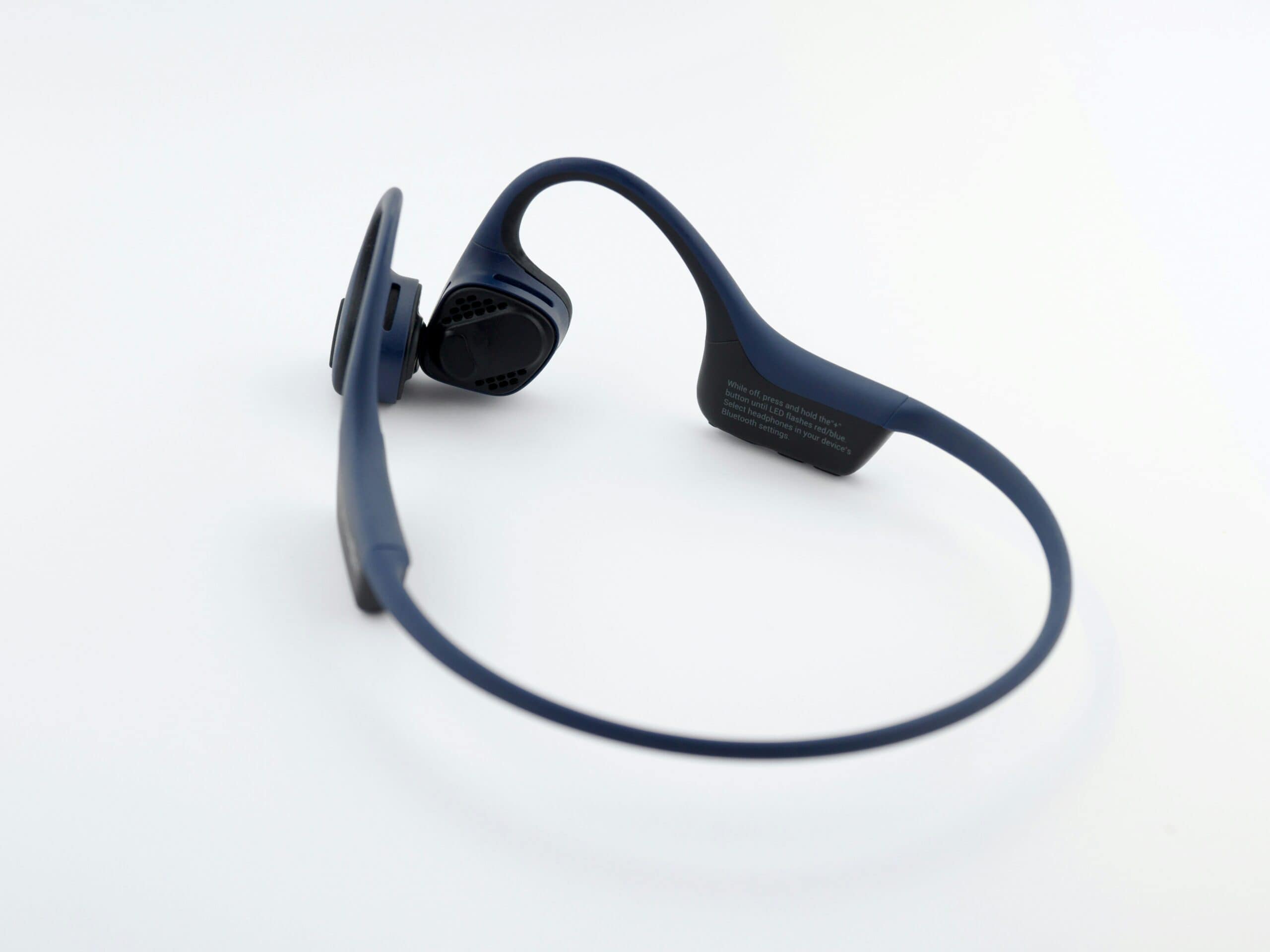
Clamping force is the reason good headphones become unbearable mid-attack, and bone conduction headphones for migraine days avoid it by sitting on the cheekbones instead of over or inside the ear. Nothing touches the ear canal. Nothing presses on the temples.
That matters because sensitivity to sound is not a side issue during an attack. The International Classification of Headache Disorders lists phonophobia alongside photophobia among the symptoms used to define migraine1, so the thing on your head is competing with a symptom rather than a preference.
Blocking sound is the opposite approach, and plenty of people own one of each for different parts of an attack.
Medical Disclaimer
This article is for educational purposes only and does not replace medical evaluation or treatment by a qualified clinician. Headphones of any kind do not treat migraine. New or changing hearing symptoms, ear pain or one-sided hearing loss need assessment by a clinician rather than a change of headphones.
Quick Verdict
A standard open-ear bone conduction set is the right default, because the wraparound titanium band puts no load on the ear or the temple. Choose a waterproof model if you want it for showering or swimming, since those versions also tolerate being wiped down daily. If pressure on the back of the head is your problem rather than the ears, a clip-on open-ear design avoids the band entirely.
Key Takeaways
- Bone conduction transmits through the skull, leaving the ear canal open.
- No clamping force on the ears or temples is the whole point for migraine use.
- Bass and isolation are both weaker than any sealed headphone.
- Vibration at high volume is noticeable and bothers some people during an attack.
- The band rests on the occipital area, which is itself tender for some.
- Open ears mean no protection from the surrounding noise.
How We Picked
We sorted by where the device makes contact, because that is the variable that decides whether it stays on once an attack starts. Cheekbone contact, band pressure and ear occlusion are three separate tolerances.
Then we weighted weight and clamping force over sound quality, which inverts how these are normally reviewed.
We have not worn these through attacks, so nothing here reports on comfort we experienced. Sensitivity patterns differ enormously between people, and the only reliable test is your own head on a bad day.
1. A Standard Open-Ear Bone Conduction Set, Best Overall
Why It Stands Out
The mainstream design rests two transducers on the cheekbones and loops a light titanium band behind the head, so the ears carry nothing at all. For anyone who finds over-ear cups painful after twenty minutes, that removes the problem rather than reducing it.
Leaving the canal open also means you hear the room, which many people prefer when lying down and wanting to stay oriented.
Worth Knowing
Sound quality is modest by any normal standard, with thin bass and audible leakage at volume. These are for speech, podcasts and quiet music rather than for listening properly.
The band also sits across the occipital area, which is tender territory for plenty of people. Migraine headbands and compression caps occupy the same real estate and some people cannot wear both.
This suits anyone whose ears hurt under conventional headphones. Skip it if the back of your head is the tender spot. Best for: audio with nothing touching your ears.
Check Price on Amazon2. A Waterproof Bone Conduction Set, Best for Showering
Why It Stands Out
A fully sealed model with onboard storage works in the shower and in the bath, which is where a lot of people spend the quiet part of a bad day. No phone nearby and nothing to get wet.
Sealed construction also means you can wipe it down properly, which matters for anything worn while unwell.
Worth Knowing
Onboard storage means loading files rather than streaming, which is a small chore. Bluetooth is usually disabled underwater, so the two modes do not overlap.
Hot water and a warm shower are their own variable for some people, so the bathroom is worth thinking about separately.
This suits long baths and anyone who showers to get through an attack. Skip it if you only listen at a desk. Best for: audio where a phone cannot go.
Check Price on Amazon3. A Clip-On Open-Ear Design, Best Without a Band
Why It Stands Out
Clip-style open-ear buds hook over the outer ear and sit beside the canal without entering it, and nothing crosses the back of the head. For anyone with occipital tenderness that is the deciding feature.
They also work lying on one side better than a rigid band does.
Worth Knowing
Most of these are air conduction rather than true bone conduction, which means they direct sound at the ear instead of through the skull. The practical effect on comfort is similar, but the mechanism is not the same.
Clips also apply a small pinch to the ear itself, which some people notice more than a band.
This suits side sleepers and anyone with a tender occiput. Skip it if ear contact is the problem. Best for: open ears with nothing behind your head.
Check Price on Amazon4. A Lightweight Minimal Band, Best for Long Wear
Why It Stands Out
The lightest models in this category weigh about as much as a pair of glasses, and weight is what you notice after an hour. Shaving grams off the band reduces the load on both cheekbones and the neck.
A slimmer band also sits lower, which keeps it clear of a pillow when lying on your back.
Worth Knowing
Lighter frames flex more and grip less, so they shift when you move your head. Battery capacity is usually smaller too.
Anything worn while lying down competes with whatever else is on your head, and migraine eye masks are the usual other item.
This suits hours of wear and sensitive skin. Skip it for active use. Best for: forgetting you have them on.
Check Price on Amazon5. A Bone Conduction Sleep Headband, Best for Lying Down
Why It Stands Out
A soft fabric headband with flat drivers inside flattens against a pillow with no hard parts at all, which no rigid band manages. For lying in the dark listening to something, it is the most comfortable format available.
It also doubles as light blocking across the eyes if pulled down.
Worth Knowing
Most sleep headbands use small flat speakers rather than bone conduction transducers, so the sound sits beside the ear rather than passing through bone. Check the specification if the mechanism matters to you.
Fabric traps heat across the forehead, which works against you if warmth is a problem. Bluetooth sleep masks cover the combined version in more detail.
This suits lying down in a dark room. Skip it for walking around. Best for: audio you can lie on.
Check Price on Amazon6. A Hard Case and Spare Cable, Best Protection
Why It Stands Out
Bone conduction sets use proprietary magnetic charging cables that are easy to lose and awkward to replace at short notice. A spare cable and a hard case turn a fragile item into one that survives a bag.
Keeping a charged set in a known place is most of what makes it useful on a bad day.
Worth Knowing
Cables are model specific, so check the fitting before ordering. Third-party versions vary in charge rate.
Where the whole kit lives matters as much as the kit, and supplies for a migraine emergency kit covers assembling that.
This suits anyone carrying a set between home and work. Skip nothing here. Best for: a charged set when you need it.
Check Price on AmazonOpen-Ear Formats at a Glance
| Format | Contact Points | Mechanism | Suits |
|---|---|---|---|
| Standard bone conduction | Cheekbones, occiput | Bone conduction | Most people |
| Waterproof bone conduction | Cheekbones, occiput | Bone conduction | Shower and bath |
| Clip-on open ear | Outer ear only | Usually air conduction | Tender occiput |
| Lightweight minimal band | Cheekbones, occiput | Bone conduction | Long wear |
| Sleep headband | Forehead and temples | Usually flat speakers | Lying down |
| Case and spare cable | Not applicable | Not applicable | Every set |
What to Look For in Bone Conduction Headphones
Band pressure you can tolerate on a bad day
Grip that feels secure when you are well can feel like a clamp during an attack, and the band crosses an area that is often already sore. Try it on before a bad day rather than during one.
Whether it is actually bone conduction
A good deal of what is sold as open-ear uses small speakers aimed at the ear rather than transducers against the skull. Both leave the canal open, but only one avoids delivering sound through the air at your eardrum.
Volume limiting and vibration
These vibrate more as volume rises, and that sensation on the cheekbone is unpleasant for some people mid-attack. A model that sounds adequate at low volume is the one to want.
What it does not do
Open ears offer no isolation whatsoever, so a noisy environment stays noisy. Earplugs for migraines are the tool for that job.
Bone Conduction Against Noise Cancelling
Bone conduction wins on physical comfort
No cups, no tips and no seal means no pressure on the parts that hurt, and you can wear it for hours. It gives you nothing against the sound in the room.
Noise cancelling wins on quiet
Active cancellation plus a sealed cup is the only combination that genuinely reduces what reaches your ears, which is what some people need most. The cost is clamping force and a sealed-in sensation that plenty of people cannot tolerate during an attack, and white noise machines are the no-contact way at that problem.
Common Misconceptions
That bone conduction protects your hearing
It bypasses the eardrum but still stimulates the inner ear, so volume still matters. Open ears also leave you exposed to everything around you.
That open-ear and bone conduction mean the same thing
Open-ear is a category that includes both true bone conduction and small air-conduction speakers. The labels get used loosely in product listings.
That any audio helps during an attack
Plenty of people want silence rather than something gentler, and sound tolerance varies through the phases of an attack. Owning both options is more useful than committing to one.
That headphones are a treatment
They are a comfort measure. Acute and preventive migraine treatment is a clinical matter covered by the American Headache Society consensus guidance on integrating migraine treatments into practice2, and no accessory substitutes for it.
Making Them Work on a Bad Day
Keep them charged and in one place
A flat set in a drawer is no use at the moment you want it, and hunting for a cable is the last thing you will manage. Charge them on a schedule rather than on demand.
Set the volume before you need it
Fiddling with controls while sound-sensitive is miserable, so leave them at a low preset. A device that remembers its last volume is worth choosing for that alone.
Pair them with the room, not against it
Since these isolate nothing, the environment has to do that part. Soundproofing products for a migraine room and sound dampening curtains and rugs cover the room side.
Have a plan for noisy places you cannot change
Offices, events and travel all need something that blocks rather than something that plays. Hearing protection for concerts and events and travel kits cover those, and quiet appliances deal with the noise at home.
Recommended Reading
Worth reading next: noise cancelling headphones for migraines, since most people end up owning one of each for different parts of an attack.
When to See a Neurologist
- Any headache you would describe as the worst of your life.
- A headache that comes on suddenly and peaks within moments.
- New headaches starting after age fifty.
- Hearing loss in one ear, or ringing that is new and one-sided.
- Vertigo or balance problems that are new or worsening.
- Weakness, numbness or speech difficulty with an attack.
- Any loss of vision, whether or not a headache follows.
- Attacks becoming more frequent over weeks or months.
- Headache that changes character or wakes you from sleep.
- Headache with fever, a stiff neck or a rash.
- Needing acute medication on more days than not.
- Headache after a head injury.
Bone Conduction Headphone FAQ
What are the best bone conduction headphones for migraine days
A standard open-ear bone conduction set is the sensible default, because the cheekbone transducers and light band keep all pressure off the ears. Clip-on open-ear designs suit anyone whose tender spot is the back of the head, and a fabric sleep headband is the most comfortable option for lying down.
How does bone conduction actually work
Transducers resting on the bone in front of the ear vibrate the skull, and those vibrations reach the inner ear without passing through the canal or the eardrum. The ear itself stays completely open.
Will they block noise during an attack
No, and that is the main trade. If reducing the sound around you is the goal, earplugs or sealed noise cancelling headphones are the right tools instead.
Does the vibration bother people
It can, particularly at higher volumes and particularly mid-attack when the face feels sensitive. Keeping the volume low reduces it considerably.
Can I wear them with an eye mask
Usually, though a rigid band and a strapped mask compete for space behind the head. A fabric sleep headband avoids that conflict because it does both jobs.
Are they safe for hearing
They still deliver sound energy to the inner ear, so the usual volume and duration cautions apply. Bypassing the eardrum does not make loud listening safe.
Will they help my migraine
They may make listening tolerable when conventional headphones are not, which is a comfort benefit rather than a treatment effect. Nothing about them changes attack frequency or severity.
Is open-ear the same as bone conduction
Not necessarily. Many open-ear products use tiny speakers directed at the ear rather than transducers on bone, so check the specification if the distinction matters to you.
When should I see a doctor about migraine attacks
Book an appointment if attacks grow more frequent, if the pattern shifts, or if you reach for rescue medication on more days than before. The signs in the section above need urgent assessment rather than a routine visit.
Sources
- Headache Classification Committee of the International Headache Society (IHS). The International Classification of Headache Disorders, 3rd edition. Cephalalgia. 2018;38(1):1-211.
- Ailani J, Burch RC, Robbins MS; Board of Directors of the American Headache Society. The American Headache Society Consensus Statement: Update on integrating new migraine treatments into clinical practice. Headache. 2021;61(7):1021-1039.
