
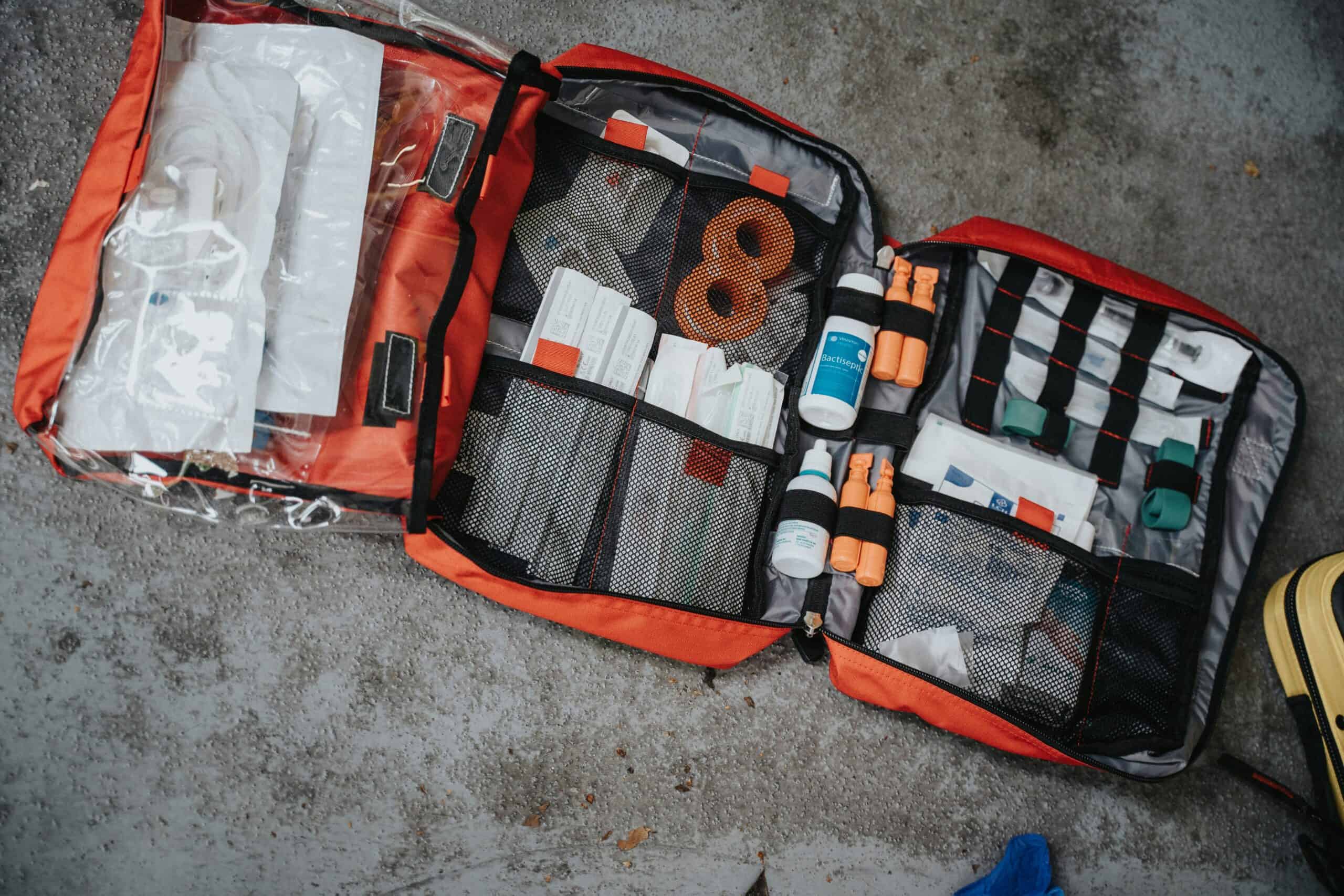
An attack at work is a timing problem. The American Migraine Foundation notes that acute treatment works best when taken early, and the gap between noticing symptoms and being able to act is where an office costs you.
A kit removes that gap. Everything lives in one drawer, so you are not deciding what to do while light and sound are already difficult. Readers without someone nearby can pair that kit with our guide to managing an attack solo.
Medical Disclaimer
This article covers practical supplies rather than medical advice. It does not diagnose or treat anything. Talk to your doctor about acute treatment, prescriptions, and what belongs in your own kit. Seek immediate medical care for a sudden severe headache unlike your usual pattern, or one with fever, confusion, weakness, vision loss, or a stiff neck.
Key Points
- Assemble the kit before you need it, not during an attack
- Light and sound blocking do the most in an open office
- Store medication according to your pharmacist’s guidance
- Cold therapy and water cover the basics cheaply
- A written plan helps when thinking clearly is hard
- Frequent workplace attacks are worth discussing with your doctor
How We Picked
Speed of use came first. Anything requiring assembly or setup during an attack fails at the moment it matters.
Discretion ranked next. Office kits get used in shared spaces, and equipment that draws attention gets left in the drawer.
Storage stability counted, since a desk drawer sees temperature swings and items sit there for months.
Portability mattered for anyone who moves between desks or works partly from home.
Migraine Glasses and Tinted Lenses
Why It Stands Out
Light sensitivity affects most people during an attack, and office lighting is often fluorescent and unavoidable. Tinted lenses reduce the intensity reaching your eyes without leaving the building.
Specific tints filter particular wavelengths rather than dimming everything, which suits an environment where you still need to see a screen.
They also work as a signal to colleagues that something is happening, which saves explaining.
Worth Knowing
Regular sunglasses indoors can cause your eyes to adapt to darkness, which some clinicians suggest may increase light sensitivity over time.
Tint choice varies by person, and what helps one person does little for another.
Keep a pair in the drawer rather than carrying one pair everywhere. Skip dark sunglasses as an all-day indoor solution, and selection sits in choosing migraine glasses.
Earplugs and Noise-Reducing Earbuds
Why It Stands Out
Sound sensitivity ranks alongside light sensitivity as a common symptom. An open office generates constant noise you cannot leave.
Filtered earplugs reduce volume while keeping speech intelligible, which lets you stay in a meeting rather than leaving one.
Reusable silicone types live in a drawer for months and wash between uses.
Worth Knowing
Full occlusion makes some people more aware of their own pulse, which is unpleasant during an attack.
Active noise cancelling handles constant background sound well and does less for sudden noises like a door or a laugh.
Keep both types if you can. Skip anything requiring charging, since a dead battery in a drawer is useless, and options sit in earplugs for migraines.
Cold Packs and Cooling Wraps
Why It Stands Out
Cold therapy is a common self-management approach, and instant chemical packs need no freezer, which most offices lack.
Wraps that stay in place free your hands, so you can keep working or lie back without holding anything.
They cost very little, which makes keeping several in a drawer straightforward.
Worth Knowing
Single-use chemical packs expire and only work once, so check them occasionally.
Never apply cold directly to skin. A cloth layer between prevents the skin damage that direct contact can cause.
Keep two or three in the drawer. Skip gel packs requiring a freezer unless your office has one, and options sit in cold therapy for migraine.
Water Bottles and Electrolytes
Why It Stands Out
Dehydration appears frequently on trigger lists, and office days pass without drinking for people who get absorbed in work.
A bottle on the desk raises intake through visibility alone, which is the mechanism that actually changes behavior.
Electrolyte sachets stored in the drawer cover days where you have not eaten or drunk properly.
Worth Knowing
Water does not treat an attack in progress. It addresses one contributing factor among several.
Some electrolyte products contain caffeine or artificial sweeteners, which are themselves reported triggers for some people.
Keep a bottle visible rather than in a bag. Skip anything with additives you react to, and options sit in water bottles for hydration.
Medication Storage Cases
Why It Stands Out
A small case keeps whatever your doctor has prescribed in one known place rather than loose in a bag you left at home.
Light-blocking and moisture-resistant cases protect medication in a drawer that sees temperature swings.
Compartments let you separate acute treatment from anything else you carry, which matters when reading a label is difficult.
Worth Knowing
Follow your pharmacist’s storage guidance. Some medications lose potency in heat, and a desk near a window is warmer than people assume.
Check expiry dates on a schedule, since a kit assembled once and forgotten holds expired medication when you need it.
Talk to your doctor about what belongs here. Skip storing anything without pharmacist guidance on conditions, and workplace management sits in creating a migraine-friendly workspace.
Anti-Glare Screen Filters
Why It Stands Out
Screen glare compounds light sensitivity, and most office monitors sit under overhead lighting that reflects directly off them.
A matte filter cuts that reflection permanently rather than requiring you to do anything during an attack.
This is the one item that works preventively while sitting on the monitor every day.
Worth Knowing
Filters slightly reduce sharpness, which some people notice on detailed work.
They address reflection rather than brightness. Lowering screen brightness and raising ambient light does more for contrast strain.
Fit this before you need it. Skip if your monitor already has a matte finish, and options sit in anti-glare screen filters.
Work Kit at a Glance
| Item | Addresses | Use during or before |
|---|---|---|
| Tinted glasses | Light sensitivity | During |
| Filtered earplugs | Sound sensitivity | During |
| Cold pack | Comfort measure | During |
| Water and electrolytes | Hydration | Before |
| Medication case | Access to treatment | Early in an attack |
| Anti-glare filter | Screen glare | Before, permanently |
Building the Kit Before You Need It
Assemble it on a good day
Decisions during an attack are harder than usual. A kit put together in advance means reaching rather than choosing.
Write down your plan
A card in the drawer listing what you take, at what point, and who to tell removes thinking from the moment you least want to do it.
Keep a duplicate where you actually are
Hot desking, hybrid work, and meetings elsewhere all separate you from a drawer. A small bag version covers that.
Check it twice a year
Expired medication, dead cold packs, and lost earplugs all accumulate quietly. A calendar reminder catches them.
Where the Kit Lives Matters
A kit in the wrong drawer is a kit you cannot reach when reaching becomes hard.
Keep it in the drawer closest to your dominant hand, at the front. During an attack you want one movement rather than searching through a drawer.
Avoid the bottom drawer. Bending forward increases head pain for many people, and a kit that requires it gets skipped.
Tell one colleague where it is. If an attack leaves you unable to manage, someone knowing which drawer holds your glasses and your written plan removes a conversation you cannot have.
For hot-desking or hybrid work, a small zip pouch that moves with your laptop bag replaces the drawer entirely. Glasses, earplugs, and medication fit in something the size of a paperback.
Desk Kit Against Bag Kit
Desk kit
Holds more, including a spare pair of glasses and several cold packs. It only helps when you are at that desk.
Bag kit
Travels everywhere and stays small. Medication, earplugs, and glasses cover most situations in a pouch, and travel versions sit in travel kits for migraine.
The Non-Product Half
Several of the most useful things in a workplace plan cost nothing.
Know where you can go. A quiet room, an empty meeting room, or a parked car all work, and finding one during an attack is harder than deciding in advance.
Have a sentence ready. Something brief like needing thirty minutes and being back after removes the effort of explaining while symptoms are building.
Understand your own early signs. Many people notice changes in the hour or two before pain arrives, and recognizing those is what makes early action possible.
Keep a record. Patterns around meetings, lighting, meal timing, and screen hours only become visible when written down, and that record is also what your doctor works from.
Common Misconceptions
That you can wait until it gets bad
The American Migraine Foundation notes that acute treatment generally works better taken early. Waiting to see whether an attack develops removes that advantage.
That equipment replaces treatment
Glasses, earplugs, and cold packs are comfort measures. They do not treat an attack, and your doctor decides what does.
That frequent attacks are just how it is
Attacks that regularly disrupt work are worth a medical conversation. Preventive options exist and frequency is information your doctor needs.
That you have to explain yourself
Workplace adjustments for migraine are common, and lighting changes and quiet space are reasonable requests, and trigger management generally sits in common migraine triggers.
Recommended Reading
- creating a migraine-friendly workspace
- the portable version
- glasses compared
- sound sensitivity
- trigger management
- tracking patterns
Frequently Asked Questions
What should be in a migraine kit at work?
Tinted glasses, filtered earplugs, cold packs, water, and whatever medication your doctor has prescribed, stored per your pharmacist’s guidance. Assemble it on a good day rather than during an attack.
Do migraine glasses help during an attack?
Many people find tinted lenses reduce light sensitivity in fluorescent environments. Tint preference varies, and regular dark sunglasses worn indoors all day may worsen sensitivity over time.
Can I keep medication in a desk drawer?
Ask your pharmacist. Some medications lose potency in heat, and a drawer near a window gets warmer than people expect. Check expiry dates twice a year.
Does cold therapy actually help?
Many people use it as a comfort measure during attacks. Always place a cloth between a cold pack and your skin, since direct contact can cause damage.
Should I tell my employer?
That is your decision. Workplace adjustments for migraine are common, and lighting changes, screen filters, and access to a quiet space are reasonable requests.
How often should I check the kit?
Twice a year. Expired medication and used cold packs accumulate quietly, and a kit you assembled once is often incomplete when you reach for it.
When should I see a doctor?
If attacks regularly disrupt work, if your pattern changes, or if over-the-counter treatment is not enough. Seek immediate care for a sudden severe headache unlike your usual pattern, or one with fever, confusion, weakness, vision loss, or a stiff neck.
Sources
- American Migraine Foundation. Acute Treatment of Migraine. https://americanmigrainefoundation.org/
- Mayo Clinic. Migraine: Diagnosis and Treatment. https://www.mayoclinic.org/diseases-conditions/migraine-headache
- American Headache Society. Practice Guidelines. https://americanheadachesociety.org/
