
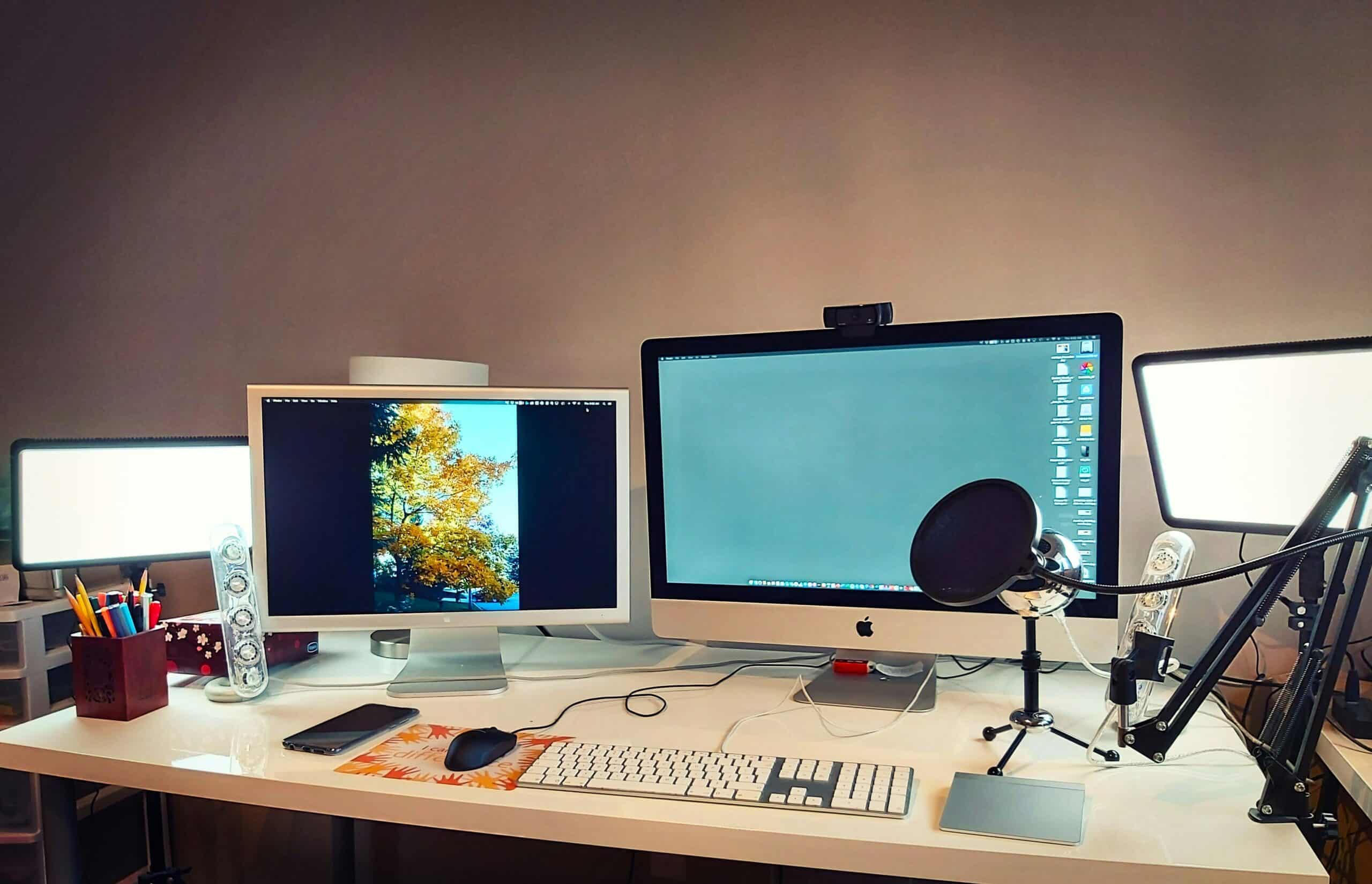
Three properties of office lighting matter for anyone with light sensitivity: flicker, glare, and color temperature. Photophobia is one of the diagnostic features of migraine in the ICHD-3 criteria, and a home office is one of the few lighting environments you fully control.
| Problem | What causes it | What addresses it |
|---|---|---|
| Flicker | Cheap LED drivers, old fluorescents | Flicker-free rated bulbs |
| Glare | Bare bulbs, screens facing windows | Diffusers, repositioning |
| Harsh color | High kelvin cool white | Warm or tunable bulbs |
| Screen brightness | Display brighter than the room | Bias lighting behind the monitor |
| Overhead intensity | Single ceiling fixture | Layered lamps, dimming |
Medical Disclaimer
This article is general information rather than medical advice. Lighting changes do not treat, prevent, or cure migraine. Light sensitivity is a recognized feature of migraine, and reducing exposure may improve comfort. Anyone with frequent or worsening attacks should speak with a doctor or headache specialist.
Key Points
- Flicker is invisible to most people and still affects some
- Glare comes from bare sources and reflections, not brightness alone
- Warmer color temperatures suit sensitive eyes better than cool white
- Bias lighting reduces the contrast between screen and room
- Several dim sources beat one bright ceiling fixture
- None of this is treatment
Related: migraine friendly workout gear.
Related: kitchen lighting for migraine sufferers.
How We Picked
Flicker performance came first, since it is the property most associated with headache complaints in lighting research and the one buyers cannot assess by looking.
Diffusion ranked next. A bare LED produces a small intense source, which is what creates glare regardless of total light output.
Adjustability mattered because needs change across a day and during an attack. Fixed-output lighting suits nobody with fluctuating sensitivity.
We excluded anything marketed as therapeutic for headache. Light therapy devices are a separate category with their own evidence questions, covered in green light therapy lamps.
Flicker-Free LED Bulbs
Why It Stands Out
All mains-powered lighting pulses at some rate. Cheap LED drivers produce deep modulation that some people perceive as strain or headache even when they cannot consciously see it.
Bulbs rated for low flicker use better drivers, and the difference is measurable rather than marketing.
Worth Knowing
Flicker specifications are rarely printed on packaging. Terms like flicker-free and low flicker are unregulated, and a phone camera pointed at a bulb reveals gross flicker as banding.
Dimming reintroduces flicker on many bulbs, so a bulb that performs well at full output can perform badly dimmed.
Best as the baseline change in any room used for hours. Skip nothing, since this is the foundation, and existing options sit in flicker-free bulbs.
Check Price on AmazonMonitor Bias Lighting
Why It Stands Out
A bright screen in a dim room forces the eyes to handle high contrast continuously. Bias lighting places soft light behind the monitor, reducing that difference without adding glare to the screen.
It also lets you run the display dimmer, which reduces total light reaching the eyes.
Worth Knowing
Color-changing strips are sold for gaming and the useful setting is a steady neutral white. Cycling colors work against the purpose.
USB-powered strips are simplest, and adhesive backing fails on textured monitor housings over time.
Best for anyone working at a screen in a dim room. Skip color-cycling models, and screen-specific strain is covered in monitor light bars.
Check Price on AmazonTunable White Desk Lamps
Why It Stands Out
Adjustable color temperature lets you run warm light on sensitive days and cooler light when you need alertness. That flexibility matters more than any single fixed setting.
Good desk lamps also direct light onto the work surface rather than into the room, which reduces what reaches your eyes directly.
Worth Knowing
Cheaper tunable lamps flicker more at lower brightness settings, which is exactly where a sensitive user operates them.
An exposed LED array creates glare regardless of temperature. Diffused shades matter as much as the bulb behind them.
Best as the primary light for desk work. Skip models with visible LED arrays and no diffuser.
Check Price on AmazonDimmable Floor Lamps With Diffusers
Why It Stands Out
Layering several dim sources produces even light without a single bright point anywhere. That approach suits sensitive eyes far better than one powerful ceiling fixture.
Uplighting bounced off a ceiling arrives diffuse, which removes the direct source from view entirely.
Worth Knowing
Dimmer compatibility varies, and mismatched LED and dimmer combinations buzz or flicker at low settings.
Torchiere designs depend on ceiling color and height. Dark or high ceilings absorb the light rather than reflecting it.
Best for replacing overhead lighting in a home office. Skip if the ceiling is dark or unusually high.
Check Price on AmazonAnti-Glare Window Film
Why It Stands Out
Daylight is often the harshest source in a home office, particularly with a window behind or beside a screen. Film reduces intensity without darkening the room the way blinds do.
It also cuts the reflections that make a screen harder to read, which reduces the squinting that contributes to strain.
Worth Knowing
Application is fiddly and bubbles are permanent. Larger windows are considerably harder than small ones.
Some films alter color noticeably, which matters for anyone doing visual work.
Best for a fixed office with a problematic window. Skip in rentals where removal could damage glass, and existing options sit in light filtering window film.
Check Price on AmazonSmart Dimmer Switches
Why It Stands Out
Existing fixtures become adjustable without replacing them, and a preset low level means you can enter a room without a bright fixture coming on at full output.
Scheduling also lets light drop automatically toward evening, which supports sleep timing alongside comfort.
Worth Knowing
Installation involves mains wiring, which is a licensed job in some places and beyond most renters regardless.
Dimming reintroduces flicker on many LED bulbs, so bulb and dimmer need to be matched rather than assumed compatible.
Best for owned homes with existing fixtures worth keeping. Skip in rentals, and existing options sit in dimmer switches for migraine.
Check Price on AmazonWhat to Look For
Low flicker at the brightness you use
A bulb rated flicker-free at full output can flicker badly when dimmed. Testing at your actual setting matters more than the specification.
Diffusion rather than raw output
A small intense source glares regardless of lumens. Shades, frosted covers, and bounced light all reduce the harshness of the same amount of light.
Adjustability
Sensitivity fluctuates across days and during attacks. Fixed lighting suits the average day and fails on the difficult ones.
Whether you can install it
Bulbs and lamps suit anyone. Dimmer switches and window film involve wiring or permanent application, which rules them out for many renters.
Layering Beats a Single Source
One ceiling fixture lighting a whole room creates a single bright point and deep shadows everywhere else. Both halves of that are hard on sensitive eyes.
Three or four dim sources at different heights produce the same total light with no intense point anywhere. A desk lamp, a floor lamp, and bias lighting behind the screen cover a home office without the ceiling fixture being on at all. Seating belongs in the same audit, and a lumbar support or seat cushion takes strain off the neck indirectly.
Layering also lets you subtract. On a difficult day you switch off the brightest layer and keep working rather than choosing between full light and darkness.
The overhead fixture becomes the emergency option rather than the default, which is a reversal of how most rooms are wired and lit.
Screen Settings Alongside Lighting
Room lighting and display settings interact, and adjusting one without the other leaves the contrast problem in place.
Matching display brightness to the room roughly is the goal. A screen noticeably brighter than its surroundings forces continuous adaptation, and one much dimmer causes squinting.
Warm display modes shift screen color toward the low end in the evening, which pairs with warmer room lighting rather than fighting it.
Text size matters too, since small text at low contrast produces the leaning and squinting that contributes to neck tension and strain.
Warm Against Cool Light
Warm light
Lower color temperatures around 2700K to 3000K are generally reported as more comfortable for sensitive eyes and suit evening use, since blue-heavy light late in the day affects sleep timing.
Cool light
Higher temperatures around 5000K support alertness during working hours and read as harsher to many people with photophobia. Tunable fixtures avoid the choice, and sleep considerations sit in sleeping with migraine.
Common Misconceptions
That LEDs are automatically better
LED quality varies enormously and cheap drivers flicker more than the fluorescents they replaced. The technology is not the issue, the driver is.
That dimmer always means gentler
Dimming reintroduces flicker on many bulbs, so a dimmed bad bulb can be worse than the same bulb at full output.
That blue light glasses fix office lighting
They filter part of the spectrum reaching your eyes and change nothing about flicker or glare. Lens options sit in migraine glasses for light sensitivity.
That lighting is treatment
Reducing exposure may improve comfort for people with photophobia. It does not treat migraine, and a treatment plan comes from a clinician.
Worth reading next: flicker-free bulbs covers the bulb layer in detail, dimmer switches handles control, and monitor light bars addresses screen work specifically. For the eyes rather than the room, choosing migraine glasses and tinted lenses for photophobia are the relevant guides, and window film deals with daylight.
Frequently Asked Questions
Does office lighting trigger migraine?
Light sensitivity is a recognized feature of migraine, and flicker, glare, and harsh color temperature are the properties most often implicated. Whether lighting affects you depends on your own pattern.
What is flicker and why does it matter?
All mains lighting pulses, and cheap LED drivers produce deep modulation that some people perceive as strain even without consciously seeing it. Better drivers reduce it measurably.
What color temperature is best?
Warmer light around 2700K to 3000K is generally more comfortable for sensitive eyes, and cooler light supports alertness. Tunable fixtures let you change it rather than committing.
Does bias lighting behind a monitor help?
It reduces the contrast between a bright screen and a dim room, which lets you run the display dimmer. A steady neutral white works better than color-cycling settings.
Are LED bulbs worse than the old ones?
Not inherently. Quality varies enormously, and cheap LED drivers can flicker more than the fluorescents they replaced. The driver rather than the technology determines it.
Will dimming always make light more comfortable?
No. Many bulbs flicker more when dimmed, so a dimmed poor-quality bulb can be worse than the same bulb at full brightness. Bulb and dimmer compatibility matters.
When should I see a doctor?
If attacks are frequent, worsening, or interfering with work. Sudden severe headache unlike any before, headache with vision loss, weakness, or speech difficulty, or headache after a head injury needs emergency care.
Sources
- Headache Classification Committee of the International Headache Society. The International Classification of Headache Disorders, 3rd edition. Cephalalgia. 2018;38(1):1-211.
- Lipton RB, Munjal S, Buse DC, et al. Predicting Inadequate Response to Acute Migraine Medication: Results From the American Migraine Prevalence and Prevention (AMPP) Study. Headache. 2016;56(10):1635-1648.
- American Migraine Foundation. Light Sensitivity and Migraine. https://americanmigrainefoundation.org/
