
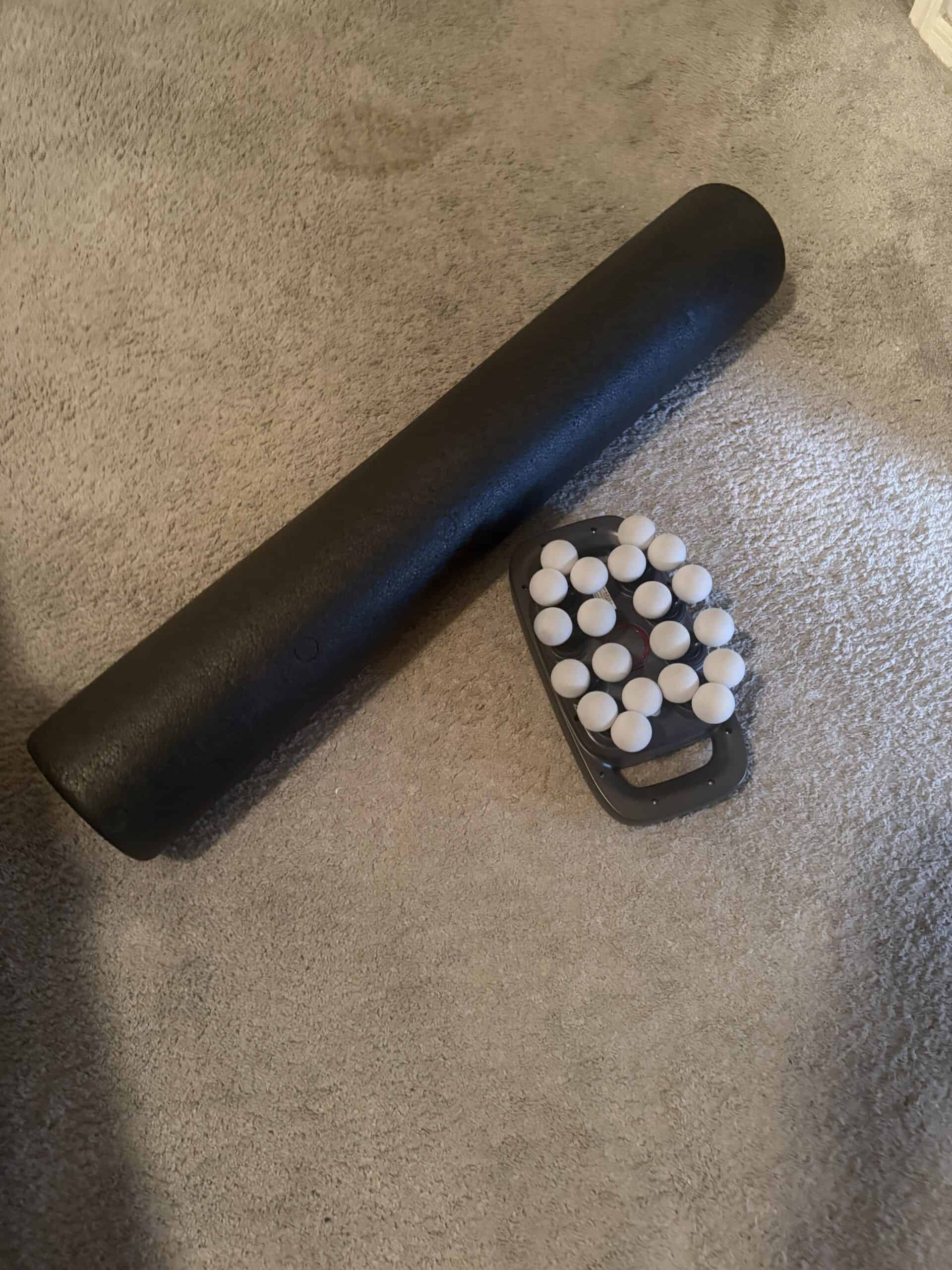
There are a dozen products aimed at the tension side of migraine and they do genuinely different things. Heat, pressure, percussion, traction, and posture are five separate mechanisms, and which one suits you depends on something most people have not worked out: whether your neck tension is causing the problem, accompanying it, or arriving with it. Those are three different situations and they want different answers.
Important
This is general information, not medical advice. I get migraines, which is why this site exists, and that is not the same as being qualified to diagnose what is happening in your neck. Neck pain with headache can have causes worth ruling out properly. If this is new, changing, or severe, see a doctor before buying anything.
Key Takeaways
- Tension headache and migraine are different things and often confused.
- Neck tension may be a trigger, a symptom, or coincidental. It matters which.
- Heat is passive, pressure is targeted, percussion is broad. Different tools.
- Nothing here treats migraine. It addresses tension that sits alongside it.
- During an attack, most of these are too much. Timing is the whole thing.
First, Is It Tension Headache or Migraine
The distinction that decides everything downstream, and the two get conflated constantly.
Tension headache is typically a band of pressure, both sides, without the nausea and light sensitivity that characterise migraine. Migraine is often one-sided, frequently comes with nausea and sensitivity to light and sound, and has phases before and after the pain. Mayo Clinic’s material on tension headache lays out the difference clearly and is worth reading before you decide which problem you are solving.
People have both, which complicates it further. And why migraine pain is often one-sided covers a distinguishing feature that helps.
Why it matters here: the products on this page are largely aimed at muscular tension. If your problem is migraine, they address something adjacent to it rather than the thing itself, and expecting more than that leads to disappointment.
Work Out What Your Neck Is Actually Doing
Three possibilities, and they are worth separating because they lead different places.
Neck tension as a trigger: tightness builds, and attacks tend to follow. If that is your pattern, addressing tension before it accumulates is preventive and the timing is on ordinary days rather than bad ones.
Neck tension as a symptom: the neck tightens as part of the attack, often early. In that case it is a signal rather than a cause, and working on it will not stop what has started. Prodrome symptoms covers the early phase where this shows up.
Neck tension as coincidence: you have a desk job and you get migraines, and both are true without being connected. Common, and worth ruling in or out honestly before building a purchase around a link that is not there.
A simple record over a few weeks tells you which. Note tension, note attacks, and look at whether one reliably precedes the other. Migraine triggers covers the wider version of this exercise.
The Five Mechanisms
Once you know what you are addressing, the category sorts itself by how each thing works.
Heat increases blood flow and helps muscles let go, and it asks nothing of you. Heating pads and warm compresses are the passive end of this category, and passive matters when you feel awful. Neck wraps apply the same idea in a wearable form.
Pressure is targeted. Acupressure mats and acupressure pens work on specific points, and scalp massagers apply it more broadly and more gently.
Percussion is what a massage gun does, and Cleveland Clinic’s write-up on massage guns is measured about what they achieve. Neck massagers sit nearby with a gentler action.
Broad self-work is the foam roller approach, using bodyweight across larger muscles rather than working a point.
Traction and posture address position rather than muscle. Cervical traction devices and posture correctors are aimed at what your neck is doing all day rather than how it feels tonight.
Timing Decides More Than the Product
The point most of this category ignores.
During an attack, sensory input is often the problem rather than the solution. A percussion device against your skull when you are light and sound sensitive is likely to make things worse, not better. Vibration, noise, and pressure are all inputs, and an attack is frequently a state of too much input already.
Which pushes most of this category toward the gaps between attacks, where addressing accumulated tension is plausible and tolerable. That reframes it as maintenance rather than rescue.
The passive options are the exception. Heat asks nothing, makes no noise, and can be tolerated when nothing else can. That is why a heating pad or a warm wrap is the one thing on this page that has a plausible role during an attack, and even then it is comfort rather than treatment.
Stopping a migraine fast covers what actually applies once one has started.
Match the Tool to the Situation
Putting it together.
If tension builds over days at a desk, the position tools and broad self-work are pointed at the cause. A posture approach and regular attention to the muscles is preventive, unexciting, and aimed at the right thing. A migraine-friendly workspace matters more than any device here for that pattern.
If tension is concentrated in one spot you can point to, targeted pressure is the fit and broad tools will be clumsy at it.
If you want relief with no effort at the end of a bad day, heat is the answer and it is the cheapest thing on the page.
And if the tension arrives as part of the attack, the honest answer is that these tools are not aimed at your problem, and the useful reading is elsewhere on this site.
What None of This Does
Worth stating plainly.
Nothing on this page treats migraine. These address muscular tension, which for some people sits alongside migraine and for some people has nothing to do with it. That is a modest and real claim, and it is smaller than the claim these products are usually sold with.
If your migraines are frequent enough to be structuring your life, the thing that helps is a proper assessment and a treatment plan, not a better massage gun. Finding a migraine specialist is the route, and the American Migraine Foundation covers what treatment can actually look like.
Tension relief can be a genuine part of managing things around the edges. It is not the middle of the problem and buying more of it is a way of not addressing the middle.
Recommended Reading
See migraine triggers, a migraine-friendly workspace, and finding a specialist, and building a migraine toolkit, and peppermint oil rollers for migraine, and reusable eye compress warmers, and whether cold helps neck tension.
Migraine Tension Relief FAQ
What is the difference between tension headache and migraine?
Tension headache is usually a band of pressure on both sides without nausea or light sensitivity. Migraine is often one-sided, frequently involves nausea and sensory sensitivity, and has phases before and after the pain. People have both, which is why they get confused.
Does neck tension cause migraines?
Sometimes, sometimes it is a symptom of one starting, and sometimes the two are unrelated and you simply have a desk job. Those are three different situations and a few weeks of noting tension and attacks will tell you which you are in. Building a purchase on a link that is not there is common.
Should I use a massage gun during a migraine?
Probably not. Vibration and noise are sensory input, and an attack is often a state of too much input already. Most of this category belongs in the gaps between attacks, as maintenance. Heat is the exception, since it asks nothing of you.
What helps neck tension with no effort?
Heat. A heating pad or a warm wrap increases blood flow and helps muscles let go while you lie there, which matters when you feel too bad to work on yourself. It is also the cheapest option in the category.
Massage gun or foam roller?
Targeted or broad. A gun works a specific spot directly, and a roller uses bodyweight across a larger muscle. If you can point to the tension, the gun fits. If it is spread out, the roller does. Neither treats migraine; both address muscle.
Do posture correctors help migraines?
They address position over a whole day rather than how your neck feels tonight, which makes them preventive if your pattern is desk-driven tension building into attacks. If that is not your pattern, they are solving something you do not have. Your workspace setup matters more than the device.
Can any of this replace migraine treatment?
No, and it is important to be clear. Nothing here treats migraine. These address muscular tension that may or may not be connected to it. If migraines are structuring your life, that is an assessment and a treatment plan rather than a purchase.
When should I see a doctor about neck pain and headache?
If it is new, changing in pattern, severe, or accompanied by symptoms beyond your usual. Neck pain with headache can have causes worth ruling out properly, and that is a conversation to have before deciding it is muscular and buying something for it.
Sources
- Mayo Clinic. Tension Headache: Symptoms and Causes.
- Cleveland Clinic. Massage Gun Benefits.
- American Migraine Foundation. Migraine resource library.
Slow breathing is the practice behind several of these approaches. What the evidence supports and what the hardware does not separates the two.
