
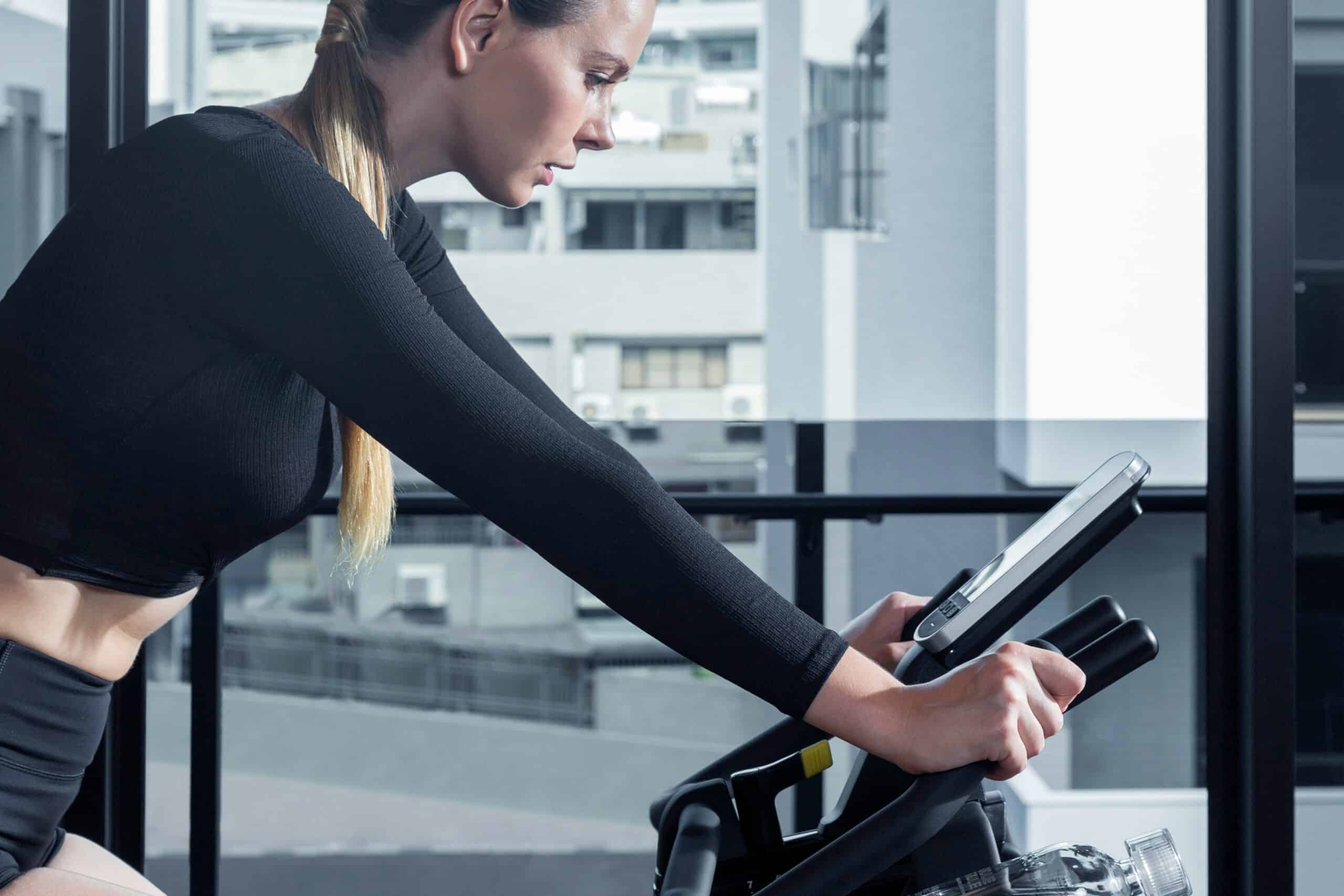
A desk cycle adds steady low-effort leg movement while you stay seated, which keeps a long workday from becoming entirely still without raising effort into the range where exertion gets complicated. The best desk cycles and mini exercise bikes for migraine are the quiet magnetic-resistance units with a low enough pedal height to fit under a real desk, and the honest verdict is that a pedal unit suits anyone who cannot stand or walk through a working day. NIOSH reviewed prolonged standing at work and reported consistent findings of low back pain, fatigue, muscle pain and leg swelling, which is why standing all day is not the obvious answer either1. Seated pedaling sidesteps both extremes.
Buy a magnetic-resistance pedal unit with a low pedal arc and a non-slip base, keep the resistance near the bottom of its range, and expect to spend more time adjusting your chair than the machine. The chair matters more than the cycle does, and ergonomic chairs covers that side.
Desk Cycles at a Glance
| Type | Fits Under a Desk | Noise | Best Use |
|---|---|---|---|
| Magnetic pedal exerciser | Usually, check pedal arc | Low | Steady seated movement |
| Low-profile desk cycle | Yes, designed for it | Low | Tight desk clearance |
| Under-desk elliptical | Yes | Low | Gliding rather than circular motion |
| Bike desk with built-in top | It is the desk | Low | A dedicated movement station |
| Resistance-free spinner | Yes | Lowest | Fidget movement, not exercise |
| Non-slip mat and base | Accessory | Reduces it | Stopping the unit sliding |
Medical Disclaimer
This article is for educational purposes only and does not replace medical evaluation or treatment by a qualified clinician. Equipment does not treat or prevent migraine. Head pain that comes on with activity needs medical assessment rather than a change of equipment.
Key Takeaways
- Pedal height and arc decide whether a unit fits under your desk at all.
- Magnetic resistance is quieter and smoother than friction resistance.
- Low resistance is the point, since this is movement rather than training.
- Units slide on hard floors unless the base grips or sits on a mat.
- Your chair has to suit pedaling, which usually means adjusting its height.
- Nothing here is a preventive, and a display showing calories invites the wrong goal.
How We Picked These Units
We grouped these by mechanism and footprint, since those are what determine whether a unit can actually live under a desk you already own.
Then we weighted quietness and smoothness at the lowest resistance setting, because that is the setting this use case lives at and most listings describe the top of the range instead.
We have not used these or measured anything, so nothing here is a result from our own testing, and no product here is claimed to prevent or treat migraine. Whether seated pedaling suits you is a conversation with your clinician.
1. A Magnetic Pedal Exerciser, Best Overall
Why It Stands Out
Magnetic resistance has no contact point, so it runs quietly and spins smoothly at the low settings this use calls for. Smoothness is what stops pedaling from becoming a distraction.
These are also the most widely available format, which keeps the price sensible and the replacement easy.
Worth Knowing
Pedal arc is the specification that catches people out, since a tall unit forces your knees up into the desk. Measure your clearance before buying rather than after.
Many come with a display counting calories and distance, which quietly encourages pushing harder than you meant to.
This suits most desks with reasonable knee clearance. Skip it if your desk is low. Best for: quiet smooth pedaling at the bottom of the resistance range.
Check Price on Amazon2. A Low-Profile Desk Cycle, Best for Tight Clearance
Why It Stands Out
Purpose-built desk cycles use a flatter pedal path specifically so your knees clear a standard desk, which is the single most common reason a pedal unit gets returned. Fit decides use.
They tend to be heavier and more stable too, so they stay where you put them.
Worth Knowing
A flatter arc means less leg range, which some people find less satisfying over a long session. It is a genuine trade rather than a pure upgrade.
These cost more than generic pedal exercisers and the resistance range is often narrower.
This suits standard-height desks and anyone short on knee room. Skip it if you have plenty of clearance. Best for: fitting under a desk that a taller unit will not.
Check Price on Amazon3. An Under-Desk Elliptical, Best Alternative Motion
Why It Stands Out
An elliptical glide moves the foot forward and back rather than in a circle, which keeps the knees lower and suits a shallow desk. The motion is also gentler on the knee joint itself.
Many of these work standing as well, so one unit covers two postures.
Worth Knowing
The sliding motion can rock the unit on a hard floor, so a mat matters more here than with a pedal cycle.
Standing use puts you taller, which changes desk height and screen position in the same way a walking pad does.
This suits shallow desks and knee-sensitive users. Skip it on a bare hard floor without a mat. Best for: low knee lift with a gliding rather than circular motion.
Check Price on Amazon4. A Non-Slip Mat and Base, Best Accessory
Why It Stands Out
A pedal unit that creeps away from you mid-session is the most irritating failure in this category, and a grippy mat ends it outright. It also damps the low hum into the floor.
On carpet a rigid board under the unit does the opposite job and stops it sinking and tilting.
Worth Knowing
Hard floors want grip and carpet wants rigidity, so the right accessory depends on which you have. Buying the wrong one achieves nothing.
New rubber mats smell strongly at first, which is worth knowing if scent affects you.
This suits every setup. Skip it only if your unit already grips well. Best for: stopping the unit sliding and cutting hum into the floor.
Check Price on Amazon5. A Bike Desk With a Built-In Top, Best Dedicated Station
Why It Stands Out
An integrated unit puts the desk surface, the seat and the pedals in a fixed relationship, so nothing needs adjusting each time. For anyone who pedals daily that removes a lot of friction.
It also separates movement work from your main desk, which keeps the main desk set up properly for focused work.
Worth Knowing
These take real floor space and they are not a laptop stand you tuck away. The desk surface is also usually small.
Monitor height on these is rarely right for long sessions, which puts the neck back in play. Ergonomic keyboards and mice mitigate part of it.
This suits a dedicated movement corner and daily use. Skip it in a small room. Best for: a fixed station that needs no setup each session.
Check Price on Amazon6. A Resistance-Free Foot Spinner, Best Minimal Option
Why It Stands Out
A free-spinning platform gives you movement with essentially no effort, which suits anyone who wants to stop sitting rigidly without adding any exertion at all. It is also nearly silent.
Cheap and small enough that it can live under a desk permanently without being in the way.
Worth Knowing
This is fidget movement rather than exercise, and nobody should expect more from it. That honesty is also its appeal.
Without resistance there is nothing to adjust, so it suits one use case and no others.
This suits restless legs at a desk and the lowest possible effort. Skip it if you want measurable activity. Best for: movement with no exertion and no noise.
Check Price on AmazonWhat to Look For in a Desk Cycle
Pedal height and arc first
Measure from the floor to the underside of your desk, then check the unit’s maximum pedal height. Everything else is irrelevant if your knees hit the desk.
Magnetic rather than friction resistance
Friction pads rub, which means noise and a gritty feel that gets worse with wear. Magnetic units have nothing in contact and stay smooth.
Smoothness at the lowest setting
This is the setting you will actually use, and cheap units can feel notchy down there. Reviews mentioning the low end are worth more than the stated resistance range.
A base that grips your floor
Rubber feet work on hard floors and do nothing on carpet, where the unit instead tilts. Check which surface the feet were designed for.
Pedaling or Walking
Pedaling keeps you seated
Nothing about your screen, your typing or your head position changes, which is the whole advantage. For anyone who gets dizzy standing, or who simply cannot type while walking, that is decisive.
Walking does more and demands more
A walking pad moves the whole body and raises the desk, which brings screen height and bounce into play. Waters and Dick found both health risks from prolonged standing and evidence that interventions help, so rotating postures beats committing to one2.
Common Misconceptions
That the resistance range matters
You will sit near the bottom of it permanently. A unit advertising high resistance levels is advertising something irrelevant to desk use.
That it replaces exercise
Low-effort pedaling breaks up sitting, which is worth doing, but structured moderate aerobic exercise is the thing with the research behind it in migraine. Cardio against strength training covers that distinction.
That the chair is already fine
Pedaling needs a chair that supports you without the desk edge taking your weight, and the seat usually has to come up. Support matters here, which is what lumbar supports and seat cushions address.
That more is better on a bad day
Returning to activity after an attack is a graded business rather than an all-or-nothing one. Exercising the day after a migraine works through it.
Fitting It Into the Rest of the Desk
Feet and footrests compete for the space
A pedal unit occupies exactly where a footrest went, so one of them has to come out on any given day. Desk footrests covers the alternative.
The desk itself still decides most of it
Clearance underneath and height on top are both desk properties rather than cycle properties. Standing desks and building a migraine-friendly workspace cover the setup around it.
Movement is not a stress strategy on its own
Stress is the most commonly identified trigger in survey data, and pedaling does not address it directly. How stress triggers migraines goes into what does.
Fluid still goes down over a long day
Several hours of light movement adds up, and dehydration appears commonly in trigger reports. Electrolyte drinks cover one way to handle it.
Worth reading next: anti-fatigue mats, which cover the standing half of breaking up a seated day.
When to See a Neurologist
- A sudden severe headache during or after activity, especially a first episode.
- Head pain that follows movement reliably rather than occasionally.
- Any headache you would describe as the worst of your life.
- New headaches starting after age fifty.
- Attacks increasing in frequency over weeks or months.
- Weakness, numbness, speech difficulty or vision loss with an attack.
- Headache with fever, neck stiffness or a rash.
- Pain that wakes you or is worst on waking.
- Headache after any head or neck injury.
- Dizziness or unsteadiness when you stand, between attacks.
- Needing acute medication on most days.
- Leg swelling or calf pain that does not settle after sitting.
Desk Cycle FAQ
What are the best desk cycles and mini exercise bikes for migraine
A magnetic-resistance pedal exerciser is the default, with a purpose-built low-profile desk cycle for tight knee clearance and an under-desk elliptical for a lower, gliding motion. A non-slip mat matters on hard floors. Keep the resistance near the bottom of the range.
Will a desk cycle fit under my desk
Measure floor to desk underside and compare it against the unit’s maximum pedal height, since the pedal at the top of its arc is what hits the desk. Low-profile desk cycles exist specifically because generic pedal exercisers sit too tall for many desks.
Is pedaling at a desk safe with migraine
Low-effort seated pedaling is gentle movement rather than exertion, and sudden intense effort is what features more often in exercise trigger reports. Whether it suits you, and at what effort, is a question for your clinician rather than a specification.
How much resistance should I use
Little enough that your breathing does not change and you forget you are doing it. If you are working to turn the pedals, the setting has moved past what desk movement was for.
Is a desk cycle better than a walking pad
It is better for anyone who needs to stay seated, since it changes nothing about screen height, typing or head position. A walking pad moves more of the body but brings desk height and screen bounce into the picture.
When should I see a doctor about this
See a doctor if head pain comes on suddenly with activity, if it follows movement reliably, or if it arrives alongside weakness, numbness, speech difficulty or vision changes. Calf pain, swelling or warmth after long seated periods should be seen urgently.
Can I use one during an attack
Routine physical activity commonly worsens an attack in progress, which is part of how migraine is characterized. Stopping is the sensible response rather than easing the resistance down.
Sources
- National Institute for Occupational Safety and Health. Prolonged Standing at Work. NIOSH Science Blog, Centers for Disease Control and Prevention. https://www.cdc.gov/niosh/bulletin/2014/standing.html
- Waters TR, Dick RB. Evidence of health risks associated with prolonged standing at work and intervention effectiveness. Rehabilitation Nursing. 2015;40(3):148-165. https://pubmed.ncbi.nlm.nih.gov/25041875/
