
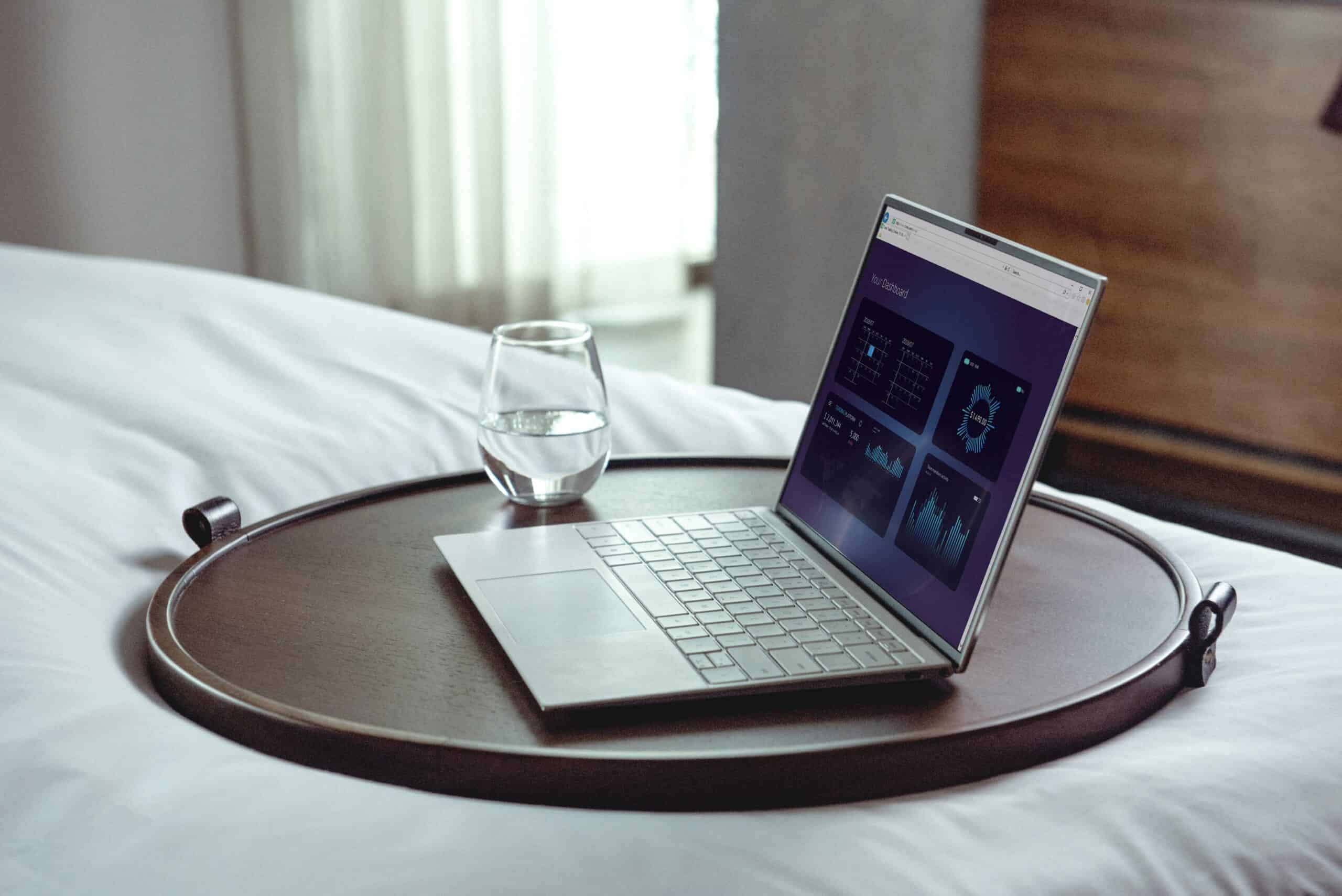
You are upright enough to answer an email and nowhere near upright enough to sit at a desk. The best lap desks and bed trays for migraine days are cushioned lap desks with a bean bag base, because they sit level on your legs in any position and need nothing else set up. Reclined work is the whole use case.
A pillow under a laptop is what most people do. It runs hot, tips, and puts the screen at the wrong angle.
A proper surface fixes the angle and keeps the heat off you. Our guide to getting through a workday after a migraine covers the rest of those hours.
Medical Disclaimer
This article is research, not medical advice. A tray makes a bad day more manageable and treats nothing. If you are regularly working from bed because of head pain, that pattern is worth raising with a doctor rather than only equipping around it.
Quick Verdict
A cushioned bean bag lap desk is the right default, since it needs no assembly and works in a bed or a chair. An adjustable overbed table on casters is better for long recovery stretches, a folding bamboo tray is the cheapest option, a tilting laptop stand fixes the screen angle, and a rolling cart keeps everything beside you. Match the surface size to what you actually put on it.
Key Takeaways
- A cushioned base keeps the surface level regardless of how your legs are positioned.
- Laptop heat against your legs is the problem most people are solving without realizing it.
- Screen angle matters more when reclined, because the neck is already in an unusual position.
- Overbed tables roll in over the mattress, so nothing rests on you at all.
- Folding trays store flat, which is why they get used rather than put away.
- A surface too small for a laptop plus a mug becomes a surface you stop using.
How We Picked the Best Lap Desks and Bed Trays for Migraine Days
We compared surface types rather than named products, because the specific items rotate constantly while the designs behave the same way.
Each section covers one type, the situation it suits and where it falls short. We weighted four things: how stable it is in a reclined position, how much heat it keeps off you, how it handles screen angle, and how quickly it can be set up and put away.
We have not published dimensions or weight limits. Those vary by product, and a figure here would not tell you whether your laptop and a glass of water both fit.
On the clinical side, the American Migraine Foundation describes rest in a dark quiet room as a common non-drug approach during an attack, and Cleveland Clinic lists sustained awkward neck positions among the contributors to tension-type head pain. A tray addresses the second of those, not the first.
1. Cushioned Lap Desks With a Bean Bag Base, Best Overall
Why It Stands Out
A rigid board on top with a loose-fill cushion underneath, which moulds to your legs and holds the surface roughly level however you are sitting.
That self-levelling is the feature. A flat-bottomed tray on bent knees slides, and this does not.
The cushion also puts a thick insulating layer between a warm laptop and your legs, which is the complaint that sends most people looking for one of these.
Worth Knowing
Loose fill compresses over time and eventually stops supporting the board evenly. Firmer fills last longer.
These also offer no height or tilt adjustment, so the screen sits wherever your knees put it.
Best for most people on most bad days, in bed or in a chair. Our recliners for migraine rest picks cover the chair half of that.
Check Price on Amazon2. Adjustable Overbed Tables on Casters, Best for Long Recovery Days
Why It Stands Out
A C-shaped or cantilever base rolls under the bed while the top extends over it, so the surface floats above your lap with nothing touching you.
Nothing resting on your legs is the real difference. You can shift position without moving the table.
Height and often tilt adjust independently, which makes this the only type here that can put a screen at a chosen angle rather than an accidental one.
Worth Knowing
These need floor clearance under the bed and a path to roll in, which rules them out with storage drawers or a platform base.
They are also the bulkiest option and do not disappear between uses, so the table becomes part of the room.
Best for extended recovery periods and anyone working from bed regularly. See our guide to monitor arms and laptop stands for the same principle at a desk.
Check Price on Amazon3. Folding Bamboo Bed Trays With Legs, Best Simple Option
Why It Stands Out
A flat top on two hinged legs that fold under. It straddles your lap, standing on the mattress rather than resting on you.
Standing on the bed means no weight and no heat on your legs, with none of the bulk of an overbed table.
They also fold completely flat and slide beside a nightstand, which is why these stay in use rather than getting put in a closet.
Worth Knowing
Legs on a soft mattress can sink unevenly and the whole thing tilts. A firm surface or a board underneath fixes that.
Fixed height and no tilt means the screen angle is whatever the tray gives you.
Best for eating, reading and short laptop sessions. For reading specifically, our e-ink devices for screen sensitivity picks pair well with a tray.
Check Price on Amazon4. Tilting Laptop Stands for Bed Use, Best Screen Angle
Why It Stands Out
A frame with an adjustable platform that angles the laptop up toward you instead of leaving it flat on your thighs.
Reclined, a flat screen points at the ceiling and you crane forward to see it. Tilting the screen is what stops that.
Most also lift the laptop clear of any surface, which improves airflow underneath and keeps the heat moving away.
Worth Knowing
A tilted laptop puts the keyboard at an awkward angle, so these work best with a separate keyboard on your lap.
Hinges and clamps are the parts that loosen, and a stand that will not hold its angle under a heavy laptop is useless.
Best when screen position is the specific problem. Our ergonomic keyboards and mice picks cover the input side.
Check Price on Amazon5. Backrest Pillows With a Tray or Side Pocket, Best Combined Support
Why It Stands Out
A reading wedge or backrest with arms, often sold with a small attached tray or side pockets for a phone and a remote.
Supporting your back is half of working reclined. A tray with no back support leaves you holding yourself up, which fails within the hour.
Side pockets also stop the phone-under-the-duvet problem, which matters when sitting up to look for it is the hard part.
Worth Knowing
The attached trays are usually small and lightly built. Treat the backrest as the product and the tray as a bonus.
These also take up space on the bed permanently, and they trap heat against your back.
Best paired with a separate lap desk rather than used alone. Our grounding and weighted lap pads picks cover the other thing people keep within reach.
Check Price on Amazon6. Rolling Laptop Carts, Best Mobility
Why It Stands Out
A small wheeled cart with one or two shelves that rolls between a bed, a chair and a window seat without being carried.
Moving the whole setup rather than relocating it item by item is the benefit. On a bad day, carrying things is the part that goes wrong.
A lower shelf also keeps water, medication and a notebook together, which saves standing up for each of them.
Worth Knowing
Carts sit beside you rather than over you, so a laptop still needs a lap surface. This solves transport, not posture.
Small casters also struggle on thick carpet and on thresholds between rooms.
Best for anyone moving between a bed and a chair through the day. See our guide to handling a migraine at work when you cannot leave for the office equivalent.
Check Price on AmazonLap Desk and Tray Types at a Glance
| Type | Rests On | Adjustable | Stores | Best Use |
|---|---|---|---|---|
| Bean bag lap desk | Your legs | No | Leans anywhere | Most bad days |
| Overbed table | The floor | Height and tilt | Stays out | Long recovery |
| Folding bamboo tray | The mattress | No | Flat | Eating and reading |
| Tilting laptop stand | Lap or bed | Angle | Folds | Screen position |
| Backrest with tray | The bed | No | Stays out | Back support |
| Rolling cart | The floor | Shelf heights vary | Stays out | Moving the setup |
What to Look For in a Lap Desk or Bed Tray
A surface big enough for everything
Laptop, mouse and a drink is the realistic load. A tray sized for a laptop alone gets abandoned quickly.
Real insulation from laptop heat
A thin board transmits heat straight through. A cushion, a vented base or legs that lift it clear all solve this differently.
Stability in your actual position
Flat-bottomed trays need flat legs. If you work with knees bent, a moulding cushion or standing legs is the answer.
Adjustability only where it helps
Tilt matters for screens and gets in the way for meals. Decide which job the surface is mainly for.
Weight you can move one-handed
On a bad day, anything needing two hands and a plan stays where it is. Light wins over featured.
A Lap Desk or a Proper Workspace?
When the lap desk is the right answer
For the hours when sitting upright at a desk is not available, a tray is what keeps a bad day from being a lost one. It is a fallback, and a fallback worth owning.
When the workspace is the right investment
If most of your work happens at a desk, fixing the desk does more. Screen height, lighting and chair support all affect how often bad days start, and our guide to creating a migraine-friendly workspace covers that properly.
Common Mistakes to Avoid
Using a pillow instead
Pillows insulate laptop heat the wrong way, trapping it against the machine and your legs. They also tip.
Buying a tray too small to be useful
This is the most common regret in the category. Measure your laptop and add room for a drink.
Ignoring the neck angle
Reclined with a flat screen means craning forward for hours. Tilt the screen or raise it, or the tray creates a new problem.
Expecting an overbed table to fit any bed
Drawers, storage bases and platform frames all block the base. Check the clearance before ordering.
Treating it as a long-term workspace
Working from bed is a fallback for bad days, not a setup. If it has become the default, that is worth discussing with a doctor.
Recommended Reading
- Monitors for light sensitivity
- Migraine-friendly lighting for home offices
- How to nap with a migraine
Best Lap Desks and Bed Trays for Migraine Days FAQ
What are the best lap desks and bed trays for migraine days?
Cushioned bean bag lap desks suit most people, because they stay level on bent legs and insulate against laptop heat with nothing to set up. An adjustable overbed table is better for long recovery stretches since nothing rests on you, and a folding bamboo tray is the cheapest workable option.
Is working from bed bad for you?
As an occasional fallback on a bad day it is reasonable, and better than losing the day entirely. As a routine it tends to mean sustained awkward neck and back positions, which can contribute to tension-type pain of their own. If bed has become your default workspace, that is worth raising with a doctor.
How do you stop a laptop overheating on a lap desk?
Choose a surface that lifts the laptop clear of soft bedding, since blocked vents are the usual cause. Hard-topped trays with legs, vented boards and tilting stands all improve airflow. A pillow does the opposite by sealing the underside.
What size lap desk do I need?
Measure your laptop and add space for a mouse and a drink, then compare against the product’s surface dimensions rather than its description. Trays sized exactly to a laptop are the ones people stop using within a week.
Are overbed tables worth it?
If you spend extended periods in bed, yes, because nothing rests on your legs and the height and angle adjust. The limits are floor clearance under the bed and the fact that it stays in the room permanently. For occasional bad days a lap desk is enough.
How do you get a comfortable screen angle in bed?
Raise and tilt the screen rather than lowering your head to it, which usually means a tilting stand plus a separate keyboard on your lap. Reclining the upper body with support behind you also helps, since it brings your eye line closer to level with the screen.
Can a lap desk help with neck tension?
Indirectly, by letting you hold a better head position than a laptop flat on your thighs allows. It does not treat neck tension, and if that is a persistent feature of your head pain it deserves assessment rather than a hardware fix.
When should I see a doctor?
See a doctor if attacks are becoming more frequent or severe, if you are regularly unable to work upright, or if you have new symptoms such as vision changes, weakness, confusion or a sudden severe headache. Needing to work from bed often is itself a useful thing to mention at an appointment.
Sources
- American Migraine Foundation, Non-Drug Approaches to Migraine Management. americanmigrainefoundation.org
- Cleveland Clinic, Tension-Type Headache. my.clevelandclinic.org
- Mayo Clinic, Migraine Symptoms and Causes. mayoclinic.org
- National Institute of Neurological Disorders and Stroke, Headache Information. ninds.nih.gov
