
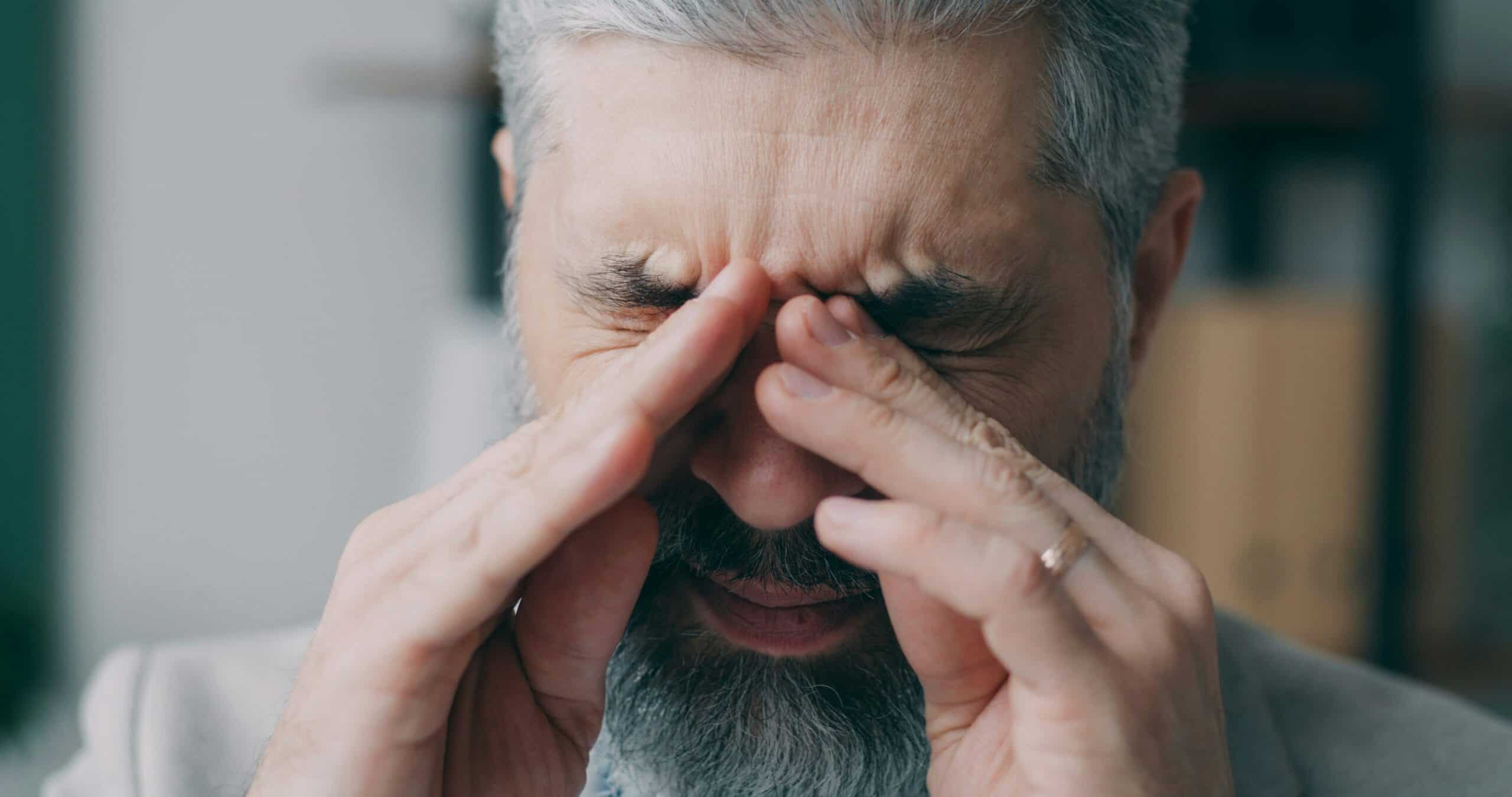
For most people they improve. Migraine prevalence peaks somewhere in the thirties and forties and declines afterward, and attacks often become less frequent and less severe with age. The pattern frequently changes character rather than simply easing, and new or worsening headache in later life needs medical assessment rather than being attributed to age.
Medical Disclaimer
This article is general information rather than medical advice. A new headache pattern after age fifty, a sudden severe headache unlike any before, or headache with fever, confusion, weakness, vision loss, or a stiff neck requires prompt medical attention. Changes in an established migraine pattern warrant discussion with a doctor.
Quick Answer
Migraine typically peaks in midlife and declines afterward. Attacks often shorten and soften with age while sometimes losing the headache component entirely. Worsening rather than easing is common around perimenopause, and a genuinely new pattern later in life is a reason to be assessed rather than reassured.
Key Points
- Prevalence peaks in the thirties and forties, then declines
- Attacks frequently become shorter and less severe with age
- Aura can persist or appear without the headache phase
- Perimenopause is commonly a period of worsening
- New headaches after fifty need assessment rather than assumption
- Medication choices change with age and other conditions
How the Pattern Typically Shifts
| Life stage | Common pattern |
|---|---|
| Childhood and adolescence | Onset, often shorter attacks, abdominal symptoms common |
| Twenties and thirties | Frequency and severity often building |
| Thirties and forties | Typical peak in prevalence |
| Perimenopause | Frequently worsens, particularly hormonally linked attacks |
| Post-menopause | Often improves markedly |
| Sixties onward | Declining frequency, aura may persist without headache |
All of these are population patterns rather than predictions for any particular individual, and a great many people do not follow them at all.
Why It Usually Improves
Hormonal change is the most commonly cited factor for people who menstruate, since estrogen fluctuation is closely linked to attack frequency and that fluctuation largely settles after menopause.
Sleep patterns and general lifestyle also tend to stabilize with age, which removes some of the variability that drives attack frequency through the earlier decades. For many people the biggest change arrives with perimenopause specifically rather than with age alone.
There may be neurological changes too, with some evidence suggesting the cortical excitability associated with migraine alters over time.
Accumulated management experience matters as well. Someone who has lived with migraine for decades usually knows their triggers, their warning signs, and what works, covered in chronic against episodic migraine.
The Perimenopause Exception
Many people find migraine worsens during the years leading up to menopause rather than improving.
The mechanism is generally attributed to erratic estrogen fluctuation, which is more variable during perimenopause than during regular cycles.
That period can last several years, and it is frequently the point at which people who had previously manageable migraine seek treatment for the first time in decades.
Improvement afterward is common, which makes this a difficult phase rather than a permanent worsening for most, covered in preventing menstrual migraines.
Changing Character Rather Than Severity
Aura without headache
Some people develop visual aura that is no longer followed by pain. This is recognized and it warrants assessment when it first appears, since visual symptoms have other causes.
Shorter attacks
Duration frequently reduces even where frequency does not change, so attacks become considerably more manageable without actually becoming any rarer.
Different symptoms
Nausea and light sensitivity may fade while dizziness or neck pain becomes more prominent.
Milder pain, longer recovery
Postdrome sometimes becomes the more disruptive part as the pain phase softens, covered in postdrome recovery.
When Change Means See a Doctor
A first migraine after the age of fifty is genuinely uncommon and warrants investigation, since other conditions become considerably more likely with age and can present in similar ways.
Any headache that is new, different, or worsening in character deserves assessment rather than being folded into an existing diagnosis.
Aura appearing for the first time in later life, particularly without headache, needs evaluation because visual disturbance has causes unrelated to migraine.
Sudden severe headache, headache with neurological symptoms, or headache with fever or stiff neck are emergency presentations regardless of migraine history.
Why Averages Are Poor Predictors Here
Population patterns describe what happens across large groups, and they say considerably less about any individual than people assume.
Onset age appears to matter. Migraine beginning in childhood follows a different arc from migraine that starts in the thirties, and the improvement pattern is not identical between them.
You can read what changes over time and what does not before deciding.
Sex differences are substantial. The decline after menopause is a large part of why overall prevalence falls, so the trajectory looks different for people whose migraine was never hormonally linked.
Attack type matters too. Migraine with aura and migraine without aura do not always follow the same course, and aura specifically has a tendency to persist when the headache component fades.
Whether migraine became chronic at any point changes the picture, since chronic migraine has its own trajectory and its own treatment considerations.
Other health conditions accumulate with age and interact with headache in ways that can mask or mimic a change in the migraine itself.
The practical conclusion is that expecting improvement is reasonable and assuming it is not. A pattern that worsens is worth investigating rather than waiting out on the basis that it should eventually settle.
Medication Changes With Age
Treatment options narrow somewhat with age, since cardiovascular risk and other conditions affect which medications are appropriate.
Triptans in particular carry cardiovascular considerations that matter more as risk factors accumulate, which is a discussion for a doctor rather than a general rule.
Interactions become more likely as people take more medications for other conditions, and some common prescriptions can themselves contribute to headache.
Newer preventive classes have altered the picture in recent years, and someone who last discussed treatment a decade ago may find the options different now, covered in CGRP medications.
What You Can Influence
Sleep regularity is among the most consistently useful levers at any age, and it becomes more relevant as sleep architecture changes over decades.
Medication overuse is worth watching closely, since decades of managing attacks can quietly build patterns of frequent acute use that eventually become part of the problem.
Regular review with a doctor matters more than it might seem, because a management plan built around a pattern from twenty years ago may not suit the current one.
And tracking remains useful, since a shifting pattern is easier to describe accurately with records than from memory, covered in migraine tracking apps.
Related Reading
- chronic against episodic
- menstrual migraines
- aura without headache
- medication overuse headache
- CGRP medications
- finding a specialist
Frequently Asked Questions
Do migraines get worse with age?
For most people they improve. Prevalence peaks in the thirties and forties and declines afterward, with attacks often becoming shorter and less severe.
Why do mine seem worse now?
Perimenopause is a common period of worsening due to erratic estrogen fluctuation. Medication overuse and changing sleep patterns are other frequent contributors.
Do migraines ever stop completely?
They can become infrequent enough to feel resolved, particularly after menopause. The underlying predisposition generally remains even when attacks do not.
Why do I get aura without a headache now?
This is recognized and becomes more common with age. It warrants assessment when it first appears, since visual disturbance has causes unrelated to migraine.
Is a first migraine after fifty normal?
Uncommon, and worth investigating. Other conditions become more likely with age and can present similarly, so a new pattern deserves proper evaluation.
Do treatment options change with age?
Yes. Cardiovascular risk and other conditions affect which medications are appropriate, and interactions become more likely as people take more prescriptions.
Will my migraines follow the average pattern?
Possibly not. Onset age, whether attacks are hormonally linked, aura status, and any period of chronic migraine all change the trajectory. Expecting improvement is reasonable, assuming it is not.
Should I keep taking what has always worked?
Worth reviewing. A plan built around a pattern from decades ago may not suit the current one, and newer preventive options exist that did not before.
When should I see a doctor about a change?
See a doctor for any headache that is new, different, or worsening, for a first migraine after fifty, and for aura appearing for the first time in later life.
Sources
- National Institute of Neurological Disorders and Stroke. Migraine. https://www.ninds.nih.gov/health-information/disorders/migraine
- Mayo Clinic. Migraine Symptoms and Causes. https://www.mayoclinic.org/diseases-conditions/migraine-headache/symptoms-causes/syc-20360201
- American Migraine Foundation. Migraine and Menopause. https://americanmigrainefoundation.org/resource-library/
For the wider picture, see our guide to best noise cancelling headphones for migraines.
