
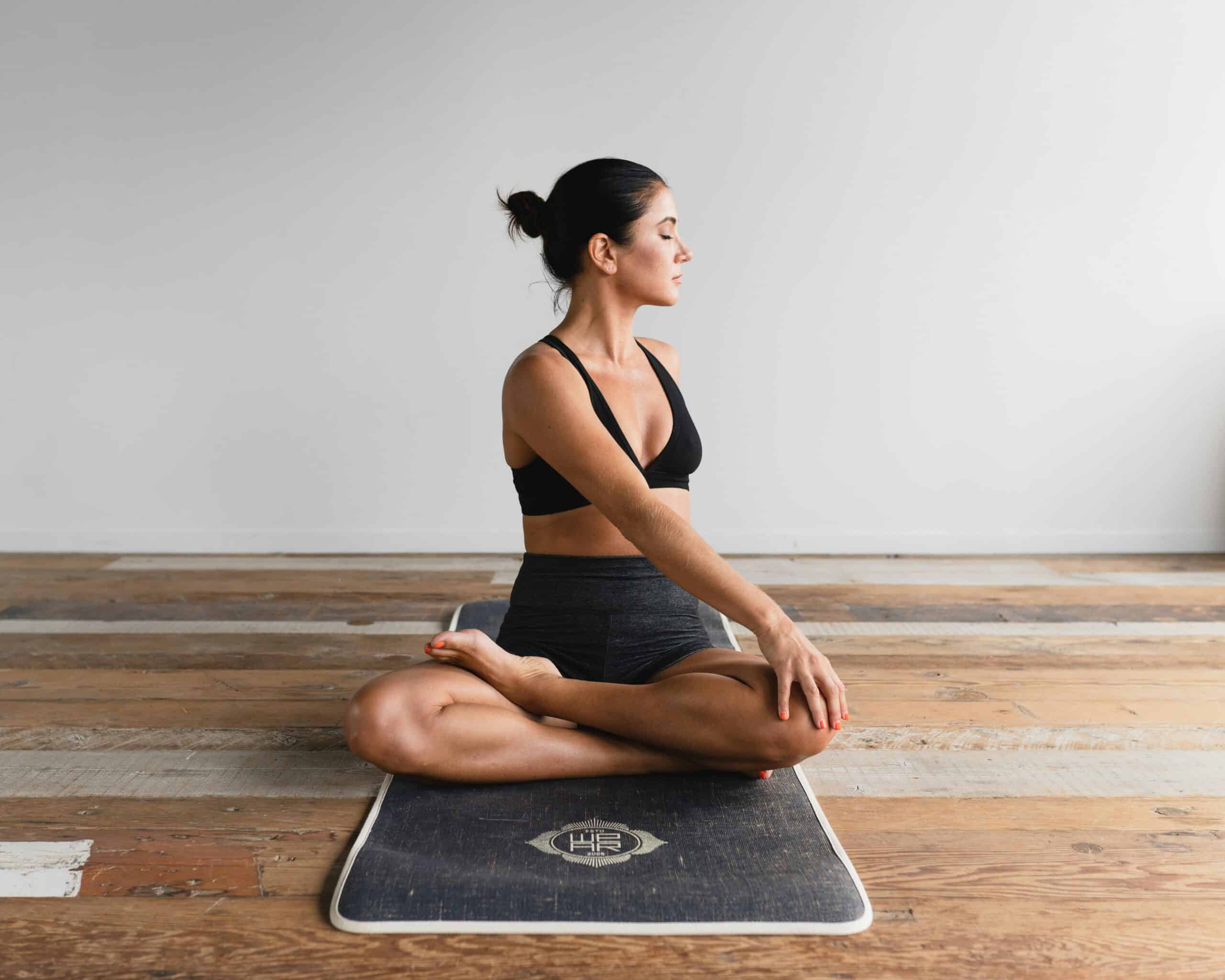
Yoga has more direct trial evidence for migraine than most complementary approaches, which puts it in a different category from the many things suggested without any.
The studies are small and the results point in a consistent direction, and the style matters considerably. Our note on cardio versus strength training covers the wider exercise question.
Medical Disclaimer
This is general information rather than medical advice. Yoga is a complement to medical treatment rather than a replacement for it, and anyone with neck problems or other conditions should speak to a doctor before starting.
Quick Answer
Trials of gentle yoga added to usual care have reported reductions in attack frequency and intensity. Hot yoga and inversions are the styles most likely to cause problems.
Styles and Suitability
| Style | Suitability |
|---|---|
| Hatha, gentle | Closest to what trials studied |
| Restorative | Well suited, minimal exertion |
| Yin | Suitable, long held passive poses |
| Vinyasa or flow | Moderate, depends on pace |
| Hot yoga | Heat and dehydration are triggers |
| Inversions | Caution, head below heart |
What the Trials Found
Randomized trials have examined yoga as an addition to standard migraine care rather than as a replacement for it.
The commonly cited findings include reductions in headache frequency and intensity in groups practicing yoga alongside usual treatment, compared with usual treatment alone.
Study sizes are modest and the durations are typically measured in a few months rather than years, which limits how strongly any conclusion can be drawn from them individually.
What is reasonably consistent is the direction of the effect, and the fact that it was studied as an addition rather than as a substitute. Our note on the main migraine triggers covers the wider picture.
Why It Might Work
Stress reduction
Stress is among the most consistently reported triggers, and yoga is studied for stress in its own right.
Neck and shoulder mobility
Tension in those areas features frequently in migraine, and gentle movement addresses part of it.
Breathing practice
Controlled breathing affects the autonomic nervous system, which is one proposed mechanism.
Sleep quality
Yoga is associated with improved sleep, and disrupted sleep is a recognized trigger. Our note on sleeping with migraine covers that link.
Which Styles to Avoid
Hot yoga combines two documented triggers, since heat and the dehydration that follows sustained sweating both appear in trigger reports.
Inversions put the head below the heart and increase intracranial pressure, which is the same mechanism implicated in exertional headache.
Fast flow classes can reach an intensity closer to aerobic exercise than to the gentle practice studied, which changes the risk profile.
Strong sensory environments matter too, since dim rooms, incense, and scented oils are common in studios and all appear as triggers for some people. Our note on whether strong smells trigger migraines covers that.
Breathing Practice on Its Own
The breathing component is worth separating out, since it is the part of yoga that needs no space, no equipment, and no ability to move.
Slow controlled breathing with a longer exhale than inhale is the pattern most commonly taught, and it is studied for its effect on the autonomic nervous system.
That matters here because autonomic changes feature in migraine, and because stress reduction is one of the proposed mechanisms behind any benefit.
It is also the only part of a practice that remains available during an attack, when movement is generally counterproductive.
Anyone put off by the idea of a class can start with breathing alone and add movement later, which is a lower barrier than committing to a studio. Our note on building a migraine toolkit covers what else fits into a routine.
Practicing During an Attack
Physical activity aggravating pain is part of the diagnostic description of migraine, so movement during an attack generally makes it worse.
Restorative poses that involve lying supported rather than moving are the exception some people find tolerable.
Breathing practice without any movement is another one, and it requires no change of position at all.
Forward folds and anything else placing the head below the level of the heart are worth avoiding entirely mid-attack, since raising pressure inside the head is the opposite of what an attack needs. Our roundup of migraine relief products covers acute options.
Starting Sensibly
Beginning with a gentle or restorative class rather than a general one avoids landing in something faster than intended.
Telling the instructor beforehand matters, since a good one will offer alternatives to inversions and adjust what they suggest.
Practicing at home removes the studio sensory environment entirely, which suits anyone who finds scent or lighting problematic.
Short sessions done regularly track the trial protocols better than occasional long ones, since consistency is what the studies actually measured. Our note on foam rollers migraine tension covers fitting practices into a routine.
Recorded classes are worth mentioning as a middle option, since they remove the studio environment while still providing sequencing and instruction that practicing alone from memory does not.
Neck Caution
Several common poses load the neck directly, and that is worth knowing for anyone whose migraines involve neck symptoms.
Shoulder stand and plow place substantial weight on the cervical spine and are the two most often flagged.
Headstand does the same thing rather more obviously, and it is not a beginner pose for anyone regardless of whether migraine is a factor.
Anyone with a diagnosed neck condition should treat those poses as off limits without specific clearance from a clinician, since the risk there is structural and has nothing to do with headache at all. Our note on neck wraps for migraine relief covers the neck link.
Comparing It to Other Options
Yoga is one of several non-drug approaches with some evidence behind it, and knowing where it sits helps with choosing.
Aerobic exercise has a larger body of research, which makes it the better-supported option for anyone able to do it.
Relaxation training and biofeedback have been studied for migraine over a longer period and share the stress reduction rationale.
Yoga’s practical advantage is that it combines gentle movement, breathing, and relaxation in one activity, which is convenient rather than evidence of superiority.
Its other advantage is accessibility, since it can be done at home without equipment and scaled down to almost nothing on a bad week. Our note on whether exercise triggers migraines covers the alternative.
Setting Expectations
The trials measured outcomes over months, so a few sessions will not tell you whether it works for you.
It was studied as an addition to medical treatment, and nothing in that literature supports stopping prescribed medication.
Response varies considerably between individuals, as it does for essentially every migraine intervention including the pharmaceutical ones.
Tracking attacks before and during a sustained period of regular practice is realistically the only way to tell whether anything is changing for you specifically, rather than relying on how a given week happened to feel.
Sources
American Migraine Foundation, on yoga and complementary approaches to migraine. Mayo Clinic, on lifestyle and complementary treatments for migraine. National Center for Complementary and Integrative Health, on yoga for health conditions. National Institute of Neurological Disorders and Stroke, on migraine management approaches.
Yoga and Migraine FAQ
Can yoga help with migraines?
Trials of gentle yoga added to usual care have reported reductions in attack frequency and intensity. Studies are small and consistent in direction.
Which style is best?
Gentle hatha or restorative, which is closest to what trials studied. Fast flow classes reach an intensity the research did not test.
Is hot yoga a problem?
For many people, yes. Heat and dehydration both appear in trigger reports, and hot yoga combines them.
Should I avoid inversions?
Generally. Head below heart raises intracranial pressure, and shoulder stand and plow also load the neck substantially.
Can I practice during an attack?
Movement usually makes it worse, since activity aggravating pain is part of migraine’s description. Restorative poses and breathing are the exceptions some tolerate.
How long before I know if it helps?
Months. Trials measured outcomes over that timescale, so a few sessions is not a meaningful test.
Can it replace my medication?
No. It was studied as an addition to standard care, and nothing in that literature supports stopping prescribed treatment.
When should I see a doctor?
Before starting if you have neck problems or other conditions, and any time attacks become more frequent or change in character.
