
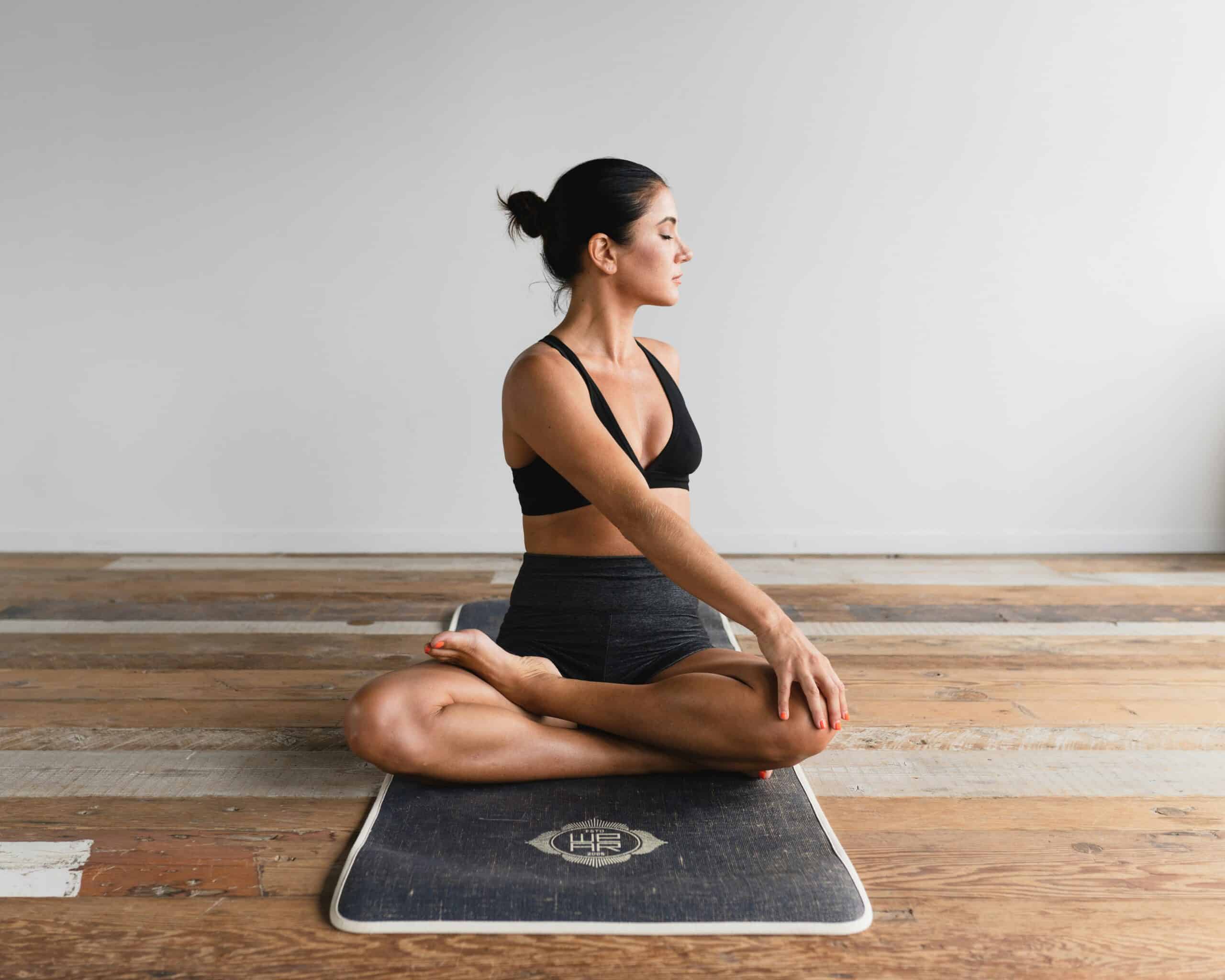
Yoga equipment for a migraine-prone practice is chosen to keep weight off the head and neck, which means a thick stable mat and enough props to sit upright comfortably. The best yoga mats and props for migraine are the ones that let you skip inversions entirely and still hold a shape, because the International Classification of Headache Disorders lists aggravation by routine physical activity among the defining features of migraine1. Props are not an accessory here. They are what makes a seated or supported version of a pose possible.
Gentle hatha and restorative styles are closest to what the research has actually looked at, and both lean heavily on bolsters and blocks. Whether the practice itself helps is covered in whether yoga helps with migraines.
Medical Disclaimer
This article is for educational purposes only and does not replace medical evaluation or treatment by a qualified clinician. Equipment does not treat migraine. New or changing head pain during exertion needs medical assessment rather than a different mat.
Quick Verdict
Buy a thick closed-cell mat for cushioning under knees and elbows, then two cork blocks and a bolster before anything else. That combination covers supported seated poses and restorative shapes without ever putting the head below the heart. A strap replaces reaching, which is where neck strain usually starts.
Key Takeaways
- Thickness matters more than grip for a gentle practice, because the knees and elbows take the load.
- Blocks and bolsters let you sit upright, which removes most of the neck question.
- A strap means you bring the pose to you rather than craning toward it.
- Hot yoga combines heat and fluid loss, which appear in trigger reports together.
- Inversions put the head below the heart and load the neck, so they are routinely skipped.
- Equipment supports a practice. It does not prevent or treat attacks.
How We Picked This Equipment
We selected for the styles the research has studied, which are gentle and restorative rather than fast flow. That narrowed the equipment toward support rather than grip and sweat management.
Then we weighted anything that removes head-down positions and overhead reaching from a practice, since those are the two shapes most often avoided.
We have not run comparisons or measured these, so nothing here is a result from our own testing, and no product here is claimed to prevent or treat migraine. Whether a practice suits you is a conversation with your clinician and a teacher who knows your history.
1. A Thick Closed-Cell Mat, Best Overall
Why It Stands Out
A thicker mat takes pressure off knees, elbows and the back of the head in supine poses, which is where a thin travel mat becomes uncomfortable quickly. Comfort decides whether a gentle practice continues.
Closed-cell surfaces also wipe clean rather than absorbing, so there is no accumulating smell. That matters for anyone who finds scent a trigger.
Worth Knowing
Thick mats are less stable for standing balance work, which is the trade. For a seated and supported practice that rarely matters.
New foam mats can carry a strong manufacturing smell for the first weeks. Airing one out before use is worth doing deliberately.
This suits gentle, restorative and floor-based practice. Skip it if you mostly do standing balance work. Best for: cushioning a floor practice and keeping pressure off the head and knees.
Check Price on Amazon2. Cork Yoga Blocks, Best Support Prop
Why It Stands Out
Blocks raise the hips in seated poses so the spine stacks without effort, which is the single change that makes long sitting comfortable. Sitting upright without strain removes most of the neck problem.
Cork holds its shape under real weight, unlike foam, so it can take a forearm or a shoulder in supported shapes.
Worth Knowing
Cork is hard and heavy, so it is less pleasant directly under a head or a hip than foam. Many people own one of each.
Buy two rather than one. Most supported poses are symmetrical and a single block limits what you can set up.
This suits anyone sitting on the floor for more than a few minutes. Skip cork if you want something soft under the head. Best for: raising the hips so the spine stacks without muscular effort.
Check Price on Amazon3. A Firm Bolster, Best for Restorative Shapes
Why It Stands Out
A bolster is what makes restorative yoga restorative, because it holds a shape so your muscles do not have to. Supported reclining and side-lying poses both depend on one.
It also props the torso up at an angle, which suits anyone who finds lying flat uncomfortable during or after an attack.
Worth Knowing
Soft bolsters collapse and then do nothing, so firmness is the specification that counts. Rectangular shapes are more versatile than round ones.
They are bulky to store and the covers need to be removable, since a bolster lives on the floor.
This suits restorative practice and anyone who wants to be propped rather than flat. Skip the soft decorative ones. Best for: holding a supported shape so nothing has to be held by muscle.
Check Price on Amazon4. A Cotton Strap, Best for Avoiding Overhead Reach
Why It Stands Out
A strap extends your reach so you can keep the shoulders down and the neck neutral instead of straining toward a foot. Reaching is where a gentle practice quietly becomes a tense one.
It also makes shoulder work possible without lifting the arms overhead, which some people find aggravating.
Worth Knowing
Buckle type matters more than the strap. A D-ring is quick to adjust while a cinch buckle holds tension better under load.
Longer is more useful than shorter, since a short strap reintroduces the reaching it was meant to prevent.
This suits anyone with limited reach or a sensitive neck. Skip the very short lengths. Best for: keeping the shoulders and neck neutral instead of reaching.
Check Price on Amazon5. Folded Wool or Cotton Blankets, Best Cheap Prop
Why It Stands Out
A firm folded blanket does several jobs at once: hip lift, head support, knee padding, and warmth in a long restorative hold. Studios own stacks of them for exactly that reason.
Warmth is not a minor detail, since body temperature drops during long stillness and shivering undoes the point.
Worth Knowing
It needs to be a firm, densely woven blanket rather than a fluffy throw, which compresses to nothing. Mexican-style cotton blankets are the usual choice.
Wool suits some people and irritates others, and it carries a smell that cotton does not.
This suits anyone building a prop collection cheaply. Skip soft throws entirely. Best for: one prop covering several jobs at low cost.
Check Price on Amazon6. A Weighted Eye Pillow, Best Finishing Prop
Why It Stands Out
Light exclusion plus gentle weight across the eyes is the standard way to finish a restorative session, and it suits anyone sensitive to light. It also removes the need to dim a whole room.
Unscented versions exist specifically because the lavender-filled ones are a problem for scent-sensitive people.
Worth Knowing
Most are filled with lavender or flaxseed and the scent is not always obvious from the listing. Check before buying if fragrance is a trigger for you.
Pressure on the eyes is uncomfortable for some people regardless of weight, so lighter is the safer starting point.
This suits light-sensitive practice and the end of a session. Skip scented fills if fragrance affects you. Best for: blocking light with gentle weight at the end of a practice.
Check Price on AmazonYoga Mats and Props at a Glance
| Item | Main Job | Buy First | Watch For |
|---|---|---|---|
| Thick closed-cell mat | Cushioning joints and head | Yes | Off-gassing smell when new |
| Cork blocks | Raising the hips to sit upright | Yes, a pair | Hard under head or hip |
| Firm bolster | Holding restorative shapes | Yes | Soft ones collapse |
| Cotton strap | Removing overhead reach | Soon after | Too short defeats it |
| Firm folded blankets | Several jobs plus warmth | Cheapest start | Fluffy throws do nothing |
| Weighted eye pillow | Light exclusion | Last | Scented fills |
What to Look For in Yoga Equipment
Thickness before grip
Grip matters in a sweaty flow class and very little in a supported practice. Cushioning is what you will notice during a long hold on your knees or your back.
Props that hold their shape
A prop exists to take load off muscle, so anything that compresses under weight has failed at its only job. Firmness is the specification to read, not color or fabric.
Unscented wherever possible
Mats, blankets and eye pillows all come scented by default in some ranges. For anyone whose attacks involve scent sensitivity that turns equipment into an exposure.
Enough props to skip poses
The point of owning props is that a pose has a supported version. With one block and no bolster, the only alternative to a hard shape is leaving it out.
Gentle Practice or Flow
Gentle is what has been studied
Trials have generally looked at gentle and restorative styles added to usual care, which is why those are the ones discussed in a migraine context. The National Center for Complementary and Integrative Health notes that yoga research covers a range of styles and that practice should be adapted to individual health conditions2. Equipment for that practice is support equipment.
Flow and heat raise the questions
Fast flow reaches an intensity the research did not test, and hot rooms add heat and fluid loss on top. Staying hydrated is its own task, covered in preventing dehydration migraines, and a cooling towel helps if a room runs warm.
Common Equipment Mistakes to Avoid
Buying a thin designer mat
Thin mats are built for standing sequences and grip. On a floor practice they leave knees and elbows on a hard surface.
Skipping props to save money
Without props, a pose either happens at full depth or not at all. Folded blankets are the cheap answer rather than no answer.
Treating equipment as the intervention
A mat supports a practice. It is not a preventive, and nothing in this category changes attack frequency on its own, which keeps this firmly in the self-care column rather than the treatment one.
Practicing through an attack
Movement during an attack commonly makes it worse, which is part of how migraine is defined. What to do the following day is covered in exercising the day after a migraine.
Where This Sits Against Other Tension Tools
Stretching straps overlap directly
A yoga strap and a stretching strap do much the same job, and the dedicated versions have loops that make positioning easier. Those sit in neck stretchers and stretching straps.
Pressure tools are a different approach
Rolling and acupressure apply pressure rather than position, and many people use both. Foam rollers and acupressure mats cover that side.
Breathing is the overlap with stress
Stress is the most commonly identified trigger in survey data, and breath work is the part of yoga that addresses it most directly. How stress triggers migraines and breathing trainers go further into it.
Recommended Reading
Worth reading next: whether exercise can trigger migraines, which covers the risk side of starting any movement practice.
When to See a Neurologist
- A headache that comes on suddenly and severely during exertion, for the first time.
- Head pain that reliably follows physical activity rather than occasionally.
- Any headache described as the worst you have had.
- New head pain after age fifty.
- Attacks increasing in frequency over weeks or months.
- Weakness, numbness, speech difficulty or vision loss with an attack.
- Headache with fever, neck stiffness or a rash.
- Pain that wakes you from sleep or is worst on waking.
- Headache following any head or neck injury.
- Needing acute medication on most days to function.
- Attacks that no longer respond to what previously worked.
- Dizziness or loss of balance that persists after an attack.
Yoga Mats and Props FAQ
What are the best yoga mats and props for migraine
A thick closed-cell mat plus a pair of cork blocks and a firm bolster covers a gentle supported practice. A long cotton strap removes overhead reaching, and firm folded blankets are the cheapest way to add support. An unscented eye pillow finishes a session.
How thick should a yoga mat be
Thicker than a standard mat if your practice is mostly seated and supine, because cushioning is what you will feel during long holds. The trade is less stability in standing balance poses, which a gentle practice uses rarely.
Which props should I buy first
Two blocks and a bolster, in that order, because both let you sit upright and be supported without muscular effort. A strap comes next, and folded blankets substitute for any of them at low cost.
Should I avoid inversions with migraine
They are generally skipped, since head-below-heart positions raise intracranial pressure and poses like shoulder stand load the neck directly. A supported seated or reclining alternative exists for most of what an inversion is used for.
Is hot yoga a problem
For many people yes, because heat and fluid loss both appear commonly in trigger reports and a hot room delivers both at once. A room-temperature gentle class removes that variable entirely.
Can equipment reduce how often I get attacks
No. Equipment makes a practice comfortable and accessible, and nothing in this category acts as a preventive. Preventive treatment is a clinical decision and belongs with your doctor.
When should I see a doctor about this
You should see a doctor if head pain comes on suddenly and severely during exertion, if it follows activity reliably, or if it arrives with weakness, numbness, speech trouble or vision loss. Any headache that is the worst you have had needs urgent assessment rather than a change of equipment.
Can I practice during an attack
Routine physical activity commonly worsens an attack in progress, which is why it appears among migraine’s defining features. Supported reclining positions are rest rather than practice, and that distinction is worth keeping.
Sources
- Headache Classification Committee of the International Headache Society (IHS). The International Classification of Headache Disorders, 3rd edition. Cephalalgia. 2018;38(1):1-211.
- National Center for Complementary and Integrative Health. Yoga: What You Need To Know. National Institutes of Health.
