
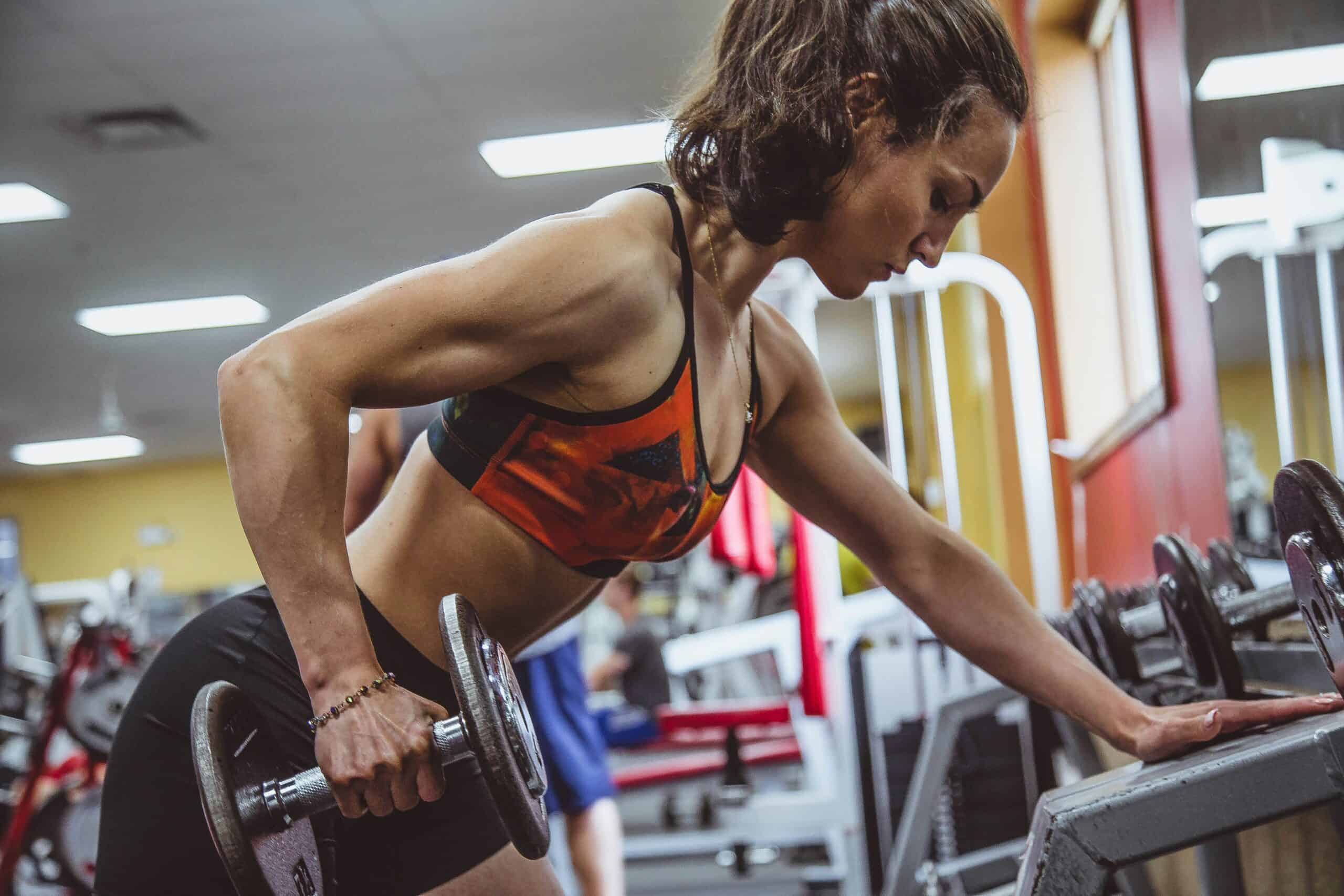
Headache brought on by lifting has a name and a recognized description in headache classification. It is called primary exercise headache, and it is distinct from a migraine that happens to occur on a training day.
The important part comes first: a headache that arrives suddenly and severely during exertion needs medical assessment before anything else, because a small share of these are caused by something serious. Our note on whether exercise triggers migraines covers the wider question.
Medical Disclaimer
This is general information rather than medical advice. New exertional headache warrants evaluation by a doctor, since secondary causes must be ruled out before it is treated as primary. Sudden severe headache reaching maximum intensity within seconds, sometimes described as the worst headache of your life, is a medical emergency and needs immediate care.
Quick Answer
Primary exercise headache is typically bilateral, throbbing, and brought on by exertion. Breath holding during heavy lifts raises intracranial pressure and is the most common contributor.
Contributing Factors
| Factor | Mechanism |
|---|---|
| Breath holding during lifts | Raises intrathoracic and intracranial pressure |
| Heavy loads near maximum | Greater straining, more pressure |
| Dehydration | Widely reported headache contributor |
| Skipped meals before training | Low blood sugar is a common trigger |
| Hot or poorly ventilated gyms | Heat is a reported migraine trigger |
| Neck and shoulder tension | Overhead and pressing work loads the neck |
What Primary Exercise Headache Is
The International Headache Society describes primary exercise headache as headache brought on by and occurring only during or after sustained physical exertion.
It is usually described as bilateral and throbbing, lasting from a few minutes up to a couple of days, and it occurs in the absence of any underlying disorder.
The word primary is doing the work in that name. It means the headache is the condition itself rather than a symptom of something else.
Establishing that requires ruling out secondary causes, which is why the diagnosis is made by a clinician rather than from a description. Our note on questions to ask a neurologist covers that conversation.
Why Breath Holding Matters
Lifters commonly hold their breath and brace during heavy sets, a pattern known as the Valsalva maneuver.
Bracing against a closed airway raises pressure inside the chest, which in turn raises pressure in the veins draining the head.
That pressure change is the mechanism most often implicated in exertional headache during weight training specifically, as opposed to during running or cycling.
It also explains why the headache frequently arrives at the end of a hard set rather than gradually across a session. Our roundup of migraine-friendly workout gear covers the training environment.
Red Flags That Need Assessment
Sudden and maximum within seconds
A thunderclap headache during exertion is an emergency rather than something to manage.
Any neurological symptom
Weakness, vision loss, confusion, speech difficulty, or neck stiffness alongside the headache.
First occurrence over age forty
New exertional headache later in life raises the likelihood of a secondary cause.
Vomiting, fever, or a persistent change
Any of these move it out of the category this article describes.
Why Secondary Causes Must Be Excluded
Exertion raises intracranial pressure, which can unmask structural problems that produce no symptoms at rest.
The conditions clinicians look for include bleeding around the brain, vascular abnormalities, and structural issues at the base of the skull.
Those conditions are uncommon, and the consequences of missing one are serious enough that imaging is treated as standard practice for new exertional headache rather than as an optional extra step.
A doctor confirming that scans are clear is what allows the headache to be treated as primary, and that sequence is not something to skip. Our note on when to see a doctor covers assessment.
Why It Is Not Simply Blood Pressure
A common assumption is that lifting raises blood pressure and the headache follows from that, and the picture is more specific.
Blood pressure does rise substantially during heavy lifting, and it rises in everyone who lifts heavy without most of them getting headaches.
What distinguishes exertional headache is thought to involve how pressure is transmitted to the veins draining the skull rather than arterial pressure alone.
Bracing against a closed airway impedes venous return from the head specifically, which is a different mechanism from the arterial spike.
That distinction matters practically, because it explains why breathing technique helps more than simply lifting lighter, and why the same person can do hard cardio without trouble. Our roundup of find a migraine specialist covers training setup.
Breathing Technique
Exhaling through the exertion rather than holding the breath reduces the pressure spike, and it is the most direct adjustment available.
Bracing is genuinely necessary for spinal safety under heavy load, so the aim is a shorter and less extreme hold rather than abandoning it entirely.
Reducing the load and increasing the repetition count lowers how much bracing any single repetition demands, which addresses the mechanism directly rather than avoiding training altogether.
Coaching is worth considering here rather than dismissing, since breathing patterns under heavy load are genuinely hard to change from a written description alone and easy to correct with someone watching.
Adjustments That Frequently Help
Warm up properly
Building intensity gradually rather than starting near maximum.
Hydrate before rather than during
Dehydration is among the more consistently reported headache contributors.
Eat beforehand
Skipping meals is a well-documented migraine trigger, and training fasted combines both.
Train somewhere cooler
Heat and poor ventilation are reported triggers independent of the exertion itself. Our note on staying hydrated covers the fluid side.
Migraine Versus Exertional Headache
The two overlap and are treated differently, which is why the distinction matters.
Migraine is typically one-sided and comes with nausea, light sensitivity, or sound sensitivity, and exertion tends to worsen an attack already underway.
Primary exercise headache is more often bilateral, arrives with the exertion rather than building over hours, and lacks the associated features.
Someone with migraine can experience both, and exercise can trigger a migraine attack as well as producing a separate exertional headache. Untangling that is clinical work rather than something to resolve from an article. Our note on the main migraine triggers covers the trigger question.
Should You Stop Training
Exercise is generally regarded as beneficial for people with migraine, and stopping entirely is rarely the recommended answer once serious causes are excluded.
Modifying the training frequently resolves it, and heavy near-maximal lifting is the pattern most associated with the problem.
Some people find that consistent moderate training reduces their overall attack frequency over months, even where individual sessions remain difficult to get through.
What that balance looks like is individual, and it is worth working out with a doctor who knows your history rather than by trial and error alone.
Sources
International Headache Society, on the classification and description of primary exercise headache. American Migraine Foundation, on exercise and migraine and on exertional headache. Mayo Clinic, on exercise headaches and when they require evaluation. National Institute of Neurological Disorders and Stroke, on headache types and warning signs.
Exertional Headache FAQ
Why do I get a headache after lifting weights?
Most commonly primary exercise headache. Breath holding during heavy lifts raises pressure inside the chest and in the veins draining the head.
Is it serious?
Usually not, and it must be assessed. Exertion can unmask structural problems that cause no symptoms at rest, so secondary causes are ruled out first.
When is it an emergency?
A headache reaching maximum intensity within seconds, or one with weakness, vision loss, confusion, speech difficulty, or neck stiffness. Seek immediate care.
What does it feel like?
Typically bilateral and throbbing, lasting from minutes to a couple of days, brought on by exertion rather than building gradually beforehand.
How do I reduce it?
Exhale through the exertion rather than holding the breath, warm up gradually, lower the load, hydrate beforehand, and avoid training fasted.
Is this the same as a migraine?
No. Migraine is more often one-sided with nausea and light sensitivity. Exercise can also trigger a migraine attack separately, and both can occur.
Should I stop lifting?
Rarely the answer once serious causes are excluded. Modifying load and breathing frequently resolves it, and exercise generally benefits people with migraine.
When should I see a doctor?
For any new exertional headache. Evaluation is standard practice rather than optional, particularly for a first occurrence after age forty.
