
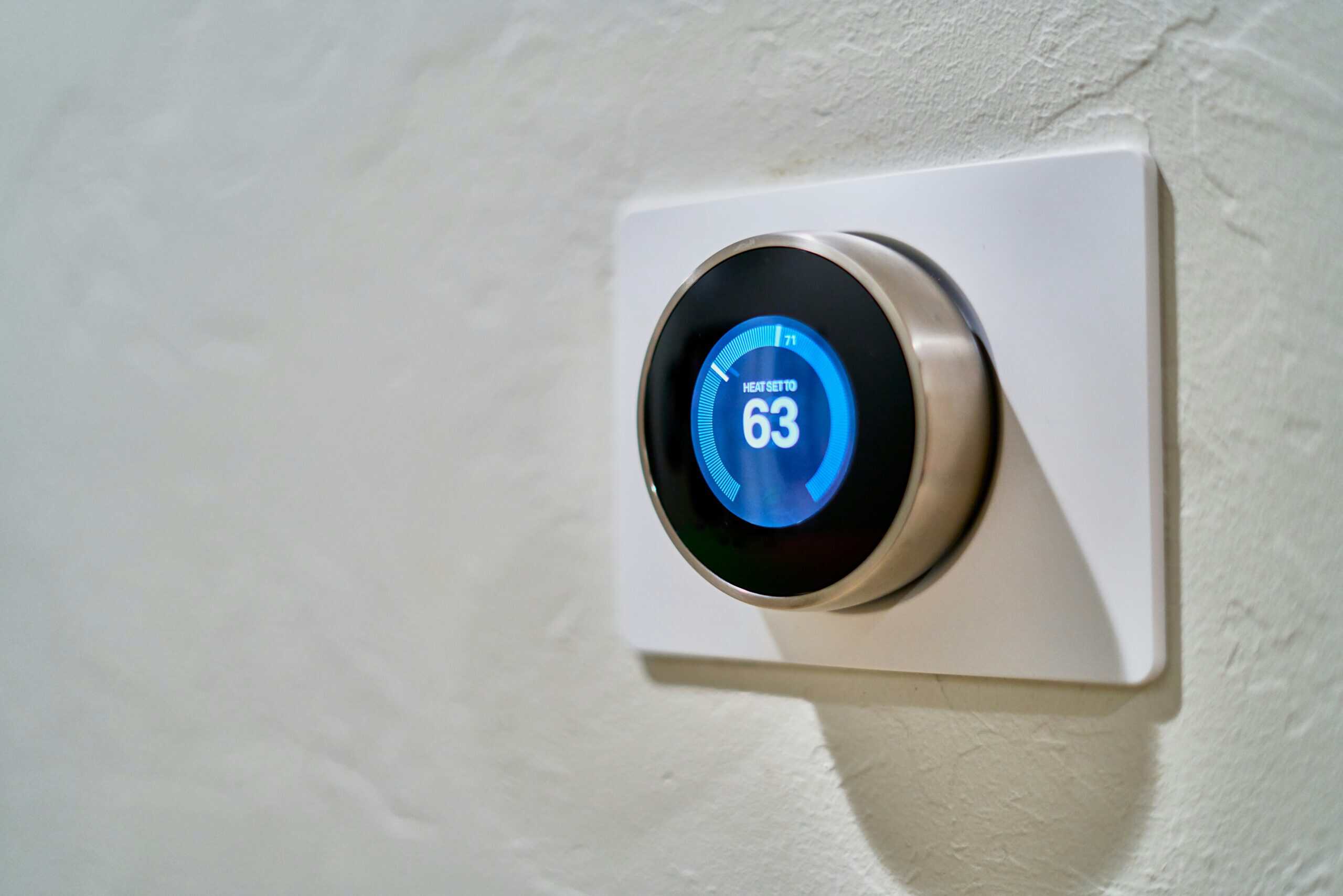
A heater or an air conditioner changes the temperature, and a thermostat is the thing that stops it changing again. The best smart thermostats for temperature-triggered migraine are judged on how tightly they hold a setpoint and how few swings they allow, not on how many features the app has. Swing range and sensor placement decide almost everything about how a room actually feels.
Most homes can reach a comfortable temperature. Holding it within a narrow band through a cold night and a warm afternoon is the harder job.
The heating side matters too. Our guide to space heaters for cold-triggered migraine covers the units a thermostat controls.
Medical Disclaimer
This article is general information about home climate equipment and is not medical advice. Temperature is one possible contributor among many, and migraine has causes that need proper assessment. Anyone with new, worsening, or more frequent headaches should speak with a doctor rather than treating the problem as a thermostat setting.
The Short Version
A learning thermostat with remote sensors holds temperature most consistently across a whole home, because it reads the room you occupy rather than the hallway. Simple programmable models cost far less and hold a schedule reliably. Smart vent systems address rooms the main system underserves, and window units need their own controller entirely.
Key Takeaways
- Swing range, sometimes called differential, sets how far temperature drifts before the system reacts.
- A thermostat reads where it sits, which is usually not where you sit.
- Remote sensors are the single feature that most improves real comfort.
- Scheduling matters more than learning algorithms for a predictable routine.
- Most smart thermostats need a common wire, and older homes often lack one.
- Screens and status lights glow, which matters in a bedroom.
How We Picked
We compared thermostat categories rather than individual models, because product lines refresh yearly while the control methods stay fixed. Each section covers one approach and the home it suits.
We ranked categories on four things: how tightly they hold a setpoint, whether they can read temperature away from the wall unit, how well they schedule around a routine, and how much light and sound they add to a room.
We excluded anything sold on energy savings claims alone, and we have not stated degree-accuracy figures, since placement and house construction affect those more than the device does.
On the underlying question we follow the American Migraine Foundation’s listing of weather and temperature change among common triggers, and the Environmental Protection Agency’s guidance that indoor comfort depends on humidity and ventilation alongside temperature. Neither treats a thermostat as a treatment, and neither is what this article claims.
1. Learning Thermostats with Remote Sensors
Why It Stands Out
A thermostat that reads temperature in the bedroom rather than the hallway controls the room you actually occupy. Remote sensors are what turn a whole-home system into something that holds a number where you are.
Most also let you prioritize a sensor by time of day, so the bedroom governs overnight and the office governs during work hours. That single behavior removes the most common comfort complaint.
Worth Knowing
These are the most expensive option and the most dependent on an app. Learning features can also fight a routine that varies day to day.
Sensor batteries need replacing periodically, and a dead sensor silently hands control back to the wall unit. Checking them on a schedule avoids a confusing week.
Screens and proximity wake features glow in a dark hall. Anyone sensitive to light at night should look for a display that switches fully off rather than dimming.
Best for: Whole-home control where the bedroom or office runs off-temperature. Skip it if your home is a single open space.
Check Price on Amazon2. Programmable Thermostats Without Smart Features
Why It Stands Out
A straightforward seven-day programmable thermostat holds a schedule without an app, an account, or a network connection. For a predictable routine that is all the control most people need.
Cost is a fraction of a learning model, and installation is usually simpler. Nothing updates itself or changes behavior without being asked.
Worth Knowing
There are no remote sensors, so the wall location decides what gets measured. A thermostat in a drafty hallway will hold the hallway comfortable and the bedroom cold.
Mechanical and budget digital models often have a wider swing range, which means bigger drifts between cycles. Look for an adjustable differential in the settings.
Adjusting a schedule means standing at the wall rather than using a phone. That suits some households and frustrates others.
Best for: A predictable routine, a tight budget, and no interest in apps. Skip it if the thermostat location is nowhere near where you spend time.
Check Price on Amazon3. Smart Thermostats with Tight Adjustable Differentials
Why It Stands Out
Some thermostats expose the swing range directly and allow a narrow setting, which reduces how far the room drifts before the system kicks in. For anyone who notices temperature change rather than absolute temperature, that is the feature that matters.
Narrow differentials mean shorter, more frequent cycles and a flatter temperature curve. The room stops going through peaks and troughs.
Worth Knowing
Short cycling puts more wear on some heating and cooling equipment, and a very narrow setting is not appropriate for every system. Checking the manufacturer guidance for your furnace or heat pump matters here.
More cycles also mean more fan noise on forced-air systems. That is a real trade if sound sensitivity is part of your pattern.
Not every model exposes this setting at all. It is worth confirming before buying rather than discovering afterward, and quiet appliances covers the noise side of the same problem.
Best for: People who react to temperature swings rather than a specific temperature. Skip a very narrow setting if your system is not rated for frequent cycling.
Check Price on Amazon4. Smart Vent and Zoning Systems
Why It Stands Out
Motorized vents let you push more air to one room and less to another without touching the thermostat setpoint. For a bedroom that runs hot or cold against the rest of the house, that is a direct fix.
These pair with a thermostat rather than replacing it, and most include their own room sensors. A single problem room becomes solvable without rebalancing the whole system.
Worth Knowing
Closing too many vents raises static pressure in the ductwork, which some systems tolerate poorly. Most kits limit how much you can close for that reason.
Cost climbs quickly with the number of rooms, and each vent needs batteries or power. This is the most involved option here.
It also does nothing about humidity. Our guides to humidifiers and dehumidifiers cover that half.
Best for: One room that consistently runs off-temperature from the rest. Skip it for whole-home problems, which belong at the thermostat.
Check Price on Amazon5. Window and Portable Unit Controllers
Why It Stands Out
A smart controller adds scheduling and remote sensing to a window air conditioner or a portable unit that has neither. Renters and apartment dwellers get thermostat-grade control without touching the building system.
Most work by reading their own sensor and switching the unit through its infrared remote commands. Installation is nothing more than placement.
Worth Knowing
Control is only as good as what the unit accepts, and many window units resume a default state after a power cut. Compatibility is model-specific and worth checking before purchase.
These also cannot hold a temperature the unit itself cannot reach. An undersized air conditioner stays undersized.
Pairing one with the right unit matters more than the controller. Our guide to portable air conditioners covers that side.
Best for: Renters, apartments, and window or portable units. Skip it if you control the central system already.
Check Price on Amazon6. Standalone Temperature and Humidity Loggers
Why It Stands Out
A logger measures without controlling anything, which is what you need before spending money on control. Overnight data shows whether the room actually swings or whether it holds steady.
These cost very little and record continuously, so a week of data settles the question. Many log humidity alongside temperature.
Worth Knowing
It changes nothing on its own, which is the point and also the limitation. Treat it as the diagnostic step rather than the fix.
Cheap units vary in accuracy, and what matters here is consistency rather than absolute precision. A unit that reads slightly high but reads it reliably still shows you the swings.
Logging alongside your own records is where this earns its cost. Pairing it with pattern tracking works the same way barometric pressure monitors do for weather.
Best for: Finding out whether temperature is actually a variable for you. Skip it if you already have the data.
Check Price on AmazonSmart Thermostats for Temperature-Triggered Migraine at a Glance
| Type | Reads remote rooms | Holds a tight band | Relative cost | Best situation |
|---|---|---|---|---|
| Learning with sensors | Yes | Very good | Highest | Multi-room homes |
| Programmable, non-smart | No | Depends on differential | Lowest | Predictable routines |
| Tight adjustable differential | Some models | Best | Moderate | Sensitive to swings |
| Smart vents and zoning | Yes, per room | Good in that room | High | One problem room |
| Window unit controller | Yes, own sensor | Limited by the unit | Low | Renters and apartments |
| Temperature logger | Measures only | Not applicable | Very low | Finding out first |
How to Choose Smart Thermostats for Temperature-Triggered Migraine
Where does the thermostat actually sit?
This is the question that decides most of it. A wall unit in a hallway measures the hallway, and a bedroom two doors away can run several degrees off without the system noticing.
If the thermostat is nowhere near where you sleep or work, remote sensors move from nice to necessary. That single feature outranks everything else on the spec sheet.
Can you set the swing range?
Swing range, or differential, is how far the temperature drifts before the system responds. A wide setting means the room cycles between too warm and too cool.
Look for a thermostat that exposes this and lets you narrow it. Then check what your furnace or heat pump manufacturer says about minimum cycle times.
Is your routine predictable?
A fixed schedule is served perfectly by a cheap programmable unit. Learning algorithms add value when your days vary and cost money when they do not.
Being honest about this saves real money. Many people buy learning features and then override them daily.
Do you have a common wire?
Most smart thermostats need a C wire for continuous power, and older homes frequently lack one. Adapters exist and add a step to installation.
Check behind your current thermostat before ordering. It is a five-minute look that prevents a return.
How much light and noise will it add?
Displays glow, proximity sensors wake screens, and some models chirp on state changes. A thermostat in a bedroom hallway becomes a light source at night.
Look for a display that switches fully off rather than dimming. Our guide to dimmer switches covers controlling the rest of the room.
What else is changing in the room?
Humidity, air quality, and ventilation all shape how a temperature feels, which the EPA guidance treats as inseparable. A thermostat alone addresses one variable of several.
Measuring the others is cheap. Our guide to air quality monitors covers that side.
Remote Sensors vs a Tighter Differential
Where remote sensors win
They fix the wrong-room problem, which is the most common reason a house feels uneven. No amount of control precision helps if the measurement is taken somewhere you never sit.
Sensors also let different rooms govern at different times of day. That matches how people actually use a home.
For most multi-room houses this is the bigger improvement. Start here before chasing precision.
Where a tighter differential wins
It flattens the curve in whatever room is being measured. If your thermostat already sits where you spend your time, narrowing the swing is the direct fix.
Single-room apartments and open-plan spaces get more from this than from sensors. There is only one room to measure.
The trade is cycle frequency and fan noise. Waking to a fan starting is its own problem, which is why bedroom setups matter alongside the thermostat.
Common Thermostat Mistakes to Avoid
Buying features instead of sensors
Voice control and energy reports change nothing about whether your bedroom holds temperature. A remote sensor does.
Leaving the swing range at default
Factory differentials are set for equipment longevity rather than comfort. Narrowing it is often the free improvement nobody makes.
Setting back too aggressively overnight
A deep overnight setback saves energy and guarantees the coldest part of the night is coldest in your bedroom. A smaller setback with an earlier recovery avoids that, which matters if you wake up with migraines.
Closing vents manually to fix one room
Hand-closing registers raises duct pressure and can make the whole system worse. Zoning products limit closure deliberately for that reason.
Treating temperature as the only variable
Pressure, humidity, sleep, and hydration all sit alongside it. Tracking what actually precedes an attack beats adjusting one dial, and preventing weather-triggered migraines covers the wider approach.
Recommended Reading
- Whether weather change triggers migraines covers what is and is not established.
Frequently Asked Questions
What are the best smart thermostats for temperature-triggered migraine?
A learning thermostat with remote sensors suits most multi-room homes, because it measures the room you occupy instead of the hallway. A model with an adjustable swing range suits single-room apartments better, and a cheap programmable unit is enough for a fixed routine.
Can temperature changes trigger migraine attacks?
Temperature and weather change appear on commonly published trigger lists, including the American Migraine Foundation’s. Individual patterns vary considerably, which is why tracking your own is more useful than general rules.
What is a thermostat swing range?
It is how far the room temperature is allowed to drift from the setpoint before heating or cooling starts. A narrow swing means a flatter temperature curve and more frequent, shorter cycles.
Do remote sensors really make a difference?
They are usually the single most useful feature, because a thermostat can only control what it measures. If the wall unit is not in the room you sleep or work in, sensors are what close that gap.
Will a smart thermostat work with my heating system?
Most work with common forced-air and heat pump systems, and many need a C wire for continuous power that older homes lack. Check behind your existing thermostat and confirm compatibility before ordering.
Is a narrow differential bad for my furnace?
It can be, since short cycling adds wear and some systems specify minimum run times. Follow your equipment manufacturer’s guidance rather than setting it as low as the thermostat allows.
Should I turn the heating down overnight?
A modest setback with an early recovery is a reasonable compromise. A deep setback makes the coldest hours of the night coldest in your bedroom, which is worth avoiding if mornings are when you struggle.
When should I see a doctor about temperature-related headaches?
See a doctor if headaches are new, changing in pattern, becoming more frequent, or come with numbness, weakness, confusion, or visual changes. Controlling a room removes one possible contributor, and it cannot tell you what is causing the attacks.
Sources
- American Migraine Foundation. Migraine Triggers. https://americanmigrainefoundation.org/
- United States Environmental Protection Agency. Introduction to Indoor Air Quality. https://www.epa.gov/indoor-air-quality-iaq
- National Institute of Neurological Disorders and Stroke. Migraine. National Institutes of Health. https://www.ninds.nih.gov/health-information/disorders/migraine
