
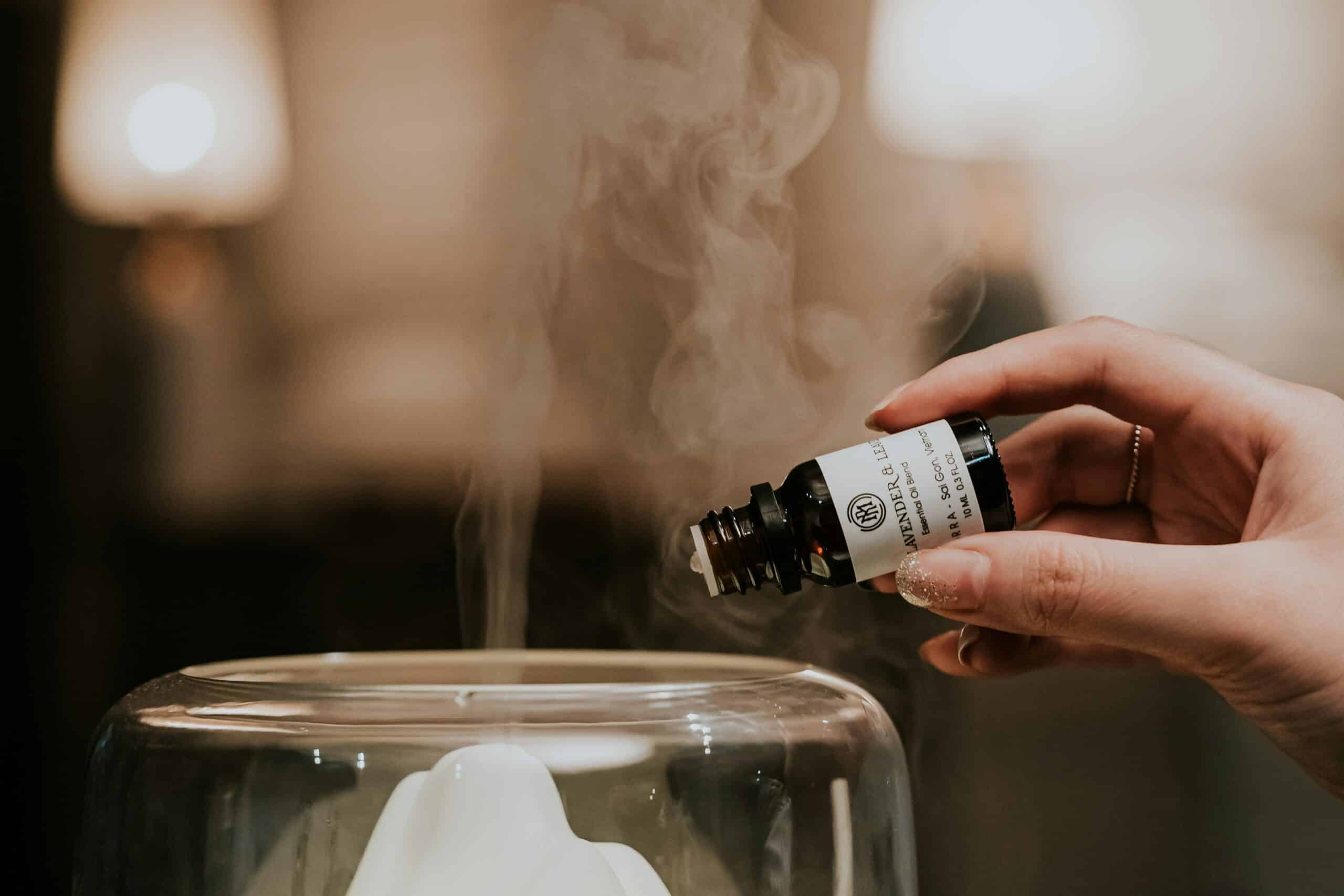
The evidence for migraine specifically is weak, and essential oils carry a risk the rest of the complementary category does not, because strong smells are themselves a well-documented migraine trigger. Asking whether essential oils help migraines means asking two questions at once, since the same bottle can offer relief to one person and start an attack in another.
Scent sensitivity is the variable that decides which. The table below sorts the category by how it is used and where the real considerations sit.
A Quick Note
This is general information, not medical advice. Essential oils are not a treatment for migraine. The FDA notes that many plants contain materials that are toxic, irritating or likely to cause allergic reactions on skin. Never ingest essential oils, always dilute before topical use, keep them away from children and pets, and speak to a clinician if pregnant or breastfeeding.
| How it is used | What to know | Main consideration |
|---|---|---|
| Diffused in a room | Fills shared air, hard to undo | Worst option if scent is a trigger |
| Topical roll-on, diluted | Controlled dose and location | Skin irritation, patch first |
| Balm or stick | Carrier already diluted | Check the concentration on the label |
| Inhaled from the bottle | Smallest exposure, easiest to stop | The sensible way to try one |
| In a bath | Oils do not disperse in water | Needs a dispersant, not just water |
| Ingested | Never | Several oils are toxic by mouth |
| Citrus oils on skin | Can be harmful with sun exposure | Avoid before going outside |
Quick Answer
There is no strong evidence base for essential oils in migraine, and they are not among the supplements NCCIH describes as having even limited evidence for migraine prevention. Some people find a cool, mild topical application soothing during an attack. Others find any strong smell makes it worse, which is common enough to expect.
Why Scent Cuts Both Ways Here
Osmophobia, a heightened aversion to smells, is a recognized feature of migraine attacks. So is smell as a trigger before one starts.
That makes aromatherapy unusual in the complementary category. Most approaches are either helpful or inert, while this one has a plausible route to making things worse.
The people most likely to be sold aromatherapy are exactly the people most likely to react badly to it. That is worth saying plainly.
Know which group you are in first. Our guide to whether strong smells are a migraine trigger covers the trigger side, and our guide to why smells bother you more during a migraine covers the attack side.
What the Evidence Base Looks Like
Thin. NCCIH’s summary of what the science says about headaches and complementary approaches covers acupuncture, massage, spinal manipulation, biofeedback, relaxation and several supplements, and does not address aromatherapy.
That absence is informative. A therapy widely marketed for migraine sits outside the review that examines the category.
The supplements NCCIH does describe as having limited evidence of potential benefit are magnesium, feverfew, riboflavin and coenzyme Q10, with effects it characterizes as modest. Essential oils are not in that group.
NCCIH also notes that butterbur, once promising, is no longer recommended over concerns about liver toxicity. Our guide to choosing a migraine supplement covers the category with an actual evidence base.
What the FDA Says About These Products
Regulation follows intended use
The FDA explains that how aromatherapy products are regulated depends mainly on how they are intended to be used. A fragrance sold to smell good is a cosmetic.
Therapeutic claims are drug claims
The FDA states that claims a product will ease pain, relax muscles, treat anxiety or help you sleep are drug claims. A migraine relief claim sits in that territory.
Plant origin is not an exemption
The FDA is explicit that the fact an ingredient comes from a plant does not keep it from being regulated as a drug.
Natural does not mean safe
The FDA notes it has no regulations defining natural or organic for cosmetics, and that all products must meet the same safety requirement regardless of source.
The Safety Part People Skip
The FDA points out that many plants contain materials that are toxic, irritating or likely to cause allergic reactions when applied to the skin. Concentration is what turns a pleasant oil into a problem.
Its examples are worth remembering. Cumin oil is safe in food and can cause the skin to blister, and certain citrus oils can be harmful in cosmetics when the skin is exposed to sun.
Undiluted application is the most common mistake. A carrier oil is not optional, and a patch test on a small area comes before anything on the temples.
Never ingest them, and keep them away from children and pets, several of whom metabolize these compounds poorly. Our roundup of migraine balms and sticks covers the pre-diluted format that removes most of this risk.
If You Want to Try One Anyway
- Start by sniffing the closed-then-opened bottle. If the smell is unpleasant or immediately unwelcome, stop there.
- Never start during an attack. Osmophobia peaks then, and one bad experience ends the experiment.
- Dilute in a carrier oil. Or buy something already diluted, which is more consistent than doing it yourself.
- Patch test on a forearm. Wait a day before putting anything near your face.
- Keep it off the eyes and eyelids. Temples and the back of the neck are as close as it should go.
- Skip the diffuser at first. A roll-on you can wash off beats a room you have to leave.
- Separate the cool from the scent. A cold compress may be doing the work the oil is credited with.
That last point matters more than it sounds. Our guide to using an ice pack for migraine covers the unscented version of the same sensation.
The Diffuser Problem in a Shared Home
A diffuser is the hardest format to undo. It puts scent into air that other people breathe and that you cannot easily leave.
In a household where one person has migraine and another likes aromatherapy, that becomes a genuine conflict. Fragrance-free is the safer default in shared space.
Workplaces raise the same problem with less control available. Our guide to handling scented workplaces with migraine covers that situation.
At home the fix is straightforward. Our guide to making your home fragrance free covers it, and our roundup of aromatherapy diffusers covers the format for people who have established that scent does not trigger them.
Where This Leaves the Category
As a comfort measure for someone who enjoys the smell and has established it does not trigger them, an essential oil is low cost and low harm when diluted properly. That is a reasonable place to land.
As migraine prevention, it has no support and should not displace anything that does. Preventive care is a clinical conversation.
As a first purchase for someone newly diagnosed, it is the wrong starting point. Our guide to building a migraine toolkit covers a better order of operations.
For context on the rest of the category, our roundup of essential oils for migraines covers which oils people reach for and how they are packaged, our roundup of peppermint oil rollers covers the single most popular format, our roundup of migraine relief roll-ons covers the wider roll-on category, and our roundup of fragrance-free products covers the opposite approach for anyone whose triggers include scent.
Frequently Asked Questions
Do essential oils help migraines?
There is no strong evidence base for migraine specifically, and they are not among the supplements NCCIH describes as having even limited evidence for prevention. Some people find a diluted topical application soothing during an attack, while others find any strong smell makes it worse.
Can essential oils trigger a migraine?
Yes, and this is the reason to be careful. Strong smells are a documented migraine trigger, and osmophobia, a heightened aversion to smells, is a recognized feature of attacks. Aromatherapy is the one complementary approach with a plausible route to making migraine worse.
Which essential oil is best for migraine?
No oil has established itself for migraine in the way that magnesium, riboflavin and coenzyme Q10 have among supplements. Peppermint and lavender are the most commonly reached for. Personal tolerance of the smell matters more than the choice of oil.
Do you have to dilute essential oils?
Yes. The FDA notes many plants contain materials that are toxic, irritating or allergenic on skin, giving cumin oil blistering skin as one example. Use a carrier oil or buy a pre-diluted product, and patch test on a forearm first.
Can you put essential oil on your temples?
Only diluted, and only after a patch test elsewhere. Keep it well away from the eyes and eyelids. The temples and the back of the neck are as close to the face as anything should go, and a reaction there is much harder to live with.
Is it safe to swallow essential oils?
No. Never ingest essential oils. Several are toxic by mouth, and the FDA is clear that a plant origin does not make an ingredient safe. Keep bottles away from children and pets, some of whom metabolize these compounds poorly.
Are diffusers a problem?
They are the hardest format to undo, because they put scent into shared air you cannot easily leave. In a household or office where someone has migraine, fragrance-free is the safer default. A roll-on you can wash off is the more controllable option.
When should you see a doctor?
See a doctor for any undiagnosed headache before relying on a complementary approach, and promptly for a headache that is new, sudden, severe, changing in pattern, or accompanied by fever, weakness, confusion, vision changes or neck stiffness. Also seek care for a skin reaction that spreads or blisters.
Sources
- US Food and Drug Administration, aromatherapy and cosmetic regulation
- US Food and Drug Administration, is it a cosmetic, a drug, or both
- National Center for Complementary and Integrative Health, headaches and complementary health approaches
