
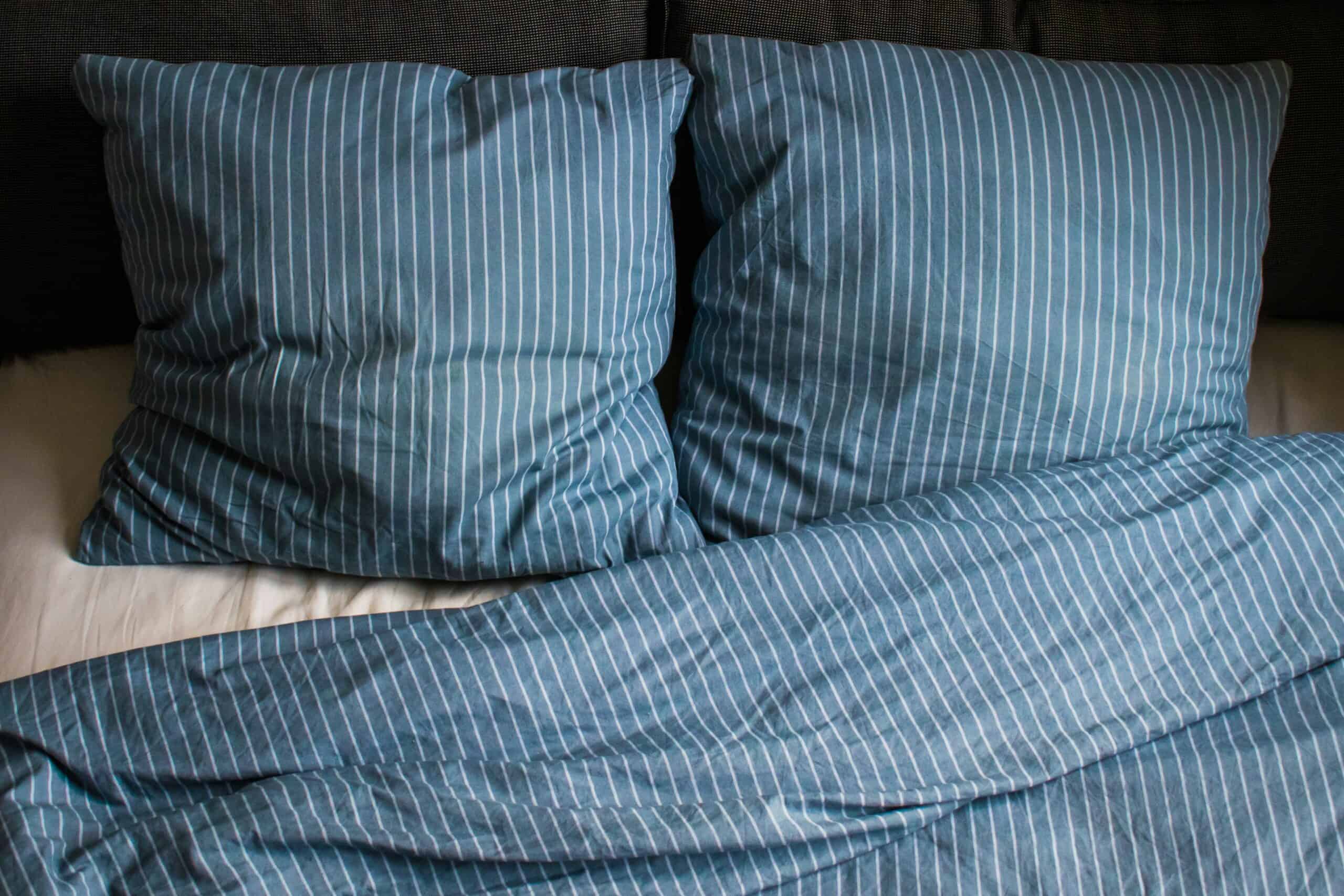
The best allergen-proof bedding covers for migraine are zippered encasements with a tightly woven or membrane-backed barrier, used on the mattress, the pillows and the base rather than on one of the three. Allergy symptoms and head pain overlap often enough that reducing what you breathe for eight hours a night is a reasonable thing to try.
The appeal is that this is a one-time change. You fit it once and it keeps working without a routine.
Whether it helps you depends on whether dust mites are actually part of your picture, which is a question worth settling before spending much. Our guide to whether allergies can cause migraines covers how the two interact.
Medical Disclaimer
This article is research, not medical advice. Bedding covers are an environmental change, not a treatment for migraine or for allergy. If you are not sure whether allergens play a role in your symptoms, see a doctor, who can arrange testing rather than leaving you to guess from trial and error.
Bedding Cover Types at a Glance
| Type | Covers | Barrier | Breathability | Best Use |
|---|---|---|---|---|
| Zippered mattress encasement | All six sides | Woven or membrane | Varies by backing | The main step |
| Pillow encasement | Pillow, fully zipped | Fine weave | Good | Cheapest starting point |
| Base or box spring cover | Foundation | Woven | Not a factor | The missed layer |
| Duvet and comforter cover | Insert, fully zipped | Fine weave | Good | Bedding you cannot wash hot |
| Membrane-backed cover | Mattress or pillow | Film laminate | Lowest | Spills plus allergens |
| Tightly woven cotton, no membrane | Mattress or pillow | Weave only | Highest | Hot sleepers |
How We Picked the Best Allergen-Proof Bedding Covers for Migraine
We compared cover types rather than named products, because the specific items change constantly while the construction choices behave the same way.
Four things set the order: how completely the cover seals, what the barrier is made of, how it sleeps in terms of heat and noise, and how it holds up to repeated washing.
We have not given pore size figures or allergen reduction numbers. Those are manufacturer measurements taken under their own conditions, and repeating one as a category rule would imply more than the data supports.
On the clinical side, Mayo Clinic lists allergen-impermeable mattress and pillow covers among the practical steps for dust mite allergy, and the American Migraine Foundation describes allergy and migraine as conditions that frequently occur together without one simply causing the other. That is the honest frame for this category.
1. Zippered Mattress Encasements, Best Overall
Why It Stands Out
An encasement wraps all six sides of the mattress and closes with a zipper, so there is no open edge. That total enclosure is what separates it from a fitted protector.
A fitted protector covers the top and the sides and leaves the underside open. Mites and debris already in the mattress still move freely.
The mattress is also the largest reservoir in the room by a wide margin, which makes it the layer worth doing first if you only do one.
Worth Knowing
Zipper quality decides whether this lasts. Look for a flap or a hook-and-loop cover over the zipper end, since the gap at the pull is the usual weak point.
Depth matters as well. Measure the mattress including any built-in topper, because a cover that will not close is a cover that does nothing.
Best for anyone starting this properly. Our guide to bedroom setups for waking with migraine covers the rest of the room.
Check Price on Amazon2. Pillow Encasements With a Fine Weave, Best Starting Point
Why It Stands Out
Pillows sit directly under your face for the whole night, which makes them the layer closest to what you breathe. They are also the cheapest to encase.
A zippered pillow encasement goes under the regular pillowcase and stays there between changes. You wash the case often and the encasement occasionally.
This is the sensible trial purchase. If covers are going to help you, encasing the pillows is the lowest-cost way to find out.
Worth Knowing
Cheap encasements can be crackly or stiff, and noise at head height is its own problem. Fine-woven fabric without a membrane avoids that.
Replace pillows on their own schedule regardless. A cover does not restore a pillow that has flattened.
Best for a first attempt at this, and for anyone who wakes congested. See our pillows for migraine sufferers picks for what goes inside.
Check Price on Amazon3. Base and Box Spring Covers, Best Overlooked Step
Why It Stands Out
A box spring is a large fabric-covered void directly beneath the mattress, and it collects the same debris. Almost nobody covers it.
Encasing it closes the gap in an otherwise sealed bed. Doing the mattress and leaving the base open is a partial job.
These cost less than mattress encasements because breathability and comfort are not factors. Nobody sleeps on it.
Worth Knowing
Platform beds and solid foundations do not need this, since there is no hollow fabric structure to seal.
Fitting one usually means lifting the mattress off entirely, so plan it as part of a bigger bedroom clean rather than a quick swap.
Best for traditional box spring setups where the mattress is already encased. Skip it on a platform or slatted base.
Check Price on Amazon4. Duvet and Comforter Covers, Best for Bedding You Cannot Wash Hot
Why It Stands Out
Hot washing is the usual advice for bedding, and plenty of duvets and comforters cannot take it. A zippered allergen cover is the alternative.
The cover takes the exposure and goes in a hot wash on its own. The insert stays protected and gets cleaned far less often.
This also extends the life of expensive bedding, which is a reason to do it independent of any symptom question.
Worth Knowing
These add a layer, so they sleep slightly warmer. Hot sleepers should favor a light woven cover over anything membrane-backed.
Fit is less forgiving than it looks. A cover much larger than the insert bunches and the insert migrates inside it.
Best for down and wool bedding that cannot be washed hot. Our guide to why you might wake with migraines covers the other overnight factors.
Check Price on Amazon5. Membrane-Backed Waterproof Covers, Best Barrier
Why It Stands Out
A thin laminated film on the inside face blocks both allergens and liquid. Nothing passes it in either direction.
That makes these the right choice when spills, night sweats or a child’s bed are part of the problem alongside allergens.
They also make existing contamination irrelevant, because the film seals it in completely rather than filtering it.
Worth Knowing
Breathability is the cost. A membrane traps heat and moisture against you, and for some people a hotter bed is its own trigger to manage.
Thin laminates can also rustle. Reviews that mention noise are worth reading before buying for a light sleeper.
Best when waterproofing is genuinely needed too. If heat is already an issue, see our dehumidifiers picks for the room-level version of the problem.
Check Price on Amazon6. Tightly Woven Covers Without a Membrane, Best for Hot Sleepers
Why It Stands Out
These rely on weave density alone. The fabric is woven finely enough to block allergens while still passing air and moisture.
That makes them the coolest option in the category by a clear margin. Nothing laminated sits between you and the mattress.
They also feel like fabric rather than plastic, which matters for anyone who has abandoned a cover for comfort reasons.
Worth Knowing
No liquid protection at all. A spill goes straight through to the mattress.
Weave quality varies, and a cover marketed as breathable is not automatically fine enough to be a barrier. Look for a stated allergen-barrier claim rather than inferring it.
Best for hot sleepers and anyone who found a membrane cover unbearable. Our how to sleep with migraine guide covers the comfort side.
Check Price on AmazonWhat to Look For in Allergen-Proof Bedding Covers
A zipper that closes completely
Full enclosure is the whole mechanism. A fitted protector with an open underside is a different product doing a different job.
A stated barrier claim
Breathable, hypoallergenic and allergy-friendly are marketing words. An explicit allergen-barrier or dust-mite-barrier claim is the one to look for.
Honest breathability for your sleep temperature
Membrane covers block more and sleep hotter. If heat is already part of your night, choose weave over film.
Washability at a useful temperature
A cover that cannot take a hot wash undercuts the point. Check the care label before ordering, not after.
Encasements or Air Filtration?
What encasements address
They cut exposure from the bed itself, which is where you spend the most continuous time at close range. Nothing else does that specific job.
What air filtration addresses
Filters handle airborne particles across the room, including pollen and smoke that bedding covers cannot touch. The two are complements rather than alternatives, and our air purifiers roundup covers that half.
Common Bedding Cover Mistakes to Avoid
Covering the mattress and skipping the pillows
The pillows are closest to your face and the cheapest to encase. Doing them second makes little sense.
Buying a fitted protector by mistake
Listings use protector and encasement loosely. If the photo shows elastic corners and no zipper, it is not a barrier.
Expecting an immediate change
Allergen levels fall gradually and so does any symptom change. Give it weeks before judging, and note what else changed in the meantime.
Treating it as a migraine treatment
This reduces one environmental exposure. It does not replace a care plan, and persistent symptoms deserve a clinical answer.
Worth reading next: our guides to whether mold can trigger migraines, air quality monitors, and humidifiers.
Best Allergen-Proof Bedding Covers for Migraine FAQ
What are the best allergen-proof bedding covers for migraine?
Fully zippered encasements with a stated allergen-barrier claim, fitted to the mattress, the pillows and the base. Fine-woven covers without a membrane sleep coolest, and membrane-backed versions block more but trap heat. Treat them as an environmental change rather than a treatment for head pain.
Do dust mite covers help migraines?
They can help if allergy symptoms are part of your pattern, because congestion, sinus pressure and poor sleep all feed into head pain. They do nothing if allergens are not involved, which is why establishing that first saves money and time. Testing through a doctor answers it more reliably than trial and error.
What is the difference between an encasement and a mattress protector?
An encasement zips around all six sides and seals the mattress completely. A protector usually has elastic corners and covers the top and sides, leaving the underside open. Only the encasement works as an allergen barrier.
Are allergen covers hot to sleep on?
Membrane-backed covers are noticeably warmer, because the laminate blocks moisture as well as allergens. Tightly woven covers without a membrane sleep close to normal. If heat already affects your sleep, choose weave over film.
How often should you wash allergen bedding covers?
Wash the sheets and pillowcases on your usual schedule and the encasements far less often, since they stay protected underneath. Follow the care label, and use the hottest wash the fabric allows when you do.
Do I need to cover the box spring too?
If you have a traditional box spring, yes, because it is a large hollow fabric structure collecting the same debris. Platform beds and solid foundations do not need one.
Will covers get rid of dust mites already in my mattress?
They seal them in rather than removing them. That is enough for exposure purposes, since what matters is what reaches you rather than what remains inside. A sealed encasement left in place does the job over time.
When should I see a doctor about this?
See a doctor if you have ongoing congestion, nasal symptoms or sleep disruption alongside head pain, or if your headaches are changing in pattern or severity. Allergy testing can confirm whether dust mites matter for you, and a migraine diagnosis should come from a clinician rather than from what seems to help.
Sources
- Mayo Clinic, Dust Mite Allergy Diagnosis and Treatment. mayoclinic.org
- American Migraine Foundation, Allergies and Migraine. americanmigrainefoundation.org
- Cleveland Clinic, Dust Mites. my.clevelandclinic.org
- National Institute of Environmental Health Sciences, Allergens and Indoor Air. niehs.nih.gov
