
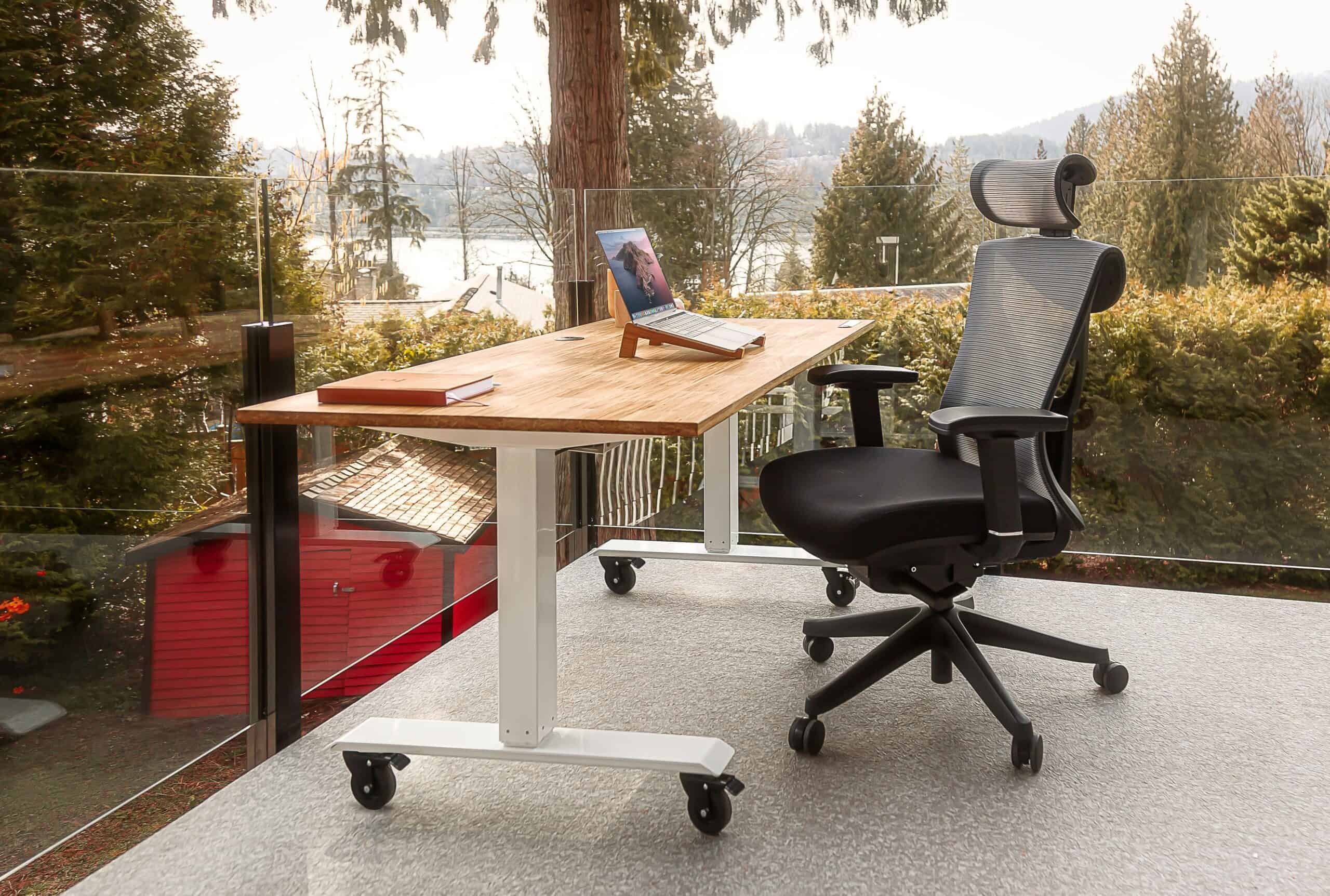
Neck and shoulder tension is one of the most common complaints among people who get migraine and spend their days at a desk. Sustained awkward posture keeps the muscles of the upper back and neck loaded for hours, and that tension is frequently described alongside head pain.1 A chair cannot treat migraine, but it can stop your workstation from working against you, and for many desk workers that is a change worth making. The best ergonomic chairs for migraine are the ones that support the neck and lower back properly and adjust to fit you, so the picks below are sorted by what each does best. For the wider setup, see our guide to creating a migraine-friendly workspace.
This article is for general information and is not medical advice. Migraine is a neurological condition that should be diagnosed and managed by a qualified healthcare professional.
Ergonomic Chairs at a Glance
| Chair type | Neck support | Adjustability | Best for |
|---|---|---|---|
| High-back with headrest | Full | High | All-round neck support |
| Mesh ergonomic | Optional headrest | High | Warm rooms, breathability |
| Premium task chair | Varies | Very high | Long workdays, precise fit |
| Adjustable lumbar chair | Moderate | High | Lower back plus posture |
| Reclining executive | Full | Moderate | Position changes and breaks |
| Budget ergonomic | Basic headrest | Moderate | Starting out |
If you want one pick, a high-back ergonomic chair with an adjustable headrest is the sensible default: it supports the neck rather than leaving it unsupported for hours, and the adjustability lets you set it to your body rather than the other way round. People who overheat should prioritize mesh, anyone spending very long days at a desk benefits from a premium task chair with finer adjustment, and those whose main complaint is lower back rather than neck should focus on lumbar support. Whatever you choose, adjustability matters more than price, because a chair that does not fit you provides no support at all. Sit-stand users need both halves, and our anti-fatigue mat picks cover the standing one. If your feet do not reach the floor once the chair is right, our footrest picks close that gap.
Key Takeaways
- Neck and shoulder tension is a common complaint among desk workers who get migraine.
- An adjustable headrest supports the neck instead of leaving it loaded all day.
- Lumbar support keeps the spine positioned so the neck is not compensating.
- Seat height and armrests matter, since shoulder position drives neck posture.
- A chair supports a workspace setup; it does not treat or prevent migraine.
How We Picked These Chairs
We prioritized adjustable neck and lumbar support, since those are the areas desk workers most often report tension. We then looked at seat height range, armrest adjustment, and breathability.
We favored chairs that adjust across a wide range of body sizes rather than assuming an average. Every pick is a widely available line so you can match fit to your body and desk. Because migraine is a medical condition, we treat these as workspace equipment rather than treatments, and note where professional advice is the right step.
High-Back Ergonomic Chair With Adjustable Headrest
Why It Stands Out
A high-back chair with a genuinely adjustable headrest is the sensible default, supporting the neck through long sitting rather than leaving the upper spine unsupported. The adjustment range lets you position support where your neck actually sits. Its balance of support and value makes it the starting point. A chair is one input, and the posture question explains how much to expect from it.
Worth Knowing
A fixed headrest that does not match your height provides little benefit, so check the adjustment range. High-back chairs take more visual space. It is the pick for all-round neck support.
Best for desk workers wanting neck support through long days. Skip it if your main complaint is lower back only.
Breathable Mesh Ergonomic Chair
Why It Stands Out
A mesh-back ergonomic chair keeps air moving against your back, which suits warm rooms and people who find heat build-up uncomfortable during long sitting. Many mesh models pair breathability with strong adjustability. Comfort in warm conditions is its main draw.
Worth Knowing
Mesh headrests are sometimes less padded than upholstered ones. Check the headrest adjusts to your height. It is the pick for warm rooms.
Best for people who overheat while sitting. Skip it if you prefer a padded, cushioned back.
Premium Adjustable Task Chair
Why It Stands Out
A premium task chair offers the finest adjustment across seat depth, tilt tension, lumbar position, and armrests, letting you dial the fit precisely rather than settling for close enough. That precision matters most over very long workdays. Adjustment range is its strength.
Worth Knowing
Premium chairs cost substantially more and some ship without a headrest. Confirm neck support is included or available. It is the pick for long days and precise fit.
Best for people at a desk all day wanting exact adjustment. Skip it if your budget is tight or you sit only occasionally.
Chair With Adjustable Lumbar Support
Why It Stands Out
A chair with adjustable lumbar support positions the lower back properly, which matters because the neck often compensates for a slumped lower spine. Fixing posture lower down can ease the load higher up. Lumbar adjustment is its focus.
Worth Knowing
Lumbar-focused chairs may have limited neck support. Pair with a headrest if neck tension is your main issue. It is the pick for lower back plus posture.
Best for people whose posture collapses at the lower back. Skip it if you specifically need neck support.
Reclining Ergonomic Chair
Why It Stands Out
A reclining chair lets you shift position and take the load off your neck and back periodically, which suits people who find staying in one posture uncomfortable. Changing position through the day is generally encouraged over sitting rigidly still.2 Position variety is its advantage.
Worth Knowing
Deep reclining chairs take more space and may suit breaks better than active typing. Check the recline locks where you want it. It is the pick for varying your position.
Best for people who need to change posture regularly. Skip it if your desk space is tight.
Budget Ergonomic Chair
Why It Stands Out
A budget ergonomic chair covers the basics of a headrest, some lumbar shaping, and height adjustment at a price that suits people who cannot spend heavily. It is a meaningful step up from a basic dining or gaming chair. Value is its strength.
Worth Knowing
Budget chairs typically offer fewer adjustment points and less durable materials. Confirm the headrest and height genuinely adjust. It is the pick for starting out.
Best for improving a poor setup affordably. Skip it if you sit all day and need fine adjustment.
How to Choose an Ergonomic Chair
Neck Support That Fits You
A headrest only helps if it meets your neck and head where they actually sit, so height and angle adjustment matter more than the presence of a headrest. A fixed headrest set for someone taller does nothing for you. Check the adjustment range covers your height.
Lumbar Support and Posture
Supporting the lower back keeps the spine stacked so the neck and shoulders are not compensating for a collapsed posture. Adjustable lumbar support that moves to your curve beats a fixed bump. Both areas work together rather than independently.
Seat Height and Armrests
Seat height should let your feet rest flat with thighs roughly parallel to the floor, and armrests should support your forearms so your shoulders are not held up or hunched. Shoulder position drives neck posture directly. Our guide to standing desks covers changing position through the day.
What a Chair Cannot Do
A chair is workspace equipment, not a treatment. If you get migraine regularly, ongoing management belongs with a healthcare professional. Our guides to finding a migraine specialist and posture correctors cover next steps.
Posture, Neck Tension, and Migraine
What the Connection Is
Neck pain and tension are very commonly reported alongside migraine attacks, and many people describe neck symptoms as part of their experience of an attack rather than simply a separate problem.1 That does not mean poor posture causes migraine, and the direction of the relationship is not simple. What it does mean is that a workstation which loads your neck for hours is not helping.
Setting Realistic Expectations
Improving your seating may reduce general musculoskeletal discomfort, and prolonged awkward posture at a workstation is a recognized contributor to neck and shoulder strain.2 It is not a migraine treatment, and buying a chair should not replace medical care. Think of it as removing one avoidable source of daily strain rather than addressing the condition itself.
Common Mistakes When Buying a Chair
Buying on Price Rather Than Fit
An expensive chair that does not adjust to your body supports you no better than a cheap one. Check the adjustment ranges against your height and desk.
Ignoring Armrest Height
Armrests set too high hunch the shoulders and too low leave them unsupported, both of which load the neck. Set them so forearms rest level.
Expecting a Chair to Fix Migraine
A chair improves your workstation, not your condition. Ongoing migraine belongs with a healthcare professional.
Recommended Reading
- Creating a migraine-friendly workspace
- Posture correctors and neck tension
- Neck wraps for tension relief
- How to find a migraine specialist
Frequently Asked Questions
Can an ergonomic chair help with migraine?
An ergonomic chair can reduce the neck and shoulder strain that comes from sitting in an awkward position for hours, and neck tension is a very common complaint among people who get migraine.1 It is not a treatment for migraine and will not prevent attacks. Think of it as removing an avoidable daily strain rather than managing the condition, which should be handled with a healthcare professional.
What chair features matter most for neck tension?
An adjustable headrest that meets your neck at the right height, adjustable lumbar support that matches your lower back curve, and armrests set so your forearms rest level without hunching your shoulders. Seat height that lets your feet rest flat matters too, since posture is a chain. Adjustability across all of these matters more than the presence of any single feature.
Is a mesh or padded chair better?
Mesh keeps air moving and suits warm rooms or people who overheat while sitting, while padded upholstery feels softer and some find the headrest more comfortable. Both are available in well-adjusting ergonomic designs. The choice comes down to temperature comfort and personal preference rather than one being more supportive.
Should I get a standing desk instead of a chair?
They address different things, and many people use both, since changing position through the day is generally preferable to holding any single posture for hours.2 A standing desk lets you alternate; a good chair makes the sitting portion better. Neither replaces the other, and standing all day brings its own strain.
How do I set up my chair correctly?
Set seat height so your feet rest flat and thighs sit roughly parallel to the floor, adjust lumbar support to meet the curve of your lower back, position armrests so your forearms rest level without lifting your shoulders, and set the headrest to meet your neck and head. Your screen should sit so you are not tilting your head up or down. Adjusting the chair to you, rather than adapting to the chair, is the whole point.
When should I see a doctor about migraine?
You should speak to a healthcare professional if you get recurring headaches, if your headache pattern changes, if attacks are becoming more frequent or severe, or if headaches interfere with your daily life. Sudden, severe, or unusual headaches, or headaches with neurological symptoms such as weakness, confusion, or vision loss, warrant urgent medical attention. Migraine is a treatable neurological condition, and equipment choices are no substitute for proper diagnosis and management.
Sources
- >American Migraine Foundation. americanmigrainefoundation.org
- >National Institute for Occupational Safety and Health (NIOSH), Centers for Disease Control and Prevention. cdc.gov/niosh
For the wider picture, see our guide to how to choose migraine glasses.
