
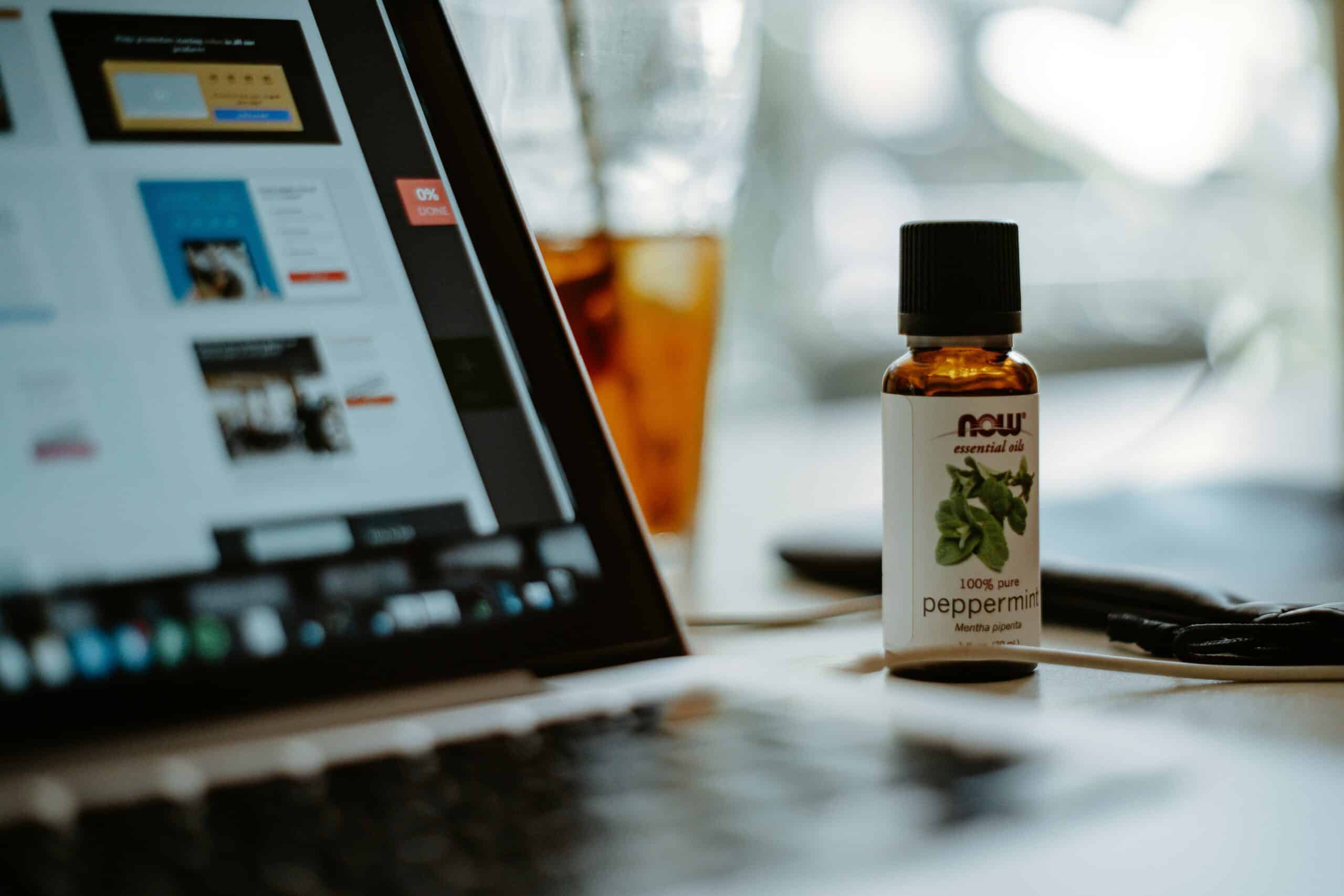
You feel it coming. The pressure behind your left eye. The faint aura at the edge of your vision. The slight nausea that tells you the next four hours are going to be rough unless you act right now. Reaching for a roll-on is simpler than anything else in that moment, no shaking out pills, no measuring carrier oil, no mixing. Just uncap, swipe across temples and the back of your neck, and get the menthol doing its work before the attack fully lands. For a related option, see our guide to migraine relief roll-ons more broadly.
Peppermint oil rollers exist because migraine sufferers figured out something pharmaceutical companies took decades to validate: topical peppermint at the right concentration produces measurable pain reduction comparable to 1,000 mg of acetaminophen. The 2010 clinical trial published in Der Schmerz by Göbel and colleagues established that this, 10% peppermint oil in ethanol applied via roll-on applicator to the forehead and temples outperformed placebo and matched oral analgesics at 15 and 30 minutes post-application. The mechanism involves menthol’s activation of TRPM8 cold-sensing receptors, vasodilation of the small cranial vessels, and counter-irritation that interrupts pain signal transmission at the peripheral nerve level.
The practical problem: most peppermint oil rollers sold online are either too weak to produce the clinical effect, too strong and cause skin irritation, or adulterated with synthetic fragrance compounds that have no analgesic properties at all. The right roll-on is a genuinely useful acute-care tool. The wrong one is a waste of money at best and a skin irritation source at worst. This guide walks through the five best peppermint oil rollers available in 2026, the criteria that separate real therapeutic products from wellness marketing, and how to use them effectively as part of a broader migraine management approach.
If you’re building a wider kit, our guide to the best essential oils for migraines covers the broader category, including lavender for inhalation. This article focuses narrowly on the pre-diluted roll-on applicator format, which is distinct from essential oil bottles requiring user dilution.
Why peppermint oil rollers work at the attack onset
Peppermint oil’s active compound is menthol, which comprises roughly 40-50% of a quality Mentha piperita essential oil. Menthol binds to TRPM8 receptors on sensory nerve endings, the same receptors activated by cold temperatures. Binding produces the familiar cooling sensation without any actual temperature change, and this sensory signal competes with pain signal transmission through a mechanism pain researchers call counter-irritation.
Counter-irritation matters for migraine specifically because of a phenomenon called allodynia, where normal sensory input becomes painful during an attack. Approximately 60-70% of migraine sufferers experience scalp or temple allodynia during moderate-to-severe attacks, a light brush against the hair, glasses pressing on the temples, or even a breeze can feel like sharp pain. Menthol’s counter-irritation signal floods the same nerve pathways with a cooling sensation that the brain’s processing hierarchy ranks above the pain input. The result is measurable pain reduction within 5-15 minutes of application.
The second mechanism is vasodilation. Menthol applied topically causes the small blood vessels in the skin and underlying tissue to dilate, which paradoxically helps migraine because the attack phase of migraine involves dysfunction in the cranial vasculature, periods of both constriction and abnormal dilation that contribute to pain generation. Topical menthol’s controlled dilation appears to stabilize this vasomotor activity in the localized application area.
The third mechanism is behavioral, and it shouldn’t be dismissed. The act of applying something at attack onset, a small ritual of intervention, reduces the learned helplessness that chronic migraine sufferers develop after years of unpredictable attacks. Having a tool you believe in, applied within minutes of feeling prodrome, can genuinely reduce the anxiety component of attacks that itself contributes to symptom severity. This isn’t a placebo in the dismissive sense; it’s the well-documented contribution of psychological state to pain perception, and it’s additive to the direct pharmacological effects of menthol.
What rollers do NOT do: They are not abortive medications in the pharmacological sense. If you have moderate-to-severe migraine requiring triptans, rollers complement your medication rather than replace it. Research supports their use as an acute intervention alongside standard care, particularly for mild-to-moderate attacks, for prodrome response, and for breakthrough discomfort between triptan doses when additional medication isn’t appropriate.
What to look for in a peppermint oil roller
The roller category contains enormous quality variance, the same bottle size and labeling can mean dramatically different therapeutic products depending on manufacturer standards. Here’s what separates rollers worth buying from the wellness-aisle marketing.
100% pure Mentha piperita essential oil
The label must specify Mentha piperita as the botanical source. Some budget rollers use Mentha arvensis (cornmint) or blends of mint species, both produce the cooling sensation but with lower menthol concentration and less documented analgesic research behind them. True peppermint oil from Mentha piperita contains 40-50% menthol and approximately 20-30% menthone, the specific compound profile that produced the clinical trial results.
Pre-diluted to 10% concentration
The clinically validated concentration for migraine is roughly 10% peppermint oil in a carrier base. Many commercial rollers dilute more heavily to minimize skin irritation complaints, a 5% dilution is gentler but produces a weaker therapeutic effect. A 2-3% dilution, common in wellness marketing products, is essentially aromatherapy without the pharmacological threshold. Look for product descriptions that either state the concentration explicitly or indicate the roller is formulated for acute migraine application rather than general wellness use.
High-quality carrier oil base
The carrier oil affects absorption rate, skin tolerance, and shelf life. Fractionated coconut oil is the gold standard, it’s liquid at room temperature, absorbs quickly, doesn’t go rancid, and rarely causes skin sensitivity. Jojoba oil is a premium alternative with excellent skin compatibility. Sweet almond oil works well, but it goes rancid faster. Avoid rollers that use synthetic mineral oil bases or unnamed “fragrance oils”, these indicate budget formulation and potentially problematic ingredients.
Third-party testing documentation
Reputable essential oil brands publish GC-MS (gas chromatography-mass spectrometry) testing reports for each batch, confirming the chemical composition of the oil. For a topical product you’ll apply to sensitive skin during an acute pain episode, this verification is worth the price premium over untested alternatives. Brands like Plant Therapy, Rocky Mountain Oils, and Revive publish these reports publicly.
Stainless steel or gemstone rollerball
The rollerball material affects both skin feel and longevity. Stainless steel rolls smoothly and doesn’t corrode. Gemstone (rose quartz, amethyst) rollers are pricier but stay cool to the touch, adding a subtle thermal contrast effect that complements menthol’s cooling sensation. Plastic rollerballs feel cheap, can snag, and sometimes fail mechanically after months of use. For daily acute use, stainless steel is the practical sweet spot.
Dark glass bottle
Essential oils degrade in light. Amber or cobalt blue glass bottles protect the oil chemistry and extend shelf life to 12-24 months. Clear glass or plastic bottles compromise the oil within months. This matters for a product you use occasionally, a bottle opened in January should still work reliably in August.
Best peppermint oil rollers for migraine in 2026: our top 5 picks
The category is judged here against acute migraine use specifically, not general wellness aromatherapy. Each pick addresses a distinct buyer profile: best overall, best clinical potency, best gentle formulation, best premium option, and best budget choice.
1. Plant Therapy Migraine Halt Roll-On, Best Overall
Best for acute attack application | Price: ~$12
Plant Therapy’s Migraine Halt is formulated specifically for acute migraine response, not a repurposed general peppermint roller. The blend combines Mentha piperita peppermint with spike lavender, Roman chamomile, and basil in fractionated coconut oil, hitting roughly 10% total essential oil concentration. The peppermint does the primary analgesic work; the supporting oils add anti-inflammatory and relaxation components that address the broader attack experience beyond raw pain.
Plant Therapy’s KidSafe Formulation Standards
Plant Therapy operates under unusually strict quality control for the direct-to-consumer essential oil market. Every batch receives third-party GC-MS testing with publicly available reports on the company website. The “KidSafe” certification on some of their products indicates formulations tested for safety on pediatric skin, the Migraine Halt roller is not KidSafe (peppermint and basil aren’t recommended for children under 10), but the testing infrastructure behind it is rigorous.
The 10 ml stainless steel rollerball in an amber glass bottle is the standard for this product class, effective for application, durable, and protective of the oil chemistry. Users report a 12-18 month shelf life with regular use.
Why does it work for migraine specifically
The Plant Therapy formulation targets three migraine components simultaneously: peppermint for TRPM8 activation and direct analgesia, Roman chamomile for its documented anxiolytic effect (useful for anticipatory anxiety during prodrome), and basil for its traditional migraine-relief use in herbal medicine. The combination produces a broader therapeutic window than pure peppermint oil.
Best for: Migraine sufferers who want a research-informed acute-care blend, those comfortable with multi-oil formulations, and anyone prioritizing third-party testing transparency.
PROS:
- Formulated specifically for migraine use, not generic aromatherapy
- Published GC-MS testing reports per batch
- Fractionated coconut oil carrier for fast absorption
- Multi-oil synergy addresses broader attack experience
- Stainless steel rollerball in amber glass bottle
CONS:
- Multi-oil blend makes it harder to isolate which component helps most
- Basil and peppermint combination may be too intense for sensitive skin
- Not suitable for children or pregnancy
- Single size option (10 ml)
2. Revive Essential Oils Peppermint Roll-On, Best Clinical Potency
Best pure peppermint formulation | Price: ~$10
Revive’s peppermint roll-on is a straight 10% Mentha piperita in fractionated coconut oil, no other essential oils, no supporting botanicals. For migraine sufferers who want to replicate the clinical trial formulation as closely as possible, this is the purest commercially available match. The concentration aligns with the Göbel study’s 10% ethanol solution (substituting coconut oil for ethanol, which most users find more skin-friendly).
Revive’s Independent Laboratory Verification
Revive publishes third-party GC-MS reports identifying specific menthol percentage per batch, typically running 42-48% menthol content, well within the range that produced clinical trial results. The company also tests for common adulterants (synthetic menthol, diluents like dipropylene glycol) and publishes those negative results as well. This level of transparency is rare in the category.
The 10 ml amber glass bottle with stainless steel rollerball is the industry standard. The product ships with detailed usage guidance, including dilution ratios if users want to make stronger or weaker versions from the same base, which distinguishes it from vague wellness-style instructions common elsewhere.
Why does it work for migraine specifically
Pure peppermint at 10% concentration is the formulation with the strongest research evidence for migraine pain reduction. The mechanism is well-documented, the dose is appropriate, and the absence of other oils means zero interaction risk with other topicals or fragrances you might use alongside it. For migraine sufferers who already use lavender for inhalation or rosemary for neck tension, this peppermint roller integrates cleanly without redundancy.
Best for: Research-minded users who want the closest match to clinical trial formulations, sensitive-nose users who want a single-oil product, and anyone building a modular essential oil kit for different migraine symptoms.
PROS:
- Pure single-oil formulation matches clinical trial parameters
- Third-party testing with a specific menthol percentage disclosed
- Fractionated coconut oil carrier
- Lower price than multi-oil alternatives
- Integrates cleanly with other single-oil migraine tools
CONS:
- No supporting anxiolytic or anti-inflammatory oils
- Single-oil formulation less adaptable for non-migraine uses
- Packaging is functional rather than premium
- Some users find pure peppermint too intense at 10%
3. Rocky Mountain Oils Gentle Mint Roll-On, Best Gentle Formulation
Best for sensitive skin | Price: ~$14
For migraine sufferers with sensitive skin or a history of reaction to standard 10% peppermint rollers, Rocky Mountain Oils’ Gentle Mint roll-on formulates at approximately 5-6% peppermint concentration with spearmint and lavender in a jojoba oil base. The reduced peppermint concentration means slower onset and milder sensation, but the trade-off is substantially lower skin irritation risk. For someone whose main barrier to using rollers has been skin reactions, this is the right entry point.
Jojoba Oil Carrier for Skin Tolerance
Jojoba oil isn’t technically an oil, it’s a liquid wax that closely matches the sebum human skin produces naturally. This compositional similarity is why jojoba-based products cause fewer reactions than other carrier oils. For daily or frequent acute use on the temple and forehead skin, jojoba’s compatibility matters more than the marginal absorption speed advantage of fractionated coconut oil.
The spearmint component provides a cooling effect at a lower irritation threshold than peppermint, while the lavender adds the anxiolytic benefit documented in migraine clinical research. The combination produces gentler but still therapeutic topical relief, particularly useful during prodrome when you want symptom management without the intensity of acute-attack formulations.
Why does it work for migraine specifically
Sensitive-skin migraine sufferers often abandon rollers entirely after initial irritation experiences. The gentler formulation keeps the therapeutic tool available for this user group. Spearmint’s milder menthol profile still activates TRPM8 receptors, just at a lower intensity. For mild-to-moderate attacks or prodrome intervention, this profile is often sufficient and dramatically more tolerable for daily use.
Best for: Sensitive-skin users, people who’ve had bad reactions to standard peppermint rollers, frequent-use applications where intensity matters less than daily tolerability.
PROS:
- Jojoba oil carrier minimizes skin reaction risk
- Lower peppermint concentration reduces irritation while maintaining therapeutic effect
- Lavender adds a complementary anxiolytic component
- Pleasant cooling without the sharp intensity of higher-concentration products
- Suitable for more frequent application
CONS:
- Lower potency means a slower onset for severe attacks
- Not a clinical trial match, gentler formulation
- Higher price point than pure peppermint alternatives
- Spearmint scent may not appeal to all users
4. Saje Natural Wellness Peppermint Halo Roll-On, Best Premium Option
Best premium formulation | Price: ~$25
Saje’s Peppermint Halo is the category’s premium benchmark, a blend of peppermint, eucalyptus, rosemary, spearmint, and lavender in a fractionated coconut base, packaged in a gemstone rollerball. The formulation targets multiple migraine mechanisms simultaneously: peppermint for acute analgesia, eucalyptus for sinus-related components, rosemary for neck and shoulder tension, and lavender for anxiolytic effect. For migraine sufferers willing to pay premium pricing for a comprehensive formulation, Peppermint Halo earns the positioning.
Saje’s Canadian Aromatherapy Standards
Saje operates primarily out of Canada, where essential oil regulations are stricter than in the US market. Products are formulated in-house with practitioner oversight rather than generic contract manufacturing. The company has been producing Peppermint Halo for over a decade with consistent formulation, which means long-term users can rely on batch-to-batch consistency, a rarely-discussed but genuinely important factor for products you’ll use during acute pain episodes.
The rose quartz rollerball adds a subtle thermal effect, gemstone stays cooler than stainless steel, creating a mild cold-therapy component alongside menthol’s chemical cooling. For premium buyers, this detail matters; for utility-focused buyers, it’s aesthetic.
Why does it work for migraine specifically
The five-oil formulation addresses migraine as a multi-system condition rather than a single-symptom problem. Peppermint handles direct head pain, eucalyptus addresses sinus pressure that accompanies many attacks, rosemary targets the cervicogenic (neck-origin) component present in approximately 30% of migraine sufferers, and lavender addresses the anxiety and tension that amplify attack severity. The comprehensive approach justifies the premium price for users whose attacks have multiple simultaneous components.
Best for: Long-term migraine management budgets, users who’ve tried simpler rollers and want more comprehensive coverage, anyone who values long-term brand consistency, and gift-purchase considerations.
PROS:
- Five-oil formulation targets multiple migraine components
- Rose quartz rollerball provides subtle additional cooling
- Long-established formula with batch consistency
- Premium packaging suitable for gift purchases
- Canadian aromatherapy standards with practitioner oversight
CONS:
- Highest price point in our guide
- Complex blend makes it harder to isolate which oils work for you
- Not suitable for pregnancy (rosemary is contraindicated)
- Premium packaging adds cost without therapeutic benefit
5. Now Foods Peppermint Roll-On, Best Budget Option
Best entry-level roller | Price: ~$8
Now Foods produces a reliable budget peppermint roll-on at approximately 6-8% Mentha piperita in fractionated coconut oil. The concentration sits below clinical trial thresholds but remains high enough to produce a meaningful therapeutic effect for many users. For migraine sufferers who want to test whether peppermint rollers work for them before committing to premium alternatives, this is the right entry point at half the price of Plant Therapy.
Now Foods’ Manufacturing Scale Advantages
Now Foods is a large natural products manufacturer with an in-house testing infrastructure that many boutique essential oil brands lack. Every batch receives GC-MS analysis, though the reports are less publicly prominent than Plant Therapy or Revive. The scale allows aggressive pricing, the $8 price point is roughly 40-50% below premium alternatives for a comparable core ingredient.
The trade-offs at this price include slightly lower peppermint concentration, simpler carrier oil formulation without added botanicals, and less premium packaging. None of these compromises affect the core therapeutic mechanism; they affect the user experience around it.
Why it works for migraine specifically
At 6-8% peppermint concentration, the TRPM8 activation and vasodilation mechanisms both operate, just at a lower intensity than 10% formulations. For mild-to-moderate attacks, prodrome intervention, and users new to essential oil interventions, this level is often sufficient. Users who find it effective at this price can upgrade to higher-concentration products with confidence that the category works for them.
Best for: First-time roller buyers, budget-conscious users, frequent-use scenarios where bottle replacement cost matters, backup bottles for car/office/travel kits.
PROS:
- Lowest price in our roundup at approximately $8
- Reliable Now Foods manufacturing quality
- Fractionated coconut oil carrier
- Wide retail availability, including major pharmacies
- Good introduction to the roller category
CONS:
- Below-clinical peppermint concentration
- Less transparent testing reports than premium brands
- Plastic rollerball rather than stainless steel (on some batches)
- Simpler formulation without supporting botanicals
Quick comparison
- Plant Therapy Migraine Halt, best overall, formulated for migraine specifically, ~$12
- Revive Peppermint Roll-On, best clinical potency, pure 10% peppermint, ~$10
- Rocky Mountain Oils Gentle Mint, best for sensitive skin, ~$14
- Saje Peppermint Halo, best premium multi-oil formulation, ~$25
- Now Foods Peppermint Roll-On, best budget entry point, ~$8
How to use peppermint oil rollers effectively
The application method determines whether you’re getting the clinical effect or just the aromatherapy suggestion. Here’s the evidence-based usage protocol.
Apply at prodrome onset, not after pain peaks. The clinical trial measured pain reduction starting 15 minutes after application. If you wait until the attack reaches full intensity, the roller is trying to compete with established neural pain signaling that’s already dominant. Apply when you first notice aura, visual changes, neck stiffness, mood shifts, or the vague “about to have a migraine” sensation most chronic sufferers recognize.
Target the temples, forehead, and occipital ridge. The temples are where the clinical study applied the 10% solution and where most users report the strongest effect. Extend application to the hairline across the forehead and down to the base of the skull at the back of the neck (the occipital ridge). These are the regions with the highest concentration of trigeminal and occipital nerve branches that mediate migraine pain.
Avoid the eye area by at least half an inch. Peppermint oil near the eyes produces intense burning and watering. If you accidentally get it close, do not rinse with water, water spreads the oil. Use a dry tissue to absorb as much as possible, then apply a fatty cream (plain moisturizer, olive oil) to dilute the peppermint away from the sensitive area.
Reapply every 15-30 minutes during active attacks. The therapeutic effect peaks around 15 minutes and begins declining after 30-45 minutes. For attacks lasting hours, reapplication throughout the attack maintains the therapeutic level. There’s no meaningful risk of over-application topically at reasonable reapplication intervals.
Combine with other interventions; don’t rely on it alone. Rollers work best as part of a multi-component response: cold therapy, dark, quiet room, prescribed medications if you have them, hydration, and the roller together. The roller’s contribution to the combined response is measurable; its contribution alone is often insufficient for moderate-to-severe attacks.
The annualized cost math
Rollers are genuinely cheap compared to most migraine interventions. Here’s what consistent use actually costs annually.
Budget tier (~$20/year): Two Now Foods bottles per year at the typical depletion rate. Works out to about 5 cents per day. Reliable acute response at minimum cost.
Standard tier (~$36/year): Three Plant Therapy bottles per year for someone using a roller 2-4 times weekly. About 10 cents per day. The Migraine Halt formulation’s targeted design justifies the modest premium over generic peppermint.
Comprehensive tier (~$75/year): Three Saje Peppermint Halo bottles for heavy users who want the multi-oil formulation. About 21 cents per day. Appropriate for chronic migraine sufferers using rollers as a primary acute-care intervention.
For context, a single prescription triptan dose typically costs $15-40, depending on insurance coverage. If a roller reduces triptan frequency by even 20% over a year, the cost savings alone exceed the bottle cost by 10-30x. This math ignores the therapeutic value entirely and still favors the investment.
Accessories worth pairing with your roller
Some companions that meaningfully improve roller effectiveness in daily use.
A dedicated migraine kit pouch keeps your roller, prescribed medications, sunglasses, earplugs, and emergency contact card together. During an attack, searching through a purse or bag for individual items adds stress and wastes minutes. A small zippered pouch dedicated to the kit solves this. Our best earplugs for migraine noise sensitivity guide covers the phonophobia tool that pairs naturally with the roller.
A backup bottle in your car, work desk, and nightstand. Attacks don’t happen where your primary roller is stored. The $8-12 cost of a secondary bottle prevents the “I left my roller at home” moment that undermines the acute-response protocol. Treat the primary bottle as the one that goes with you; the backup bottles stay put.
Cold therapy in the same kit. The cooling sensation from the roller is chemical (via TRPM8 activation); a cold pack or ice cap adds actual thermal cooling. The combination addresses the same pathway through two mechanisms, producing additive relief for moderate-to-severe attacks.
A migraine log or tracker. Noting roller application time, dose, and subjective response in a diary over 4-6 weeks reveals whether the roller is genuinely helping or producing a placebo response. For persistent use decisions, this data matters more than a general impression. Apps like Migraine Buddy handle this; a paper notebook works equally well.
A dark sleeping environment for post-application recovery. Many users find that applying the roller and then lying down in a dark room for 20-30 minutes produces better outcomes than application while continuing normal activity. The roller’s effect compounds with sensory reduction. Our guide on how to sleep with a migraine covers the environmental setup.
The learning curve by week
Week 1: You’re establishing the habit of reaching for the roller at prodrome onset rather than waiting for pain to peak. This is counterintuitive at first, humans tend to wait and see if symptoms get worse before acting. The first few times you apply at early prodrome, you may feel like you’re being overly cautious. You’re not; you’re doing it right.
Week 2: You’ll start noticing which body regions respond most to application. Some users get the strongest response at temples, others at the occipital ridge, others at the hairline. Experiment with application location to find your personal response profile. Keep notes.
Week 3-4: Pattern recognition kicks in. You’ll identify whether the roller is an acute-attack tool for you, a prodrome-intervention tool, a breakthrough-between-medications tool, or some combination. Most chronic sufferers find a specific use case where the roller excels and another where it’s insufficient. Knowing which is which makes your acute care dramatically more efficient.
Week 6-8: Data-informed adjustment. If you’ve been tracking, you’ll see whether the roller is reducing attack severity, shortening attack duration, reducing the need for other medications, or none of the above. Users who show no measurable benefit after 6-8 weeks of consistent, appropriate-timing use can conclude rollers aren’t their responder, the category works for many but not all.
Month 3+: If you’re seeing benefit, the roller becomes automatic. You’ll buy replacement bottles proactively, keep backups everywhere, and reach for it without conscious decision during prodrome. This automaticity is the point, acute-care tools work best when their use doesn’t require deliberation during attack onset.
Our verdict
Plant Therapy’s Migraine Halt is the right first purchase for most migraine sufferers. The migraine-specific formulation, third-party testing transparency, and reasonable price point make it the safest bet across the broadest user profile. If it works, continue. If it doesn’t, you’ve invested $12 to learn whether the category helps you, a reasonable cost for that information.
Revive’s pure peppermint roller is the choice for research-minded users who want the closest match to clinical trial formulations. The single-oil approach makes it easier to isolate the peppermint effect from confounding variables and integrates cleanly with other single-oil migraine tools.
Sensitive-skin users should start with Rocky Mountain Oils Gentle Mint despite its lower potency. A working gentler tool beats a theoretically more potent tool you’ve stopped using due to irritation. The skin matters for long-term adherence.
Saje’s Peppermint Halo earns the premium price for chronic sufferers whose attacks have multiple simultaneous components, head pain plus sinus pressure plus neck tension plus anxiety. The five-oil formulation’s breadth justifies the cost for this user profile. For simpler attack presentations, the premium is unnecessary.
Now Foods is the entry point for anyone hesitant to spend premium prices on a category they haven’t validated yet. At $8, the cost of being wrong about whether rollers help you is negligible.
The larger point: peppermint oil rollers are among the cheapest evidence-based migraine interventions available. Clinical research supports their use for acute attack pain reduction. Quality products from reputable manufacturers cost under $15. The category is low-risk, moderately-effective, and worth including in any migraine management approach, particularly for sufferers using Amazon for convenience rather than direct-affiliate programs where higher commission alternatives exist. Apply at prodrome, target the clinically-validated regions, reapply as needed, combine with other interventions, and track your response.
Frequently asked questions
Do peppermint oil rollers actually help migraines?
Yes, for mild-to-moderate migraine attacks, clinical research supports peppermint oil as an acute-care intervention. The 2010 Göbel study published in Der Schmerz found that 10% peppermint oil applied topically to the forehead and temples produced pain reduction comparable to 1,000 mg of acetaminophen at 15 and 30 minutes post-application. For severe attacks, rollers complement rather than replace prescription medications. The mechanism involves menthol’s activation of cold-sensing TRPM8 receptors, vasodilation of cranial vessels, and counter-irritation of pain signal transmission.
How often can I apply peppermint oil rollers?
During active attacks, reapplication every 15-30 minutes is reasonable and safe. The therapeutic effect peaks around 15 minutes after application and begins declining after 30-45 minutes. For prevention or prodrome intervention, one application at symptom onset is usually sufficient. Over-application topically at reasonable intervals carries minimal risk beyond potential skin dryness from frequent reapplication to the same area.
Are peppermint oil rollers safe during pregnancy?
Peppermint oil has a generally favorable safety profile during pregnancy in topical dilute application and is among the commonly recommended tools for pregnancy-related headaches when medication options are limited. However, first-trimester use warrants extra caution, and multi-oil blends containing rosemary (like Saje’s Peppermint Halo) should be avoided during pregnancy entirely. Always discuss essential oil use during pregnancy with your obstetrician before starting.
Can children use peppermint oil rollers?
No. Peppermint oil is not recommended for children under 10 years old due to the risk of menthol-induced respiratory effects in young children. For pediatric migraine management, consult a pediatric neurologist for age-appropriate interventions. Some brands (including Plant Therapy) offer KidSafe formulations for children, but these do not contain peppermint, they use gentler alternatives.
Why do my peppermint oil rollers stop working over time?
Two likely causes. First, oxidation, essential oils degrade with light and air exposure over 12-24 months. A roller you’ve owned for 18+ months may have lost significant menthol content. Replace bottles annually if you’re a heavy user. Second, habituation, sensory receptors can downregulate with repeated exposure, reducing the subjective cooling sensation over time. Taking a 2-4 week break from the roller often restores full sensitivity.
Can I use peppermint oil rollers alongside prescription migraine medications?
Yes, there are no documented significant interactions between topical peppermint oil and oral migraine medications, including triptans, ergotamines, NSAIDs, or preventive medications. Topical essential oils don’t achieve systemic blood concentrations that would interfere with oral medication pharmacokinetics. The roller complements prescription treatment rather than interfering with it. Confirm with your neurologist if you have specific concerns about your medication regimen.
What’s the difference between peppermint oil rollers and pure peppermint essential oil?
Pre-diluted rollers are safer for direct skin application because the peppermint oil is already mixed with a carrier oil to approximately 10% concentration. Pure peppermint essential oil is 100% concentration and causes significant skin irritation when applied undiluted. Pure essential oil requires user dilution before application, which is error-prone during an acute migraine attack when precise measurement is difficult. Rollers eliminate this variable. For a deeper discussion of the broader essential oil category, our guide to best essential oils for migraines covers both formats.
Will peppermint oil rollers help with chronic tension-type headaches, not just migraines?
Yes. Research on topical peppermint oil for tension-type headache shows similar pain reduction outcomes to the migraine data. The mechanisms (TRPM8 activation, counter-irritation, local vasodilation) operate identically regardless of headache etiology. For cervicogenic headaches with significant neck muscle tension, apply to the occipital ridge and upper trapezius muscles rather than just the temples. For cluster headaches, clinical data are limited, and the severity of cluster attacks typically requires pharmacological intervention beyond topical support.
This is general information, not medical advice, and these products may ease symptoms but do not treat or prevent migraine. See a doctor for persistent or severe migraine.
More Migraine Guides
Sources
- Headache Classification Committee of the International Headache Society. The International Classification of Headache Disorders, 3rd edition. Cephalalgia. 2018;38(1):1-211. https://ichd-3.org/
- American Headache Society. Position Statement on Integrating New Migraine Treatments Into Clinical Practice. Headache. 2019;59(1):1-18. https://americanheadachesociety.org/
- National Institute of Neurological Disorders and Stroke. Migraine. National Institutes of Health. https://www.ninds.nih.gov/health-information/disorders/migraine
Recommended Reading
See our note on choosing migraine tension relief.
