
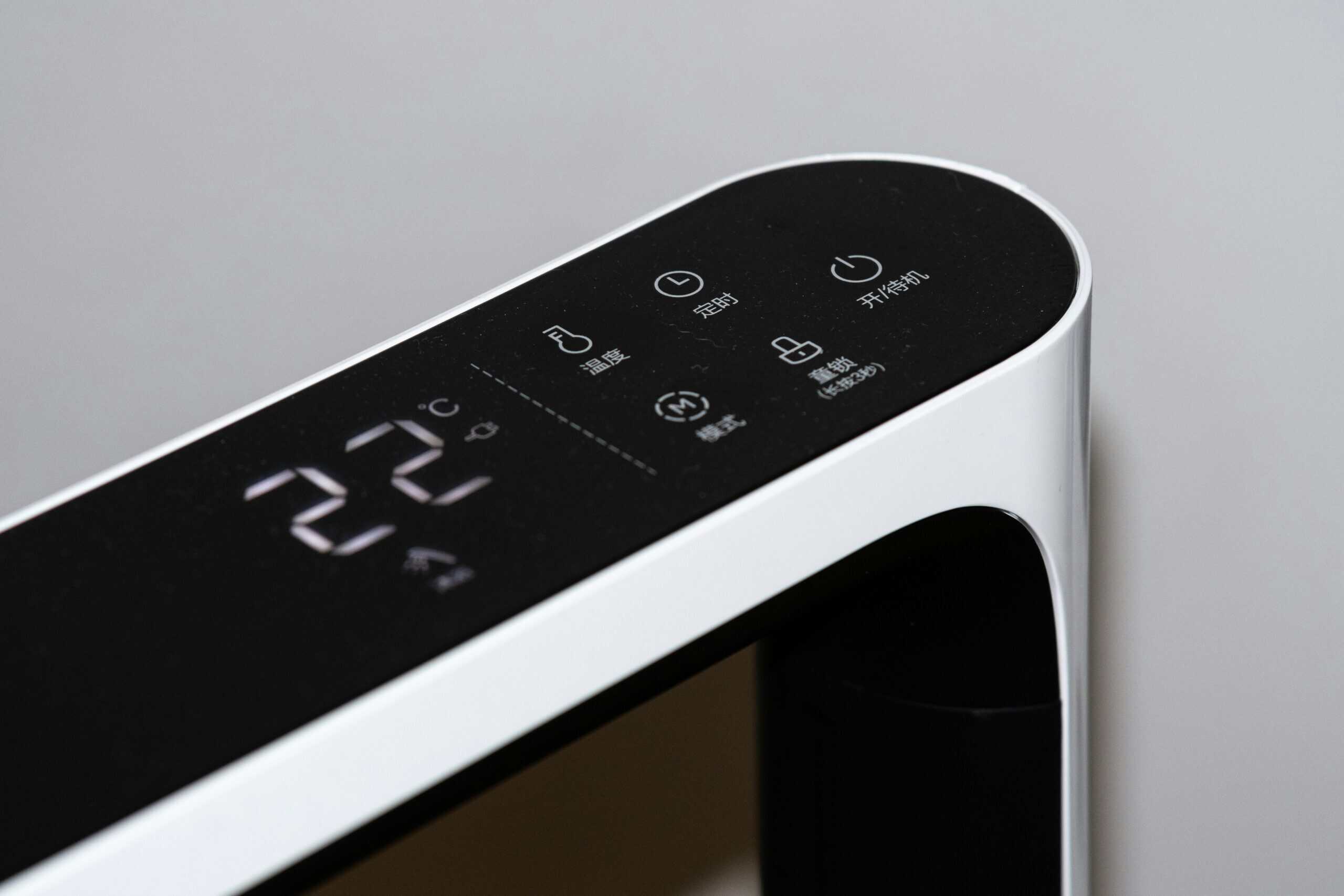
A humidifier and dehumidifier size calculator answers two questions in one pass: which direction your room needs to move, and how much capacity it takes to get there. Room volume and the current reading decide both.
Most people buy before measuring and end up with a unit that runs constantly without shifting the number. An undersized dehumidifier in a damp basement is the classic version, and dehumidifier picks are grouped by capacity for that reason.
Medical Disclaimer
This article is for educational purposes only and does not replace medical evaluation or treatment by a qualified clinician. Room humidity is a comfort and air-quality matter. No humidity level treats migraine, and symptoms that keep worsening need assessment rather than a different appliance.
Quick Answer
Aim for an indoor relative humidity in the 30 to 50 percent band. Below 30, a humidifier sized to the room’s square footage is the fix. Above 50, a dehumidifier rated in pints per day for that floor area and dampness level is what moves the number.
Key Takeaways
- Measure the current humidity before choosing a direction.
- The 30 to 50 percent band is the usual indoor target.
- Dehumidifier capacity is rated in pints removed per day.
- Humidifier capacity is rated by gallons per day and room coverage.
- Ceiling height matters, because the unit works on volume rather than floor area.
- Oversizing a humidifier causes its own problems, including condensation and mold.
Enter the room dimensions, the ceiling height and the current humidity reading.
| Room area | Humidifier output | Dehumidifier, slightly damp | Dehumidifier, wet |
|---|---|---|---|
| Up to 300 sq ft | 0.5 to 1 gal/day | 20 pint | 30 pint |
| 300 to 500 sq ft | 1 to 1.5 gal/day | 20 to 30 pint | 35 to 40 pint |
| 500 to 1,000 sq ft | 1.5 to 3 gal/day | 30 to 40 pint | 50 pint |
| 1,000 to 1,500 sq ft | Whole-floor unit | 40 to 50 pint | 50 to 60 pint |
| Over 1,500 sq ft | Whole-house system | 50 to 60 pint | Over 60 pint |
Figures assume a standard eight foot ceiling. Taller ceilings add volume the rating does not account for, so the calculator adjusts for height directly.
Why a humidifier and dehumidifier size calculator starts with a reading
The direction is not obvious from how a room feels. A cold room reads as damp and a warm one as dry, and both impressions are often wrong.
An inexpensive hygrometer settles it in a few minutes. Without that number, the choice between the two appliances is a guess.
Readings also move through the day and across seasons. A bedroom at 55 percent in August can sit at 25 percent in January with the heating on.
That seasonal swing is why some rooms need both appliances across a year. Several options in air quality monitors log humidity continuously rather than showing only the current figure.
How the two capacity ratings actually work
Dehumidifiers are rated in pints per day
A 50 pint unit removes up to 50 pints of water in 24 hours under test conditions. Real rooms rarely match those conditions, so headroom helps.
Dampness level changes the requirement
The same floor area needs more capacity when the room smells musty or shows damp patches than when it is merely humid. The calculator asks which it is.
Humidifiers are rated by output and coverage
Output is gallons per day; coverage is the square footage the maker claims. Coverage claims run optimistic, so sizing to the upper end of a range works better.
Tank size is runtime, not capacity
A large tank means fewer refills, which is convenience rather than performance. Two units with the same output and different tanks shift a room equally.
What goes wrong at both ends of the band
Air under about 30 percent dries out the nose and throat and makes static a daily annoyance. It also makes a room feel colder than the thermostat says.
Air above about 50 percent supports dust mites and mold growth. That upper limit is the practical reason the band has a ceiling at all, and mold as a reported trigger goes into the detail.
Oversizing a humidifier pushes a room past the top of the band quickly. Condensation on windows is the first visible sign, and it usually appears before any reading gets checked.
Running either unit without a built-in humidistat makes overshoot likely. Picks in humidifiers for a bedroom weigh that control alongside output.
Placement and maintenance change the result
Put a humidifier a few feet from the bed and off the floor, away from walls and soft furnishings. A unit tucked into a corner humidifies the corner.
A dehumidifier needs clearance on all sides for airflow and a drain or a tank you will actually empty. A full tank stops the machine, which is the most common reason a correctly sized unit achieves nothing.
Humidifiers need regular cleaning more than any other small appliance in a bedroom. Standing water grows what it grows, and the mist carries it into the room.
Evaporative models add a wick that loads up with mineral scale, which is the running cost behind humidifier filters and descaling supplies.
What trips people up
Buying before measuring
A hygrometer costs a fraction of either appliance and decides which one you need. Guessing the direction is the expensive mistake.
Sizing by floor area alone
A room with a ten foot ceiling holds a quarter more air than the same footprint at eight feet. Volume is what the unit has to move.
Treating an open-plan space as one room
Air moves between connected spaces, so the relevant area is everything the air reaches. A bedroom unit with the door open is working on the hallway too.
Ignoring where the moisture comes from
A dehumidifier manages symptoms of a leak without fixing it. Persistent damp on one wall is a building problem first.
Expecting humidity to explain attack days
Weather and indoor conditions shift together, which makes either easy to blame. The relationship is explored in whether weather change triggers migraines.
When to see a neurologist
Room humidity is comfort management, not treatment. Book an appointment independently of any appliance decision if any of these apply.
- A sudden severe headache that peaks within seconds or minutes.
- Headache with fever, a stiff neck, confusion or a rash.
- Headache following a head injury.
- Weakness, numbness, slurred speech or vision loss with an attack.
- A first severe headache after age 50.
- A clear change in the usual pattern, frequency or intensity.
- Headache that wakes you from sleep or worsens lying flat.
- Headache worsened by coughing, straining or exertion.
- Attacks on more days than not in a month.
- Acute medication needed on ten or more days a month.
- New aura, or aura lasting longer than an hour.
- Breathing symptoms alongside the headaches in a damp or musty home.
If a damp room is part of the picture, mention it at the appointment, since it belongs to the environmental history rather than to the headache history alone.
What this calculator cannot tell anyone
It cannot say that reaching the target band will change your attack frequency. It sizes an appliance to a room, which is a mechanical question with a mechanical answer.
It also cannot find the source of a damp problem. Capacity figures assume ordinary moisture load, and a leak or a failed damp course sits outside that assumption entirely.
Sources
- US Environmental Protection Agency
- American Headache Society
- American Migraine Foundation
- Mayo Clinic
Frequently Asked Questions
How does a humidifier and dehumidifier size calculator decide which one I need?
It compares your current humidity reading to the 30 to 50 percent band. Below the band it sizes a humidifier; above it, a dehumidifier; inside it, neither.
What humidity should a bedroom sit at?
Between 30 and 50 percent suits most homes. Below that, air gets uncomfortably dry; above it, dust mites and mold have the conditions they need.
What size dehumidifier does a basement need?
Floor area and dampness together decide it. A moderately damp 800 square foot basement usually lands in the 40 to 50 pint range, with more capacity where there are visible damp patches.
Can a humidifier be too big for a room?
Yes. Output beyond what the room needs drives humidity past the top of the band, which shows up as window condensation and eventually mold.
Do I need one in every room?
Usually no. Treat the room you sleep in first, measure the rest, and remember that connected spaces share air.
How often should either one be cleaned?
Follow the manufacturer’s schedule, and treat a humidifier as the higher-maintenance of the two. Standing water is the reason that schedule exists.
When should I see a doctor rather than adjust the room?
Any sudden severe headache, headache with fever or neurological symptoms, a first severe headache after 50, or a clear change in pattern needs an appointment regardless of the humidity reading. Breathing symptoms alongside headaches in a damp home are worth raising too.
