
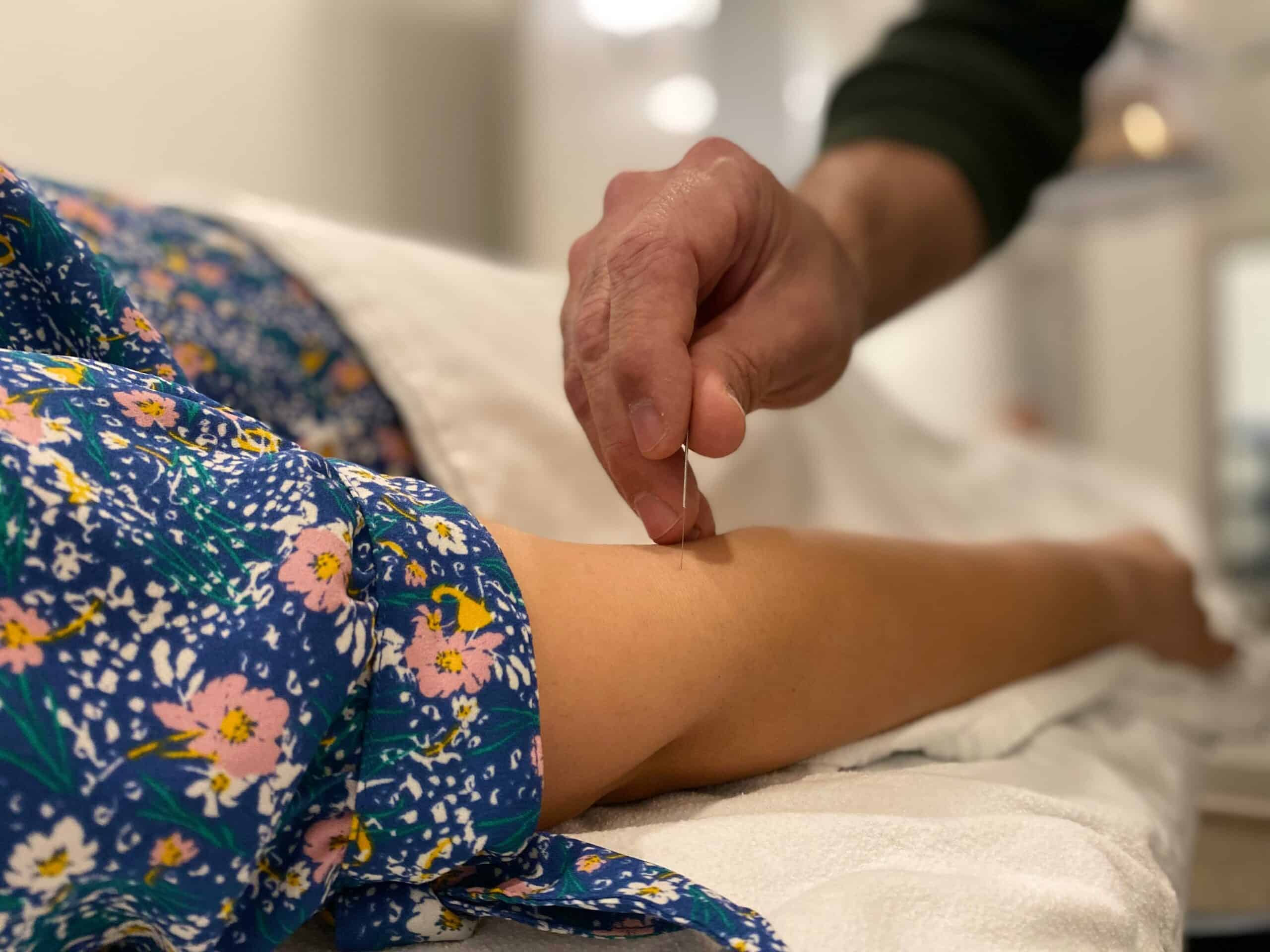
A real but modest preventive effect, and a large part of it appears to come from the setting rather than the needles. Whether acupuncture helps migraines is one of the better-answered questions in complementary medicine, because a Cochrane systematic review has examined it directly against both sham needling and preventive drugs.
The honest version involves three separate comparisons that give three different answers. Our guide to building a migraine toolkit covers where something like this fits alongside everything else.
A Quick Note
This is general information, not medical advice. Acupuncture is not a substitute for diagnosis, and new, changing, sudden or severe headaches need medical evaluation rather than a complementary therapy. Anyone considering acupuncture alongside preventive medication should discuss it with the clinician managing their migraine, and should see a licensed practitioner.
Quick Answer
A Cochrane review of acupuncture for episodic migraine prevention found moderate-quality evidence of benefit against usual care, and a smaller advantage over sham acupuncture. Acupuncture matched preventive drugs at three months with fewer people stopping because of side effects. It is an adjunct to migraine care rather than a replacement for it.
Key Takeaways
- Acupuncture outperforms usual care for migraine prevention.
- Its advantage over sham needling is real but much smaller.
- That gap suggests context and expectation carry real weight.
- It matched preventive drugs at three months, not at six.
- Far fewer people quit acupuncture over side effects.
- Needles are regulated as single-use sterile devices.
- Practitioner licensing varies considerably between states.
| Comparison | What the Cochrane review found | How to read it |
|---|---|---|
| Against usual care | Moderate benefit, moderate-quality evidence | The strongest result |
| Against sham acupuncture | Small but measurable advantage | Much of the effect is nonspecific |
| Against preventive drugs | Better at three months, equal at six | Short-term edge that does not hold |
| Dropouts from side effects | Far lower than with drugs | The clearest practical advantage |
| As an acute treatment | Not what the evidence addresses | This is prevention research |
The Three Comparisons That Matter
Asking whether acupuncture works is too coarse a question. Compared to what is the part that changes the answer.
Against usual care, the Cochrane review of acupuncture for episodic migraine prevention reported a moderate effect and rated the evidence moderate quality. Roughly four in ten people receiving acupuncture had their headache frequency at least halved, against under two in ten on usual care.
Against sham acupuncture, the advantage shrank substantially. Slightly over half of the acupuncture group halved their headache frequency, against slightly over four in ten receiving sham.
Against preventive medication, acupuncture came out ahead at three months and level by six. Our guide to how triptans work covers the acute drugs this research does not address.
What the Sham Comparison Tells You
Why it matters so much
Sham acupuncture uses shallow or non-penetrating needles, often away from traditional points. It reproduces the appointment, the practitioner and the expectation without the intended intervention.
The size of the gap
The difference between real and sham is much smaller than the difference between real and usual care. That arithmetic points at the surrounding experience doing real work.
What NCCIH says about it
NCCIH notes that acupuncture’s benefit against no treatment exceeds its benefit against sham procedures, and describes patient belief, the practitioner relationship and psychological factors as contributing to the effect.
Whether that makes it useless
No. A nonspecific effect is still a reduction in headache days. Our guide to getting through a migraine without medication covers other approaches that work partly this way.
The Side Effect Comparison Is the Practical One
Preventive migraine drugs work for many people and are hard for others to stay on. Fatigue, cognitive fog, weight change and mood effects all drive discontinuation.
In the drug comparison within the Cochrane review, the share of people dropping out because of adverse effects was several times higher on medication than on acupuncture. That difference is not subtle.
For someone who has cycled through preventives and stopped each one over side effects, that matters more than the effect size does.
It is also the argument for using it alongside rather than instead. Our guide to CGRP medications covers the newer preventive class with a different side effect picture.
How It Is Thought to Work
The mechanism is not settled. NCCIH describes the effects as involving several pathways at once rather than one.
Nervous system function is the most studied route, with needling appearing to influence how pain signals are processed. Local effects in connective tissue at the needle site are a second proposed pathway.
Nonspecific effects are the third, and NCCIH treats them as a genuine contributor rather than as noise to be subtracted.
Nobody needs a settled mechanism to weigh a therapy. Our guide to neuromodulation for migraine covers the device category with a better-characterized mechanism.
Safety and Choosing a Practitioner
- Check licensing in your state. NCCIH notes that most states license acupuncturists and that requirements vary considerably.
- Ask about single-use needles. The FDA regulates acupuncture needles as medical devices required to be sterile and labeled single use.
- Say what you are being treated for. Migraine prevention is a different course of treatment than a one-off session for tension.
- List your medications. Particularly anticoagulants, which change the bleeding picture.
- Expect a course, not a session. The prevention research uses repeated treatment over weeks.
- Know the serious risks. NCCIH lists infection, punctured organs and central nervous system injury from improperly delivered acupuncture.
Our guide to finding a migraine specialist covers assembling a care team, and our guide to questions to ask a neurologist covers raising complementary therapies in an appointment.
Tracking Whether It Helped You
Group averages do not tell an individual what happened. A diary does.
Record headache days before starting and keep the same record through the course. Frequency is the outcome the prevention research measures, so it is the one to watch.
Avoid changing anything else at the same time. A new preventive, a new sleep schedule and acupuncture started together produce an uninterpretable result.
Give it the length of a proper course before judging. Our guide to how long to track migraines before seeing a doctor covers building that baseline, and our guide to spotting patterns in tracking data covers reading it afterward.
Where It Fits and Where It Does Not
The research is about prevention in episodic migraine. It does not establish acupuncture as an acute treatment during an attack.
It is also not a diagnostic step. A headache pattern that is new, changing or accompanied by neurological symptoms needs evaluation first.
Chronic migraine sits outside most of this evidence base, which studied episodic migraine. Our comparison of chronic against episodic migraine covers that distinction.
Treated as one adjunct among several, it has a defensible place. Our guide to whether yoga helps with migraines covers another approach in the same category.
Related Reading
Frequently Asked Questions
Does acupuncture help migraines?
A Cochrane review of acupuncture for episodic migraine prevention found moderate-quality evidence of benefit compared with usual care, and a smaller advantage over sham acupuncture. It performed as well as preventive drugs at three months, with far fewer people stopping because of side effects.
How much does it reduce migraine frequency?
In the Cochrane review, roughly four in ten people receiving acupuncture had headache frequency at least halved, against under two in ten on usual care. Against sham acupuncture the figures were closer, at slightly over half compared with slightly over four in ten.
Is the benefit just placebo?
Partly, and that is not the same as nothing. NCCIH notes that acupuncture’s benefit against no treatment exceeds its benefit against sham, and counts patient belief and the practitioner relationship as genuine contributors. Fewer headache days is still fewer headache days.
Is acupuncture better than preventive medication?
Not on effect. It matched preventive drugs at three months and the advantage had gone by six. Its clearer edge is tolerability, since the share of people discontinuing over adverse effects was several times higher on medication.
How many sessions does it take?
The prevention research uses a course of repeated treatment over weeks rather than a single session, so a one-off appointment is not what was examined. Ask the practitioner what course they propose and keep a headache diary across it.
Is acupuncture safe?
NCCIH describes it as generally safe when delivered by an experienced practitioner using sterile needles, while listing infection, punctured organs and central nervous system injury among risks of improper delivery. The FDA regulates acupuncture needles as sterile, single-use medical devices.
Can you have acupuncture while taking migraine medication?
Many people do, and it is a conversation for the clinician managing your migraine rather than a decision to make alone. Mention all medications to the practitioner as well, particularly anticoagulants, which change the bleeding picture.
When should you see a doctor instead?
See a doctor before starting any complementary therapy for an undiagnosed headache, and promptly for a headache that is new, sudden, severe, changing in pattern, or accompanied by fever, weakness, confusion, vision loss or neck stiffness. Acupuncture is not a diagnostic step.
Sources
- Cochrane systematic review of acupuncture for the prevention of episodic migraine
- National Center for Complementary and Integrative Health, acupuncture effectiveness and safety
- National Center for Complementary and Integrative Health, headaches and complementary health approaches
- US Food and Drug Administration, regulation of acupuncture needles as medical devices
