
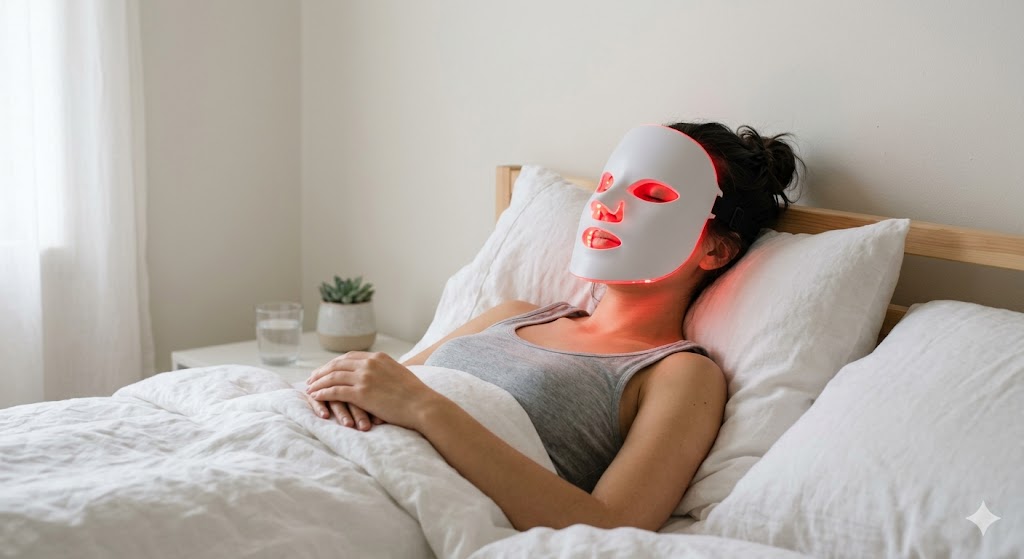
Red light therapy for migraine sits in an awkward place. There is enough early research to make it interesting and not enough to call it established, and the devices are sold far more confidently than the evidence supports. Individual response varies, plenty of people notice nothing, and the honest starting position is that this is an unproven tool rather than a treatment. What a guide can usefully do is explain what the devices are, what to check before buying one, and where the research actually stands. For the full picture, see our guides on whether the masks help migraines, how to use one, whether it is safe, and how often to use it.
Red light therapy for migraine sits in an interesting scientific position. Beyond traditional medication and rescue treatments, photobiomodulation research has accumulated meaningful evidence that specific wavelengths of red and near-infrared light reduce migraine frequency and intensity for many sufferers. Studies from institutions including the University of California, San Francisco, and clinical trials published in journals like Pain Research and Management have documented measurable improvements in migraine outcomes when patients use specific wavelength devices consistently over weeks.
However, the migraine red light therapy market includes both legitimate therapeutic devices and consumer gadgets marketed as therapeutic without the technical specifications to deliver actual benefits. Wavelength accuracy matters enormously, devices producing 660nm red light and 850nm near-infrared light penetrate tissue and trigger cellular responses that produce therapeutic effects. Devices producing wavelengths outside these specific ranges produce warm light that feels nice but doesn’t generate measurable benefits.
Quality red light therapy devices for migraine solve three problems at once. Accurate wavelength output (660nm red, 850nm near-infrared, or both combined) ensures the photobiomodulation mechanism actually activates. Adequate treatment area covers the temples, forehead, and base of skull, where migraine pain typically originates. Power density (irradiance) reaches therapeutic thresholds without requiring impractically long session durations. Get those three traits right, and the device becomes a genuine migraine management tool rather than expensive theater.
If you’re building a comprehensive migraine management approach, our best migraine glasses for light sensitivity and best ice caps for cold therapy migraine relief guides cover complementary tools.
How Red Light Therapy Works for Migraines
Photobiomodulation triggers cellular responses through specific wavelengths.
Photobiomodulation refers to the biological response that occurs when specific wavelengths of light penetrate tissue and interact with cellular components. The most-researched wavelengths for therapeutic applications are 660 nanometers (red light) and 850 nanometers (near-infrared light). These wavelengths penetrate skin and underlying tissue at depths sufficient to reach blood vessels, muscle tissue, and cellular mitochondria.
Research published in the Journal of Photochemistry and Photobiology has documented that 660nm and 850nm wavelengths trigger measurable cellular responses. Mitochondria absorb the light energy and increase ATP production. Inflammatory markers decrease in treated tissue areas. Blood flow increases in the treatment region.
For migraine specifically, several mechanisms appear to contribute to symptom reduction. Vasodilation in cranial blood vessels reduces the abnormal vasoconstriction patterns that contribute to migraine pain. Anti-inflammatory effects reduce the neurogenic inflammation that intensifies migraine. Increased mitochondrial function may address the cellular energy deficits that some migraine research has identified as a contributing factor.
Treatment timing affects outcomes significantly.
Red light therapy works differently for migraine than acute medications. While medications target ongoing migraine attacks, red light therapy produces the best results through consistent preventive use rather than acute treatment.
Most beneficial protocols involve 15-20 minute sessions performed daily or every other day during non-migraine periods. The cumulative effect builds over 4-8 weeks of consistent use, with reductions in migraine frequency and intensity becoming measurable around the 4-week mark.
Some sufferers report acute relief during active migraines through targeted treatment, but the more reliable benefit emerges through preventive use that addresses the underlying patterns producing migraine episodes. Set realistic expectations, red light therapy works as a preventive tool rather than a rescue treatment.
Individual response varies considerably.
Not all migraine sufferers respond equally to red light therapy. Research suggests approximately 60-70% of users experience measurable benefits from consistent treatment. The remaining 30-40% see minimal improvement despite proper device use and consistent protocols.
Predicting individual response in advance remains difficult. The 4-week consistent use trial provides the most reliable indicator of whether red light therapy will work for any specific individual. Many devices include money-back guarantees specifically because individual response variation is real and unpredictable.
For sufferers whose migraines respond, the benefits often persist with continued use across years. For those whose migraines don’t respond, no amount of additional treatment time produces results, moving to alternative approaches makes more sense than persisting beyond reasonable trial periods.
How I Use Mine
I own a full-face wearable red light mask and have had it around eight months to a year. I use it occasionally rather than daily, roughly once every couple of weeks, and always with my eyes closed throughout.
A session is usually fifteen to twenty minutes and I lie down for it. Sometimes that is during an attack and sometimes it is preventive, on a day when nothing is happening yet.
Whether it helps is hard to tell. I have not noticed a clear pattern either way, and I am not going to claim one. That is worth saying plainly, because a device like this is easy to credit for an attack that was ending anyway, and migraine is a condition where that mistake is very easy to make.
What I can say is that it is comfortable enough to actually use, which matters more than it sounds. A device that is awkward to wear ends up in a drawer regardless of what the research says. The picks below are research-based rather than devices I have compared, and my own experience covers one mask used occasionally over most of a year.
What to Look for in Red Light Therapy Devices for Migraines
Wavelength specifications determine therapeutic value.
Look for devices that specify exact wavelength outputs in their technical documentation. Quality devices list 660nm red light, 850nm near-infrared light, or both. Generic specifications like “red light therapy” without specific wavelengths often indicate cheap LEDs producing wavelengths outside the therapeutic ranges.
Combination devices producing both 660nm and 850nm wavelengths offer broader treatment effects than single-wavelength alternatives. The 660nm light treats surface-level tissue effectively. The 850nm near-infrared penetrates more deeply, reaching tissues that 660nm can’t access. Together, the combination addresses both surface and deep tissue mechanisms that contribute to migraine pain.
For migraine specifically, devices with both wavelengths typically outperform single-wavelength alternatives. The deeper tissue penetration of near-infrared matters because some migraine mechanisms involve tissue depths beyond what 660nm can reach effectively.
Treatment area coverage matters for migraine application.
Migraine pain originates from multiple anatomical regions, temples, forehead, base of skull, and neck. Effective treatment requires devices that cover these areas adequately within reasonable session times.
Small handheld devices (single-LED or small panel) require multiple positioning changes across a treatment session to cover all relevant areas. While these devices can work, the practical experience of holding the device against multiple positions for 20 minutes becomes tedious enough that many users skip sessions.
Headband-style devices designed specifically for migraine treatment cover the temples and forehead simultaneously through a wraparound design. The hands-free operation lets users continue daily activities during treatment, which dramatically improves consistency. Mid-size panel devices (6-12 inches) allow positioning treatment across larger areas with a single placement.
For migraine application specifically, headband-style devices provide the most practical daily-use experience. Panel devices work for users willing to dedicate 20 minutes to passive treatment sessions.
Power density (irradiance) affects session duration.
Irradiance measures the light intensity reaching the treatment area, typically reported in milliwatts per square centimeter (mW/cm²). Therapeutic protocols generally require 20-200 mW/cm², depending on treatment goals.
Higher irradiance reduces the required session duration. A device producing 100 mW/cm² achieves a therapeutic dose in 5-10 minutes. The same therapeutic dose from a device producing 20 mW/cm² requires 25-50 minutes.
For practical daily use, devices in the 50-100 mW/cm² range balance treatment effectiveness with reasonable session duration. Devices below 30 mW/cm² often require sessions too long for sustainable daily use. Devices above 150 mW/cm² provide minimal additional benefit while increasing the risk of overheating during extended sessions.
FDA clearance and clinical evidence.
Some red light therapy devices carry FDA clearance for specific medical applications. The clearances indicate the FDA has reviewed safety and efficacy data for specific indications.
For migraine specifically, FDA-cleared devices include some products from Cefaly and a small number of other clinical-grade manufacturers. Most consumer red light therapy devices marketed for migraine relief don’t carry FDA clearance specifically for migraine, they’re cleared for general pain or wellness applications.
The clearance distinction matters for some users but isn’t definitive. FDA-cleared devices have undergone more rigorous testing, but quality non-cleared devices still produce therapeutic benefits when wavelength and power specifications match research-supported parameters. Look at the actual device specifications rather than relying on FDA clearance status alone.
The 5 Best Red Light Therapy Devices for Migraine in 2026
1. Hooga HG300 Red Light Therapy Panel
Best Overall Red Light Therapy Device for Migraine | Price: ~$200
The Hooga HG300 earns the top spot through accurate dual-wavelength output, substantial treatment area coverage, therapeutic power density, and the price-to-performance ratio that makes professional-grade red light therapy accessible for migraine sufferers.
Why Hooga HG300 Sets the Standard
The HG300 produces both 660nm and 850nm wavelengths simultaneously through 60 high-quality LEDs (30 of each wavelength). The dual-wavelength approach addresses both surface and deep tissue mechanisms that contribute to migraine pain, providing broader therapeutic coverage than single-wavelength alternatives.
The 12-inch x 4-inch treatment area allows full forehead and temple coverage from a single positioning. Beyond migraine application, the panel size accommodates broader pain treatment for shoulders, neck, and other body regions where migraine sufferers often experience secondary tension.
Irradiance reaches 100 mW/cm² at 6-inch distance, providing a therapeutic dose within 10-15 minute sessions. The power density sits in the optimal range for daily migraine treatment without requiring impractical long sessions.
The panel design works hands-free with the included stand. Users can position the panel during morning routines, work breaks, or evening relaxation. The hands-free operation dramatically improves treatment consistency compared to handheld alternatives.
Hooga publishes detailed third-party testing documentation verifying wavelength accuracy and irradiance specifications. The transparency separates Hooga from competitors who claim therapeutic specifications without independent verification.
The 60-day money-back guarantee accommodates the individual response variation that affects red light therapy outcomes. Migraine sufferers can complete a full 4-week trial period and still return the device if no benefits emerge.
The trade-off compared to dedicated migraine headbands is the positioning effort. The panel requires intentional positioning rather than wear-and-go convenience. For users willing to dedicate 15 minutes to focused treatment sessions, the HG300’s superior specifications justify the positioning effort.
PROS:
- Dual 660nm + 850nm wavelengths
- 100 mW/cm² therapeutic irradiance
- 12 x 4-inch treatment area
- Hands-free panel design
- Third-party tested specifications
- 60-day money-back guarantee
CONS:
- Requires intentional positioning sessions
- Less convenient than wearable alternatives
- Larger storage footprint
- Higher upfront cost than handheld options
Best for: Most migraine sufferers, particularly those willing to commit to focused 15-minute sessions and who value verified specifications.
2. Cefaly DUAL Migraine Treatment
Best FDA-Cleared Migraine-Specific Device | Price: ~$400
The Cefaly DUAL is the FDA-cleared device specifically designed and cleared for migraine treatment. While it uses electrical neurostimulation rather than red light, the device merits inclusion as the most clinically validated migraine treatment device available, providing context for evaluating red light alternatives.
Clinical Validation for Migraine Specifically
Cefaly DUAL has FDA clearance for both acute migraine treatment and migraine prevention. Clinical trials published in journals including Neurology and Cephalalgia have documented migraine frequency reductions of 30-40% in users following the prevention protocol consistently.
The device uses transcutaneous electrical nerve stimulation (TENS) of the supraorbital nerve through a small electrode placed on the forehead. The 20-minute sessions for prevention and 60-minute sessions for acute treatment have established protocols backed by clinical evidence rather than general wellness research.
Cefaly’s prescription-free over-the-counter status (since 2020) makes it accessible without doctor visits, though insurance coverage often requires prescriptions. The device works specifically for migraine rather than the general wellness applications most red light devices target.
The trade-off compared to red light alternatives is the different mechanism. Cefaly works through electrical stimulation rather than photobiomodulation. Some users tolerate one mechanism better than the other. Many migraine sufferers find one approach effective while the other doesn’t help, predicting individual response remains difficult in advance.
For users specifically seeking the most clinically validated migraine device available, Cefaly represents the gold standard. For users wanting red light therapy specifically, the Hooga HG300 or other dedicated red light devices serve better.
The price, at approximately $400, sits at the premium tier. Cefaly’s adhesive electrode replacements add ongoing costs of approximately $25 every 20 sessions. Total cost of ownership over the years approaches $600-800.
PROS:
- FDA-cleared for migraine specifically
- Strongest clinical validation available
- Established treatment protocols
- 60-day return policy
- Prescription-free availability
- Multiple treatment modes (acute + prevention)
CONS:
- Different mechanism than red light therapy
- Premium pricing at approximately $400
- Ongoing electrode replacement costs
- May not help users who don’t respond to electrical stimulation
- Smaller treatment area than panel devices
Best for: Migraine sufferers seeking maximum clinical validation, users who haven’t responded to other treatments, and those willing to invest in proven, specifically cleared technology.
3. Mito Red Light Mito Mobile
Best Portable Red Light Therapy Device | Price: ~$130
The Mito Mobile is a portable handheld red light therapy device for migraine sufferers who need treatment flexibility across home, work, and travel applications. Compact design, dual-wavelength output, and rechargeable battery make it the right choice for users prioritizing portability over panel-size coverage.
Portable Dual-Wavelength Treatment
The Mito Mobile produces 660nm and 850nm wavelengths through 24 LEDs in a handheld form factor. While the smaller LED array delivers less treatment area than panel devices, the compact size enables treatment scenarios that panels can’t address.
The rechargeable battery provides 60-90 minutes of operation per charge. Migraine sufferers can use the device during travel, at work breaks, or anywhere else without requiring outlet access. The portability eliminates the location restriction that affects panel device use.
Treatment requires positioning the device against the treatment areas for 5-10 minutes per spot. For migraine application, positioning sequences across temples, forehead, and base of skull deliver comprehensive treatment in 20-30 minutes total. While more involved than panel device use, the portable design enables consistency across travel and varied daily routines.
Mito Red Light publishes third-party testing documentation. Wavelength accuracy and irradiance match advertised specifications. Power density reaches 80-90 mW/cm² at the device surface, providing a therapeutic dose in 5-10 minutes per treatment area.
The 60-day money-back guarantee covers the trial period required to evaluate individual response. Users who don’t experience benefits within 4-6 weeks can return the device for a full refund.
Trade-offs match the portable form factor. The smaller treatment area requires more positioning effort than panel devices. Battery life limits continuous treatment sessions. The handheld design isn’t hands-free, requiring user effort throughout sessions.
PROS:
- Dual 660nm + 850nm wavelengths
- Rechargeable battery for portability
- Compact handheld design
- 80-90 mW/cm² therapeutic irradiance
- Third-party tested specifications
- Travel and work-friendly use
CONS:
- A smaller treatment area requires repositioning
- Battery life limits long sessions
- Not hands-free during treatment
- Less efficient than panel devices for whole-area coverage
Best for: Migraine sufferers who travel frequently, work from varied locations, or want red light therapy flexibility beyond home use.
4. PlatinumLED Therapy Lights BIO 300
Best Premium Red Light Therapy Panel | Price: ~$500
The PlatinumLED BIO 300 is the premium panel for migraine sufferers serious about photobiomodulation therapy. Larger treatment area, higher LED count, premium build quality, and extensive third-party validation make it the right choice for users committed to long-term red light therapy who can justify a premium investment.
Premium Specifications for Serious Users
The BIO 300 produces dual 660nm and 850nm wavelengths through 60 high-quality LEDs across an 18-inch x 8-inch treatment area. The larger treatment surface enables full upper body coverage from a single positioning, accommodating not just migraine treatment but the broader pain and recovery applications that migraine sufferers often need.
Power density reaches 130 mW/cm² at 6-inch distance, significantly higher than mid-tier alternatives. The increased irradiance reduces session duration to 8-12 minutes for therapeutic dose, making daily consistency more practical than longer sessions, which cheaper devices require.
PlatinumLED maintains the most extensive third-party testing documentation in the consumer red light therapy market. Wavelength accuracy verified by independent laboratories. Irradiance measurements were documented across the treatment surface. Beam angle specifications provided for treatment planning.
The premium build quality justifies the price across years of use. Industrial-grade LEDs maintain output specifications across 50,000+ hours of operation. The aluminum housing dissipates heat effectively, preventing the LED degradation that affects cheap consumer alternatives.
The 5-year warranty covers manufacturing defects across far longer periods than budget alternatives offer. The 30-day in-home trial accommodates individual response evaluation, though shorter than the 60-day periods other manufacturers offer.
The trade-offs match premium pricing. At $500, the BIO 300 sits significantly above mid-range alternatives. The larger size requires more storage space than compact options. For users primarily focused on migraine treatment without secondary pain or recovery applications, the additional features may exceed actual needs.
PROS:
- 18 x 8-inch large treatment area
- 130 mW/cm² therapeutic irradiance
- Dual 660nm + 850nm wavelengths
- Premium third-party testing
- 5-year manufacturer warranty
- Multi-application capability
CONS:
- Premium pricing at $500
- Larger storage requirements
- 30-day trial shorter than competitors
- Overkill for migraine-only use cases
Best for: Migraine sufferers committed to long-term red light therapy, users with secondary pain or recovery needs, and buyers prioritizing premium build quality and extensive validation.
5. Tendlite Original Red Light Therapy Device
Best Targeted Migraine Treatment Device | Price: ~$170
The Tendlite Original is the focused-beam handheld device for migraine sufferers wanting targeted spot treatment. Concentrated single-LED design, FDA Class II registration, and strong professional adoption make it the right choice for users seeking focused treatment of specific migraine pain points.
Targeted Beam for Specific Treatment Areas
The Tendlite uses a single high-power LED producing 660nm red light at 165 mW/cm² irradiance. While the single LED limits treatment area to a focused beam, the high power density delivers a therapeutic dose in 1-2 minutes per spot.
For migraine application, the focused approach targets specific pain points rather than treating broader areas. Users identify their primary pain locations (typically temples, sinus areas, and base of skull) and apply 1-2 minute sessions to each spot. Total treatment time runs 8-12 minutes for comprehensive coverage.
Tendlite carries an FDA Class II registration as a low-risk medical device. While not specifically cleared for migraine treatment, the registration indicates higher regulatory standing than consumer wellness devices. Many chiropractors, physical therapists, and pain management practitioners use Tendlite professionally.
The compact size makes Tendlite genuinely portable. Users can carry the device in laptop bags or purses for treatment access throughout the day. Battery life supports multiple sessions before requiring recharging.
The trade-offs match the focused-beam design. Treatment requires identifying specific pain points and applying the device to each location individually. For users who prefer passive whole-area treatment, panel devices work better. For users targeting specific, consistent pain points, the focused approach can be more efficient than treating large areas.
The single 660nm wavelength limits treatment to surface tissue mechanisms. The Tendlite can’t address the deeper tissue mechanisms that 850nm near-infrared targets. For migraine specifically, the limitation matters less than for other pain conditions because migraine treatment mechanisms occur largely in surface and middle tissue layers.
PROS:
- 165 mW/cm² high irradiance for short sessions
- FDA Class II registration
- Compact portable design
- Used by professional practitioners
- Battery rechargeable
- Good for targeted spot treatment
CONS:
- Single 660nm wavelength only
- A small treatment area requires multi-point sessions
- More expensive per square inch of treatment than panels
- Not ideal for whole-area treatment
Best for: Migraine sufferers with specific, consistent pain points, users wanting professional-grade, focused treatment, and buyers preferring targeted over broad-area approaches.
Quick Comparison: Best Red Light Therapy Devices for Migraine in 2026
| Device | Price | Wavelengths | Treatment Area | Irradiance | Score |
|---|---|---|---|---|---|
| Hooga HG300 | ~$200 | 660nm + 850nm | 12×4 inches | 100 mW/cm² | 9.5 |
| PlatinumLED BIO 300 | ~$500 | 660nm + 850nm | 18×8 inches | 130 mW/cm² | 9.4 |
| Cefaly DUAL | ~$400 | TENS (not light) | Forehead electrode | N/A | 9.3 |
| Mito Mobile | ~$130 | 660nm + 850nm | Handheld 24-LED | 80-90 mW/cm² | 9.0 |
| Tendlite Original | ~$170 | 660nm only | Focused beam | 165 mW/cm² | 8.8 |
How to Choose the Right Device for Migraines
The decision depends on commitment level, treatment style preference, and budget tolerance.
Match device to commitment level.
Sufferers experimenting with red light therapy for migraine before committing to expensive options should choose the Mito Mobile at $130. The portability and reasonable price let users evaluate individual response without a major financial commitment.
Sufferers committed to red light therapy as a sustained migraine management tool should choose the Hooga HG300 at $200. The price-to-performance ratio provides the best value for daily use across years.
Sufferers seeking maximum clinical validation should consider the Cefaly DUAL at $400 despite the different mechanism. The FDA clearance for migraine specifically provides clinical certainty that red light devices can’t match.
Match device to treatment style.
Users preferring passive hands-free treatment work best with panel devices like the Hooga HG300 or PlatinumLED BIO 300. Position the panel and continue daily activities during treatment.
Users preferring active targeted treatment work better with handheld devices like the Tendlite or Mito Mobile. Apply the device to specific pain points throughout the day as needed.
Set realistic expectations for response.
Approximately 60-70% of migraine sufferers respond to red light therapy with measurable benefits over 4-8 weeks of consistent use. Plan for a full 4-week trial before evaluating effectiveness. Use the money-back guarantees that quality manufacturers offer, specifically because individual response variation is real.
For comprehensive migraine management, our best migraine glasses for light sensitivity, best ice caps for cold therapy migraine relief, and Cefaly review guides cover complementary approaches.
Cost-Per-Use Math Across Years
Beyond the upfront purchase price, calculate the total cost across the device’s expected lifespan to compare options accurately.
The Hooga HG300 at $200 used 5 times weekly for 5 years equates to approximately 1,300 sessions. Cost per session: $0.15. Across the same period, prescription migraine medications often cost $50-200 per month, or $3,000-12,000 over 5 years.
The PlatinumLED BIO 300 at $500 produces similar per-session math due to longer expected lifespan and stronger build quality. Across 7-10 years of use, the cost per session approaches $0.10.
The Cefaly DUAL at $400 plus ongoing electrode replacements adds approximately $200-400 in supply costs over 5 years. Total cost approaches $600-800, or $0.50-0.80 per session.
For migraine sufferers experiencing measurable benefits, all options produce favorable cost-per-use math compared to medication alternatives. The investment math justifies the upfront purchase even at premium pricing levels.
Our Verdict
For most migraine sufferers, the Hooga HG300 at approximately $200 is the right red light therapy device. The dual-wavelength output addresses both surface and deep tissue mechanisms, the 100 mW/cm² irradiance delivers a therapeutic dose in practical session times, and the 12×4-inch treatment area covers all primary migraine pain locations. Third-party testing verifies specifications, and the 60-day money-back guarantee accommodates individual response evaluation.
For sufferers seeking maximum clinical validation, the Cefaly DUAL at $400 provides FDA clearance specifically for migraine, the strongest evidence base available in the device category. While Cefaly uses electrical stimulation rather than red light, migraine sufferers comparing therapeutic options should consider Cefaly’s clinical strength against red light alternatives.
For premium users committed to long-term photobiomodulation therapy, the PlatinumLED BIO 300 at $500 delivers the largest treatment area, highest irradiance, and most extensive third-party validation. The premium investment makes sense for users with secondary pain or recovery applications beyond migraine.
For portability priorities, the Mito Mobile at $130 provides dual-wavelength treatment in a handheld form factor at the most accessible price point. Travel-friendly use enables consistency that location-restricted devices can’t match.
For targeted treatment of specific pain points, the Tendlite Original at $170 delivers high irradiance focused-beam treatment with FDA Class II registration. Professional adoption validates the device’s therapeutic legitimacy.
The bigger principle is that red light therapy works for approximately 60-70% of migraine sufferers when applied consistently with quality devices over 4-8 week trial periods. The remaining 30-40% see minimal response regardless of device quality. Use the money-back guarantees that quality manufacturers provide, specifically because individual response variation is real. A 4-week consistent trial provides a reliable evaluation of whether red light therapy will work for your specific situation.
Beyond the device decision, consistency matters more than equipment specifications. The user who completes 30 sessions over 6 weeks with a $130 Mito Mobile produces better outcomes than the user who completes 5 sessions in the same period with a $500 PlatinumLED. Choose the device that fits your lifestyle and ensures consistent use rather than the highest-specified option that you’ll abandon after two weeks.
For complete migraine management, our best migraine glasses for light sensitivity, best ice caps for cold therapy migraine relief, and top migraine triggers guide guides cover complementary approaches that combine effectively with red light therapy.
Frequently Asked Questions
Does red light therapy actually work for migraines?
Research suggests red light therapy works for approximately 60-70% of migraine sufferers when applied consistently over 4-8 weeks. Clinical studies published in journals including Pain Research and Management have documented measurable migraine frequency and intensity reductions in users following proper protocols. However, individual responses vary significantly. The 30-40% of users who don’t respond see minimal improvement regardless of device quality or treatment duration. Use money-back guarantees from quality manufacturers to evaluate individual response without long-term financial commitment. A 4-week consistent trial provides a reliable evaluation of personal effectiveness.
What is the best red light therapy device for migraine in 2026?
The Hooga HG300, at approximately $200, is the best overall red light therapy device for most migraine sufferers. Dual 660nm + 850nm wavelength output addresses both surface and deep tissue mechanisms, 100 mW/cm² irradiance delivers a therapeutic dose in practical 10-15 minute sessions, and the 12×4-inch treatment area covers temples and forehead from a single positioning. Third-party testing verifies wavelength accuracy and power density specifications. For maximum clinical validation, the Cefaly DUAL at $400 provides FDA clearance specifically for migraine, though using electrical stimulation rather than red light.
How long does it take for red light therapy to work for migraines?
Most users experiencing benefits notice initial improvements within 2-3 weeks of consistent daily or every-other-day use. Measurable migraine frequency and intensity reductions become clearer around the 4-week mark. Maximum benefits typically develop over 6-8 weeks of consistent use. Plan for a full 4-week trial before evaluating effectiveness. Users seeing zero response after 6-8 weeks of proper, consistent use likely won’t benefit from red light therapy, regardless of additional treatment time. Move to alternative approaches rather than persisting beyond reasonable trial periods.
What wavelengths work best for migraine red light therapy?
The most-researched wavelengths for migraine and pain treatment are 660 nanometers (red light) and 850 nanometers (near-infrared light). Devices producing both wavelengths simultaneously typically outperform single-wavelength alternatives because the combination addresses both surface tissue (660nm) and deep tissue (850nm) mechanisms that contribute to migraine pain. Avoid devices that don’t specify exact wavelengths or claim general “red light therapy” without technical specifications. Generic devices often produce wavelengths outside therapeutic ranges that feel warm but don’t generate measurable benefits.
Can I use red light therapy during an active migraine?
Some users report acute relief during active migraines through targeted treatment, but the more reliable benefit emerges through preventive use during non-migraine periods. The cumulative effect of consistent treatment addresses underlying patterns producing migraines rather than acute symptoms. For acute migraines, light sensitivity may make red light treatment uncomfortable or counterproductive, the bright treatment light can intensify migraine symptoms in some sufferers. Test red light therapy during early prodrome symptoms before peak pain to evaluate personal acute response, but don’t expect rescue-medication-level acute relief. Set expectations as a preventive tool rather than an acute treatment.
This is general information, not medical advice, and these products may ease symptoms but do not treat or prevent migraine. See a doctor for persistent or severe migraine.
More Light Sensitivity Guides
Sources
- Headache Classification Committee of the International Headache Society. The International Classification of Headache Disorders, 3rd edition. Cephalalgia. 2018;38(1):1-211. https://ichd-3.org/
- Lipton RB, Munjal S, Buse DC, et al. Results From the American Migraine Prevalence and Prevention (AMPP) Study. Headache. 2016;56(10):1635-1648. https://headachejournal.onlinelibrary.wiley.com/
- National Institute of Neurological Disorders and Stroke. Migraine. National Institutes of Health. https://www.ninds.nih.gov/health-information/disorders/migraine
Recommended Reading
See our note on choosing migraine glasses.
