
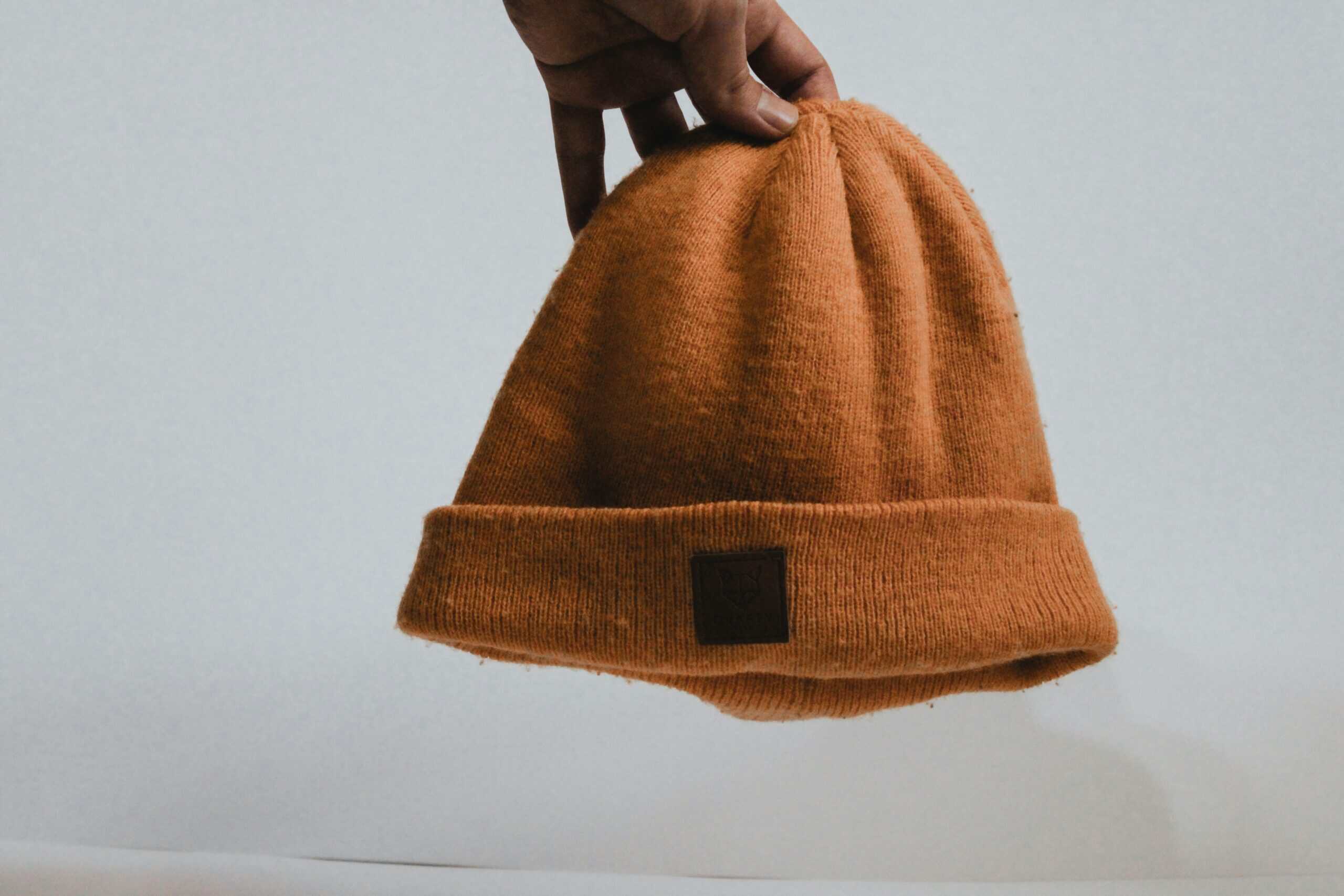
Why does an ordinary hat become unbearable during an attack? Because the skin itself turns tender, and the best soft beanies for head sensitivity work by removing every seam, band and point of pressure rather than by adding warmth or compression. Seamless knit beanies are the ones most people get on with.
This is the opposite of a compression cap. Nothing is meant to squeeze.
The goal is covering the head without the head noticing. Our guide to why your scalp hurts during a migraine explains what is happening underneath.
Medical Disclaimer
This article is research, not medical advice. A soft hat is a comfort measure and does nothing to the underlying cause. Scalp tenderness that is new, one-sided and persistent, or paired with jaw pain or vision changes, should be assessed, so see a doctor rather than only changing what you wear.
Soft Beanie Types at a Glance
| Type | Pressure | Warmth | Seams | Best Use |
|---|---|---|---|---|
| Seamless knit beanie | Very low | Moderate | None at the crown | Everyday wear |
| Bamboo or modal sleep cap | Lowest | Low | Flat or none | Sleeping and resting |
| Chemo and recovery cap | Very low | Low to moderate | Designed seamless | Softest available |
| Loose slouch beanie | None at the brow | Moderate | Usually one | Allodynia flares |
| Merino without an elastic band | Low | Highest | Flat knit | Cold weather |
| Satin-lined beanie | Low | Moderate | Lined, no rub | Scalp and hair comfort |
How We Picked the Best Soft Beanies for Head Sensitivity
We compared hat constructions rather than named products, because the specific items rotate constantly while the construction choices stay the same.
Four things decided the order: how much pressure the hat applies at the brow and crown, whether seams sit against the scalp, how the fiber feels on tender skin, and how warm it runs.
We have not published fabric weights or fiber percentages. Those differ by product and would imply a precision this category does not have.
On the clinical side, the American Migraine Foundation describes cutaneous allodynia, where ordinary touch becomes painful, as a common feature during attacks, and Cleveland Clinic lists scalp tenderness among the symptoms people report alongside head pain. That is the reason a normal hat stops working, and it is why pressure matters more than fabric here.
1. Seamless Knit Beanies, Best Overall
Why It Stands Out
Circular-knit beanies are made as one continuous tube, so there is no seam running over the crown. That single construction detail removes the most common complaint.
A crown seam sits exactly where many people feel tenderness most. Even a flat one becomes noticeable after an hour.
These also stretch evenly rather than pulling tight at a sewn line, which keeps the pressure low and consistent all the way around.
Worth Knowing
Seamless and flat-seam are used loosely in listings. Look at photos of the top of the hat rather than trusting the description.
Many still have a folded brim, which doubles the fabric and adds pressure at the forehead. Unfolding it or choosing an unlined style avoids that.
Best for everyday wear and as a first purchase in this category. Our hair accessories that do not trigger headaches picks follow the same principle.
Check Price on Amazon2. Bamboo and Modal Sleep Caps, Best for Sleeping
Why It Stands Out
These are thin, very smooth caps cut to sit flat against the head. They are the lightest option here and the least noticeable once on.
Bamboo viscose and modal both have a cool, slick handle that moves over skin rather than catching on it. On tender skin that difference is immediate.
They also stay put through the night without a gripping band, which is what separates a sleep cap from a regular beanie.
Worth Knowing
Warmth is minimal, so these are for comfort and light coverage rather than cold rooms.
Thin knits also wear out faster. Expect to replace them more often than a wool beanie.
Best for sleeping, resting and lying down during an attack. See our guide to how to sleep with migraine for the rest of the setup.
Check Price on Amazon3. Chemo and Recovery Caps, Best Softest Option
Why It Stands Out
Caps made for medical recovery are designed from the start for sensitive scalps. Seamless construction and very soft fiber are the baseline rather than a feature.
They also avoid elastic entirely in most cases, using fabric stretch to stay on. Nothing grips.
Because the intended wearer may have no hair, nothing in the design assumes a cushion between the fabric and the skin.
Worth Knowing
Styling leans plain and close-fitting, which some people find conspicuous and others prefer. Sizing also runs snug to the head by design.
Prices are higher than a basic beanie, because the construction is more careful.
Best for the most tender scalps and for anyone who has given up on ordinary hats. Our guide to gentle shampoos for scalp tenderness addresses the same sensitivity from another angle.
Check Price on Amazon4. Loose Slouch Beanies, Best Zero Pressure at the Brow
Why It Stands Out
A slouch beanie is cut long and worn loose, so the fabric drapes rather than gripping. The brow carries almost no pressure at all.
Pressure at the forehead and temples is what makes fitted hats intolerable during a flare. A slouch removes it without removing the coverage.
The excess length also means you can push it back off the forehead entirely while keeping the crown covered.
Worth Knowing
A loose hat moves. In wind or during activity it will shift and need resetting, which is its own irritation.
Many slouch styles still have a ribbed band, so check that the band is soft and unlined rather than elasticated.
Best for days when any pressure is too much. Skip it if you need a hat that stays put without thought.
Check Price on Amazon5. Merino Beanies Without an Elastic Band, Best for Cold Weather
Why It Stands Out
Fine-gauge merino is warm, light and far less scratchy than ordinary wool. For cold-triggered symptoms, warmth without weight is the useful combination.
Merino also manages moisture well, so the hat does not become damp and cold after walking. A damp hat is uncomfortable in its own right.
Versions knitted without an elastic band hold shape through the knit itself, which keeps the pressure even.
Worth Knowing
Coarse wool is a problem on tender skin, and fiber diameter varies a lot between products. Look for superfine or extrafine descriptions.
Merino needs gentler washing than synthetic, and it felts if handled roughly.
Best for cold weather and anyone whose attacks follow temperature drops. Our space heaters for cold-triggered migraine picks cover the indoor half.
Check Price on Amazon6. Satin-Lined Beanies, Best for Scalp and Hair Comfort
Why It Stands Out
A satin lining lets the hat slide over the scalp and hair instead of dragging on it. Friction is a real source of irritation when the skin is tender.
The lining also means a warmer outer knit can be used without that fiber ever touching the skin. You get the warmth and none of the texture.
Hair stays smoother as well, which matters if brushing out tangles is itself uncomfortable afterward.
Worth Knowing
A lining adds a layer and therefore a little pressure. Look for a loose fit rather than a fitted one.
Satin lining is sometimes stitched in at the brim, which puts a seam at the forehead. Check how the lining is attached.
Best for anyone bothered by fabric dragging on the scalp or hair. Our migraine headbands and compression caps roundup covers the deliberate-pressure products, which is the opposite approach.
Check Price on AmazonWhat to Look For in a Soft Beanie
No seam over the crown
This is the detail that decides most of it. Circular-knit and purpose-made recovery caps are the reliable routes to it.
No elastic in the band
Elastic concentrates pressure in a ring at the brow. Fabric stretch holds a hat on perfectly well without it.
Fiber that slides rather than catches
Bamboo, modal, satin linings and superfine merino all move over skin. Coarse wool and stiff acrylic catch on it.
A size you can wear loose
Sizing up is usually better here than getting a snug fit. Coverage without tension is the whole point.
Soft Hats or Compression Caps?
What a soft beanie does
It covers and warms the head while applying as close to no pressure as possible. That suits allodynia, where touch itself is the problem.
What a compression cap does
Compression caps apply deliberate even pressure, often combined with cold, because some people find that pressure relieving rather than painful. The two are opposite approaches, and which one suits you is worth finding out before spending on either. Our ice caps and cold therapy picks cover that side.
Common Misconceptions
That softer fabric is enough
Pressure matters more than fabric. A very soft hat with an elastic band still hurts at the brow.
That a hat helps the headache
It makes being cold or exposed more bearable, which is worth something during an attack. It does not act on the pain.
That scalp tenderness is always migraine
Tenderness has other causes, including nerve irritation and inflammatory conditions. Our guide to occipital neuralgia covers one of them.
That a looser hat always stays on
It does not, and a hat you keep adjusting becomes its own irritation. A seamless hat in the right size beats a very loose one.
Worth reading next: our guides to what a migraine feels like, wide brim hats for light sensitivity, and scalp massagers.
Best Soft Beanies for Head Sensitivity FAQ
What are the best soft beanies for head sensitivity?
Seamless circular-knit beanies suit most people, because they remove the crown seam and spread pressure evenly. Bamboo or modal sleep caps are the lightest option for resting, and purpose-made recovery caps are the softest available. All of these are comfort measures rather than treatment.
Why does wearing a hat hurt during a migraine?
Many people develop cutaneous allodynia during an attack, where ordinary touch and light pressure become painful. A hat’s band, seams and weight all become sources of pain that would be unnoticeable otherwise. The hat has not changed, the skin’s response has.
Are tight or loose hats better for a sensitive scalp?
Loose, in almost every case, because the problem is pressure rather than coverage. The exception is people who find deliberate even compression relieving, which is what compression caps are for. Trying a soft loose hat first is the cheaper experiment.
What fabric is best for a tender scalp?
Bamboo viscose, modal and satin linings slide over skin with very little friction. Superfine merino is the best choice when warmth matters. Coarse wool and stiff acrylic are the ones people most often abandon.
Can a beanie help with cold-triggered headaches?
Keeping the head warm is reasonable if cold reliably precedes your attacks, and plenty of people do it. Whether it prevents anything is individual, and it is better treated as comfort than as prevention. Our guide to whether weather change triggers migraines covers the evidence.
Do seamless beanies really make a difference?
For people sensitive to pressure, the crown seam is one of the most commonly reported irritants, so removing it is a meaningful change. If your sensitivity is mainly at the brow instead, a loose fit or an unfolded brim matters more than the seam.
Can I sleep in a beanie?
Yes, and thin sleep caps are made for it. Choose something without elastic and without seams, since anything you lie on will press into the scalp. A regular fitted beanie is usually too much for a whole night.
When should I see a doctor about scalp tenderness?
See a doctor if scalp tenderness is new and persistent, stays on one side, comes with jaw pain when chewing, vision changes or fever, or appears for the first time later in life. Those patterns need assessment rather than a change of hat, and sudden severe head pain needs urgent care.
Sources
- American Migraine Foundation, Cutaneous Allodynia and Migraine. americanmigrainefoundation.org
- Cleveland Clinic, Migraine Symptoms and Causes. my.clevelandclinic.org
- Mayo Clinic, Giant Cell Arteritis Symptoms. mayoclinic.org
- National Institute of Neurological Disorders and Stroke, Headache Information. ninds.nih.gov
