
Neck tension and migraine are connected in a way that confuses people, because neck pain frequently arrives as part of an attack rather than causing one. It shows up in the premonitory phase for a lot of people, hours before any head pain.
That matters for what cold does. Applied to genuine muscle tension it may loosen things; applied to neck pain that is part of the attack itself, it is a comfort measure rather than a fix. Our note on migraine cooling pads covers the practical side.
Medical Disclaimer
This is general information, not medical advice. Neck pain has many causes and persistent or severe neck pain needs medical assessment rather than self-treatment. Neck pain with fever, stiffness preventing you touching chin to chest, weakness, numbness, or following an injury requires immediate medical attention.
Quick Answer
Cold on the back of the neck helps many people during an attack. Whether it addresses a cause or a symptom depends on whether the neck tension came first or arrived with the migraine.
Neck Pain Is Often Part of the Attack
Neck stiffness is a recognized premonitory symptom, appearing alongside yawning, mood changes, and fatigue in the hours before pain begins.
Someone who notices neck tension and then develops a migraine reasonably concludes the tension caused it. The alternative is that the attack was already underway and the neck pain was one of its earliest signs.
Studies looking at neck pain in migraine have found it to be extremely common, and frequently present without any identifiable neck problem.
That is worth knowing because it changes what to expect. Treating neck tension that is a symptom will not prevent the attack, though it may make it more bearable. Our note on spotting patterns in tracking data covers separating the two.
What I Do
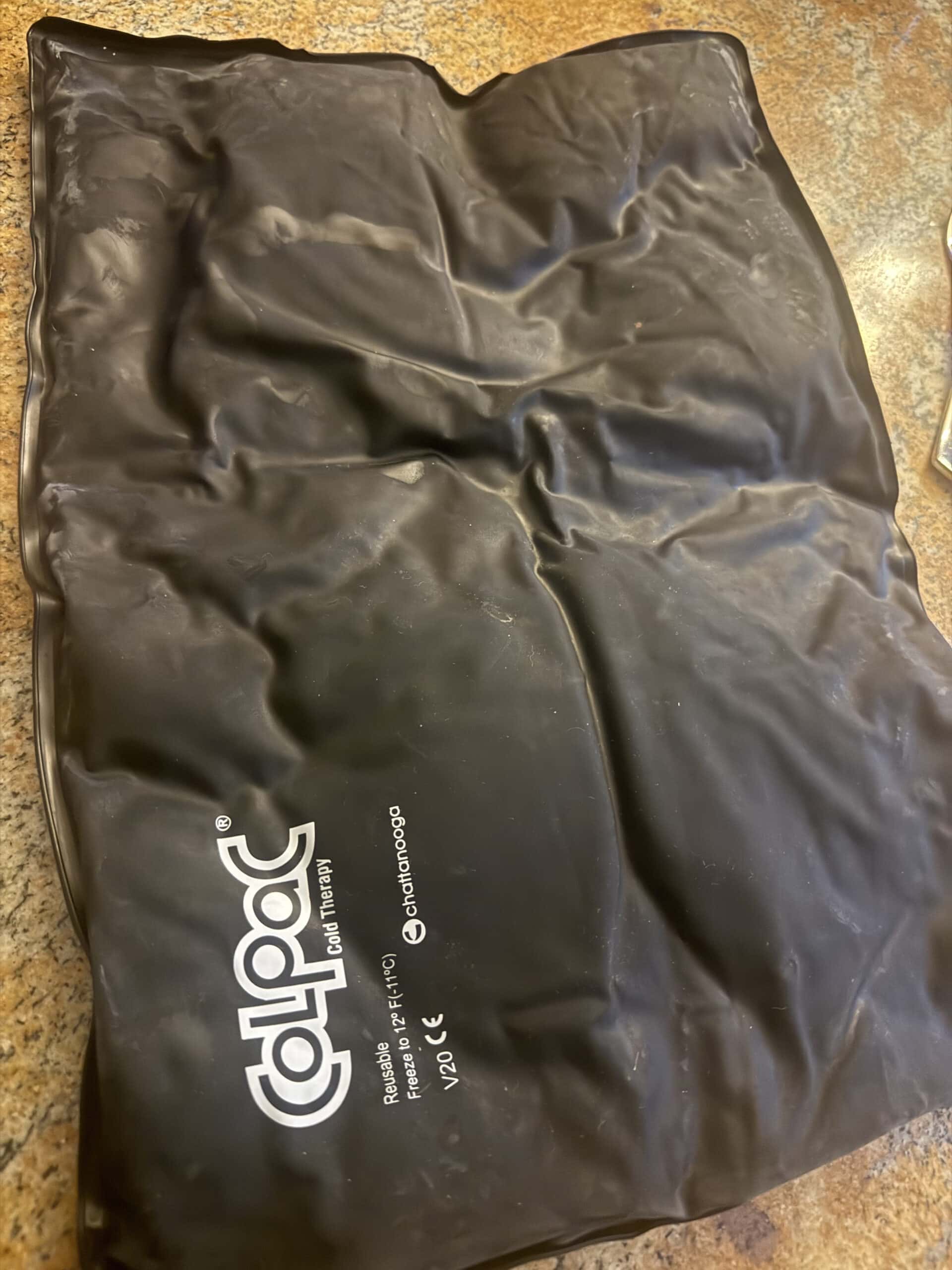
I use a gel pack from the freezer on the top back of my neck for fifteen to twenty minutes, and specifically when the problem is tension in my head and upper neck rather than for every attack.
That selectivity is the part worth mentioning. I am not putting cold on everything; I reach for it when the tension is the dominant feature.
Separately, I use a heat wrap for muscle tension and a foam roller for tension at the back of my head. Those are different tools for what feels like a different problem, and I keep them apart rather than combining them.
Whether the tension is causing the attack or arriving with it, I honestly cannot tell from the inside. Our roundup of warm compresses covers the heat option.
Why Cold Might Work on the Neck
Cold reduces perceived pain by providing a competing sensation, which is a recognized mechanism independent of any effect on the underlying cause.
There is also research on cold applied to the neck affecting blood flow in vessels near the surface, though findings vary and this remains an unsettled area.
For genuine muscle tension, cold is generally associated with acute inflammation while heat is associated with loosening tight muscle. That is the conventional split, and it suggests heat may suit chronic muscular tightness better.
The practical position is that both are cheap and low-risk, individual response varies considerably, and trying each on separate occasions tells you more than any general guidance will.
Tension That Builds Before an Attack
The pattern a lot of people describe is neck tightness appearing gradually over hours, then a migraine following. That sequence is what makes the tension feel causal.
Research on premonitory symptoms complicates it. Neck stiffness appears in that phase frequently enough to be considered a recognized early feature, which means the sequence people observe is equally consistent with the attack having already started.
There is no way to tell from the inside which is happening, and honestly I cannot tell with mine either. The tension and the attack arrive close enough together that ordering them is guesswork.
Where it becomes useful is as a warning. If neck tension reliably precedes your attacks, that is information rather than a nuisance, and treating an attack early is a recognized approach worth discussing with a doctor.
Tracking it with times rather than just dates is what separates the two explanations over enough weeks. Our roundup of migraine journals covers recording it.
Cold Versus Heat for the Neck
| Cold | Heat | |
|---|---|---|
| Conventionally suits | Acute pain, inflammation | Muscle tightness, stiffness |
| Effect | Numbs, competing sensation | Loosens, increases blood flow |
| Typical duration | 15 to 20 minutes | Longer, lower intensity |
| Risk | Skin damage if too direct | Burns if too hot |
Neither is right in general, and most people find one suits them and use it. Our comparison of ice caps and cooling pads covers the cold options.
What I Keep Separate
I have three things I use for tension and I do not combine them, which was not a deliberate system so much as what settled out over time.
The gel pack goes on the top back of my neck when the tension is part of an attack. That is the one tied to migraine specifically rather than to muscle tightness generally.
A heat wrap is what I use for muscle tension, and it is a separate situation with a separate tool. I do not alternate between hot and cold on the same episode.
A foam roller handles tension at the back of my head, which is different again and more mechanical than either compress.
Whether keeping them separate is optimal I have no idea. It is simply what I do, and having three distinct responses to three distinct sensations has been more useful than treating everything as one problem. Our roundup of cooling towels covers another cold option.
Posture and Position
Sustained forward head posture at a desk, on a phone, or in bed loads the muscles at the back of the neck, and that is a genuine source of tension separate from migraine. Whether that loading amounts to a cause is covered in does posture cause migraines.
Where neck tension is postural, cold treats the symptom while the cause continues, and adjusting screen height and taking breaks does more than any compress.
Sleep position matters too, and a pillow that leaves the neck unsupported produces morning neck tension reliably.
That is worth ruling out before concluding neck tension is migraine-related, because it is both common and fixable. Our note on creating a migraine-friendly workspace covers the desk side.
When Neck Pain Needs a Doctor
Neck stiffness severe enough that you cannot touch chin to chest, particularly with fever, is a medical emergency and needs immediate attention.
Neck pain following any injury, or accompanied by weakness, numbness, or tingling in the arms, needs prompt assessment rather than a compress.
Persistent neck pain that does not resolve, or that is getting worse over weeks, warrants investigation regardless of whether you also get migraines.
And a new pattern of neck pain with headache in someone who has not had it before is worth a doctor’s opinion rather than self-management. Our roundup of cervical traction devices covers tools to discuss with a clinician.
Cold and Neck Tension FAQ
Does cold help neck tension with migraine?
Many people find it does during an attack, including me. Whether it addresses a cause or a symptom depends on whether the neck tension preceded the attack or arrived as part of it.
Is my neck tension causing the migraine?
Possibly not. Neck stiffness is a recognized premonitory symptom appearing hours before pain, so tension followed by an attack may mean the attack was already underway.
Where exactly should the cold go?
Wherever the tension actually sits. I use the top back of my neck. Following generic placement advice when your tension is elsewhere wastes the intervention.
Cold or heat for a tight neck?
Cold is conventionally associated with acute pain and heat with muscle tightness. I use cold for attack-related tension and heat separately for muscular tension, and individual response varies enough that trying both is reasonable. Heat has its own place in the same routine, and epsom salt soaks cover the warm end of tension relief.
How long should I apply it?
Around fifteen to twenty minutes, with a barrier between a frozen pack and your skin. Longer adds risk without adding benefit.
Could my neck pain just be posture?
Frequently, and it is worth ruling out first. Forward head posture at a desk or on a phone loads the neck muscles directly, and an unsupportive pillow produces morning tension reliably.
Will treating my neck stop the migraines?
Not if the neck pain is part of the attack rather than a trigger. It may make attacks more bearable, which is worthwhile and different from prevention.
When should I see a doctor?
Urgently for neck stiffness with fever, inability to touch chin to chest, weakness, numbness, or pain after an injury. Otherwise for persistent or worsening neck pain, or a new pattern of neck pain with headache.
Sources
- American Migraine Foundation. Neck pain and migraine. https://americanmigrainefoundation.org/resource-library/
- National Institute of Neurological Disorders and Stroke. Migraine information. https://www.ninds.nih.gov/health-information/disorders/migraine
- American Academy of Orthopaedic Surgeons. Neck pain guidance. https://orthoinfo.aaos.org/
