
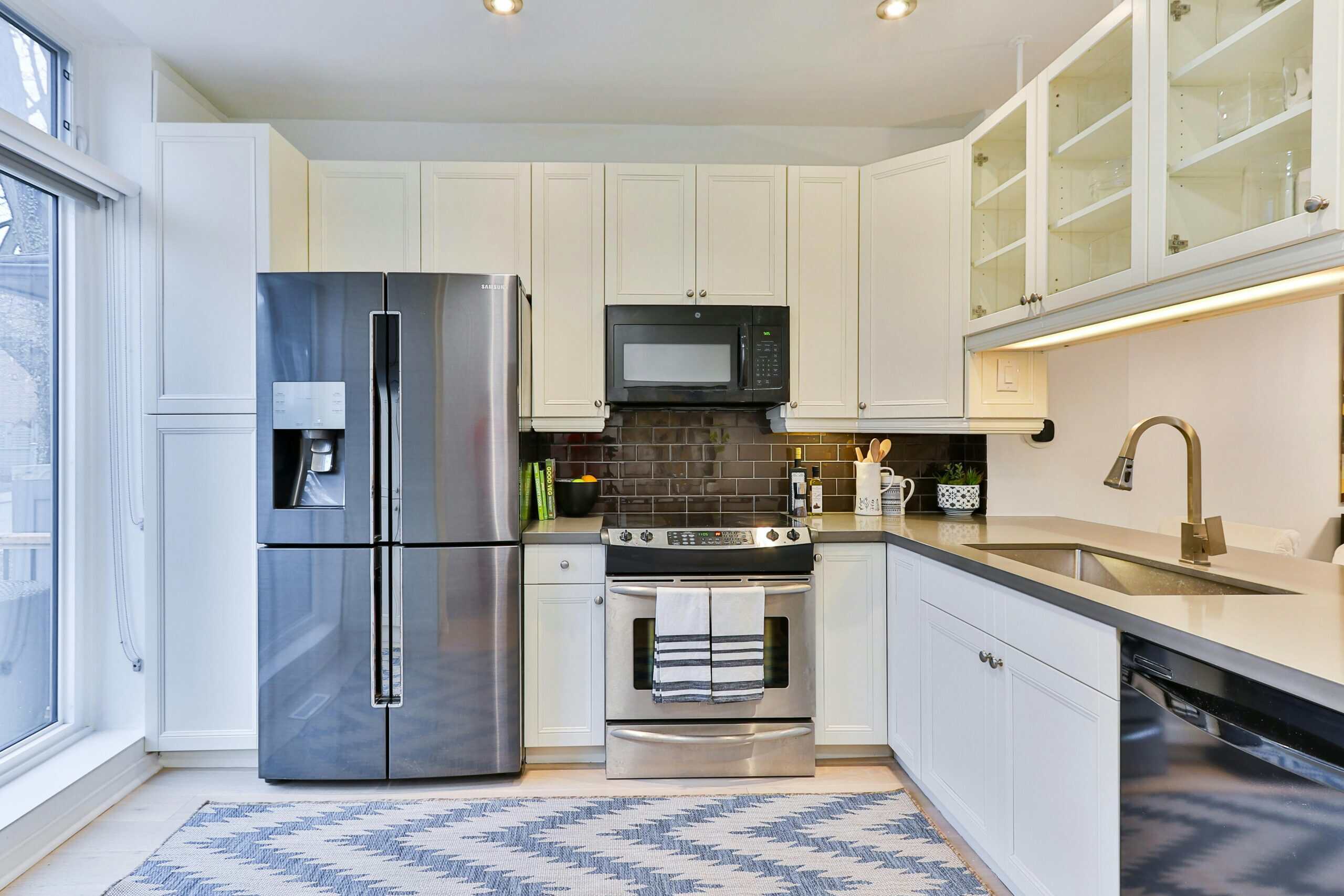
Household appliances produce sound you cannot leave, and during sound sensitivity a fridge compressor or an extractor fan becomes genuinely difficult. Replacing everything is not realistic, and knowing which appliances dominate the noise and which have quiet alternatives makes the problem tractable.
| Appliance | Typical range | Quiet threshold |
|---|---|---|
| Dishwasher | 44 to 55 dB | Under 44 dB |
| Refrigerator | 32 to 47 dB | Under 38 dB |
| Range hood | 50 to 70 dB | Under 55 dB |
| Vacuum cleaner | 65 to 80 dB | Under 65 dB |
| Blender | 85 to 95 dB | Under 75 dB with enclosure |
| Washing machine | 50 to 75 dB | Under 55 dB washing |
Medical Disclaimer
This article covers appliance selection rather than medical advice. It does not diagnose or treat anything. Talk to your doctor about sound sensitivity, since phonophobia has several possible causes. Seek immediate medical care for a sudden severe headache unlike your usual pattern, or one with fever, confusion, weakness, vision loss, or a stiff neck.
Key Points
- Decibel scale is logarithmic, so ten fewer decibels sounds roughly half as loud
- Fridges run constantly, which makes them worth prioritizing
- Placement changes perceived noise as much as the appliance does
- Intermittent sounds disturb more than continuous ones
- Delay timers move noise to when you are out
- Manufacturers state decibel figures inconsistently
Related: quiet vacuum cleaners for sound sensitivity.
Related: kitchen lighting for migraine sufferers.
How We Picked
Stated decibel ratings came first, since appliances that publish them tend to be the ones designed with noise in mind.
Run time ranked next. A fridge running continuously matters more than a blender used for thirty seconds, even though the blender is louder.
Scheduling counted. Delay timers move dishwasher and laundry noise to hours when nobody is home, which costs nothing extra.
We excluded appliances marketed as quiet without a stated figure, since the word alone carries no meaning across manufacturers.
Low-Decibel Dishwashers
Why It Stands Out
Dishwashers run for an hour or more and sit in the room people spend evenings in. The gap between a 55 decibel machine and a 42 decibel one is the difference between an audible presence and something you forget is running.
Quieter models achieve it through insulation, better pump isolation, and slower wash cycles rather than a single feature.
Delay start on most machines moves the cycle to overnight or while you are out.
Worth Knowing
Quieter machines often run longer cycles, which is part of how they stay quiet.
Installation affects the result. A machine not properly leveled or touching a cabinet transmits vibration into the units around it.
Worth prioritizing if your kitchen opens onto living space. Skip if the dishwasher sits behind a door you close, and workspace noise sits in creating a migraine-friendly workspace.
Quiet Refrigerators
Why It Stands Out
A fridge is the only appliance running twenty-four hours a day. Its compressor cycling on and off is intermittent, which disturbs more than a constant sound at the same level.
Inverter compressors run continuously at variable speed rather than switching on and off, which removes the cycling that people notice.
Models rated below 38 decibels are quiet enough to be inaudible in an adjoining room.
Worth Knowing
Replacing a working fridge for noise alone is an expensive decision. Placement changes, an anti-vibration mat, and leveling all help for far less.
Fridges get louder as they age, and a noisy old one is sometimes reporting a fault rather than a design limit.
Worth considering when replacing anyway. Skip replacing purely for noise before trying placement fixes.
Quiet Range Hoods
Why It Stands Out
Extractor fans are among the loudest things in a kitchen and they run while you are standing directly underneath them.
Models with external or remote-mounted blowers put the motor outside the living space, which cuts perceived noise substantially.
Variable speed lets you run a low setting for light cooking rather than the maximum for everything.
Worth Knowing
Ducting affects noise as much as the unit. Narrow, long, or sharply bent duct runs create turbulence that adds sound.
Sone ratings are common here rather than decibels, and lower sones mean quieter.
Worth doing if you cook often and the kitchen is open plan. Skip if ducting cannot be improved.
Quiet Air Purifiers and Fans
Why It Stands Out
Air purifiers run for hours in bedrooms and offices, so a quiet one matters more than its peak performance figure.
DC motor fans run considerably quieter than AC ones at the same airflow, and they offer more speed steps so you can find a genuinely low setting.
Bladeless and larger slow-turning fans move the same air with less noise than small fast ones.
Worth Knowing
Sleep modes often reduce noise by reducing airflow, so a purifier on its quiet setting cleans considerably less.
Some purifiers produce a high-pitched electronic whine separate from fan noise, which is worse for sensitivity than a broader sound.
Worth doing for anything running overnight. Skip units with no low-speed setting, and air quality sits in air purifiers for migraine relief.
Anti-Vibration Mats and Pads
Why It Stands Out
Much of what you hear from a washing machine or a fridge is vibration transmitted into the floor and the cabinets around it rather than airborne sound.
Rubber anti-vibration pads under the feet break that path, which reduces noise reaching adjacent rooms considerably.
They cost very little compared with replacing the appliance and take minutes to fit.
Worth Knowing
They do nothing about airborne noise like a compressor hum in the same room. This addresses structural transmission specifically.
Pads compress over time and need replacing, and cheap foam flattens within a year.
Worth trying before any replacement. Skip if the noise is clearly airborne rather than through the floor.
Blender Enclosures and Sound Shields
Why It Stands Out
Blenders are the loudest thing in most kitchens, and an acrylic sound enclosure cuts the peak noticeably.
Unlike most items here, this addresses a short intense sound rather than a continuous one, which is exactly the kind that startles during sensitivity.
Enclosures also work with the blender you already own rather than requiring a replacement.
Worth Knowing
They take substantial counter or cupboard space, which is a real cost in a small kitchen.
Some blenders sold as quiet include their own shield, which is a better arrangement than an aftermarket box.
Worth doing if you blend daily. Skip if counter space is tight and you blend occasionally.
What to Look For
Check for a stated figure
Manufacturers who publish decibel or sone ratings designed for it. Products calling themselves quiet with no number tell you nothing.
Prioritize by run time
A fridge running all day matters more than a louder appliance used for a minute. Fix the constant sounds first.
Try placement before replacement
Anti-vibration pads, leveling, and moving an appliance away from a shared wall all cost a fraction of a new machine.
Use delay timers
Moving a dishwasher or laundry cycle to when you are out costs nothing and removes the noise entirely.
Reading Decibel Figures Honestly
Published numbers let you compare products and they carry assumptions worth knowing.
Measurements are usually taken at a set distance in a controlled room. Your kitchen has hard surfaces and reflections, so the same appliance reads higher in practice.
Manufacturers also quote the quietest mode. A dishwasher rated at 44 decibels may hit that only on an eco cycle and run louder on a normal wash.
Sone ratings appear on range hoods and fans instead. One sone is roughly the sound of a quiet refrigerator, and the scale is closer to how loudness feels than decibels are.
Frequency matters and never appears on a spec sheet. A high-pitched whine at 40 decibels can be far harder to tolerate than a low hum at 45, particularly during sensitivity.
Which means published figures narrow the shortlist rather than settling it. Hearing an appliance running, in a showroom or a friend’s kitchen, tells you something the number cannot.
Continuous Noise Against Intermittent
Continuous
A steady hum fades into the background for most people and becomes part of the room. It is easier to tolerate at a given level than something starting and stopping.
Intermittent
Compressors cycling, fans switching speed, and machines completing cycles all pull attention back. That is why a quieter appliance that cycles can feel worse than a louder one that does not.
Common Misconceptions
That decibels are linear
The scale is logarithmic. A ten decibel reduction sounds roughly half as loud, which is why a 45 decibel dishwasher is a substantial improvement on a 55 decibel one.
That quiet marketing means anything
Without a stated figure the word is meaningless. Comparing published numbers is the only way to compare products.
That you need to replace everything
Placement, leveling, anti-vibration pads, and scheduling handle a large share of household noise for very little money.
That appliance noise is only a comfort issue
Sound sensitivity during and between attacks is a recognized part of migraine. Persistent phonophobia is worth raising with a doctor rather than only managing with purchases, and triggers generally sit in common migraine triggers.
Worth reading next: soundproofing a room covers blocking sound from outside, earplugs cover the personal option, and sound masking covers covering what you cannot remove. For the wider picture, trigger management and tracking patterns are the relevant guides, and quieting a room during a migraine, and whether noise is a trigger or a symptom.
Frequently Asked Questions
What decibel level counts as quiet for an appliance?
Under 44 decibels for a dishwasher and under 38 for a fridge are the usual thresholds. The scale is logarithmic, so ten fewer decibels sounds roughly half as loud.
Which appliance should I address first?
The one running longest rather than the loudest. A fridge cycling all day affects more hours than a blender used for a minute.
Do anti-vibration pads help?
For noise transmitted through floors and cabinets, considerably. They do nothing about airborne sound in the same room, so they suit washing machines and fridges best.
Why does my quiet fridge still bother me?
Cycling. A compressor switching on and off pulls attention in a way a constant sound does not, which is why inverter compressors running continuously feel quieter.
Are quiet appliances worth the extra cost?
For anything running long hours in a space you occupy, often. For occasional-use appliances, placement and scheduling usually achieve more per dollar.
What can I do without buying anything?
Level appliances properly, move them off shared walls, use delay timers to run cycles while you are out, and close doors between you and the source.
When should I see a doctor about sound sensitivity?
If it persists between attacks, worsens, or comes with hearing changes. Phonophobia has several possible causes and is worth assessing rather than only managing with appliance choices.
Sources
- American Migraine Foundation. Sensory Sensitivity and Migraine. https://americanmigrainefoundation.org/
- Mayo Clinic. Migraine: Symptoms and Causes. https://www.mayoclinic.org/diseases-conditions/migraine-headache
- American Headache Society. Phonophobia in Migraine. https://americanheadachesociety.org/
