
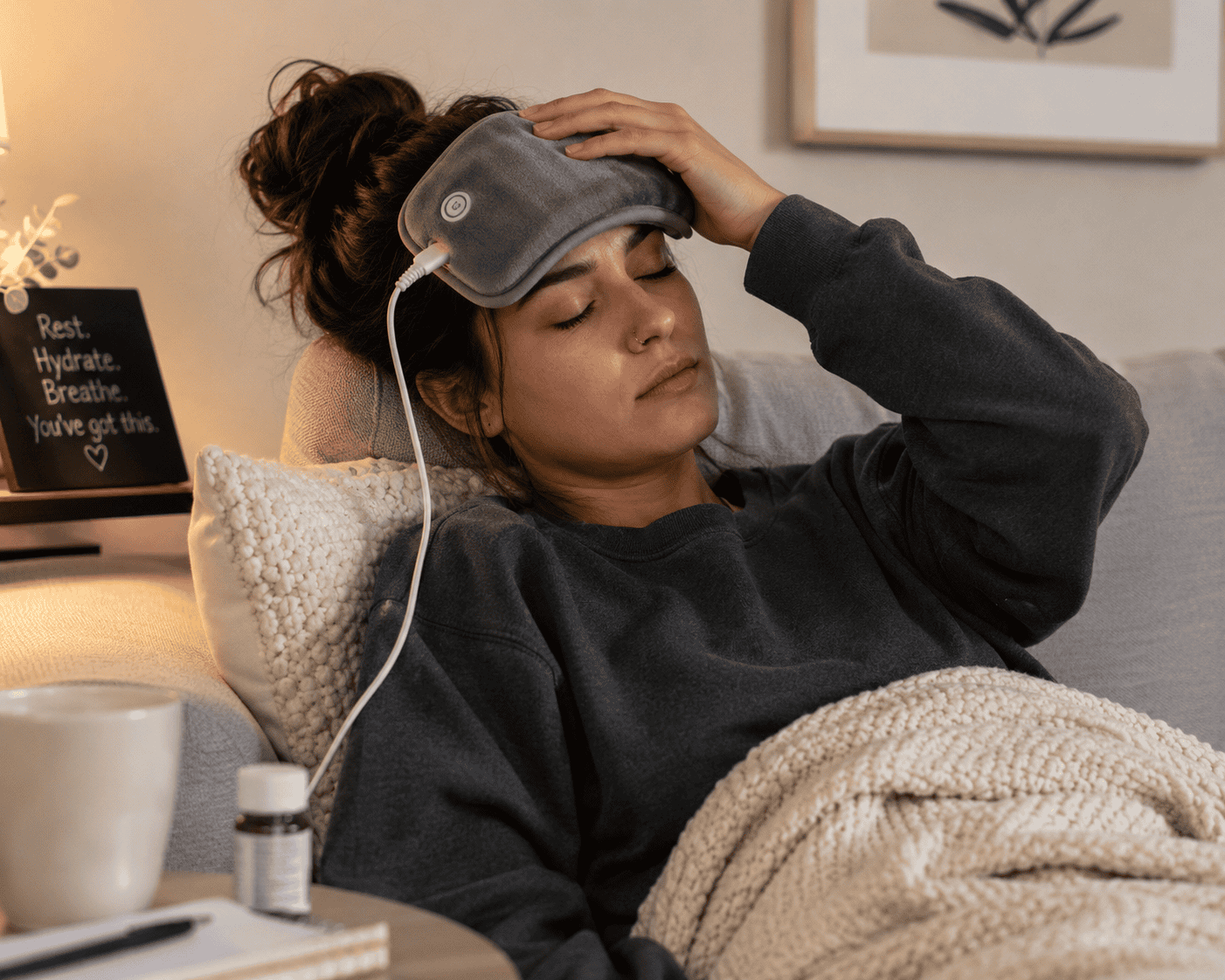
Tension-type migraines respond to heat in a way that cold therapy alone often cannot match. Where ice caps and cooling pads soothe the typical throbbing migraine, heat targets the muscle tightness across the back of the neck, the upper trapezius, and the base of the skull that drives tension-pattern attacks. A well-sized heating pad relaxes those muscles and can interrupt the cycle before it escalates. For a related option, see our guide to warm compresses for tension relief.
This guide compares five heating pads selected specifically for tension migraine relief: extra-long pads for neck and shoulder coverage, microwaveable options for portable use, weighted pads that combine heat with pressure, and infrared models for deeper penetration. Picks span budget to premium tiers.
As someone who gets migraines, I want heat that reaches the neck and upper back without sliding off, with a reliable auto-shutoff. The picks below were selected with that bar in mind.
Quick Verdict:
- Best for: migraine sufferers whose attacks feature neck or upper-back muscle tightness, or who notice tension migraines coming on after long screen sessions.
- Skip if: your migraines worsen with heat or your attacks are exclusively throbbing/sharp without tension component; cold therapy may suit you better.
How We Chose These Heating Pads
Selection focused on coverage area suitable for neck and upper shoulders, multiple temperature settings, automatic shutoff for safety, washable covers, and durability past months of regular use. Generic backup pads were excluded; the picks here are sized and shaped for migraine-relevant areas.
For broader migraine management context, see neck massagers and cervical traction devices. Heat works well combined with these for tension-driven attacks. For the cold-therapy contrast, see best ice caps and cold therapy.
Decision Matrix: Which Heating Pad for Which Migraine
| Use Case | Type | Top Pick |
|---|---|---|
| Bedside use, plug-in | Electric XL | Sunbeam XL Microplush |
| Travel or portable use | Microwaveable | Bed Buddy Hot & Cold |
| Pressure + heat combo | Weighted | Calming Heat Weighted |
| Deep tissue tension | Infrared | UTK Far Infrared |
| Budget pick | Standard electric | PureRelief XL |
1. Sunbeam XL Microplush Heating Pad: Best Overall Pick
The Sunbeam XL covers neck, shoulders, and upper back in one piece, which solves the typical issue of a pad sliding off during use. Six heat settings allow you to dial in the right intensity. The auto-shutoff fires at two hours, the cover is removable and washable, and the pad lays flat across the upper trapezius without bunching.
The microplush cover is the comfort detail that separates this from generic pads. Direct skin contact with rough pad surfaces is itself a mild irritant, and the soft cover removes that issue. The cord length is adequate for bedside use without needing extension cables. Build quality is reliable; many users report the same unit lasting several years of regular use.
Best for
Bedside use during tension migraine attacks; the XL size covers all the relevant tension areas at once.
Skip if
You want a portable or travel option; this is a corded electric pad and not built for moving around.
Check Price on Amazon2. Calming Heat Weighted Heating Pad: Best Pressure-Plus-Heat Option
The Calming Heat combines a weighted body (around 2 pounds) with electric heat. The added pressure approximates the calming effect of a light hand on the neck or shoulders, which suits migraine sufferers who find acupressure mats helpful. Three heat settings and three vibration settings give multiple intervention options.
The vibration feature is the differentiator. For tension migraines with significant muscle tightness, gentle vibration combined with heat can produce more relief than heat alone. The weighting comes from glass beads distributed evenly through the pad rather than from a solid heavy element, which keeps the weight feel gentle rather than oppressive.
Best for
Sufferers who find weighted blankets helpful; tension migraine with anxiety component; users who respond to pressure plus heat better than heat alone.
Skip if
You find weighted products uncomfortable; the weight is noticeable and not adjustable.
Check Price on Amazon3. UTK Far Infrared Natural Jade Heating Pad: Best Deep-Tissue Option
UTK’s far infrared pad uses natural jade and tourmaline stones over heating elements. Far infrared penetrates deeper into muscle tissue than standard electric heat, which suits chronic tension migraine sufferers whose neck and shoulder tightness builds over weeks rather than hours. The temperature range goes higher than standard pads, which matters for some users.
The jade and tourmaline stones add weight (around 5 pounds total), which creates a pressure effect alongside the heat. The pad is firmer than typical electric pads and contours less to the body, which is the main trade-off. Users typically place it on a chair back or recliner for sustained neck-and-shoulder application rather than draping over the body.
Best for
Chronic tension migraine sufferers; deep muscle tension that does not respond to standard heating pads; users who tolerate higher heat intensity.
Skip if
You want budget-friendly basic warmth; this is several times the price of standard electric pads.
Check Price on Amazon📑 Recommended Read: Heat loosens tight muscles; active massage releases them. For tension migraine, pairing a heating pad with targeted muscle work on the neck and upper traps produces better relief than either alone. See the best neck massagers for migraine relief.
4. PureRelief XL King-Size Heating Pad: Best Budget Pick
The PureRelief XL offers similar coverage area to the Sunbeam at a lower price. Six heat settings, two-hour auto-shutoff, and a soft microplush cover. Build quality is more basic than premium picks but the core function works reliably for migraine sufferers who do not need additional features.
The price gap to the Sunbeam covers small details: stitching durability, cover material thickness, cord build. For users who treat heating pads as occasional-use items, those details matter less. For daily heavy users, the longer-term reliability gap may justify the Sunbeam upgrade.
Best for
Budget-conscious buyers who want XL coverage without paying for premium features; first-time heating pad users testing if heat helps.
Skip if
You want long-term durability under heavy daily use; build quality matches the price point.
Check Price on Amazon5. Bed Buddy Hot & Cold Pack: Best Portable Option
The Bed Buddy is a microwaveable pad filled with natural grain and lavender. It heats in the microwave and stays warm for a session of several minutes. The grain conforms to the shape of the neck or shoulders, and the lavender adds a mild aromatherapy element. Also works as a cold pack from the freezer.
The non-electric format means no cord, no shutoff worry, and full portability. The trade-off is reheating: longer sessions require returning to the microwave every half-hour or so. For migraine sufferers who travel or want a low-tech option for the office, this fills a gap that electric pads cannot.
Best for
Travel, office use, or anyone wanting a non-electric option; sufferers who use both hot and cold therapy.
Skip if
You want sustained heat for hours; this needs reheating every half-hour or so.
Check Price on AmazonWhen Heat Helps and When It Hurts
Heat suits tension-pattern migraines where the dominant feature is muscle tightness across the neck, shoulders, or base of the skull. Heat increases blood flow, relaxes muscle fibers, and reduces the inflammatory tightness that drives tension-pattern attacks. The Mayo Clinic notes heat therapy as a non-pharmacological option for muscle-tension headaches.
Cold suits throbbing or vascular-pattern migraines where the dominant feature is pulsing pain at the temples or forehead. Cold reduces blood vessel dilation and dulls pain signals. Mixed-pattern migraines may benefit from alternating heat (on the neck) with cold (on the head). Many sufferers learn over time which dominates their attacks.
Heat works best as part of a layered approach to tension migraine. Pair the heating pad with neck massagers for active muscle release after the heat has loosened the tissue, or with cervical traction for sustained postural correction. Each tool addresses a different aspect of the same problem.
For chronic tension migraine sufferers, daily preventive heat sessions (15 minutes or so each evening) can reduce baseline muscle tension and lower attack frequency. For acute attacks, heat applied at the first signs of premonitory tightness sometimes interrupts the cycle before pain fully develops.
Recommended Reading
- a warm wrap for muscle tension
- what to look for in tension relief
- building a migraine toolkit
- whether cold helps neck tension
Common Heating Pad Mistakes
Using too-high temperature for too long: leads to skin irritation or burns and does not improve relief. Stick to medium settings for sustained use. Falling asleep with a non-shutoff pad: fire and burn risk. Use only pads with automatic shutoff if you tend to fall asleep during therapy. Applying heat to an inflamed area: if the area is red, swollen, or recently injured, use cold instead. Heat increases inflammation. Ignoring the underlying tension source: heating pads soothe symptoms but do not fix posture issues, jaw tension, or workstation problems that cause repetitive muscle tightness. Around the eyes a smaller compress works better, and our eye compress picks cover those.
Frequently Asked Questions
How long should I use a heating pad? Session lengths of several minutes are common; longer sessions add little benefit and increase skin irritation risk. Multiple shorter sessions through the day suit chronic tension better than one long session.
Can I use a heating pad during a full-blown migraine attack? If your attack is tension-pattern (neck and shoulder tightness), yes. If your attack is pulsing or vascular at the forehead and temples, cold typically suits better. Some sufferers benefit from combining: heat on the neck, cold on the head.
Is moist heat better than dry? Moist heat (damp towel under the pad, or steam-style pads) penetrates slightly deeper but the practical difference is small for most users. Standard dry electric pads work fine for migraine use.
Will a heating pad prevent migraines? Used preventively during early warning signs (premonitory tightness, neck stiffness), heat may interrupt the cycle for some sufferers. It does not prevent migraines in the way medication can. For chronic tension migraine, regular preventive heat sessions can reduce baseline muscle tension that contributes to attack frequency, though this is one piece of a broader prevention approach rather than a standalone solution.
When should I see a doctor? Persistent or worsening tension headaches, migraines with neurological symptoms (vision changes, weakness, confusion), or attacks not responding to standard interventions warrant medical evaluation. See how to find a migraine specialist.
This article is for general information and is not medical advice. For persistent or severe migraines, consult a doctor or migraine specialist.
More Migraine Relief Guides
Sources
- Headache Classification Committee of the International Headache Society. The International Classification of Headache Disorders, 3rd edition. Cephalalgia. 2018;38(1):1-211. https://ichd-3.org/
- American Headache Society. Position Statement on Integrating New Migraine Treatments Into Clinical Practice. Headache. 2019;59(1):1-18. https://americanheadachesociety.org/
- US Food and Drug Administration. Drugs@FDA database, migraine therapeutic class. https://www.accessdata.fda.gov/scripts/cder/daf/
