
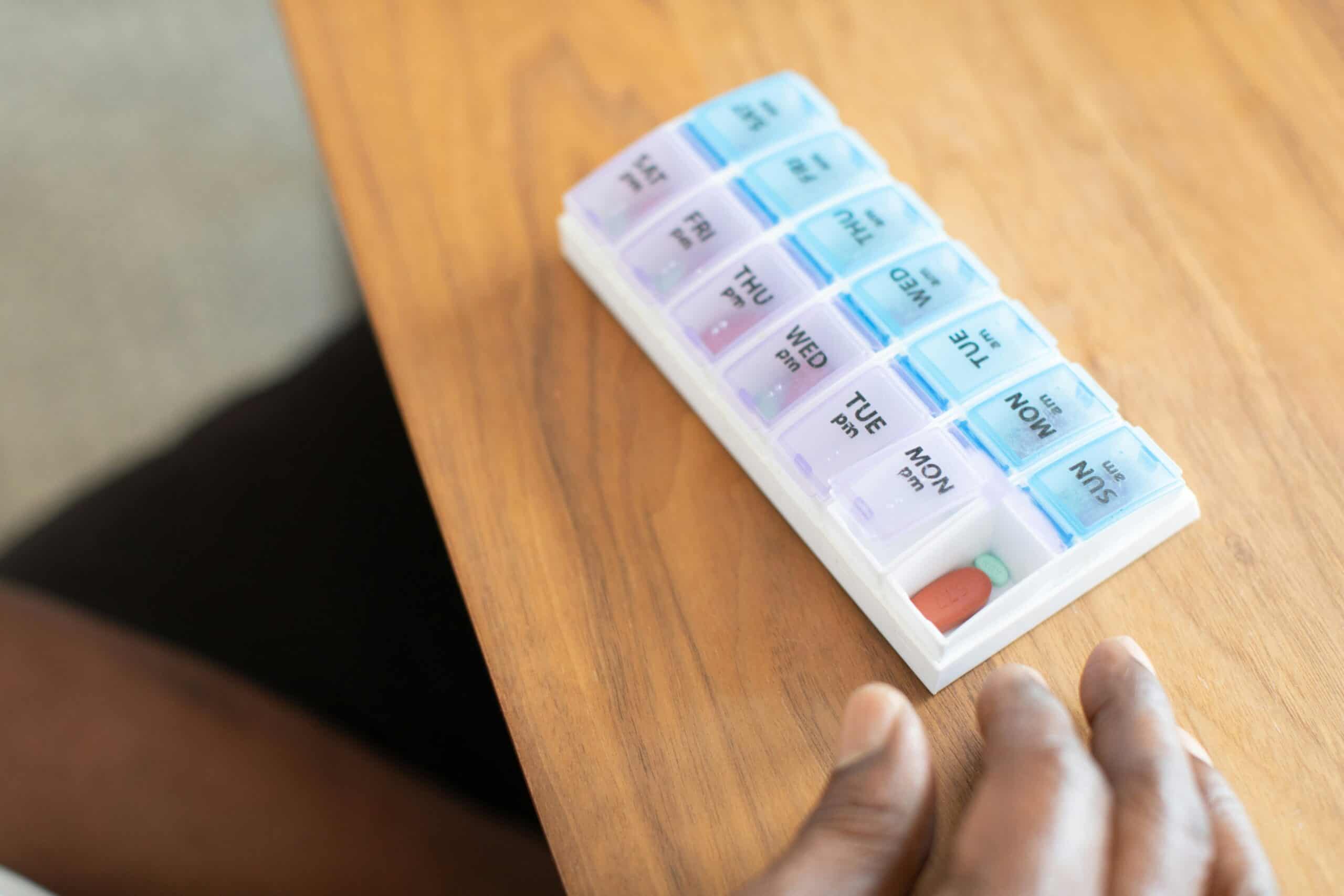
A medication day counter tracks how many days in a month acute treatment was used, because that day count, rather than the number of pills, is what clinicians look at when checking for a medication overuse pattern. A migraine medication day counter turns a vague sense of “a lot lately” into one clear number. That number is a starting point for a conversation, not a verdict.
Counting helps because memory is unreliable across four or five weeks. Most people underestimate treatment days, since each single day felt reasonable at the time. Our plain guide to medication overuse headache explains the pattern in more depth.
Medical Disclaimer
This article offers general information and is not medical advice. A qualified clinician should guide diagnosis, treatment choices and any change to a medication plan. Nothing here should be used to start, stop or adjust a medicine.
Quick Answer
Count the calendar days in one recent month when any acute migraine treatment was taken. Count plain pain relievers and triptan or combination products in separate rows, then look at the combined total. Bring that number to a clinician, who reads it alongside attack frequency and history.
Key Takeaways
- Days, not pills, are the unit clinicians use when reviewing acute treatment.
- A day with any dose counts as one full treatment day.
- Categories are counted separately first, then combined, because guidance differs by drug type.
- A high count is information, not a fault. It often signals that a prevention conversation is due.
- No one should stop or taper an acute medicine without a clinician guiding it.
- Several months of counting say far more than a single month.
Enter the number of days last month when plain pain relievers were used, then the number of days when triptans or combination products were used. Count days, not doses and not pills. A day when anything was taken counts as one full day, and a typical recent month works better than an unusual one.
| Situation | How it counts | Why |
|---|---|---|
| Two doses of the same medicine on one day | One treatment day | The count measures days of exposure, not the amount swallowed. |
| A dose taken near midnight that carries into the next morning | One treatment day, on the date the dose was taken | Anchoring to the clock time of the dose keeps counts consistent month to month. |
| A plain pain reliever taken for a sore back or another non headache reason | One treatment day, with the reason noted beside it | Clinicians usually want the full picture of pain reliever days, so write the reason down. |
| A combination product holding more than one active ingredient | One treatment day in the combination row | The product counts once as a day. Note its ingredients separately, because a clinician will want them. |
| A first dose that did not work, so a second type was tried | One day in each category row | Category rows count exposure by drug type, so a mixed day appears twice. Flag those days so the total reads correctly. |
| A preventive medicine taken every day by schedule | Not a treatment day | Preventives run on a schedule rather than responding to an attack. |
| A day handled only with rest, a dark room, ice or caffeine | Not a treatment day | Only medicine days belong in the count. Noting these days separately still helps, since they show untreated frequency. |
Common counting situations and how each one lands in a monthly treatment day total.
Why a Migraine Medication Day Counter Counts Days and Not Doses
Days are the unit because the body responds to how often a medicine arrives, not how much arrives at once. Two tablets on one bad afternoon still describe a single day of treatment. Ten days with one tablet each describe something quite different.
The American Headache Society frames acute treatment use in monthly treatment days for this reason. Counting pills makes one heavy day look alarming while a steady drip of light days slips past. Days flip that around and surface the pattern that matters.
Why Categories Are Counted Separately Before They Are Combined
Different classes of acute treatment carry different general guidance, so lumping them together hides useful detail. Plain pain relievers sit in one group. Triptans, ergots and combination products with caffeine, codeine or several active ingredients sit in another.
The American Migraine Foundation describes acute treatment as a set of distinct classes rather than one bucket. A reader leaning on one class gets a different conversation than a reader spread across three. Our comparison of two common shelf options shows how far apart neighboring choices can sit.
What Medication Overuse Headache Actually Means
Medication overuse headache describes a pattern where frequent acute treatment appears linked with more frequent headache over time. It is a recognized condition rather than an accusation. The International Headache Society lists it in its formal classification.
The reassuring part is that it responds to treatment. Mayo Clinic describes it as something clinicians manage with a plan, and that management is routine. Nothing about the pattern implies carelessness, since treating pain when pain arrives is a reasonable instinct.
Why This Pattern Is Easy to Miss From the Inside
Every treatment day feels justified in the moment, which is exactly why the total escapes notice. A reader remembers the reason for each dose, not the running tally. Slow drift compounds it, because two extra days a month rarely register as a change.
A written count breaks that loop. Cleveland Clinic encourages keeping a headache record precisely because recall alone tends to run low. Marks on a calendar cost nothing and beat memory every time.
How to Choose a Month and Count It Honestly
Pick a recent month that felt ordinary rather than the worst or the calmest one. Unusual months skew the picture in either direction. Ordinary months describe the real baseline.
Count from a calendar, a phone log or a tracking app instead of memory, because reconstruction usually loses the mild days. Mild days are often where the volume hides. Our roundup of over the counter rescue options helps sort which products belong in which row.
Why One Month Is Never the Whole Story
A single month can be noisy for reasons unrelated to any lasting pattern. A stressful stretch, a hormonal shift or a bad sleep run can all push one month higher. Reading too much into it mostly wastes worry.
Three months of counting is far more informative. The American Migraine Foundation frames diary keeping as something done across months, not weeks. Direction of travel matters more than any single figure.
What a High Count Often Signals
A high treatment day count usually reflects a high attack count, which is a different problem from the medicine itself. Frequent attacks demand frequent treatment, and the counter measures the consequence. The real question is why attacks are so frequent.
That question often points toward prevention rather than restriction. The National Institute of Neurological Disorders and Stroke describes preventive approaches as aimed at reducing attack frequency, which lowers the need for acute treatment. Newer options, including the CGRP targeting drugs, have widened that conversation.
A high number is not evidence of a mistake. It suggests the current plan is carrying more weight than it should.
Why Nobody Should Stop or Taper an Acute Medicine Alone
Changes to acute treatment belong with a clinician, and this point carries no exceptions. Stopping suddenly can be uncomfortable, and some medicines need a structured approach. A clinician can plan the change and support it.
Untreated attacks are not a safe default either, and the goal is never to endure more pain. Whether a familiar shelf option still has a place is a question for a doctor, not a self imposed rule. Keep treating attacks as advised while the count is gathered.
What to Bring to an Appointment Alongside the Count
The number lands better with context beside it, so gather a few extras first. Bring the names of every acute product used, including anything bought off a shelf. Combination products need their full ingredient list.
Add the number of headache days, which usually runs higher than the treatment day count. Note how often a first dose failed and a second was needed. Mention any preventive currently in use.
What a Migraine Medication Day Counter Cannot Tell Anyone
The counter does arithmetic only, and the limits deserve to be stated plainly. It does not diagnose medication overuse headache, and no calculator can. Diagnosis rests on a clinician reviewing history, examination and the wider picture.
It also does not know which medicine was taken, at what strength, or why. General thresholds do exist in clinical guidance, often described as somewhere around ten to fifteen treatment days a month depending on drug class, though those figures guide clinicians rather than serving as a self diagnosis line. Two readers with identical totals can be in entirely different positions.
A number alone decides nothing. It opens a conversation, and that is the whole job.
Related Reading
Our notes on reading patterns in tracking data cover what to look for once a few months are logged. Non drug approaches appear in our guide to getting through an attack without medication. For keeping doses organized and easier to record, see our roundup of pill organizers suited to migraine medication.
Sources
- American Migraine Foundation
- American Headache Society
- International Headache Society
- National Institute of Neurological Disorders and Stroke
- Mayo Clinic
- Cleveland Clinic
Migraine Medication Day Counter: Frequently Asked Questions
What does a migraine medication day counter actually measure?
A migraine medication day counter measures how many separate calendar days in one month included any acute treatment, rather than counting pills or doses. Plain pain relievers and triptan or combination products go into separate rows, then combine into one total. Clinicians tend to ask about that total first.
Should a day with two doses count as two days?
No, a day with two doses still counts as one treatment day. The unit is the calendar day, so anything taken between waking and midnight collapses into a single mark. Note the extra dose separately when a first attempt failed, since that detail is useful at an appointment.
Do preventive medicines belong in the count?
Preventive medicines stay outside the treatment day count, because they run on a fixed schedule rather than responding to an attack. Including them would inflate the number without adding meaning. Still list any current preventive for the clinician, since it shapes how the count gets read.
How many months of counting are useful?
Three months gives a far clearer picture than one, because single months swing for ordinary reasons such as stress, poor sleep or seasonal change. A pattern holding across several months carries more weight in an appointment. Recording untreated headache days alongside treated ones makes the record better still.
Can the counter diagnose medication overuse headache?
No, and it should never be used that way. Medication overuse headache is diagnosed by a clinician who reviews headache history, medication types, examination findings and other possible causes. The counter exists only to make one of those inputs accurate and easy to hand over.
What should someone do if the count looks high?
Bring the number to a doctor and keep treating attacks exactly as currently advised. A high count most often points toward frequent attacks, which usually opens a conversation about prevention rather than restriction. Never stop, reduce or taper an acute medicine independently, because those changes need clinical supervision.
When should I see a doctor about this?
Book an appointment if the monthly count is climbing, if attacks are growing more frequent, or if acute treatment is working less well than before. Sudden or severe new headaches, and headaches with new neurological symptoms, need prompt medical attention. Bringing a written count and a medication list makes that visit more productive.
