
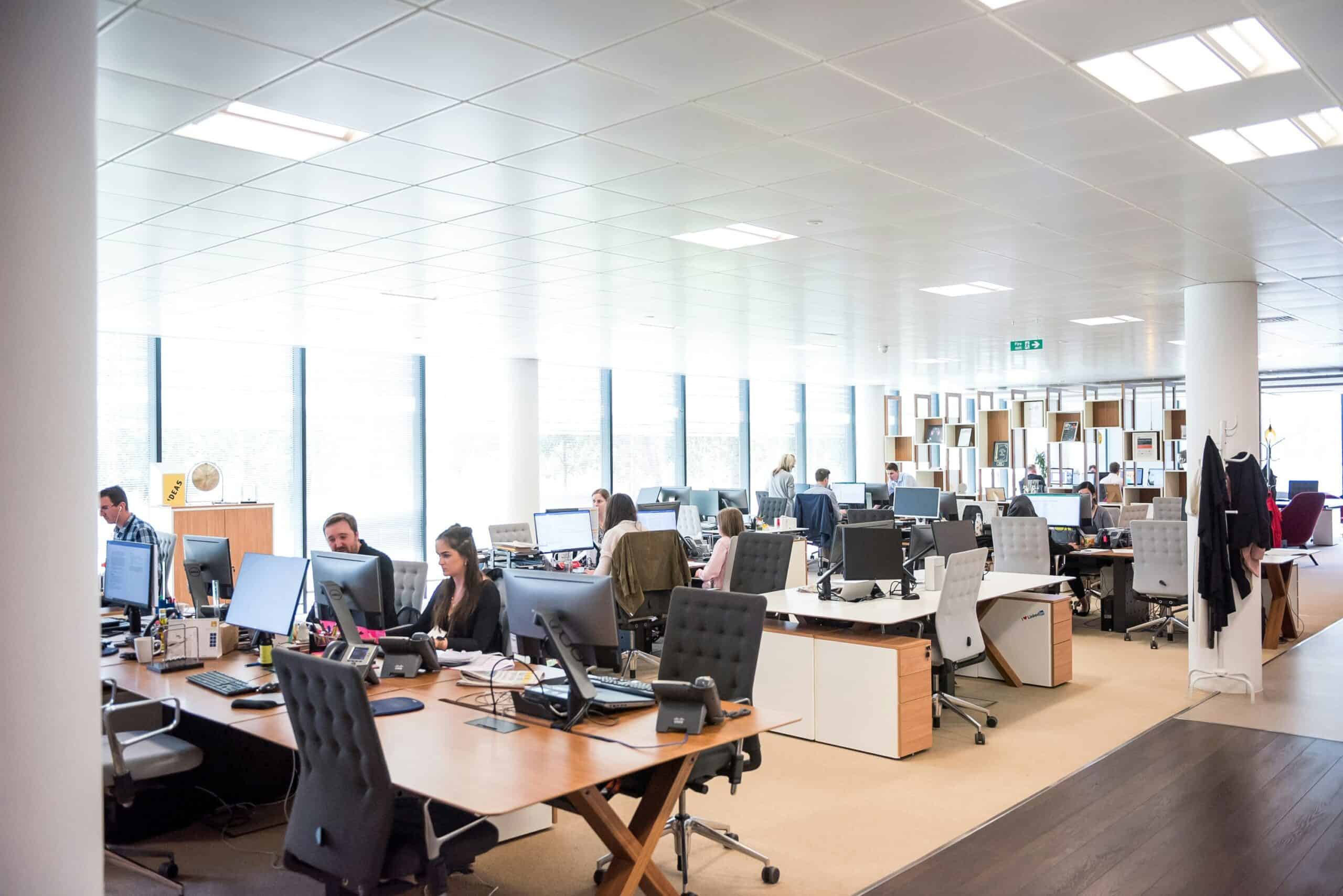
A shared workplace is the hardest environment for scent sensitivity because you control almost none of it. Colleagues wear what they wear, cleaning happens on a schedule, and the ventilation is whatever the building has.
What can be changed is your position within it, and in many places what can be requested formally. Our note on whether strong smells trigger migraines covers the underlying question.
Medical Disclaimer
This is general information rather than medical advice, and it is not legal advice. Workplace protections vary considerably by country, state, and employer. A doctor who knows your history and, where relevant, an employment adviser are the right sources for decisions.
Quick Answer
Change your position relative to airflow first, since that costs nothing. Then look at what your employer can adjust, and treat a formal accommodation request as a conversation to have while well rather than mid-attack.
What You Can Change, in Order
| Step | Requires |
|---|---|
| Move away from airflow sources | Nothing |
| Ventilate your immediate area | Nothing, if windows open |
| Change your own products | Small cost |
| Ask a nearby colleague informally | A conversation |
| Request a desk move | Manager agreement |
| Formal accommodation | Documentation, HR process |
Start With Airflow, Not Sources
Odors travel on air currents, so where you sit relative to the airflow matters as much as where the source is.
A desk directly downwind of a vent, a doorway, or a kitchen receives everything that passes through, which is a positioning problem rather than a fragrance problem. Once the workday ends, our guide to building a scent free living space covers the same approach at home.
Moving a few feet, or to the other side of a partition, sometimes achieves more than any request to a colleague.
Identifying the pattern takes a few days of noticing when it is worst, and the answer is frequently a time of day rather than a person. Our roundup of air quality monitors covers tracking conditions.
What Genuinely Helps at a Desk
A small personal fan
Moving air past your own space rather than letting it settle, which dilutes rather than filters.
An openable window nearby
Worth more than any device for volatile compounds, where the building allows it.
Your own products fragrance-free
Hand soap, lotion, and sanitizer at your own desk are within your control.
A neutral space to retreat to
Knowing where the least-scented room is before you need it. Our note on creating a migraine-friendly workspace covers the wider setup.
The Conversation With a Colleague
Raising fragrance with a specific person is uncomfortable, and it goes better framed as a medical need rather than a preference.
Being specific helps. Naming a particular product is easier to act on than a general request about fragrance.
Timing matters, and asking while well is considerably easier than asking mid-attack when the conversation carries more emotion.
Some people would rather go through a manager than raise it directly, which is reasonable and avoids the relationship becoming the issue.
Remote and Hybrid Work Changes the Calculation
Hybrid arrangements have made this considerably more manageable for people who have access to them.
Working from home on days when an attack is building removes the exposure entirely rather than managing it, which is the only complete solution available.
Choosing which days to be in the office matters too, since cleaning schedules, meeting density, and occupancy all vary through the week.
For anyone with a hybrid arrangement already in place, flexibility about which days rather than how many is frequently an easier request than a formal accommodation.
Where attendance is fixed, that flexibility is itself worth raising as an adjustment, since it costs an employer very little compared with a desk move or a policy change. Our note on getting through a workday after a migraine covers the recovery day.
Formal Accommodations
In many jurisdictions, chronic migraine can qualify as a condition for which workplace accommodations may be requested, though the framework and terminology differ considerably by country.
Typical adjustments include a desk relocation, changes to cleaning product schedules or formulations, flexibility to work remotely during flare-ups, and fragrance-free policies for shared areas.
Documentation from a doctor is generally part of the process, which is another reason to have the conversation with a clinician early.
Employer size, sector, and local law all affect what is available, so specifics are worth checking locally rather than assuming. Our note on explaining migraines to your employer covers that discussion.
Fragrance-Free Policies
Some workplaces operate fragrance-free policies, and they are more common in healthcare and education than in general offices.
They work best framed as a shared-air issue rather than as accommodating one person, which reduces the chance of resentment landing on whoever raised it.
Enforcement is the difficulty. A policy without a mechanism tends to fade after a few months.
Where a full policy is unrealistic, a narrower request about shared spaces such as meeting rooms and lifts is frequently more achievable and covers the worst exposures.
Cleaning Products and Building Services
Cleaning schedules are often the largest single source, and they are also among the easiest to adjust because they involve a contract rather than a person.
Shifting cleaning to end of day rather than mid-morning gives volatile compounds overnight to dissipate.
Many commercial cleaning suppliers offer fragrance-free lines, and switching is a procurement decision rather than a personal request.
Facilities teams are frequently more receptive than expected, since air quality complaints are something they already handle. Our roundup of air purifiers covers what a device can and cannot do.
Meetings and Shared Vehicles
Two situations concentrate exposure more than an open office does, and both are worth planning around separately.
Meeting rooms are small, often poorly ventilated, and hold several people in close proximity for an extended period.
Sitting near the door rather than at the far end gives both fresher air and an easier exit, which is a small choice that costs nothing.
Shared vehicles are the harder case, since a car interior is the most concentrated environment most workplaces produce, and air fresheners are common in them.
Asking to open a window is usually uncontroversial, and for a longer journey, raising it before setting off is easier than partway through. Our roundup of car accessories covers vehicle setups.
When an Attack Starts at Work
Leaving the immediate area is the fastest intervention available, even if only to a stairwell or outside for a few minutes.
Taking whatever a doctor has prescribed as early as possible is the standard guidance, and delay at work is common because people hope it will pass.
Reducing light and screen brightness alongside removing the odor addresses more than one symptom at once.
Deciding in advance what you would say to a manager removes having to compose it while symptomatic. Our note on handling a migraine at work when you cannot leave covers that situation.
What Not to Do
Masking with another scent
Adding fragrance to counter fragrance generally makes things worse rather than neutralizing anything.
Waiting until you are symptomatic to ask
The conversation is harder and lands worse when it arrives as a complaint mid-attack.
Framing it as a preference
A medical need is treated differently from a dislike, and the distinction matters in a workplace process.
Assuming nothing can change
Cleaning schedules and desk positions are frequently adjustable, and both are asked about less often than they could be.
Sources
American Migraine Foundation, on workplace management of migraine and on common triggers. Mayo Clinic, on migraine symptoms and triggers including strong smells. U.S. Equal Employment Opportunity Commission, on reasonable accommodation processes for employees with medical conditions. National Institute of Neurological Disorders and Stroke, on migraine phases and associated symptoms.
Scented Workplaces FAQ
What should I try first?
Position relative to airflow. A desk downwind of a vent, doorway, or kitchen receives everything passing through, and moving a few feet can achieve more than any request.
How do I raise it with a colleague?
Frame it as a medical need rather than a preference, be specific about the product rather than general about fragrance, and have the conversation while well.
Can I request a formal accommodation?
In many places chronic migraine may qualify, though frameworks differ considerably by country and employer. Documentation from a doctor is generally part of it.
What adjustments are typical?
Desk relocation, changes to cleaning schedules or products, remote work flexibility during flare-ups, and fragrance-free rules for shared spaces.
Do air purifiers help in an office?
Ventilation generally does more than filtration for volatile compounds. A personal fan moving air past your space can help more than a filter.
Are fragrance-free policies realistic?
More common in healthcare and education than general offices. A narrower request covering meeting rooms and lifts is frequently more achievable.
What about cleaning products?
Often the largest single source and among the easiest to change, since it is a procurement decision. Shifting cleaning to end of day also helps.
When should I see a doctor?
If attacks are frequent, worsening, or affecting your work. You will also need clinical documentation for any formal accommodation request.
For the wider picture, see our guide to how to choose migraine glasses.
