The best caffeine supplements for migraine work because caffeine directly affects the blood vessel dilation and adenosine receptor activity that drives most migraine attacks. If you’ve ever reached for coffee during the earliest warning signs of a migraine and felt it actually help, you’ve experienced the mechanism that makes caffeine a legitimate migraine intervention — not just a placebo. Caffeine constricts the dilated blood vessels in the brain that cause migraine pain, blocks adenosine receptors that contribute to pain sensitivity, and enhances the absorption of other pain medications when combined.
The challenge with coffee, tea, or energy drinks is dose precision. A cup of coffee might contain anywhere from 80 to 300 milligrams of caffeine, depending on the brewing method, bean variety, and cup size. For migraine treatment, you want consistent, predictable dosing — exactly 100 mg or 200 mg on demand, with known timing and known absorption. This is what caffeine supplements specifically designed for migraine use provide: the therapeutic benefit of caffeine without the variability that makes coffee-based dosing unreliable for treatment.
The market for caffeine supplements spans general alertness products (targeted at students and workers), specialized migraine formulations (combined with magnesium or other complementary ingredients), and simple anhydrous caffeine tablets (the purest delivery of the active compound). Understanding which format fits your migraine pattern — and which products deliver on their claims — separates genuine therapeutic options from marketing-focused alternatives.
This guide walks through the best caffeine supplements for migraine available in 2026, the specific dosing principles that make caffeine work for migraine relief, and how to use caffeine supplementation safely without creating rebound headaches or tolerance issues. If you’re building a broader migraine intervention toolkit, our guides on best butterbur supplements for migraines and best magnesium supplements for migraine prevention cover preventive supplementation that works alongside acute caffeine intervention.
Why caffeine works for migraine attacks
Caffeine affects migraine through multiple mechanisms simultaneously. Understanding these mechanisms explains why caffeine is both highly effective for some migraines and counterproductive for others.
Vasoconstriction reverses the blood vessel dilation that drives much migraine pain. During a migraine attack, cerebral blood vessels dilate inappropriately, activating pain-sensitive nerves. Caffeine’s vasoconstrictor effect narrows these vessels back toward normal, reducing the pain signal.
Adenosine receptor blockade prevents adenosine — a neurotransmitter that increases during migraine attacks — from activating pain pathways. Caffeine competes with adenosine for receptor binding, effectively neutralizing part of the pain cascade.
Enhanced absorption of co-administered medications means caffeine improves the efficacy of acetaminophen, aspirin, and other pain relievers when taken together. This is why combination products (like Excedrin) include caffeine alongside analgesics.
Why caffeine supplement choice matters more than most migraine sufferers realize
The caffeine supplement category contains products ranging from generic alertness pills to specialty migraine formulations. The differences affect therapeutic outcomes for migraine use specifically.
Pure caffeine vs combination products
Pure anhydrous caffeine: Provides only caffeine in precise doses. Appropriate for sufferers who want exact control over their caffeine dosing without added ingredients.
Caffeine + magnesium combinations: Pair caffeine’s acute effects with magnesium’s preventive benefits. Useful for sufferers taking magnesium for prevention anyway.
Caffeine + L-theanine combinations: L-theanine smooths the caffeine effect, reducing jitters and anxiety. Beneficial for sufferers who experience anxiety during migraine attacks.
Caffeine + pain reliever combinations: Products like Excedrin combine caffeine with acetaminophen and aspirin. Highly effective for some migraines, but carries medication overuse risks with frequent use.
For most migraine sufferers seeking acute intervention, pure caffeine or caffeine+L-theanine represents the cleanest approach.
Dosing precision matters for therapeutic use
Migraine caffeine dosing typically ranges from 65-200 mg per dose. Within this range, precise dosing matters because:
- Too low a dose (under 60 mg) may not provide a meaningful benefit
- Ideal doses (65-130 mg for most users) provide relief without significant side effects
- Higher doses (150-200 mg) may be needed for severe attacks, but increase the risk
- Excessive doses (over 400 mg) can trigger caffeine-induced anxiety or exacerbate certain migraine types
Quality supplements provide exact milligram amounts. Cheap alternatives often have variable dosing between tablets from the same bottle.
Fast absorption for acute migraine use
For migraine treatment, how quickly caffeine enters the bloodstream affects clinical value. Standard oral caffeine takes 30-45 minutes to reach peak blood levels.
Faster-acting forms include:
- Chewable tablets (15-20 minutes to onset)
- Sublingual/dissolvable tablets (10-15 minutes)
- Buccal strips placed in the cheek (5-10 minutes)
For migraine abortive use, faster-acting forms provide meaningful clinical advantages over standard pills.
Timing of migraine development
Caffeine works best at specific migraine stages:
Prodrome (early warning signs): Highly effective. Caffeine can prevent attack progression in many cases.
Early migraine (first hour): Effective. Combined with rest and possible additional pain relievers, often aborts attacks.
Established migraine: Moderate efficacy. Works better when combined with rest, dark room, and other interventions.
Late migraine (6+ hours): Minimal benefit. The migraine has already caused the neurological changes caffeine could have prevented.
Rebound/recovery phase: Actually counterproductive. Can perpetuate the migraine cycle.
What to look for in a caffeine supplement for migraine
The caffeine supplement category contains quality differences that affect therapeutic outcomes for migraine use.
Exact mg per tablet specification
Quality supplements list the exact caffeine content per tablet in milligrams. This allows precise dosing that matches your therapeutic needs.
Avoid supplements that list caffeine as “proprietary blend” amounts or use terms like “high-strength” without specific numbers. For migraine use, you need to know exactly how much caffeine you’re getting.
Third-party testing certifications
Supplement manufacturing varies in quality. Third-party testing certifications verify:
- Actual caffeine content matches labeled amount
- No contamination with other substances
- Manufacturing meets quality standards
Certifications to look for: USP Verified, NSF Certified, ConsumerLab tested, or Informed Sport certification. These indicate verified product quality.
Absence of problematic fillers
Some caffeine supplements include ingredients that can trigger migraines in sensitive individuals:
- Artificial colors (FD&C dyes)
- Artificial sweeteners (aspartame, sucralose)
- Preservatives (BHT, BHA)
- High-quality fillers are tasteless and migraine-neutral
Check ingredient lists carefully. Cleanest caffeine supplements contain only caffeine, cellulose (for tablet binding), and minimal coating materials.
Reasonable dosing options
Quality migraine caffeine supplements offer multiple dose options:
- 65-75 mg (mild migraine, sensitive individuals)
- 100-130 mg (typical migraine intervention)
- 150-200 mg (severe migraine or high tolerance)
Single-dose-only products limit flexibility. The ability to start with lower doses and titrate up as needed is useful for migraine sufferers calibrating their therapeutic dose.
Compatibility with other migraine interventions
Check whether the caffeine supplement will interact with:
- Prescription migraine medications (triptans, CGRP inhibitors)
- Other caffeine sources (coffee, tea, sodas)
- Supplements you take (magnesium, butterbur, CoQ10)
Most caffeine supplements are compatible with these, but specific combinations may affect efficacy.
Reasonable serving size and packaging
A quality caffeine supplement provides 50-100 tablets per bottle at a reasonable per-dose cost. Tiny bottles with high prices suggest marketing-focused rather than therapy-focused products.
Packaging should protect tablets from moisture and air. Loose tablets in flimsy bottles degrade faster.
Price appropriate for purity
Pure caffeine is inexpensive to manufacture. Reasonable pricing for pure caffeine supplements is $0.05-0.15 per tablet. Combination products (caffeine + L-theanine) may cost 2-3x more.
Paying $1+ per tablet for pure caffeine suggests marketing markup rather than ingredient quality.
Best caffeine supplements for migraine in 2026: our top 5 picks
Five picks covering the full range of migraine-specific caffeine needs: best overall caffeine supplement for migraine, best fast-acting option for attack abortion, best budget pick, best caffeine + L-theanine combination, and best chewable for on-demand relief.
1. Jacked Factory Caffeine — Best Overall for Migraine
Best caffeine supplement for most migraine sufferers | Score: 9.4/10 | Price: ~$10 for 200 capsules
Check Price on AmazonThe Jacked Factory Caffeine supplement earns the top recommendation for migraine use through its combination of exact 200 mg anhydrous caffeine dosing, third-party testing, clean ingredient profile, and accessible pricing. The product delivers precise caffeine without added ingredients that might trigger sensitivities.
Clean ingredient profile
The supplement contains only caffeine anhydrous (200 mg) plus cellulose binder and vegetable capsule material. No artificial colors, sweeteners, or preservatives that could trigger migraines in sensitive individuals.
This purity matters for migraine sufferers whose attacks often have chemical triggers. Every additional ingredient is a potential trigger.
Dosing flexibility through capsule division
At 200 mg per capsule, the product supports multiple dosing strategies:
- Full capsule (200 mg) for severe migraines or high-tolerance users
- Half capsule (100 mg) for typical migraine intervention
- Quarter capsule (50 mg) for sensitive individuals
The capsule can be opened and the powder divided accurately with a small scale or dosing spoon for precise reduced doses.
Third-party testing
Jacked Factory products undergo third-party testing for content accuracy and contamination. The labeled 200 mg matches the actual tablet content within normal variation tolerances.
Value pricing
At approximately $10 for 200 capsules, the per-dose cost is approximately $0.05 — among the lowest in the category. For regular migraine sufferers using caffeine frequently, this affordability matters.
Bulk availability
The large bottle size (200 capsules) reduces shopping frequency for regular users. For occasional users, portions of the bottle can be shared across household members if appropriate.
Best for: Most migraine sufferers, regular caffeine supplement users, budget-conscious buyers, those prioritizing ingredient purity, and sufferers sensitive to artificial additives.
PROS:
- Exact 200 mg caffeine anhydrous per capsule
- Clean ingredient profile (no artificial additives)
- Third-party testing verification
- Lowest per-dose cost in category
- 200-capsule bulk packaging
- Vegetable capsule (vegan-friendly)
- Dosing flexibility through capsule division
CONS:
- 200 mg starting dose too high for some users
- Capsule division requires care for accurate partial doses
- No combination with magnesium or other cofactors
- Standard capsule absorption (30-45 minute onset)
- Bulk packaging may expire before use for occasional users
2. Prolab Caffeine — Best Fast-Acting for Migraine
Best fast-acting caffeine for acute migraine | Score: 9.3/10 | Price: ~$9 for 100 tablets
Check Price on AmazonFor migraine sufferers who need fast-acting intervention during prodrome or early attacks, Prolab Caffeine 200 mg tablets use a compressed formulation that dissolves faster than capsule alternatives. The 15-20 minute onset time compared to 30-45 minutes for capsules can make a meaningful difference during active attacks.
Compressed tablet formulation
The tablet formulation allows caffeine to enter the bloodstream faster than capsule-encapsulated powder. This matters for migraine abortive use, where timing significantly affects whether an attack progresses to full migraine.
Precise 200 mg dosing
Each tablet contains 200 mg caffeine anhydrous. The consistency between tablets matters for predictable dosing during migraine intervention.
Reasonable tablet size
The tablets are small enough to swallow easily, even during migraine nausea phases. Large tablets can be problematic for migraine sufferers experiencing nausea.
Longstanding brand reputation
Prolab has been in the caffeine supplement market for decades. This longevity suggests consistent product quality and manufacturing stability.
Reasonable pricing
At approximately $9 for 100 tablets ($0.09 per dose), pricing is slightly higher than Jacked Factory but remains in the budget-friendly range.
Best for: Active migraine attack abortion, sufferers needing fast intervention, those who find capsules slow to take effect, and sufferers prioritizing onset time over ingredient purity.
PROS:
- Faster onset than capsule alternatives (15-20 min vs 30-45)
- Small tablet size, easy to swallow during nausea
- Established brand reputation
- 100 tablets per bottle
- Consistent 200 mg dosing
- Lower price than specialty products
- Appropriate for acute intervention
CONS:
- 200 mg only dose option (no flexibility)
- Contains binders and coatings (less “pure” than capsules)
- Tablet coating may contain minor additives
- Faster tablet degradation in humid environments
- Single dose size limits customization
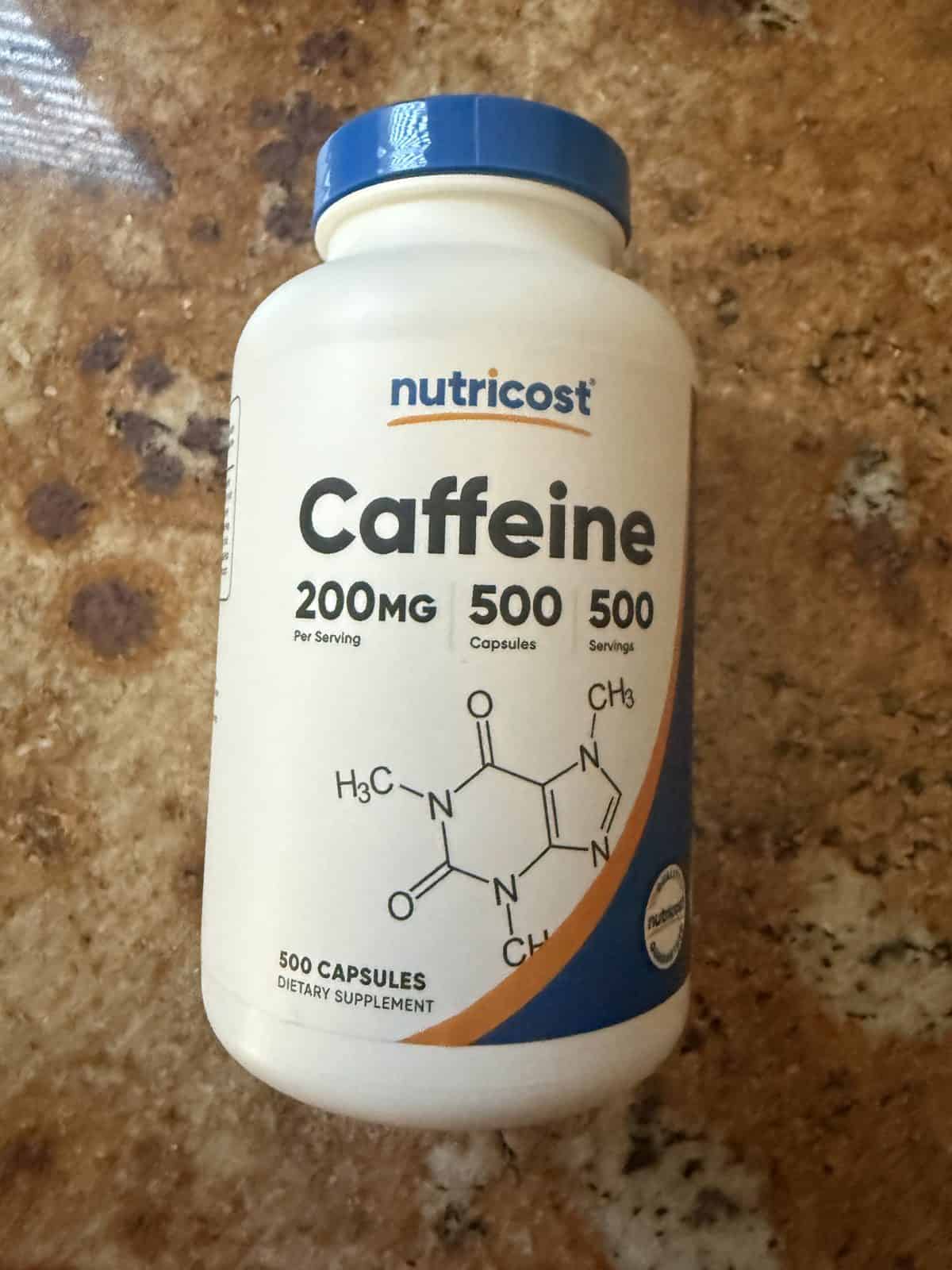
3. Nutricost Caffeine — Best Budget Option for Migraines
Best budget caffeine supplement for migraine | Score: 8.5/10 | Price: ~$8 for 240 capsules
Check Price on AmazonFor budget-constrained migraine sufferers, Nutricost offers caffeine supplementation at the lowest per-dose cost in the category. At approximately $8 for 240 capsules, the per-dose cost is approximately $0.033 — one-third the cost of mainstream alternatives while providing similar 200 mg dosing.
Adequate basic function
The supplement provides 200 mg caffeine anhydrous per capsule with standard ingredients. The product meets basic quality standards without specialty features that justify premium pricing.
Budget-tier manufacturing
Nutricost operates in the value segment of the supplement market. This creates some trade-offs:
- Less rigorous third-party testing
- Slightly less consistent tablet-to-tablet variation
- Simpler packaging
- Less premium presentation
None of these affects the core function of providing 200 mg caffeine doses.
Appropriate for specific use cases
Nutricost works best for:
- Budget-constrained migraine sufferers
- Secondary stash for work or travel
- Testing whether caffeine supplementation fits your migraine pattern
- Backup supply when the preferred brand is unavailable
- First-time caffeine supplement users validating the approach
Quantity advantage
240 capsules versus a typical 100-tablet packaging means fewer shopping trips for regular users. This convenience matters for migraine sufferers who need a consistent supply.
Best for: Budget-constrained migraine sufferers, secondary supplementation needs, first-time caffeine users validating category, backup supply, cost-focused buyers.
PROS:
- Lowest per-dose cost in our guide
- 240-capsule bulk packaging
- Adequate basic caffeine function
- Simple ingredient profile
- Wide availability through major retailers
- Acceptable for most migraine intervention needs
- Strong budget category entry
CONS:
- Less rigorous quality testing than premium alternatives
- More variable tablet-to-tablet consistency
- Standard capsule absorption time
- Budget packaging
- Fewer certifications than premium options
- Not ideal for highly sensitive users
4. Thorne Caffeine + L-Theanine — Best Caffeine + L-Theanine Combination
Best caffeine combination for migraine with anxiety | Score: 9.2/10 | Price: ~$30 for 90 capsules
Check Price on AmazonFor migraine sufferers who experience anxiety during attacks or those who find pure caffeine causes jitters, Thorne’s Caffeine + L-Theanine formulation combines the therapeutic caffeine benefits with L-theanine’s smoothing effect. The 100 mg caffeine + 200 mg L-theanine per capsule provides effective migraine intervention without the anxiety side effects that affect some users.
Thorne’s pharmaceutical-grade manufacturing
Thorne is a premium supplement manufacturer with pharmaceutical-grade quality standards. The brand is often recommended by integrative medicine physicians and consumers prioritizing highest quality.
Manufacturing includes:
- Strict ingredient testing
- Pharmaceutical-grade production standards
- Comprehensive third-party verification
- Premium packaging for ingredient preservation
L-theanine’s synergistic effect
L-theanine is an amino acid naturally found in tea that crosses the blood-brain barrier and:
- Reduces stress and anxiety without sedation
- Smooths the stimulating effects of caffeine
- May help with sleep quality when taken earlier
- Has no known interactions with most medications
For migraine sufferers whose attacks involve anxiety components, this combination addresses both the pain mechanism (caffeine) and the anxiety amplification (L-theanine).
Premium pricing
At approximately $30 for 90 capsules ($0.33 per dose), Thorne is notably more expensive than budget alternatives. The premium reflects:
- Pharmaceutical-grade manufacturing
- L-theanine inclusion
- Premium brand positioning
- Higher ingredient quality
For migraine sufferers who can afford premium supplementation, this represents the highest quality option. For budget-conscious users, pure caffeine options cost 5-10x less.
Appropriate dose for sensitive users
The 100 mg caffeine dose is lower than the standard 200 mg options. This suits:
- Sensitive users who struggle with higher doses
- First-time caffeine supplement users
- Sufferers with anxiety who need a smoother caffeine experience
- Those combining supplementation with other caffeine sources
Best for: Migraine sufferers with anxiety, premium-focused buyers, those sensitive to pure caffeine, users who previously struggled with caffeine jitters, and integrative medicine approaches.
PROS:
- Pharmaceutical-grade manufacturing quality
- L-theanine smooths caffeine effects
- Lower 100 mg dose appropriate for sensitive users
- Premium third-party testing
- Thorne’s established reputation
- Suitable for migraine sufferers with anxiety
- Integrates well with other supplement routines
CONS:
- Highest price in our guide
- L-theanine may not benefit sufferers without anxiety
- Lower caffeine dose may be insufficient for severe attacks
- Premium pricing for features not all users need
- Capsule size may be larger than alternatives
5. Vivarin Caffeine Alertness Aid — Best Chewable for Migraine
Best chewable caffeine for on-demand migraine relief | Score: 8.8/10 | Price: ~$10 for 40 tablets
Check Price on AmazonFor migraine sufferers experiencing nausea during attacks or those who struggle to swallow pills during severe attacks, Vivarin’s chewable caffeine alertness aid provides the therapeutic benefit in a form that doesn’t require swallowing. The chewable format also provides faster absorption than swallowed capsules.
Chewable format benefits for migraine
Chewable supplements work well for migraine use because:
- Nausea during attacks can make swallowing pills difficult
- Chewing releases caffeine into the mouth, where some absorption begins
- Faster overall onset than swallowed capsules
- Appropriate for on-demand use when water isn’t available
200 mg precise dose per tablet
Each chewable tablet contains 200 mg caffeine anhydrous — the standard therapeutic dose for migraine use.
The chewable format allows partial dosing if needed by biting off a smaller portion, though this reduces precision.
Convenient packaging
Individual foil-wrapped tablets maintain freshness and protect from environmental factors. This matters for:
- Travel use
- Workplace emergency stashes
- Glove box or bag carrying
- Secondary stashes in multiple locations
Flavor considerations
Chewable caffeine has a bitter taste naturally. Vivarin uses peppermint flavoring to mask most of the bitterness. Some users find the flavor acceptable; others find it unpleasant.
For on-demand use during migraines, the flavor trade-off typically doesn’t matter — the therapeutic benefit outweighs taste preferences.
Established brand and quality
Vivarin has been available for decades and maintains consistent product quality. The brand is widely recognized and available in most pharmacies.
Best for: Migraine sufferers with nausea, sufferers who struggle with pills, travel use, workplace emergency stash, on-demand relief needs, and those who prefer alternative delivery methods.
PROS:
- Chewable format works despite nausea
- Faster absorption than capsules
- Convenient individual wrapping
- Peppermint flavor masks bitterness
- Established brand with proven quality
- 200 mg precise dose
- Works without water
CONS:
- Slightly higher per-dose cost than bulk alternatives
- Bitter flavor not appealing to all users
- Individual packaging creates more waste
- Smaller quantity per bottle (40 tablets)
- Mint flavoring may be inappropriate during certain attacks
- Less flexibility than capsule-based alternatives
Quick comparison of the best caffeine supplements for migraine
- Jacked Factory Caffeine — best overall, clean ingredients, 200 capsules for ~$10
- Prolab Caffeine — best fast-acting, quick tablet absorption, ~$9 for 100 tablets
- Nutricost Caffeine — best budget option, 240 capsules for ~$8
- Thorne Caffeine + L-Theanine — best combination for anxiety, ~$30 for 90 capsules
- Vivarin Caffeine Alertness Aid — best chewable for nausea/on-demand, ~$10 for 40 tablets
How to use caffeine supplements safely for migraine relief
Proper use of caffeine supplements matters as much as product choice. Here’s evidence-based guidance for migraine-specific application.
Find your optimal dose through titration
Start with the lowest dose that provides relief. For most migraine sufferers, this is:
First-time users: Start at 65-100 mg. Many users find this sufficient. Moderate tolerance: 100-150 mg typical intervention dose. High tolerance (regular coffee drinkers): 150-200 mg needed for effect. Severe attacks only: Up to 200 mg as needed with care.
Never exceed 400 mg total caffeine per day, including all sources (coffee, tea, supplements, medications with caffeine).
Timing matters significantly
Prodrome use: Take caffeine at the first sign of migraine warning (visual disturbances, unusual food cravings, mood changes, neck stiffness). This is the optimal intervention window.
Early attack: Within the first hour of pain onset, combined with rest in a dark room.
Established attack: Diminishing returns after 2-3 hours of pain. Combined with other interventions may still help.
Late attack: Usually counterproductive. Wait for recovery.
Recovery phase: Avoid caffeine to prevent rebound.
Avoid rebound through pattern management
Caffeine rebound headaches occur when you consume caffeine daily, then miss a dose. Prevention strategies:
Keep daily baseline consistent: If you drink coffee every day, maintain the pattern during migraine treatment.
Don’t introduce new caffeine sources during attacks: If you don’t normally have caffeine, use caffeine supplements only for occasional migraine intervention, not daily.
Weekly caffeine “vacations”: Some sufferers benefit from 1-2 caffeine-free days per week to prevent tolerance buildup.
Track caffeine intake: Awareness of total daily caffeine helps prevent accidental overconsumption.
Combine with complementary interventions
Caffeine works best combined with:
- Rest in a darkened room: Addresses sensory sensitivity
- Cold compress: Combines vasoconstriction with surface cooling
- Magnesium (preventive): Complementary mechanism for frequency reduction
- Butterbur (preventive): Additional preventive support
- Sleep hygiene: Supports nervous system regulation
Our guide on best magnesium supplements for migraine prevention covers preventive supplementation that reduces the need for acute caffeine intervention.
Avoid counterproductive combinations
Excessive coffee with supplements: Total daily caffeine above 400 mg increases side effects significantly.
Alcohol: Combines with caffeine problematically for migraine sufferers, potentially triggering migraines.
Fasting states: Caffeine on an empty stomach can exacerbate migraine symptoms in some users.
Late-day use: Caffeine within 6 hours of bedtime disrupts sleep, which worsens migraine frequency over time.
Common caffeine supplement mistakes migraine sufferers make
Several specific errors reduce caffeine supplement effectiveness or create problems.
Starting at too high a dose
First-time users who start with 200-400 mg often experience:
- Jitters and anxiety
- Heart palpitations
- Worse migraine symptoms
- Negative first experience discourages future use
Start with 65-100 mg. Assess effects over 2-3 sessions before titrating upward.
Using daily instead of as-needed
Daily caffeine supplementation leads to:
- Tolerance requires higher doses for the same effect
- Caffeine dependence with withdrawal headaches when missed
- Reduced effectiveness for acute migraine intervention
- Potential for medication overuse syndrome
Use caffeine supplements for acute migraine intervention rather than daily supplementation.
Waiting too long for a migraine
Caffeine works best in prodrome and early attack phases. Waiting until pain is severe reduces effectiveness.
Learn to recognize your migraine warning signs and take caffeine at those signals, not after full pain develops.
Ignoring total caffeine intake
Some users forget they’ve had coffee earlier in the day before taking caffeine supplements. Total intake can quickly exceed safe daily limits.
Track all caffeine sources: coffee (80-200 mg/cup), tea (25-70 mg/cup), energy drinks (80-300 mg/can), sodas (30-50 mg/can), chocolate (5-35 mg/serving), and medications containing caffeine.
Not giving prodrome signals enough weight
Many sufferers dismiss prodrome signs as “just tiredness” or “stress” and miss the intervention window.
Learn your specific prodrome patterns. Common signs include:
- Unusual food cravings or aversions
- Mood changes (depression, irritability, elation)
- Neck stiffness or tension
- Visual disturbances
- Increased yawning
- Difficulty concentrating
Mixing caffeine with other migraine medications without guidance
Some prescription migraine medications interact with caffeine in complex ways. Consult your healthcare provider before combining caffeine supplementation with:
- Triptans
- CGRP inhibitors
- Preventive migraine medications
- Blood pressure medications
The research behind caffeine for migraine
Research on caffeine for migraine is well-established compared to many other migraine interventions.
Mechanism of action research
Studies have documented caffeine’s:
- Cerebral vasoconstrictor effects (reduce dilated blood vessels in migraine)
- Adenosine receptor blocking (prevents pain-promoting signaling)
- Enhanced analgesic effects when combined with pain relievers
- Prostaglandin inhibition (reduces inflammatory pain)
Clinical effectiveness research
Clinical studies show caffeine:
- Increases the effectiveness of acetaminophen, aspirin, and ibuprofen by 40% or more for tension and migraine headaches
- Provides meaningful pain relief as a standalone intervention in 60-70% of migraine users
- Works within 30-60 minutes of administration for most users
- Shows effectiveness comparable to some prescription migraine medications for mild-moderate attacks
Combination product research
Research on products like Excedrin (acetaminophen + aspirin + caffeine) shows:
- Higher overall response rates than any component alone
- Shorter time to pain relief than the individual components
- Similar or greater effectiveness than some prescription alternatives
Rebound and tolerance research
Research also clearly demonstrates:
- Daily caffeine use creates tolerance requiring higher doses
- Medication overuse headache (rebound) is common with daily use
- Caffeine withdrawal causes headaches in 20-30% of regular users
- Sporadic acute use avoids these complications
The annualized cost math for caffeine supplements
Caffeine supplement costs per year vary by product tier and usage frequency.
Budget tier ($0.03-0.09 per dose): For a migraine sufferer using 2 doses per month, approximately $1-2 per year. Affordable across all income levels.
Standard tier ($0.05-0.15 per dose): For 2 doses per month, approximately $1.50-4 per year.
Premium combination products ($0.33+ per dose): For 2 doses per month, approximately $8 per year.
Specialty chewable ($0.25+ per dose): For 2 doses per month, approximately $6 per year.
For regular users: 10+ doses per month shifts the calculation. Premium options cost $40-75+ per year, while budget options cost $4-11 per year.
Comparison to medication alternatives
Prescription migraine medications cost:
- Generic triptans: $15-50 per dose
- Brand triptans: $30-100 per dose
- CGRP inhibitors: $500-1,000 per month
Caffeine supplements at $0.05-0.33 per dose represent one of the most affordable migraine interventions available. For appropriate migraine types, they provide comparable efficacy at dramatically lower cost.
Accessories and complementary products
Several products pair well with caffeine supplements for complete migraine intervention.
Complementary migraine interventions
Preventive supplements: Magnesium, butterbur, riboflavin, and CoQ10 all reduce migraine frequency. Our guides on best magnesium supplements for migraine prevention and best butterbur supplements for migraines cover these options.
Acute intervention tools: Essential oils, cold therapy, light-blocking glasses. Our best essential oils for migraines and best migraine glasses for light sensitivity guides cover complementary products.
Sleep support: Quality sleep reduces migraine frequency. Our guide on how to sleep with migraine covers sleep optimization for migraine sufferers.
Practical accessories
Pill cutter: For precise dose reduction if needed. $5-10 investment.
Small water bottle: Some sufferers prefer taking pills with water despite sensitivity during attacks.
Travel pill container: Keeps caffeine supplements accessible during travel or workplace emergencies.
Caffeine tracking app or journal: Monitors total daily intake to prevent overconsumption.
Migraine trigger awareness
Understanding your triggers helps prevent attacks. Our top migraine triggers guide covers common triggers and avoidance strategies.
Comprehensive migraine relief toolkit
For the most comprehensive approach, our best migraine relief products guide covers the complete category of effective interventions.
Our verdict on the best caffeine supplements for migraine
The Jacked Factory Caffeine supplement is the right choice for most migraine sufferers. At approximately $10 for 200 capsules ($0.05 per dose), it delivers clean 200 mg anhydrous caffeine with third-party testing verification — exactly what migraine intervention requires without marketing overhead. For regular or occasional users, this represents the optimal combination of quality and affordability.
Sufferers needing faster intervention during active attacks should consider Prolab Caffeine. The 15-20 minute tablet absorption time versus 30-45 minutes for capsules can make a meaningful difference during prodrome or early attack phases when timing matters most.
Budget-constrained migraine sufferers should choose Nutricost Caffeine at $0.033 per dose. The trade-offs in quality testing are real, but the core 200 mg caffeine function works adequately for most users.
Migraine sufferers with anxiety components or sensitivity to pure caffeine should invest in Thorne Caffeine + L-Theanine. The premium pricing reflects genuine pharmaceutical-grade manufacturing, and the L-theanine combination addresses the anxiety that often accompanies migraine attacks.
Sufferers experiencing nausea during attacks or those needing on-demand relief should keep Vivarin chewables in their emergency toolkit. The chewable format works when pill-swallowing becomes problematic, and the individual wrapping suits travel or workplace stashes.
The broader point: caffeine represents one of the most affordable and well-researched migraine interventions available. The $5-30 investment in quality caffeine supplementation provides effective acute intervention for most migraine types at a fraction of prescription medication costs. Use caffeine strategically (prodrome and early attacks, not daily), track your response to find your optimal dose, and combine with complementary interventions for maximum benefit. For many migraine sufferers, proper caffeine supplementation reduces attack severity and frequency enough to meaningfully improve quality of life without prescription medication dependencies.
Frequently asked questions about caffeine supplements for migraine
Do caffeine supplements really help with migraines?
Yes, caffeine supplements provide a genuine therapeutic benefit for most migraine sufferers. Caffeine works through multiple mechanisms: vasoconstriction reduces the blood vessel dilation that causes migraine pain, adenosine receptor blockade prevents pain signaling, and enhanced absorption of co-administered pain relievers amplifies overall relief. Research shows caffeine provides meaningful pain reduction in 60-70% of migraine users, with the best effects during prodrome and early attack phases. Do precision and timing significantly affect results?
How much caffeine should I take for a migraine?
Therapeutic doses range from 65-200 mg depending on individual tolerance and attack severity. Start with 65-100 mg for first-time users, the typical intervention is 100-150 mg for moderate tolerance users, and up to 200 mg for severe attacks or high-tolerance individuals. Never exceed 400 mg total caffeine per day, including all sources. Find your optimal dose through careful titration, starting low and increasing if needed for effectiveness.
When is the best time to take caffeine for migraine?
Prodrome (early warning signs) is the optimal intervention window. Take caffeine at the first signs of impending migraine — unusual food cravings, visual disturbances, mood changes, neck stiffness, or increased yawning. Within the first hour of pain onset is the second-best timing. Taking caffeine during established migraines (3+ hours in) provides diminishing returns, and during recovery phase it’s counterproductive.
Can caffeine supplements cause rebound headaches?
Yes, particularly with daily use. Caffeine rebound headaches occur when daily users miss a dose — the sudden drop in blood caffeine levels triggers headaches similar to withdrawal. Prevention strategies: keep daily baseline consistent if you normally have caffeine, use caffeine supplements occasionally rather than daily for sporadic intervention, consider weekly caffeine-free days to prevent tolerance buildup, and track total daily intake.
Are caffeine supplements safe with prescription migraine medications?
Generally, yes, but specific combinations require medical guidance. Most over-the-counter migraine combinations (like Excedrin) already include caffeine. Triptans are generally compatible with caffeine. CGRP inhibitors and preventive migraine medications require consultation with your healthcare provider about caffeine use. Blood pressure medications may interact with caffeine’s vasoconstrictor effects. Always discuss with your prescribing physician if you’re on chronic medications.
What’s the difference between caffeine supplements and coffee for migraines?
Caffeine supplements provide precise, predictable dosing — exactly 100 or 200 mg as labeled. Coffee varies widely (80-300 mg per cup, depending on brewing, beans, and cup size). Supplements have no co-ingredients (other compounds in coffee) that might affect migraine. Absorption timing is more consistent with supplements. For therapeutic intervention, supplements provide better control. Coffee is fine for regular non-therapeutic consumption or as supplemental caffeine.
Can I take caffeine supplements during pregnancy for migraines?
Limit caffeine intake during pregnancy to under 200 mg per day from all sources (including coffee, tea, chocolate, medications). Consult your obstetrician before using caffeine supplements during pregnancy. Many prescription migraine medications are contraindicated during pregnancy, making conservative caffeine use potentially more important — but always with medical guidance. Lower doses (65-100 mg) may be safer than standard 200 mg doses.
Should I take caffeine supplements daily or only during attacks?
Only during attacks or prodrome, not daily. Daily caffeine supplementation creates tolerance requiring higher doses for the same effect, potential for medication overuse syndrome, caffeine withdrawal when doses are missed, and reduced effectiveness for acute migraine intervention. Use caffeine supplements as acute intervention tools, with daily caffeine needs met through regular coffee or tea consumption if desired. Keep supplement use for migraine-specific therapeutic events.