
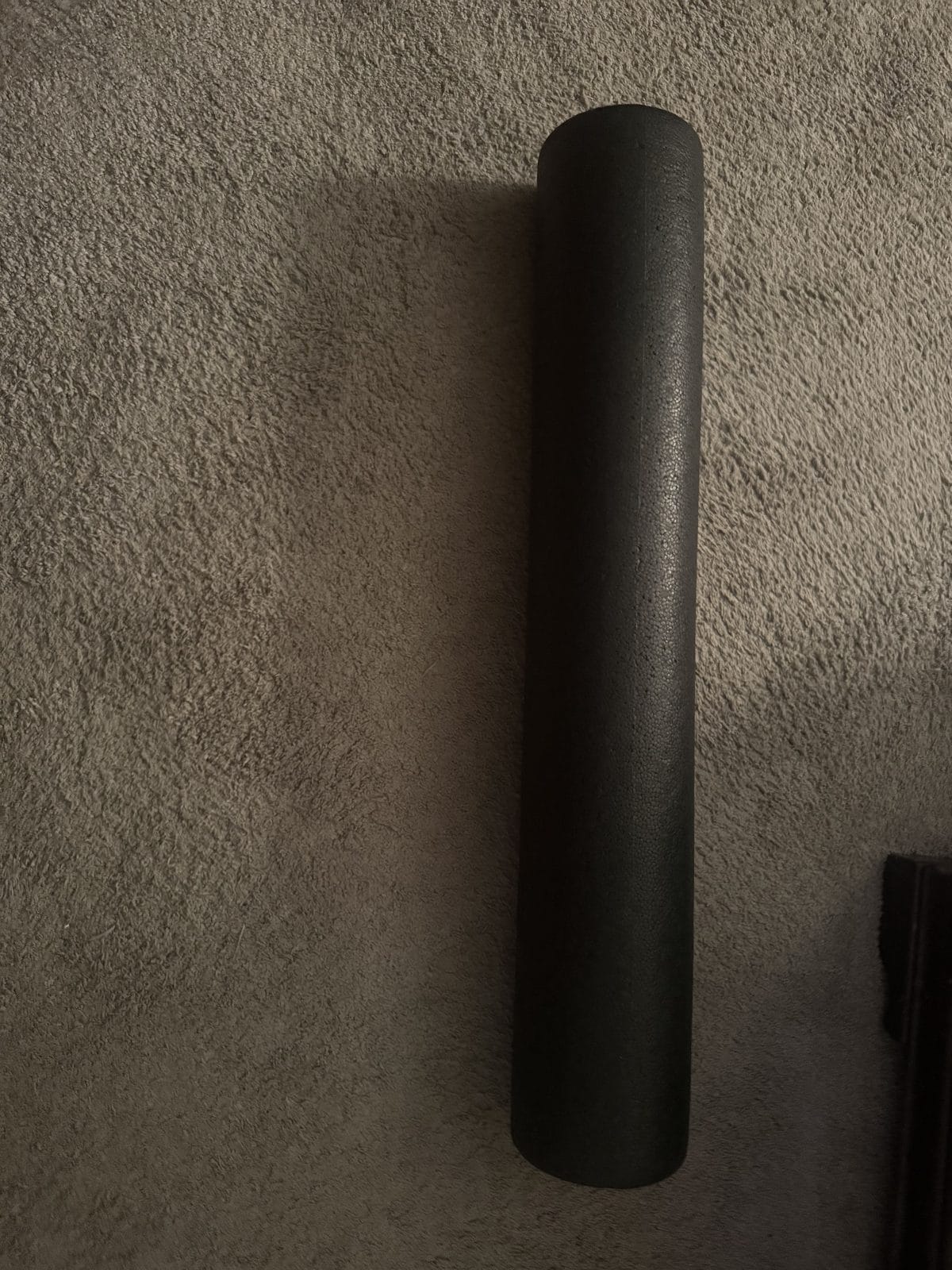
The best foam roller for migraine tension is a comfortable, appropriately firm roller you can use to work on the muscles of the upper back and the base of the neck. For many people who get migraines, tension builds in these muscles and at the back of the head, and a foam roller is one tool some reach for to ease it. I get migraines myself, and I use a foam roller for the tension I sometimes feel in the back of my head. It is important to be clear up front, though: a foam roller is a muscle-release tool, not an established treatment or cure for migraines, it is not a substitute for care from your doctor, and it must be used carefully around the neck.
Important
This article is for general information and is not medical advice. A foam roller is not an established treatment or cure for migraines and is not a substitute for care from your doctor. Some people, including me, use one to ease the muscle tension that can accompany their migraines, and personal results vary. Migraine is a neurological condition that should be managed with a healthcare professional. Use a foam roller cautiously around the neck, never roll directly on your spine or the front of your throat, and talk to your doctor or a physical therapist before rolling your neck or upper back, especially if you have migraines or any neck or vascular condition.
Quick Verdict
For most people, a medium-density foam roller is the best all-around choice for working on the upper-back and neck tension that can come with migraines: firm enough to release muscle, forgiving enough to stay comfortable. Choose a softer roller if you are new to it or sensitive, a firmer or textured one for deeper work on larger muscles, and a peanut-style roller to work along the neck without pressing on the spine. Keep pressure gentle near the neck, support your head, and treat it as a comfort tool alongside, not a replacement for, your medical care.
Why Trust This Guide
I get migraines, and I use a foam roller for the tension I sometimes feel in the back of my head. I work the muscles of my upper back and the base of my neck with it, gently, as one of the things I try for relief, and for me it can help ease that tension. The roller I use is a quality, sturdy product that has held up well. That is my personal experience, not medical advice or a promise it will work the same for you. Migraine is a neurological condition, results vary, and your doctor should guide your care. The health information below is drawn from medical sources.
Key Takeaways
- A foam roller works on muscle tension; it is not an established migraine treatment.
- Medium density suits most people; softer for beginners, firmer for deeper work.
- Never roll directly on the spine, the base of the skull, or the throat.
- Talk to your doctor before rolling your neck or upper back if you have migraines.
How We Picked These Foam Rollers
We weighed density and comfort, size and portability, surface texture, durability, and value, focusing on rollers suited to the upper back and the muscles at the base of the neck rather than aggressive deep work. We prioritized options that let you control pressure, since gentleness matters near the neck. Because this touches a health topic, the picks describe the rollers and their features. A foam roller works on muscle tension, and it is not designed or shown to treat migraine itself.
1. TriggerPoint GRID Foam Roller, Best Overall
Why It Stands Out
The TriggerPoint GRID is the best all-around pick. Its medium-firm multi-density surface releases muscle without being punishing, and the hollow core holds its shape over years of use. For working the upper back and shoulders where migraine-related tension often sits, its balance of firmness and comfort makes it a reliable default.
Worth Knowing
The textured surface is firmer than it looks, so ease into it and keep pressure light near the neck. Its standard size handles the back well but is less pinpoint than a smaller roller for the neck base.
Choose it for balanced everyday use. Skip it if you want the softest or most targeted option.
2. The Foam Roller I Use
Why It Stands Out
The foam roller I use is my pick for everyday tension work. It is a quality, sturdy product that has held up well, and I use it on my upper back and the base of my neck to ease the tension I sometimes feel in the back of my head. Rolling those muscles gently is one of the things I try for relief, and for me it helps take the edge off that tightness.
Worth Knowing
Near the neck I keep the pressure light, support my head, and stay on the muscle rather than the spine or the base of the skull. As with any roller, this is a personal comfort routine for muscle tension, not a treatment for migraines, so it is worth checking safe technique with a professional.
Choose it for sturdy, everyday muscle-tension work. Skip it if you want a tiny, travel-only roller.
3. LuxFit High-Density Foam Roller, Best Firm
Why It Stands Out
The LuxFit high-density roller is the best pick for firmer pressure. Its dense, smooth surface delivers deeper release on larger muscles like the upper back, and it is durable and inexpensive. For people who want a firmer roll on the back and find softer rollers too gentle, this is a sturdy, affordable choice.
Worth Knowing
High density means more intensity, so it can be too much near the neck; keep firm rolling to the larger back muscles. Beginners may prefer to start softer and work up to this firmness.
Choose it for firm work on the back. Skip it if you are new to rolling or want gentleness near the neck.
4. Gaiam Restore Soft Foam Roller, Best for Beginners
Why It Stands Out
The Gaiam Restore soft roller is the best pick for beginners and sensitive users. Its gentler foam eases you into rolling without the intensity of a firm roller, which is helpful when working near the neck or when you are new to it. For a comfortable, forgiving start, a soft roller lowers the barrier.
Worth Knowing
A soft roller offers less deep release, so it may feel light for large, tight muscles. Many people start soft near the neck and use a firmer roller only on the larger back muscles.
Choose it to start gently. Skip it if you specifically want deep, firm pressure.
5. 321 STRONG Textured Foam Roller, Best Textured
Why It Stands Out
The 321 STRONG textured roller is the best pick for a trigger-point feel on larger muscles. Its raised surface mimics the pressure of hands to work into tight spots along the upper back. For those who like a more targeted, kneading sensation on the bigger muscle groups, the texture adds versatility.
Worth Knowing
Textured rollers concentrate pressure, so use them on the back rather than directly on the neck, and ease in. The raised pattern can feel intense at first, so start slowly.
Choose it for a trigger-point feel on the back. Skip it if you prefer a smooth, even surface.
6. Peanut Double-Ball Roller, Best for the Neck
Why It Stands Out
A peanut double-ball roller is the best pick for working along the neck safely. Its shape straddles the spine so the balls press the muscles on either side while leaving the vertebrae untouched, which makes it well suited to the base of the neck and upper back where back-of-head tension often refers from. For careful neck-adjacent work, the peanut design is purpose-built.
Worth Knowing
Even with a peanut roller, keep pressure gentle near the neck, support your head, and avoid the base of the skull and the front of the neck. Its small size is targeted but not meant for broad rolling of the whole back.
Choose it for careful neck-adjacent tension. Skip it if you want a full-size roller for the whole back.
Foam Rollers at a Glance
| If you want this | Reach for | Why |
|---|---|---|
| A balanced everyday roller | TriggerPoint GRID | Medium-firm, durable |
| Sturdy everyday tension work | The One I Use | Quality, holds up well |
| Firmer, deeper pressure | LuxFit High-Density | Dense, affordable |
| A gentle start | Gaiam Restore Soft | Forgiving foam |
| A trigger-point feel | 321 STRONG Textured | Raised surface |
| Careful neck-adjacent work | Peanut Double-Ball | Spares the spine |
How to Choose a Foam Roller
Density and Firmness
Density sets the intensity. Soft rollers are forgiving and good for beginners or gentle neck-adjacent work, medium rollers suit most people, and firm rollers give deeper release best kept to the larger back muscles. If you are working near the neck for back-of-head tension, err toward gentler pressure and save firmer rolling for the upper back.
Size and Shape
A full-length roller covers the whole back, a shorter roller travels easily, and a peanut-shaped roller straddles the spine to work the muscles alongside the neck safely. For tension that sits at the base of the neck and back of the head, a peanut or smaller roller gives more control than a large one. Pair rolling with other tools like a neck wrap if that helps you relax.
Texture
Smooth rollers give even pressure and are easier for beginners, while textured rollers concentrate pressure for a trigger-point feel on larger muscles. Texture is best kept to the back rather than directly on the neck. Choose based on how intense a sensation you find comfortable and effective.
How to Use It Safely for Back-of-Head Tension
This is the most important part. Work the muscles of the upper back and the sides and back of the neck, and never roll directly on your spine, the base of your skull, or the front of your throat, where sensitive structures sit. Cleveland Clinic advises using rolling tools with care and avoiding bony and vulnerable areas1. Support your head, keep pressure light near the neck, go slowly, and stop immediately if you feel pain, dizziness, or numbness.
Foam Roller vs Handheld Massager
A foam roller uses your body weight for broad, controllable pressure on the back, while a handheld device targets specific spots. Many people use both, and a massage gun or a neck massager can complement rolling. A roller is inexpensive and simple, which is part of why it is a common starting point for upper-back tension, and a lighter-touch scalp massager is another option for the head. Whichever you use, the same cautions apply near the neck.
Recommended Reading
Common Foam Rolling Mistakes to Avoid
Rolling Directly on the Spine or Skull
Never roll directly on the vertebrae, the base of the skull, or the front of the neck. Keep the roller on the muscles to either side, and use a peanut-shaped roller if you want to work close to the spine safely. Bony and vulnerable areas should always be avoided.
Expecting It to Replace Your Migraine Care
A foam roller can help some people ease the muscle tension that comes with their migraines, but it is not an established treatment and is no substitute for medical care. The American Migraine Foundation emphasizes working with a healthcare professional on a migraine plan2. Use rolling as one comfort tool, and keep your actual migraine management with your doctor.
Using Too Much Pressure
Bearing down hard, especially near the neck, can leave you sore or aggravate tension. Use gentle pressure, support your head, and keep sessions short. If tension keeps returning, look at root causes, since stress and posture often play a role.
Skipping the Professional Conversation
If you have migraines, neck problems, or any vascular condition, talk to your doctor or a physical therapist before rolling your neck or upper back. Mayo Clinic notes that neck tension and headaches can be linked, and a professional can advise what is safe for you3. A quick conversation helps you roll safely.
More Migraine Guides
Frequently Asked Questions
Can a foam roller help with migraines?
Some people, including me, use a foam roller to work on the neck and upper-back muscle tension that can come with their migraines, and find it helps them ease that tension. That is a personal experience rather than a guarantee, and a foam roller is not an established treatment or cure for migraine. Migraine is a neurological condition whose management should be guided by a healthcare professional, and results vary from person to person.
Is it safe to foam roll my neck?
With care. Keep the roller on the muscles at the back and sides of the neck and the upper back, never on the spine, the base of the skull, or the front of the throat. Support your head, use light pressure, go slowly, and stop if you feel pain, dizziness, or numbness. A peanut-shaped roller helps you work alongside the spine safely, warmth from a heating pad can loosen muscles first, and a professional can show you technique.
How do I use a foam roller for tension at the back of my head?
Tension felt at the back of the head often refers from the muscles of the upper neck and back. Gently rolling those upper-back and neck-base muscles, while supporting your head and avoiding the skull and spine, is how I approach it. Keep pressure light and sessions short. Because this is close to sensitive areas, ask a professional to confirm safe technique for you.
How firm should my foam roller be?
Medium density suits most people, balancing effective release with comfort. Beginners or anyone sensitive should start soft, especially near the neck, while firmer rollers give deeper pressure best saved for the larger back muscles. You can always start gentle and work up, which is the safer approach when muscle tension is involved.
How long should I foam roll?
Keep it brief, generally a minute or two per area, using gentle pressure near the neck. More is not better and can leave you sore. If you are new to it or have health concerns, start with very short sessions and see how you respond, and check with a professional about what is appropriate for you.
Foam roller or massage gun for migraine tension?
Both work on muscle tension in different ways: a roller uses body weight for broad pressure on the back, while a massage gun targets specific spots. Some people prefer one, others use both. Neither is a treatment for migraine. Choose what feels most comfortable and controllable for you, and keep the same cautions near the neck.
Can I foam roll during a migraine attack?
That is a question for your doctor, since sensitivity varies and some people are more sensitive during an attack. A foam roller is not designed to stop a migraine, and pressure may not be welcome during one. Follow your personal migraine plan and your provider’s guidance about what helps and what to avoid during attacks.
Is this article medical advice?
No. This guide is general information about foam rollers and is not medical advice. A foam roller is not a treatment for migraines. Always consult your doctor or a qualified professional about your migraines, about whether foam rolling is appropriate for you, and about safe technique, especially involving the neck.
Sources
- Cleveland Clinic, guidance on using foam rollers safely and areas to avoid. clevelandclinic.org
- American Migraine Foundation, working with a professional on migraine management. americanmigrainefoundation.org
- Mayo Clinic, on neck tension and headache. mayoclinic.org
When should I see a doctor about neck and shoulder tension?
See a doctor if neck pain is severe, follows an injury, comes with numbness, tingling or weakness in the arms, or does not settle with normal care. Stop rolling and get evaluated if it makes symptoms worse. A clinician or physical therapist can tell you whether self-release is appropriate for your neck at all.
Sources
- Headache Classification Committee of the International Headache Society. The International Classification of Headache Disorders, 3rd edition. Cephalalgia. 2018;38(1):1-211. https://ichd-3.org/
- American Headache Society. Position Statement on Integrating New Migraine Treatments Into Clinical Practice. Headache. 2019;59(1):1-18. https://americanheadachesociety.org/
- US Food and Drug Administration. Drugs@FDA database, migraine therapeutic class. https://www.accessdata.fda.gov/scripts/cder/daf/
