
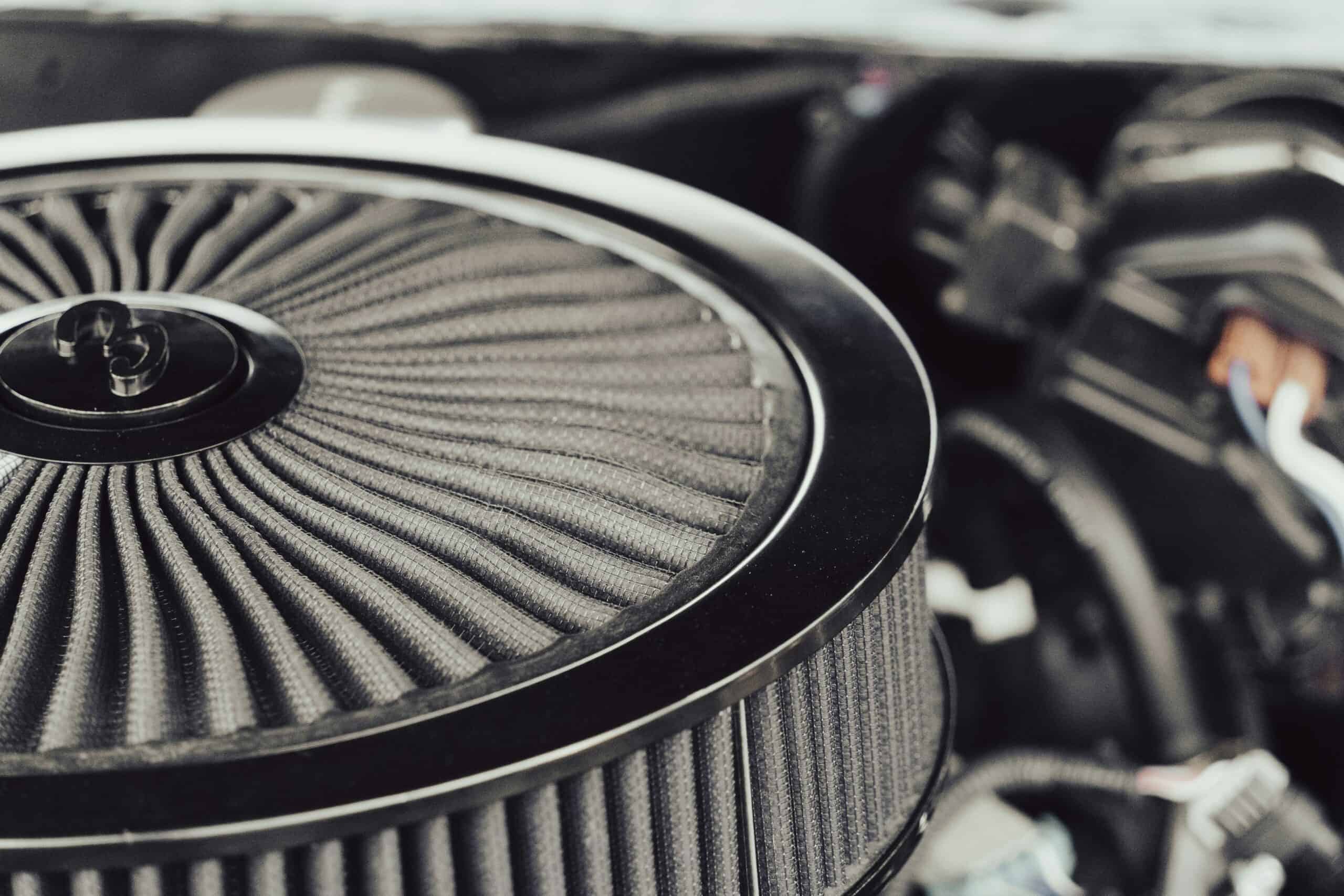
A large share of cabin filters on the shelf are deliberately fragranced, which makes them the worst possible choice for anyone sensitive to smells inside a closed car. Choosing among cabin air filters for car allergen triggers starts with ruling those out, then deciding whether your problem is particles, gases, or both. This article is for educational purposes only and does not replace medical evaluation or treatment by a qualified clinician.
The second thing most drivers get wrong is the interval. Vehicle manufacturers typically specify cabin filter replacement somewhere around every 12,000 to 15,000 miles or annually, and a filter left for three years is a loaded mat of pollen, dust and road grime sitting directly upstream of the vents. Changing it is usually a ten-minute job behind the glovebox.
Be clear about what this fixes. A clean filter reduces pollen and particulate entering the cabin and, with carbon, cuts exhaust and odor intrusion in traffic. It does not treat migraine, and the American Migraine Prevalence and Prevention research on trigger identification found that self-reported triggers carry high false-positive rates1. The broader in-car kit is covered in car accessories for migraine; this page goes one level down into the filter itself.
Quick Verdict
An unscented activated carbon cabin filter is the right default, because it handles both particles and the exhaust odor that gets in during stop-and-go traffic. Go high-efficiency particulate instead if pollen is the specific complaint, buy OEM when the aftermarket fit is uncertain, and treat a persistent musty smell as an evaporator problem that no filter will solve.
Key Takeaways
- Avoid fragranced and “freshener” cabin filters entirely if you have any scent sensitivity.
- Particulate media capture pollen and dust; activated carbon adsorbs gases and odors.
- Manufacturer intervals usually fall around annually or every 12,000 to 15,000 miles.
- Most cars give access behind the glovebox with no tools beyond a screwdriver.
- Filters have a directional airflow arrow, and fitting one backwards reduces its effect.
- A musty smell that returns after a new filter is coming from the evaporator, not the filter.
How We Picked
Fragrance was the first filter applied to the field. Scented and “air freshener” cabin filters were excluded regardless of their filtration specifications, because adding volatile compounds to a sealed cabin defeats the purpose for this audience.
After that the criteria were media type matched to the complaint, stated efficiency, fit accuracy by vehicle, and airflow restriction. A filter dense enough to choke the blower trades one problem for weak ventilation and foggy glass.
Cost was assessed per year of ownership, which favors multi-packs and reusables over single premium filters in most cases. Each entry is a product class rather than a single part number, since fitment is entirely vehicle-specific.
1. An Activated Carbon Cabin Filter, Best Overall
Why It Stands Out
Carbon-impregnated filters combine a particulate layer with activated carbon, so they capture pollen and dust while also adsorbing gases. In traffic that means less diesel exhaust and less of the smell from the car ahead reaching the vents.
For most drivers this is the sensible middle. Particulate-only filters do nothing about odor, and odor is often the complaint that actually makes a commute unpleasant.
Worth Knowing
Carbon capacity depletes with exposure rather than clogging, so a carbon filter stops adsorbing odor before it stops catching particles. Returning odor is the signal, not reduced airflow.
Carbon layers add some restriction, which is normal and usually unnoticeable on a healthy blower. On an older car with a tired fan it can be noticeable at the lowest setting.
Best for commuters, urban driving and anyone bothered by exhaust intrusion. Skip it if pollen is the only concern and you would rather spend the money on higher particulate efficiency.
Check Price on Amazon2. A High-Efficiency Particulate Cabin Filter, Best for Pollen
Why It Stands Out
High-efficiency particulate filters use denser, finer media to capture smaller particles than a standard filter. For seasonal pollen, road dust and brake particulate, this is the format that measurably changes what reaches the cabin.
Several are marketed with HEPA-style ratings. The claim is worth checking against a stated efficiency figure rather than taken from the product name, but the better examples genuinely outperform standard media.
Worth Knowing
Denser media restrict airflow more, and that matters on hot days when you want maximum fan. If defogging becomes sluggish after fitting one, the media is too restrictive for your blower.
Particulate filters do nothing about gases or smells. If exhaust odor is part of the complaint, a combination carbon filter serves better even at slightly lower particulate efficiency. Seasonal allergy and headache patterns overlap in ways worth reading up on, and the allergy and migraine question covers that ground.
Best for hay fever season, rural dusty roads and anyone whose complaint is specifically pollen. Skip it on a vehicle with a weak blower motor.
Check Price on Amazon3. An OEM Filter from the Dealer, Best Fit Certainty
Why It Stands Out
An original equipment filter is dimensionally correct, seals against the housing as designed, and carries no ambiguity about which way round it goes. On vehicles where aftermarket listings disagree about fitment, that certainty is worth the premium.
Seal quality is the under-discussed specification. A filter that leaves a gap at one edge lets unfiltered air bypass the media entirely, which makes efficiency numbers meaningless.
Worth Knowing
OEM filters are usually standard particulate rather than carbon, so you may be paying more for less capability. Check what the part actually is before assuming it is the premium option.
Dealer pricing on these is typically several times the aftermarket equivalent. The fit advantage is real; the cost difference is also real.
Best for newer vehicles, unusual housings, and cases where a previous aftermarket filter did not seal. Skip it when a reputable aftermarket brand clearly lists your exact model year.
Check Price on Amazon4. A Multi-Pack of Standard Filters, Best Ongoing Cost
Why It Stands Out
Two or three filters bought together cost far less per unit, and the spare in the trunk is what makes the annual change actually happen. For a filter that is genuinely due every year, this is the format that matches the schedule.
Standard particulate multi-packs also suit households with two cars on the same platform, where one order covers both.
Worth Knowing
Standard media handle pollen and dust adequately and nothing about odor. If you want carbon, buy carbon in a multi-pack rather than standard filters more often.
Store spares flat and dry. A filter that has been crushed in a trunk for a year will not seal in the housing.
Best for anyone who changes on schedule and wants the cheapest route to doing so. Skip it if exhaust or odor intrusion is the actual complaint.
Check Price on Amazon5. A Washable Reusable Cabin Filter, Best Long-Term Value
Why It Stands Out
Reusable filters use a synthetic or electrostatic media designed to be rinsed and refitted, so one purchase covers years. For a high-mileage vehicle that loads filters quickly, the arithmetic can favor them substantially.
They also remove the forget-to-order problem. A rinse during a normal wash is easier to remember than a parts order.
Worth Knowing
Washable media generally offer lower particulate efficiency than a good disposable filter, and none of them carry carbon. You are trading performance for convenience and cost.
They must be fully dry before refitting, which takes longer than people expect. A damp filter in a dark housing is how a musty smell starts.
Best for high-mileage drivers and anyone prioritizing cost per year over peak filtration. Skip it if pollen or odor control is the main reason you are buying.
Check Price on Amazon6. Vent Cleaning Kits and Evaporator Treatments, Best for Persistent Odor
Why It Stands Out
When a smell survives a new filter, the source is almost always biological growth on the air conditioning evaporator core, which sits deeper in the system. Foam or aerosol treatments delivered through the vents or the drain reach that surface.
These kits also include ducting brushes for the vent louvers, where dust accumulates visibly and recirculates every time the fan starts.
Worth Knowing
Choose unscented or lightly scented formulations and air the car thoroughly afterward. Many of these products are heavily perfumed by design, which is exactly the problem for a scent-sensitive driver.
A blocked evaporator drain causes recurring growth no treatment will fix permanently. If the carpet under the dash is ever damp, that is the actual repair.
Best for cars with a lingering musty smell on startup and for a deep clean alongside a filter change. Skip it if the smell disappeared with the new filter, since nothing further is needed.
Check Price on AmazonCabin Filter Types at a Glance
| Type | Captures particles | Handles odor | Airflow restriction | Cost per year |
|---|---|---|---|---|
| Activated carbon | Yes | Yes | Moderate | Moderate |
| High-efficiency particulate | Yes, best | No | Higher | Moderate to high |
| OEM standard | Yes | Usually no | Low to moderate | Highest |
| Standard multi-pack | Yes | No | Low | Lowest |
| Washable reusable | Partly | No | Low | Lowest over years |
| Vent and evaporator kit | Not a filter | Treats the source | None | Occasional |
What to Look For
Unscented, stated explicitly
Look for the word unscented or fragrance-free on the listing, and treat any mention of freshening, deodorizing perfume or essential oils as a reason to pass. A sealed cabin concentrates whatever is added to it.
Exact year, make, model and trim
Cabin filter dimensions change within a model run and sometimes between trims. Confirm fitment against your specific vehicle rather than the general model name.
Media type named, not implied
“Premium” and “advanced” tell you nothing. Activated carbon, electrostatic, and a stated particulate efficiency are checkable; brand adjectives are not.
The airflow arrow
Every filter has one, and fitting it against the airflow reduces both efficiency and life. Note the orientation of the old filter as you pull it out.
Carbon Against Particulate
When carbon is the right call
Urban commuting, tunnels, drive-through queues and any route with heavy diesel traffic. Those are gas and odor problems, and particulate media are simply the wrong tool for them.
When particulate is the right call
Pollen season, gravel roads, and dusty agricultural areas. If your symptoms track the pollen count rather than traffic, spend the money on efficiency rather than carbon. Where glare rather than air is the issue on a drive, sun shades address a different variable entirely.
What Trips People Up
Buying a scented filter by accident
These are stocked alongside the plain ones and the packaging rarely leads with it. Read the full listing text, not just the title.
Leaving the filter for years
Out of sight behind the glovebox, it gets forgotten, and the first visible evidence is weak airflow or a smell. An annual reminder tied to another service is the practical fix.
Expecting a filter to fix motion symptoms
Dizziness and nausea in a moving car are not an air filtration problem. Vestibular migraine is a recognized diagnosis in the International Classification of Headache Disorders, third edition2, so persistent motion-related symptoms belong in a clinical conversation rather than a parts order. The vestibular migraine guide covers the distinction, and motion sickness products address the symptom side.
Treating the filter as the whole answer
Heat, glare, posture, hydration and trip length all act on a long drive at once. Changing one variable and watching is more informative than changing everything, which is the same reasoning behind the preparation in planning a road trip around attacks.
When to See a Neurologist
A cabin filter is maintenance. Any of the following warrants medical evaluation rather than another product:
- A sudden, severe headache that peaks within seconds or minutes
- Headache with fever, stiff neck, confusion or a rash
- New headache after a head injury, including a minor collision
- Headache with weakness, numbness, slurred speech or vision loss
- Aura that lasts longer than an hour or differs from your usual pattern
- Dizziness or vertigo that persists outside of attacks
- A clear change in the pattern, frequency or character of your headaches
- Headache that wakes you from sleep or is worst on waking
- Headache reliably worsened by coughing, straining or bending
- A first migraine-like headache after age 50
- Headache on 15 or more days per month
- Symptoms that make driving feel unsafe
- Attacks that no longer respond to what previously worked
Recommended Reading
- Driving decisions during an attack
- Products for sinus and congestion headaches
- What the evidence says about odors
- The documented trigger list and its limits
Cabin Air Filter FAQ
How often should a cabin air filter be replaced?
Manufacturer schedules commonly fall around annually or every 12,000 to 15,000 miles, and heavy pollen, dust or city traffic shortens that. Returning odor on a carbon filter and reduced airflow on a particulate one are the practical signals.
Does a cabin air filter help with allergies in the car?
A particulate filter reduces the pollen and dust reaching the vents, which many drivers notice during allergy season. It cannot do anything about allergens already in the upholstery or carpet.
Should I buy carbon or particulate?
Carbon if exhaust and odor intrusion bother you, particulate if pollen and dust are the complaint. Combination carbon filters are the reasonable compromise and what most drivers should default to.
Are scented cabin filters worth it?
Not for anyone with scent sensitivity. They add fragrance compounds into a small sealed space, which is the opposite of what a filter purchase is usually meant to achieve.
Can I change a cabin air filter myself?
On most vehicles yes, through a panel behind the glovebox, in about ten minutes with a screwdriver. A minority of models place it under the hood or under the dash, where access is harder.
Why does my car still smell after a new filter?
Almost always growth on the air conditioning evaporator core, which the filter sits upstream of and cannot reach. An evaporator treatment addresses it, and a blocked condensate drain is the underlying cause worth checking.
Will a cabin filter reduce migraine attacks?
There is no evidence that it will. Trigger identification carries high false-positive rates even for commonly reported triggers1, so the honest framing is a more comfortable cabin rather than fewer attacks.
When should this be a clinical conversation instead?
If driving reliably brings on attacks, if dizziness persists between attacks, or if your pattern is changing, that belongs with a clinician. Bring what you have changed and what happened after each change.
Sources
- Lipton RB, Munjal S, Buse DC, et al. Predicting Inadequate Response to Acute Migraine Medication: Results From the American Migraine Prevalence and Prevention (AMPP) Study. Headache. 2016;56(10):1635-1648.
- Headache Classification Committee of the International Headache Society (IHS). The International Classification of Headache Disorders, 3rd edition. Cephalalgia. 2018;38(1):1-211. https://ichd-3.org/
