
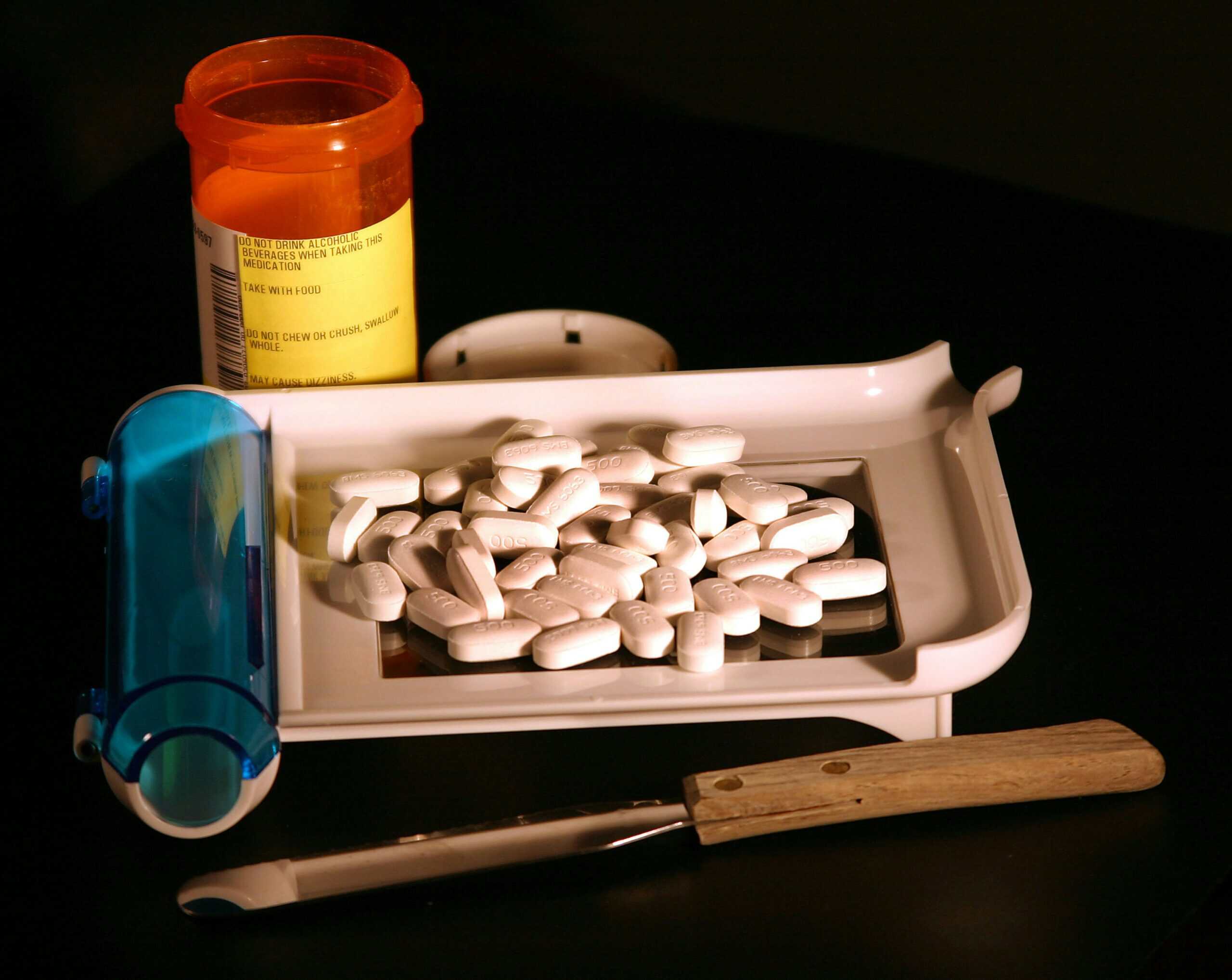
The number that matters most in migraine is not how many pills you took, it is how many days a month you took them. European Academy of Neurology guidance on medication overuse headache sets the overuse thresholds at 10 or more days per month for triptans, ergotamines, opioids and butalbital, and 15 or more days per month for simple analgesics such as NSAIDs and acetaminophen1. The best automatic pill dispensers for medication adherence are useful here precisely because they timestamp what came out and when.
That makes them a different purchase from a pill organizer. An organizer answers whether today’s dose was taken, which matters for a daily preventive. A dispenser with a log answers how many days this month the rescue medication came out of the bottle, which is the question a neurologist asks and almost nobody can answer accurately from memory.
None of this is medical advice, and nothing here should change what you take or when. This article is for educational purposes only and does not replace medical evaluation or treatment by a qualified clinician; the thresholds above are guideline-level definitions rather than personal limits, and your own are set with your clinician. If you only need compartments and day markers, pill organizers cover that at a fraction of the cost.
Quick Verdict
A rotating-tray dispenser with audible alarms is the right default for a daily preventive, since it loads once a week and will not dispense the wrong slot. Choose a locking model if anyone else is involved in oversight, a smart bottle cap if the real problem is counting rescue-medication days, and a plain battery dispenser if you want the function without an app.
Key Takeaways
- Overuse thresholds are counted in days per month, not pills, which is what a log captures.
- Rotating-tray dispensers only expose one slot at a time, which prevents double dosing.
- Locking models matter when a household includes children or shared supervision.
- Smart caps suit as-needed medication better than trays, because rescue dosing is unscheduled.
- App logging turns a vague recollection into a record you can bring to an appointment.
- Battery backup is the specification that decides whether a power cut erases your schedule.
How We Picked
The first criterion was whether the device records anything. A dispenser that beeps but keeps no history solves reminding and does nothing for the counting problem that makes this category relevant to migraine.
Second was dose integrity: whether the design can expose more than one dose at a time, whether it locks, and what happens if a slot is missed. A tray that allows access to a whole week defeats most of the purpose.
After that the criteria were capacity, alarm types including vibration and visual alerts for anyone sensitive to sound during an attack, battery backup, and how much work a weekly reload takes. Price was weighed against subscription costs, since several connected models charge monthly. Each entry is a product class rather than a single model, because availability shifts and features change between revisions.
1. An Automatic Rotating-Tray Dispenser with Alarms, Best Overall
Why It Stands Out
A rotating-tray dispenser holds a week or more of pre-sorted doses and rotates a single slot into the opening at each scheduled time. Only that slot is reachable, so taking tomorrow’s dose by mistake is not possible.
For a daily preventive this is the format that fits the problem. Preventive therapy is typically judged over two to three months before its adequacy is assessed2, and a trial is only meaningful if the doses were actually taken on schedule.
Worth Knowing
Loading is a weekly task that takes a few minutes and demands attention, since a misloaded tray dispenses the wrong thing on time. Doing it at the same point each week makes it reliable.
Slot depth limits what fits. Large capsules and oddly shaped tablets sometimes will not sit flat, and a pill that sticks can jam the rotation.
Best for anyone on a daily preventive who wants the schedule handled without thinking about it. Skip it if your only medication is as-needed, since a tray cannot schedule an unpredictable dose.
Check Price on Amazon2. A Locking Dispenser with Caregiver Alerts, Best for Shared Oversight
Why It Stands Out
Locking models keep the whole tray secured between scheduled times and can notify a second person when a dose is missed. In a household with children, or where someone else helps with management, that combination addresses both safety and follow-up.
The alert function is also genuinely useful during a bad attack, when the person who most needs the reminder is least able to act on it.
Worth Knowing
Alerts usually depend on connectivity, which means a hub, a phone, or in some cases a cellular subscription. Confirm what the ongoing cost is before buying.
A locked device needs a documented way in for a legitimate early dose, and every model handles that differently. Read how the override works before you need it.
Best for shared households, caregivers at a distance, and anyone who wants a second set of eyes on adherence. Skip it if you live alone and nobody needs notifying, since the subscription buys nothing.
Check Price on Amazon3. A Smart Pill Bottle Cap with a Timer Display, Best for Rescue Medication
Why It Stands Out
A smart cap replaces the lid on an existing bottle and shows the elapsed time since it was last opened, sometimes with a count of openings. For as-needed medication that is exactly the right instrument, because the dose is unscheduled and the useful data is the date.
This is the cheapest path to answering the acute-days question. The cap costs a fraction of a dispenser and attaches to the bottle you already have, which is also why it pairs well with over-the-counter rescue options that otherwise go uncounted.
Worth Knowing
Opening the bottle is not the same as taking a dose, so the log is a proxy rather than a record. It is still far more accurate than recall.
Thread sizes vary, and a cap that does not seat properly on a prescription bottle is useless. Check which standard the cap fits before ordering.
Best for anyone whose concern is acute medication frequency rather than daily scheduling. Skip it if you take a daily preventive and nothing as-needed.
Check Price on Amazon4. A Connected Dispenser with App Logging, Best Record Keeping
Why It Stands Out
Connected dispensers write every dispense event to an app, which produces an exportable history by date. Walking into an appointment with an actual count of acute medication days is a materially different conversation from estimating it.
Several of these also let you add a note at the time of dosing, which is how a medication record starts to function like a migraine journal without the discipline a paper journal requires.
Worth Knowing
App quality varies far more than hardware quality in this category, and an abandoned app can strand a working device. Check when the app was last updated.
Subscriptions are common and sometimes gate the history export, which is the feature you bought it for. Read what the free tier actually includes.
Best for anyone preparing for a neurology appointment or tracking a preventive trial. Skip it if you would rather not have medication data on a third-party service, where a simple day counter covers the same ground.
Check Price on Amazon5. A Vibrating Pocket Pill Timer, Best Discreet Option
Why It Stands Out
A small timer that vibrates rather than beeps handles the midday dose at work, in a meeting, or anywhere an alarm would be unwelcome. For anyone with sound sensitivity, a silent reminder is the only tolerable kind during an attack.
These are inexpensive, pocket sized, and run for months on a coin cell. Several include a few compartments so the dose travels with the reminder.
Worth Knowing
They remind and they do not log, so they solve timing rather than counting. Pairing one with a smart cap on the bottle at home covers both.
Capacity is minimal, usually one or two doses. Treat it as a daytime companion to a main system rather than the system itself.
Best for working days, travel, and anyone who cannot tolerate an audible alarm. Skip it as your only solution if adherence rather than timing is the problem.
Check Price on Amazon6. A Basic Battery Dispenser Without Connectivity, Best Value
Why It Stands Out
A plain dispenser with a tray, a clock and an alarm costs a fraction of a connected model and does the core job. No app, no account, no subscription, and nothing to stop working when a company changes direction.
For a single daily preventive taken at a consistent time, this is often all that is needed. The simplicity is the feature.
Worth Knowing
No logging means you still need a separate way to count acute days, whether that is a tracking app or a mark on a calendar. The dispenser handles the preventive and nothing else.
Check for battery backup on the clock. Cheaper units lose the schedule in a power cut and silently stop alarming until reset.
Best for a simple daily regimen on a budget, and for anyone who wants no connectivity at all. Skip it if the reason you are shopping is to produce a record.
Check Price on AmazonPill Dispenser Types at a Glance
| Type | Logs doses | Locks | Suits | Ongoing cost |
|---|---|---|---|---|
| Rotating-tray with alarms | No | Partial, one slot | Daily preventive | Batteries |
| Locking with caregiver alerts | Yes | Yes | Shared oversight | Often a subscription |
| Smart bottle cap | Openings, with dates | No | As-needed rescue | Battery, sometimes an app |
| Connected with app logging | Yes, exportable | Varies | Appointment prep | Often a subscription |
| Vibrating pocket timer | No | No | Daytime doses | Coin cell |
| Basic battery dispenser | No | Partial, one slot | Simple regimens | Batteries |
What to Look For
Whether it produces a dated record
This is the specification that separates the category from an organizer. If counting acute medication days is why you are shopping, a device with no history does not answer it.
Alarm types, including silent ones
Audible alarms are unusable for some people mid-attack. Look for vibration, a visual indicator, or a phone notification as alternatives rather than a louder beep.
One slot at a time
Access control is what prevents a double dose on a foggy postdrome morning. A tray that opens fully is a weekly organizer with a clock attached.
Power loss behavior
Ask what happens in an outage: does the schedule persist, does it alarm on battery, and does it need resetting. A device that quietly stops is worse than no device, because you stop checking.
Dispensers Against Organizers
Where an organizer is enough
If the only question is whether today’s dose was taken, a weekly box with day markers answers it visually for a few dollars and never needs a battery. Most people on a single daily medication need nothing more.
Where a dispenser earns its cost
When doses are multiple, when access needs limiting, or when you need a record rather than a glance. The record is the part that matters clinically, because the days-per-month count is what overuse definitions are built on1, and it is the figure that is hardest to reconstruct afterward.
Common Mistakes to Avoid
Buying for reminding when the problem is counting
These are different jobs. Reminding helps a preventive; counting helps an acute medication conversation, and most buyers who are worried about frequency need the second.
Loading it carelessly
A dispenser executes exactly what you loaded, and a misplaced tablet is dispensed on schedule with total confidence. Load in good light, unhurried, and check the first slot against the prescription.
Using the log to self-adjust
The record is for the clinician, not for changing doses. Overuse thresholds are guideline definitions and withdrawal from overused medication is managed under medical supervision rather than independently1, which is why the medication overuse guide ends in the same place.
Bringing no data to the appointment
The whole point of a logging device is the printout or export. Pulling the history before you go turns a vague answer into a specific one, which is also the first item in appointment preparation.
When to See a Neurologist
A dispenser is an organizational tool. Any of the following warrants medical evaluation rather than another device:
- A sudden, severe headache that peaks within seconds or minutes
- Headache with fever, stiff neck, confusion or a rash
- New headache after a head injury
- Headache with weakness, numbness, slurred speech or vision loss
- Aura lasting longer than an hour or unlike your usual pattern
- Acute medication use climbing month over month
- Acute medication use on more days per month than your clinician has agreed
- A clear change in the pattern, frequency or character of your headaches
- Headache that wakes you from sleep or is worst on waking
- Headache reliably worsened by coughing, straining or bending
- A first migraine-like headache after age 50
- Headache on 15 or more days per month
- New or newly severe headache during pregnancy
- Attacks that stop responding to treatment that previously worked
Recommended Reading
Automatic Pill Dispenser FAQ
What is the difference between a pill dispenser and a pill organizer?
An organizer is a sorted box you open yourself. A dispenser adds a clock, controls which doses are reachable at which times, and on better models keeps a dated record of what was dispensed.
Why would a migraine patient need one?
Two reasons: keeping a daily preventive on schedule through a trial period, and producing an accurate count of acute medication days. Guideline definitions of medication overuse are built on days per month1, and that number is difficult to recall accurately.
Do automatic dispensers lock?
Many expose only the current slot, and dedicated locking models secure the entire tray between scheduled times. Full locking matters most in households with children or where someone else assists.
Can a dispenser handle as-needed rescue medication?
Not well, since trays are built around a schedule. A smart bottle cap that timestamps openings is the better instrument for unscheduled dosing.
What happens during a power cut?
It depends on the model. Better units run the clock and the alarm on backup batteries; cheaper ones lose the schedule and stop alarming until reset, so battery backup is worth confirming.
Are the apps required?
For connected models the app is usually how you set schedules and export history, and some features sit behind a subscription. Non-connected dispensers need no app at all and keep no record.
Will a dispenser reduce my attack frequency?
Not by itself. What it can do is make a preventive trial a fair one, and preventive therapy is generally assessed over two to three months with a meaningful reduction in monthly migraine days as the benchmark2. Taking the medication as prescribed is a precondition for that assessment, not a treatment in itself.
Should I use the log to decide when to stop a medication?
No. Bring the log to your clinician and let it inform their decision. Changes to acute or preventive medication, including withdrawal from an overused one, are managed medically rather than from a device history.
Sources
- Diener HC, Antonaci F, Braschinsky M, et al. European Academy of Neurology guideline on the management of medication-overuse headache. Eur J Neurol. 2020;27(7):1102-1116. https://onlinelibrary.wiley.com/doi/10.1111/ene.14268
- American Headache Society. The American Headache Society Position Statement On Integrating New Migraine Treatments Into Clinical Practice. Headache. 2019;59(1):1-18. https://americanheadachesociety.org/
